
At six in the morning, the container yard at the Meishan Port Area of Ningbo Zhoushan Port is still covered by thin mist. A quadruped robot dog has already begun its inspection route. It moves flexibly through narrow gaps between containers, while a laser radar scans the surrounding environment in real time and infrared cameras capture every unusual heat source. Two hours later, a complete inspection report is generated automatically and uploaded to the dispatch center.
The scene is a practical illustration of how intelligent products are gradually entering production and daily life. A new generation of intelligent terminals deeply integrated with artificial intelligence, capable of active perception and autonomous learning, is becoming an important carrier of the new round of technological and industrial revolution. In Ningbo, these capabilities are being connected with the city’s strong manufacturing base, diverse industrial scenarios and growing digital infrastructure. The broader effort also places the humanoid robot at the center of a wider debate about how embodied intelligence can move from laboratories and exhibition halls into factories, ports, hospitals and service environments.
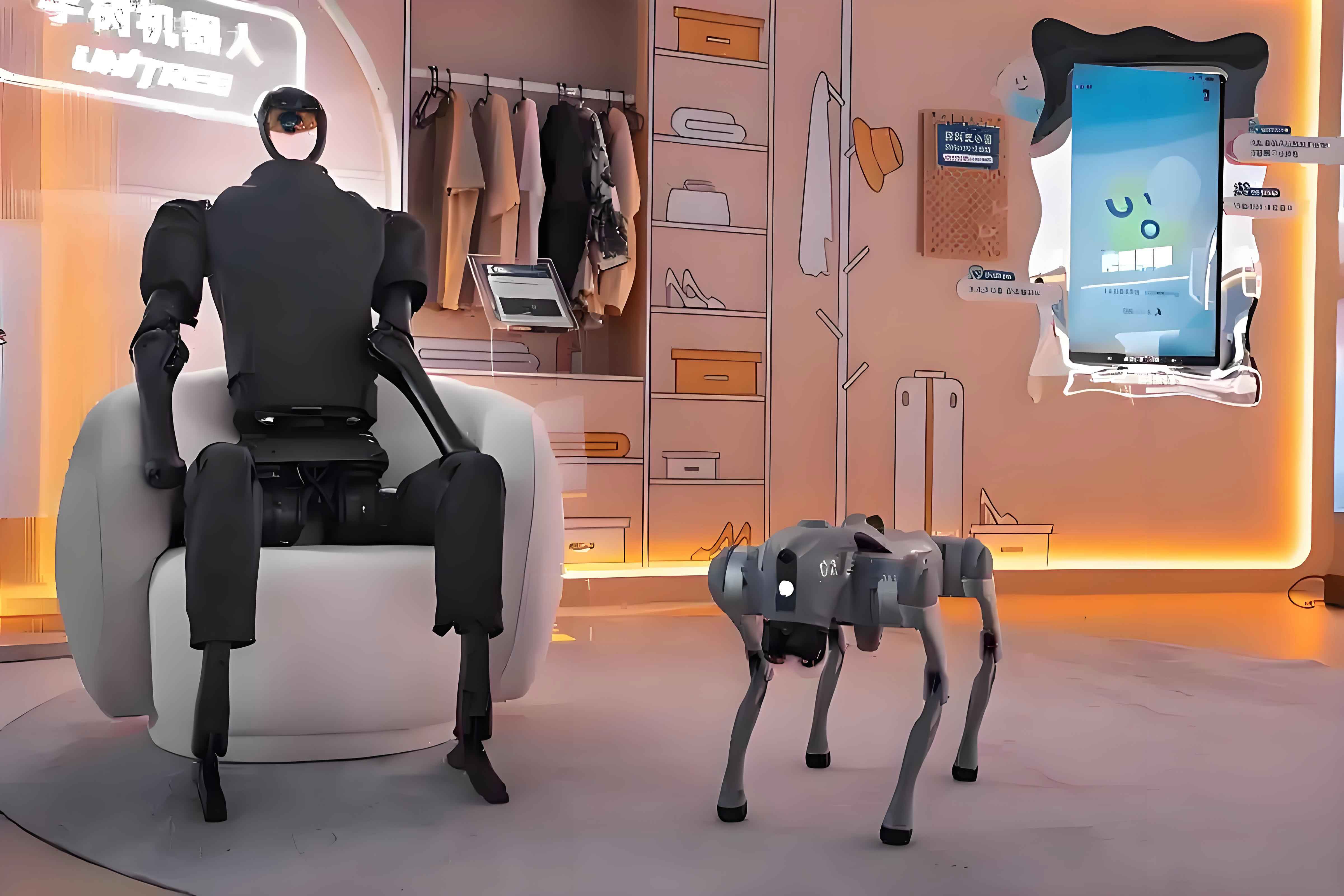
Ningbo’s approach is not limited to showcasing individual machines. It is building a chain that links scenario demand, model development, data accumulation, hardware supply and solution integration. Within that chain, the humanoid robot is both a symbol and a test case. The humanoid robot must demonstrate reliability, consistency and economic value in real operations, rather than remaining a prototype designed only for controlled demonstrations. The port inspection example shows that embodied intelligence can already perform repetitive and safety-related tasks, while the humanoid robot represents a more complex frontier involving dexterity, mobility and interaction.
The city’s strategy reflects a broader shift in industrial policy. Instead of treating artificial intelligence as a standalone sector, Ningbo is embedding it into manufacturing, logistics, healthcare and other fields. The humanoid robot is one of the most visible expressions of this shift because it combines artificial intelligence models, sensors, actuators, motion control and industrial data in a single physical system. The humanoid robot therefore becomes a demanding benchmark for the entire innovation chain, from component suppliers to complete-machine enterprises and scenario operators.
-
Port Inspection and Exhibition Platform Highlight Practical Progress
Recently, the 16th Smart City and Intelligent Economy Expo was held in Ningbo under the theme “AI-driven Transformation, Wisdom Shaping the Future.” The event established an intelligent product experience center for the first time, creating an important platform for enterprises to display and exchange ideas. The expo provided a concentrated view of how artificial intelligence, embodied intelligence and the humanoid robot are being positioned in the next stage of industrial upgrading.
The exhibition platform matters because it connects supply and demand. Enterprises can present hardware, software, models and integrated solutions, while industrial users can compare applications and identify scenarios suitable for early deployment. For the humanoid robot, such platforms are especially important because the technology involves long development cycles and complex integration. A humanoid robot cannot be evaluated only by its appearance or a single demonstration; it must be assessed by stability, maintainability, safety and the ability to work alongside existing production systems.
Ningbo has been actively seizing new opportunities in artificial intelligence development and promoting digital and intelligent transformation. In the first half of this year, the revenue of Ningbo’s above-scale artificial intelligence core industry and the above-scale industrial output value of its intelligent robot industrial chain both increased by nearly 20 percent year on year. The city was also included in the first batch of cities selected to create a national new industrialization demonstration zone.
These indicators suggest that the policy focus is translating into industrial activity. The growth of the intelligent robot industrial chain is particularly relevant to the humanoid robot because it covers components, control systems, sensors and complete machines. The humanoid robot depends on a broad supplier base, and Ningbo’s manufacturing ecosystem can support the iterative development of key modules. At the same time, the growth of the artificial intelligence core industry provides the models and data capabilities needed for embodied intelligence.
Selected indicators cited in Ningbo’s artificial intelligence and embodied intelligence development Indicator Reported level Context Growth of above-scale artificial intelligence core industry revenue Nearly 20 percent year on year First half of this year Growth of above-scale industrial output value in the intelligent robot industrial chain Nearly 20 percent year on year First half of this year Humanoid robot joint modules mass-produced by Ningbo Nashi Electric Drive Robot Co., Ltd. 20,000 sets this year Applications include handling and home services Artificial intelligence scenario supply capabilities and open opportunities collected 86 items Scenario-driven deployment Artificial intelligence plus typical scenarios and cases More than 200 Cross-industry applications Industrial vertical large models cultivated 20 Model development for industry Models passing national filing 6 Including Geely Xingrui Complete-machine enterprises releasing embodied intelligence robot products for industrial scenarios 9 Including Zhejiang Humanoid Robot Innovation Center and Puzhi Future High-value scenarios identified for key industries More than 20 Petrochemicals, automobile manufacturing and other sectors Precision control in apparel pocket process 2 millimeters Humanoid robot application in garment production Cervical cancer screening clinical applications completed More than 2 million cases Artificial intelligence early cancer screening -
Stable Mass Production Remains the Critical Bottleneck for the Humanoid Robot
The bottleneck facing the humanoid robot industry is often not whether a machine can be built, but whether it can be produced and delivered stably at scale. Joint module debugging costs are high, and consistency remains insufficient. These issues have become key constraints on complete-machine delivery. For the humanoid robot, joint modules are central because they determine motion accuracy, load capacity, durability and safety. If joint modules cannot be produced with consistent quality, the humanoid robot cannot be deployed reliably in industrial environments.
Ningbo Nashi Electric Drive Robot Co., Ltd. offers a concrete example. The company has mass-produced 20,000 sets of humanoid robot joint modules this year, and its products have been widely applied in handling, home services and other fields. Wu Gaohong, general manager of the company, said that based on more than 10 years of technological accumulation, the company focuses on robot joint modules and drive systems and has achieved stable delivery and batch deployment.
The significance of this progress lies in the shift from sample production to batch supply. A humanoid robot requires many joint modules with consistent performance. Even small deviations can affect calibration, motion planning and safety. Batch production of humanoid robot joint modules therefore supports the entire industry chain. It gives complete-machine developers a more reliable component base and allows system integrators to plan deployments with greater confidence.
Ningbo’s manufacturing foundation is an advantage in this process. As a city known for its manufacturing single champions, Ningbo has accumulated expertise in precision processing, electromechanical components, automation equipment and supply chain management. These capabilities are directly relevant to the humanoid robot. The humanoid robot is not a single product but an integration of many high-performance components, and the maturity of the local supplier network can shorten development cycles and improve cost control.
At the same time, mass production does not automatically guarantee successful application. The humanoid robot must still pass rigorous testing in real scenarios. Reliability, maintenance, spare parts supply and safety standards all need to be addressed. The progress made by component suppliers such as Nashi shows that the humanoid robot supply chain is moving toward industrial discipline, but the transition from component maturity to complete-machine maturity remains a system-level challenge.
-
Scenario Resources Become a Core Lever for Embodied Intelligence
As a city with a strong manufacturing base, Ningbo possesses rich scenario resources. The city treats scenarios as a core lever and is deeply implementing the “AI Plus” initiative. It continues to promote artificial intelligence across industries and to build momentum for widespread application. At present, Ningbo has collected 86 artificial intelligence scenario supply capabilities and open opportunities, and it has developed more than 200 typical “AI Plus” scenarios and cases.
Wei Jiangen, a member of the Party Leadership Group of the Ningbo Municipal Government, said that Ningbo takes scenarios as a core lever, implements the “AI Plus” initiative in depth and continues to promote artificial intelligence empowerment across all industries. The collection of scenario supply capabilities and open opportunities is intended to match technological solutions with real demand. For the humanoid robot, this matching process is essential because the technology needs specific tasks, environments and operational data to improve.
Scenario opening is not simply a matter of inviting companies to test products. It involves defining tasks, setting performance requirements, providing access to facilities and establishing evaluation mechanisms. In a factory, a humanoid robot may need to work near human workers, handle tools, move materials or inspect equipment. In a port, a humanoid robot or another form of embodied intelligence may need to operate in outdoor conditions with changing weather and complex traffic. Each scenario generates data that can be used to refine models and improve hardware.
Ningbo’s scenario resources are diverse. They include port logistics, automobile manufacturing, petrochemicals, healthcare, garment production and general industrial operations. This diversity allows the humanoid robot to be tested across different requirements. Some tasks require high precision, some require high payload, some require long endurance and some require close human-robot interaction. The humanoid robot cannot be optimized for all scenarios at once, so scenario prioritization is necessary.
The city’s approach also encourages enterprises to move from selling equipment to providing solutions. A humanoid robot deployment often requires sensors, software, data platforms, safety systems and maintenance services. By opening scenarios and collecting supply capabilities, Ningbo is creating a market environment in which solution providers can emerge. The humanoid robot thus becomes part of a broader embodied intelligence ecosystem rather than an isolated product category.
-
Garment Production Shows the Humanoid Robot Moving into Fine Manual Processes
At the Zhejiang Humanoid Robot Innovation Center, engineers are focusing on specific garment production processes. Mou Ruining, an engineer at the center, said that the cutting piece setting precision is controlled within 2 millimeters, and refined operations have achieved large-scale application. The team focuses on core pocket-attaching processes for jeans and shirts and relies on the humanoid robot to achieve full-process autonomous operation.
Through visual-tactile fusion technology, the system accurately perceives the state of the fabric and covers the complete process, including piece separation, spreading, alignment, clamping and inserting. The application supports continuous batch production. This is a notable development because garment production has traditionally been difficult to automate due to flexible materials, variable shapes and complex handling requirements.
The humanoid robot’s role in this process is not merely to mimic human movement. It must combine perception, decision-making and execution in a way that meets industrial quality standards. Fabric is soft, deformable and sometimes difficult to distinguish visually. Visual-tactile fusion allows the humanoid robot to adjust its grip and positioning based on both appearance and physical feedback. The 2-millimeter precision requirement shows that the humanoid robot is being pushed toward fine manipulation rather than only gross material handling.
This application also demonstrates why scenario-specific development matters. A general-purpose humanoid robot may struggle in garment production without dedicated end effectors, perception models and process knowledge. By focusing on a narrow but economically meaningful task, the innovation center can accumulate data and refine the humanoid robot’s performance. The resulting capabilities may later be transferred to other flexible-material tasks.
The garment case is particularly relevant to Ningbo’s industrial structure. The city and its surrounding region have extensive manufacturing experience in textiles, apparel and consumer goods. The humanoid robot can therefore be tested in an environment where process knowledge is available and where production volumes can support iteration. The humanoid robot does not replace the entire production line; it takes on a defined operation and proves its reliability within an existing workflow.
-
Model-Data Resonance Supports the Humanoid Robot and Industrial Intelligence
Wang Yidong, director of the Ningbo Municipal Bureau of Economy and Information Technology, said that artificial intelligence models and industrial data are the “super brain” of manufacturing digital transformation, while embodied intelligence is the “efficient terminal” that transforms intelligent decisions into physical execution. Ningbo is implementing a “Model-Data Resonance” action to accelerate a virtuous cycle in which data optimizes models and models feed back into data.
This formulation captures the relationship between digital intelligence and physical systems. A humanoid robot depends on models for perception, planning and control, but those models require industrial data to become useful. In turn, the humanoid robot generates new data through its sensors and operations. If that data is collected, governed and fed back into model development, the humanoid robot can improve over time. The cycle is especially important for tasks that are difficult to program manually.
In terms of cultivating industrial models and intelligent agents, Ningbo has cultivated 20 industrial vertical large models, and six models, including Geely Xingrui, have passed national filing. These models are not necessarily all designed for the humanoid robot, but they contribute to the broader model ecosystem that supports embodied intelligence. Industrial vertical models can encode domain knowledge, process rules and operational experience that are difficult to capture in general-purpose models.
For the humanoid robot, model-data resonance has several implications. First, the humanoid robot needs domain-specific models for tasks such as material handling, inspection and assembly. Second, the humanoid robot needs real-time data processing to respond to changes in its environment. Third, the humanoid robot needs a data infrastructure that supports continuous learning without compromising safety or reliability. These requirements make the humanoid robot a demanding test case for the city’s model and data strategy.
The Model-Data Resonance action also encourages collaboration between model developers, industrial users and equipment makers. A humanoid robot deployment cannot succeed if each party works in isolation. Model developers need access to scenario data, industrial users need confidence in safety and performance, and equipment makers need feedback from real operations. By connecting these actors, Ningbo is building an environment in which the humanoid robot can evolve through repeated deployment.
-
Industrial Tasks Provide Early Demand for Embodied Intelligence and the Humanoid Robot
Tasks such as handling and sorting, cutting and grinding, and safety inspection are characterized by high repetition, high precision or high risk. These tasks are relatively suitable for embodied intelligence robots. Ningbo is accelerating exploration of embodied intelligence applications in manufacturing scenarios. The city is strengthening the supply of complete embodied intelligence machines and promoting the release of products adapted to industrial scenarios.
Zhejiang Humanoid Robot Innovation Center, Puzhi Future and nine complete-machine enterprises have released embodied intelligence robot products adapted to industrial scenarios. These products address different operational needs, but they share a common requirement: they must work reliably in real production environments. The humanoid robot is among the most complex of these products because it combines mobility, manipulation and interaction. The humanoid robot must therefore meet higher standards for balance, safety and task adaptability.
Ningbo is also cultivating embodied intelligence solution service providers. The city is building bridges between local intelligent manufacturing engineering service providers and complete-machine enterprises, and it is encouraging these service providers to transform into embodied intelligence solution providers. This is an important step because many industrial users do not buy a robot as a standalone item. They need an integrated solution that includes process design, system integration, data connection, training and maintenance.
The role of solution providers is especially important for the humanoid robot. A humanoid robot may need to be adapted to a specific workstation, equipped with custom end effectors and integrated with existing manufacturing execution systems. The humanoid robot must also be evaluated for safety and productivity. Solution providers can translate user requirements into technical specifications and ensure that the humanoid robot is deployed in a way that creates measurable value.
Ningbo’s manufacturing service ecosystem provides a foundation for this work. Local engineering service providers already understand production processes, automation equipment and factory management. By moving toward embodied intelligence solutions, they can help bridge the gap between advanced humanoid robot technology and practical industrial needs. The humanoid robot thus benefits from an ecosystem that is accustomed to integrating complex equipment into existing operations.
-
Key Industries Set Main Lines for Deployment
Ningbo is strengthening pilot applications in key industries. The city has identified petrochemicals, chemicals, automobile manufacturing and several other sectors as the “main lines” for embodied intelligence applications, and it has simultaneously sorted out more than 20 high-value scenarios. These sectors involve complex processes, strict safety requirements and significant opportunities for automation. They are also suitable for testing the humanoid robot and other embodied intelligence systems in demanding conditions.
In port and shipping logistics, Ningbo Zhoushan Port is leading the creation of an innovative application scenario for direct pickup between ships and vehicles. Artificial intelligence is being used to empower key links in port collection and distribution. The port environment is dynamic, with heavy equipment, changing schedules and complex traffic flows. Embodied intelligence can support inspection, monitoring and material handling, while the humanoid robot represents a longer-term option for tasks that require flexible manipulation.
In healthcare, Jiangfeng Biological is leading the construction of an artificial intelligence early cancer screening scenario. Relying on massive national pathology artificial intelligence big data, the initiative has completed more than 2 million clinical applications for cervical cancer screening. This case shows how artificial intelligence can support large-scale screening and clinical decision-making. While the humanoid robot is not the central technology in this scenario, the case illustrates the broader principle that artificial intelligence applications require domain data, validation and workflow integration.
The selection of main lines helps focus resources. A city cannot deploy every technology in every sector at the same time. By identifying petrochemicals, automobile manufacturing, port logistics and healthcare, Ningbo can concentrate scenario opening, model development and solution integration. The humanoid robot can then be introduced in selected tasks where its capabilities are most likely to meet a real need. The humanoid robot does not need to replace an entire workforce; it can begin with specific operations that are repetitive, dangerous or difficult to staff.
The high-value scenario list also provides a framework for evaluation. Each scenario can be assessed by technical feasibility, safety risk, economic return and data availability. For the humanoid robot, such assessment is essential because deployment costs remain significant. A humanoid robot should be applied where its mobility, manipulation and perception capabilities provide an advantage over fixed automation or conventional robotic systems. The humanoid robot is most compelling when the environment is unstructured or when tasks change frequently.
-
Ningbo’s Model Links Scenario Demand, Hardware Supply and Data Feedback
Ningbo’s experience suggests that embodied intelligence development depends on the interaction between scenario demand and technological supply. The humanoid robot cannot be developed in isolation from industrial needs. At the same time, industrial users cannot adopt the humanoid robot without reliable hardware and capable models. Ningbo is attempting to connect these sides through scenario opening, component supply, complete-machine development and solution services.
The humanoid robot supply chain is broad. It includes joint modules, drive systems, sensors, control units, batteries, materials and software. Ningbo’s manufacturing base can support many of these areas. The mass production of humanoid robot joint modules by Nashi is one example of how component maturity can support the broader humanoid robot industry. The humanoid robot’s performance depends heavily on the quality and consistency of these modules.
At the same time, the humanoid robot requires model development and data infrastructure. The city’s industrial vertical large models and Model-Data Resonance action provide a foundation. But the humanoid robot also requires real-time perception and control models that operate under strict latency and safety constraints. These models must be validated in specific scenarios. The humanoid robot therefore benefits from the city’s effort to collect scenario supply capabilities and open opportunities.
Solution providers play a bridging role. They translate user needs into system requirements, select appropriate hardware, integrate software and provide maintenance. For the humanoid robot, solution providers must also address safety certification, worker training and workflow redesign. The humanoid robot is not simply a drop-in replacement for existing equipment. It changes how tasks are organized and how data flows through the production process.
The overall model is iterative. A scenario generates demand, a solution provider defines requirements, a complete-machine enterprise integrates the humanoid robot, a component supplier improves modules, and operational data feeds back into model development. This cycle can strengthen the entire ecosystem. The humanoid robot is both a product of the cycle and a driver of it, because its complexity exposes weaknesses in components, models and integration.
-
Deployment Challenges Require Discipline and Measurable Value
The transition from demonstration to deployment requires discipline. A humanoid robot that performs well in a controlled environment may face unexpected challenges in a factory or port. Lighting changes, moving obstacles, vibration, dust, temperature variation and human activity can all affect performance. The humanoid robot must be designed to handle these conditions without compromising safety.
Economic value is another critical factor. The humanoid robot must justify its cost through productivity, quality, safety or labor flexibility. In some tasks, fixed automation may be more efficient. In others, the humanoid robot may provide an advantage because it can move, manipulate tools and adapt to changing layouts. Ningbo’s scenario-based approach allows users to compare options and select the most appropriate technology.
Data governance is also important. The humanoid robot generates data through cameras, lidar, force sensors and other devices. This data can improve models, but it also raises questions about ownership, privacy and security. Industrial users need clear rules for data collection and use. The humanoid robot must operate within these rules while still providing the data needed for improvement.
Standards and evaluation methods are still developing. The humanoid robot industry needs common metrics for reliability, safety, energy efficiency and task performance. Without such metrics, users may find it difficult to compare products. Ningbo’s scenario opening and solution provider development can contribute to the creation of practical evaluation methods. The humanoid robot can then be assessed on measurable outcomes rather than promotional demonstrations.
Workforce readiness is another consideration. The humanoid robot will not eliminate the need for skilled workers; it will change the nature of work. Operators, maintenance technicians and engineers will need new skills to supervise and maintain humanoid robot systems. Ningbo’s manufacturing base and engineering service providers can support training and knowledge transfer. The humanoid robot should be introduced in a way that complements human workers and improves overall safety and productivity.
-
Scenario-Driven Transformation Positions the Humanoid Robot for Broader Industrial Use
Ningbo’s scenario-driven approach places the humanoid robot within a larger transformation agenda. The city is not only promoting a single technology but also building the data, models, components and services needed for embodied intelligence. The humanoid robot is a demanding application that can benefit from this broader foundation. The humanoid robot can also help identify gaps in the foundation, because it requires high-performance components, reliable models and safe integration.
The port inspection robot dog, the garment production humanoid robot, the mass-produced humanoid robot joint modules and the industrial vertical models all point to the same direction. Intelligent systems are moving from isolated experiments to connected operations. The humanoid robot is part of this movement, but its success depends on the maturity of the entire ecosystem. The humanoid robot cannot be evaluated only by its hardware; it must be evaluated by its ability to deliver value in real scenarios.
Ningbo’s manufacturing single champion status provides a strong industrial base. The city’s scenario resources provide testing grounds. The city’s model and data initiatives provide digital capabilities. The city’s solution providers provide integration capacity. Together, these elements create a supportive environment for the humanoid robot and other embodied intelligence products. The humanoid robot can move from demonstration to scale only when these elements work together.
The experience also suggests that local governments can play a catalytic role by opening scenarios and matching supply with demand. The humanoid robot industry needs more than research funding; it needs real tasks, real data and real customers. By collecting scenario supply capabilities and open opportunities, Ningbo is creating a structured process for engagement. The humanoid robot can then be tested, improved and deployed in a controlled but realistic manner.
The next stage will require continued attention to reliability, cost and safety. The humanoid robot must prove that it can work consistently over long periods. The humanoid robot must also demonstrate that it can be maintained and upgraded without disrupting operations. If these requirements are met, the humanoid robot can become a practical tool in manufacturing, logistics, healthcare and service industries. Ningbo’s scenario-driven digital and intelligent transformation provides one of the clearest examples of how that transition can be organized.