
The first batch of six national standards for humanoid robots has been officially released, with Shenzhen-based UBTECH leading the drafting of some standards and participating in the compilation of others. The release covers foundational and application-oriented areas of humanoid robot development, including general technical requirements, environmental perception, simulation test platforms, motion control and decision planning. The standards are part of a coordinated effort to support the development of key humanoid robot technologies and to improve the consistency of technical language across research, testing, product selection and delivery. The first batch of humanoid robot standards is scheduled to take effect on April 1, 2027, and is administered by the National Technical Committee for Robot Standardization under TC591, with execution handled by the Humanoid Robot Subcommittee under TC591SC5.
The release marks a significant step in the construction of a national standards system for humanoid robots. It is not limited to setting references for individual technologies. Instead, it seeks to promote coordination across a broader chain that runs from overall requirements and environmental perception to decision planning, motion control, operation execution and simulation verification. For the humanoid robot industry, this chain-oriented approach is important because humanoid robot systems combine perception, planning, control, actuation and validation in complex ways. A shared standards framework can help reduce misunderstandings in research and development, testing, model selection and delivery, while also making evaluations of humanoid robot capabilities more comparable. Such comparability is a foundation for moving humanoid robot technology from technical verification toward larger-scale application.
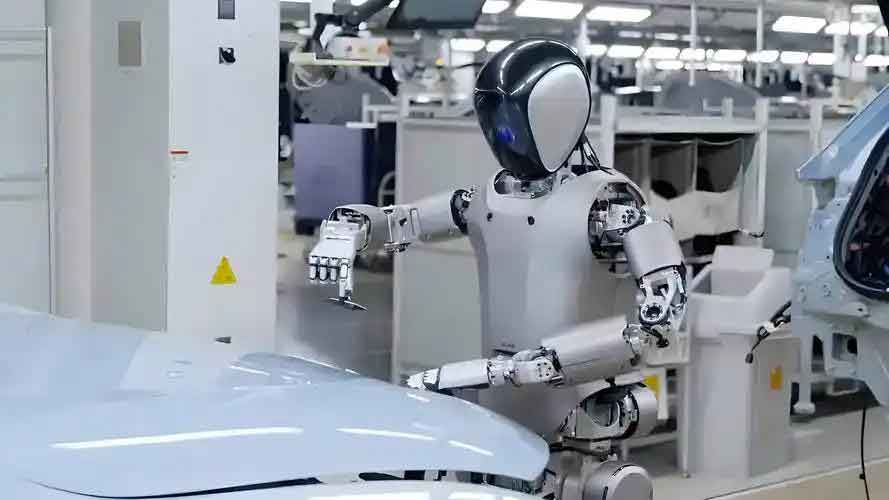
- The first-batch humanoid robot standards identify core technical areas
The first batch of six national standards for humanoid robots includes standards that address general provisions, environmental perception and simulation testing platforms. The release also identifies two core technical standards in which UBTECH participated as one of the top five drafting units: Technical Requirements for Humanoid Robots, Part 4: Motion Control, and Technical Requirements for Humanoid Robots, Part 3: Decision Planning. These standards are designed to connect with operation tasks and to form a key technical chain that links how a humanoid robot understands a task with how a humanoid robot implements an action. The public announcement named several standards individually while confirming that the first batch consists of six standards in total.
The humanoid robot standards package reflects a system-level view of technical development. General provisions provide a common reference for the overall technical requirements of humanoid robots. Environmental perception addresses how a humanoid robot obtains and interprets information from its surroundings. Simulation test platforms support validation in virtual environments. Decision planning concerns information processing, task planning and decision-making. Motion control concerns low-level control, whole-body coordination and operational reliability. Together, these areas form a framework in which humanoid robot technologies can be developed, tested and evaluated with greater consistency.
| Standard | Primary focus | Status in the release announcement |
|---|---|---|
| Technical Requirements for Humanoid Robots, Part 1: General Provisions | Overall technical requirements and general framework for humanoid robots | Named individually in the release |
| Technical Requirements for Humanoid Robots, Part 2: Environmental Perception | Environmental perception for humanoid robots | Named individually in the release |
| Technical Specification for Humanoid Robot Simulation Test Platforms | Simulation testing platforms for humanoid robot development and validation | Named individually in the release |
| Technical Requirements for Humanoid Robots, Part 3: Decision Planning | Information processing, task planning and decision-making for humanoid robots | Named individually in the release |
| Technical Requirements for Humanoid Robots, Part 4: Motion Control | Low-level control, whole-body coordination and operational reliability for humanoid robots | Named individually in the release |
| Additional standard in the first batch of six | Part of the same first-batch humanoid robot standards package | The announcement confirmed six standards in total and named five individually |
The table above summarizes the humanoid robot standards identified by name in the release and preserves the fact that the first batch consists of six standards in total. The standards are not isolated documents. They are intended to work together as a coordinated reference system for humanoid robot technology. The humanoid robot standards system therefore supports a more integrated approach to technical development, in which general requirements, perception, planning, control and simulation are considered as connected parts of the same humanoid robot engineering problem.
- General provisions and environmental perception establish common ground for humanoid robot development
The general provisions standard is important because humanoid robot development involves many subsystems and many participants. A general standard can provide a shared starting point for terminology, technical requirements and system-level expectations. For humanoid robot developers, this common ground can reduce ambiguity when different teams work on perception, planning, control, testing or integration. For users and integrators, general provisions can make it easier to understand what a humanoid robot system is expected to cover and how different humanoid robot products can be compared. The value of such a standard is not that it replaces innovation. Rather, it creates a stable reference against which innovation in humanoid robot technology can be organized and evaluated.
Environmental perception is another foundational area for humanoid robots. A humanoid robot must understand its surroundings in order to plan tasks and execute actions. The environmental perception standard is therefore closely connected to the broader humanoid robot standards chain. It supports the development of perception capabilities that can feed into decision planning and motion control. In practical humanoid robot systems, perception is not a standalone function. It informs how a humanoid robot identifies objects, understands spatial relationships and prepares for action. A shared technical reference for environmental perception can help humanoid robot developers align perception outputs with planning and control requirements, reducing integration risk and improving the consistency of humanoid robot capability evaluation.
The inclusion of environmental perception in the first batch of humanoid robot standards also signals that humanoid robot development is being treated as a system-level engineering field. A humanoid robot cannot be evaluated only by its mechanical structure or its control algorithms. Its ability to perceive, interpret and act in an environment is central to its usefulness. By addressing environmental perception within the national standards framework, the humanoid robot standards system recognizes the importance of connecting perception with the rest of the humanoid robot technical chain. This connection is essential for humanoid robot applications that require complex tasks, coordinated movement and reliable operation.
- Motion control standard targets stability, whole-body coordination and reliability
The motion control standard for humanoid robots focuses on low-level control, whole-body coordination and operational reliability. These areas are central to the physical performance of a humanoid robot. Low-level control affects how a humanoid robot executes commands at the actuator and joint level. Whole-body coordination affects how different parts of a humanoid robot work together to achieve stable and purposeful movement. Operational reliability affects whether a humanoid robot can perform consistently over time and across different conditions. By addressing these dimensions, the motion control standard supports the development of humanoid robot actions that are more stable and more dependable.
For humanoid robot developers, motion control is a challenging field because a humanoid robot must coordinate many degrees of freedom while maintaining balance and adapting to task requirements. The motion control standard can help organize technical expectations around low-level control and whole-body coordination. It can also support more consistent testing of humanoid robot motion capabilities. When different humanoid robot systems are evaluated against a shared reference, it becomes easier to compare motion stability, coordination performance and reliability. This comparability is valuable for research teams, product developers, integrators and users who need to understand the capabilities of a humanoid robot system.
The motion control standard is also closely linked to decision planning and operation execution. A humanoid robot may have a good plan, but the plan must be translated into stable actions. Motion control is the layer at which task intentions become physical movement. The standard therefore helps connect the higher-level question of what a humanoid robot should do with the lower-level question of how a humanoid robot should move. This connection is one of the key technical chains identified in the release. It supports a more integrated approach to humanoid robot development, in which planning and control are designed and evaluated together rather than as separate technical islands.
- Decision planning standard addresses information processing, task planning and decision-making
The decision planning standard for humanoid robots focuses on information processing, task planning and decision-making. These functions allow a humanoid robot to understand and organize complex tasks. Information processing supports the interpretation of available data. Task planning supports the organization of actions toward a goal. Decision-making supports choices among possible actions or strategies. For humanoid robots, these capabilities are essential because humanoid robot tasks are often multi-step and context-dependent. A humanoid robot must be able to take information from perception, interpret it in relation to a task and decide how to proceed.
The decision planning standard is designed to help humanoid robots better understand and organize complex tasks. This is important for humanoid robot applications in which a task cannot be reduced to a single motion or a fixed sequence. Humanoid robot systems need to coordinate perception, planning and action over time. A shared technical reference for decision planning can help developers align information processing and task planning with motion control and operation execution. It can also support more consistent evaluation of how well a humanoid robot organizes complex tasks and makes decisions in changing conditions.
In the broader humanoid robot standards chain, decision planning occupies a central position. It receives information from environmental perception and provides guidance for motion control and operation execution. It is therefore a bridge between understanding and action. The release emphasizes that the decision planning standard and the motion control standard connect with operation tasks, forming a key technical chain from how a task should be done to how an action should be implemented. This chain-oriented description is significant because it shows that the humanoid robot standards are intended to support integrated technical development rather than isolated component-level references.
- Simulation and validation support the humanoid robot standards chain
The simulation test platform standard is an important part of the first batch of humanoid robot standards. Simulation testing allows humanoid robot developers to evaluate technical designs, control strategies and planning approaches in virtual environments before or alongside physical testing. For humanoid robots, simulation is particularly valuable because physical testing can be complex and resource-intensive. A shared technical specification for simulation test platforms can help improve consistency in how humanoid robot simulations are constructed and used. It can also support more comparable validation results across different humanoid robot development projects.
The inclusion of simulation testing in the humanoid robot standards system reflects the importance of validation in the development process. A humanoid robot standard is most useful when it can be connected to testable requirements and repeatable evaluation methods. Simulation test platforms provide one route for such evaluation. They can support the testing of perception, planning and control functions in controlled virtual conditions. They can also help developers identify issues before physical deployment. By addressing simulation test platforms, the humanoid robot standards package supports a more complete development cycle that includes requirements, design, simulation, testing and deployment.
Simulation verification is also part of the broader humanoid robot technical chain described in the release. The chain runs from overall requirements and environmental perception to decision planning, motion control, operation execution and simulation verification. This sequence shows that humanoid robot standards are intended to support coordination across the full development and validation process. A humanoid robot system should not be evaluated only at the level of individual algorithms or components. It should be evaluated as an integrated system that perceives, plans, acts and verifies performance. The simulation test platform standard contributes to this integrated view by providing a technical reference for validation environments.
| Stage in the humanoid robot chain | Role in humanoid robot development |
|---|---|
| Overall requirements | Provides a general reference for humanoid robot technical expectations and system-level coordination |
| Environmental perception | Supports how a humanoid robot obtains and interprets information from its surroundings |
| Decision planning | Addresses information processing, task planning and decision-making for complex humanoid robot tasks |
| Motion control | Focuses on low-level control, whole-body coordination and operational reliability for humanoid robot actions |
| Operation execution | Connects planned tasks and controlled actions to the execution of humanoid robot operations |
| Simulation verification | Provides a validation pathway for humanoid robot technical requirements and system performance |
The humanoid robot technical chain shown above reflects the coordinated structure emphasized in the release. Each stage of the chain depends on the others. Environmental perception provides information for decision planning. Decision planning provides direction for motion control. Motion control enables operation execution. Simulation verification supports testing and improvement across the chain. For the humanoid robot industry, this chain-oriented standards framework can help reduce fragmentation and improve communication among developers, integrators, testing organizations and users. It can also support a more systematic approach to humanoid robot product development.
- Industry value extends beyond individual technology references
The value of the humanoid robot standards release is not limited to setting references for single technologies. Its broader value lies in promoting coordination across the overall humanoid robot technical chain. The release explicitly links general requirements, environmental perception, decision planning, motion control, operation execution and simulation verification. This coordination is important because humanoid robot systems are complex and multidisciplinary. A humanoid robot development project may involve teams working on perception, planning, control, mechanical design, testing and integration. Without a shared technical framework, these teams may use different assumptions and different evaluation criteria. The humanoid robot standards help reduce such gaps.
Unified technical specifications can help reduce misunderstandings in research and development, testing, model selection and delivery. In humanoid robot research and development, shared references can help teams align technical expectations across subsystems. In humanoid robot testing, shared references can support more consistent test design and interpretation. In humanoid robot model selection, shared references can help users compare different systems on a more common basis. In humanoid robot delivery, shared references can reduce ambiguity about technical requirements and acceptance criteria. These benefits are practical and can support the humanoid robot industry as it moves toward more mature products and applications.
The humanoid robot standards can also improve the comparability of product capability evaluations. When humanoid robot systems are evaluated against shared technical references, the results are easier to interpret across different products and projects. This does not mean that all humanoid robots must be the same. It means that evaluation can be based on common dimensions and common expectations. For the humanoid robot market, comparable evaluation can support more informed decisions by users and integrators. For humanoid robot developers, it can provide clearer feedback on technical performance and areas for improvement. For the broader humanoid robot ecosystem, it can support trust and clarity in technical communication.
- UBTECH’s standards participation reflects sustained humanoid robot standardization work
UBTECH led the drafting of some of the first-batch humanoid robot national standards and participated in the compilation of others. In two core technical standards, UBTECH participated as one of the top five drafting units: Technical Requirements for Humanoid Robots, Part 4: Motion Control, and Technical Requirements for Humanoid Robots, Part 3: Decision Planning. This participation reflects the company’s sustained involvement in humanoid robot standardization. The release also states that UBTECH has cumulatively participated in the drafting and release of 73 related standards, including 4 international standards and 42 national and industry standards. These figures provide a clear measure of the company’s standards engagement without adding unsupported claims about specific humanoid robot products or deployments.
The participation of a Shenzhen-based company in humanoid robot standards development is significant for the wider humanoid robot industry. Standards work requires technical knowledge, coordination with multiple stakeholders and a long-term commitment to documenting and aligning technical requirements. For humanoid robot development, such work can help translate practical engineering experience into shared references. It can also support the growth of a humanoid robot ecosystem in which developers, suppliers, testing organizations and users can communicate more effectively. The release does not claim that standards alone will solve all technical challenges. It does show that humanoid robot standardization is moving forward with participation from industry actors.
| Item | Details |
|---|---|
| First-batch humanoid robot national standards | 6 standards |
| Implementation date | April 1, 2027 |
| Central administration | National Technical Committee for Robot Standardization, TC591 |
| Execution body | Humanoid Robot Subcommittee, TC591SC5 |
| UBTECH cumulative participation in related standards | 73 standards |
| International standards among the cumulative total | 4 standards |
| National and industry standards among the cumulative total | 42 standards |
| Named core technical standards with UBTECH as a top-five drafting unit | Technical Requirements for Humanoid Robots, Part 4: Motion Control; Technical Requirements for Humanoid Robots, Part 3: Decision Planning |
The facts summarized above are important because they show that the humanoid robot standards release is tied to a clear implementation timeline and a defined governance structure. The standards are not merely informational documents. They are national standards scheduled for implementation and administered through established technical committee arrangements. For humanoid robot developers and users, this timeline provides a basis for planning compliance, testing and product development activities. For the humanoid robot industry, the governance structure provides a channel for continued standardization work and technical coordination.
- Implementation and governance provide a clear timeline for humanoid robot standards
The first batch of six humanoid robot national standards will be implemented on April 1, 2027. The standards are administered by the National Technical Committee for Robot Standardization under TC591 and executed by the Humanoid Robot Subcommittee under TC591SC5. This governance arrangement places humanoid robot standardization within a specialized technical committee structure. Such a structure can support continuity in standards development and can provide a forum for coordinating technical requirements across the humanoid robot field. The implementation date also gives humanoid robot stakeholders a defined period for alignment, testing and preparation.
For humanoid robot developers, the implementation timeline is a signal to align technical documentation, testing processes and product evaluation practices with the new standards. For humanoid robot users and integrators, the timeline supports planning for technical requirements and procurement evaluation. For humanoid robot testing organizations, the timeline provides a basis for developing test methods and validation procedures that reflect the standards. The release does not provide a detailed compliance schedule beyond the implementation date, and no additional timeline should be assumed. The confirmed date is April 1, 2027, and the confirmed governance bodies are TC591 and TC591SC5.
The humanoid robot standards system is expected to support coordination among different technical areas. The standards are structured around general requirements, environmental perception, decision planning, motion control, operation execution and simulation verification. This structure can help humanoid robot stakeholders see how different technical requirements relate to one another. It can also support the development of consistent testing and evaluation approaches across the humanoid robot technical chain. The governance bodies can use this structure to guide future standards work and to maintain coherence as humanoid robot technology continues to develop.
- Comparable evaluation and shared technical language support humanoid robot applications
Comparable evaluation is a practical need in the humanoid robot field. Humanoid robot systems vary in design, capabilities and intended applications. Without shared technical references, it can be difficult to compare performance or to interpret test results across different systems. The humanoid robot standards release addresses this need by promoting common technical specifications across the humanoid robot chain. Shared references can help make humanoid robot capability evaluations more comparable. They can also help users understand the technical basis of different humanoid robot products and solutions.
Shared technical language is equally important. Humanoid robot development involves experts from many disciplines, including perception, planning, control, mechanics, testing and integration. These experts may use different terms or assumptions. A standards framework can help establish common references that reduce miscommunication. For humanoid robot projects, this can improve coordination between teams and reduce integration risk. For humanoid robot procurement and delivery, shared technical language can reduce ambiguity in requirements and acceptance discussions. The release’s emphasis on reducing understanding gaps in research, testing, selection and delivery reflects these practical benefits.
The humanoid robot standards also support a more structured approach to product capability evaluation. When humanoid robot capabilities are described in relation to common technical dimensions, users can better understand what a humanoid robot system is expected to do and how it is expected to perform. This does not replace application-specific testing. It provides a common foundation on which such testing can be organized. For the humanoid robot industry, this foundation can support more transparent technical communication and more consistent evaluation practices.
- Humanoid robot standards prepare the shift from technical verification to scaled application
The release emphasizes that unified technical specifications can provide基础支撑 for humanoid robots to move from technical verification toward larger-scale application. This is a key point for the humanoid robot industry. Technical verification is essential, but scaling humanoid robot applications requires more than isolated demonstrations. It requires common technical references, repeatable testing and comparable evaluation. The humanoid robot standards system supports these requirements by connecting general requirements, perception, planning, control, operation and simulation. This connection can help humanoid robot developers build products that are easier to test, integrate and evaluate.
For humanoid robot applications, the ability to evaluate and compare systems is important for users who need to make technical decisions. A user considering a humanoid robot solution needs to understand technical capabilities, reliability and integration requirements. Shared standards can make these discussions more structured. They can also help reduce the cost and risk of technical evaluation. The humanoid robot standards release does not claim that large-scale application will happen immediately. It provides a technical foundation that can support the transition toward broader humanoid robot deployment over time.
Simulation verification and operation execution are especially relevant to this transition. Humanoid robot systems must be tested in ways that reflect real tasks and real operating conditions. Simulation test platforms can support early validation, while operation execution connects planning and control to actual tasks. By including these areas in the humanoid robot standards chain, the release supports a development path that links technical requirements to practical validation and application. This path can help humanoid robot developers identify issues earlier and improve system reliability before deployment.
- System-level coordination strengthens the humanoid robot ecosystem
The humanoid robot ecosystem includes developers, component suppliers, testing organizations, integrators, users and standards bodies. Coordination across this ecosystem is essential for the growth of humanoid robot technology. The first batch of humanoid robot national standards provides a common reference that can support coordination among these participants. It can help developers align technical requirements with testing practices. It can help suppliers understand system-level expectations. It can help users evaluate humanoid robot capabilities more consistently. It can help testing organizations design validation approaches that reflect shared technical references.
The release’s focus on system-level coordination is particularly relevant to humanoid robots because humanoid robot performance emerges from the interaction of many subsystems. Perception, planning, control and actuation must work together. A humanoid robot that performs well in one area but poorly in another may not be useful for complex tasks. The humanoid robot standards chain addresses this by linking technical areas across the system. This linkage can support more integrated humanoid robot development and more meaningful evaluation of humanoid robot capabilities.
The standards also provide a basis for future humanoid robot standardization work. As humanoid robot technology develops, new technical requirements and new application areas may emerge. A coordinated standards framework can help organize future work and maintain consistency with existing standards. The governance structure under TC591 and TC591SC5 provides a mechanism for continued development. The first batch of six humanoid robot standards is therefore not an endpoint. It is a foundation for further technical coordination in the humanoid robot field.
- Outlook for humanoid robot standardization and industry development
The release of the first batch of six humanoid robot national standards is a notable development for the humanoid robot industry. It establishes a coordinated set of technical references covering general requirements, environmental perception, simulation testing, decision planning and motion control. It also confirms a clear implementation date and a defined governance structure. For humanoid robot developers, the standards provide a basis for aligning technical work across subsystems. For humanoid robot users and integrators, they provide a basis for more structured evaluation and communication. For the broader humanoid robot ecosystem, they support the development of shared technical language and comparable evaluation practices.
The humanoid robot standards system is designed to promote coordination across the chain from overall requirements to simulation verification. This system-level approach is important because humanoid robot technology is complex and multidisciplinary. The standards do not replace innovation or application-specific engineering. They provide a common foundation that can help humanoid robot stakeholders work together more effectively. As the implementation date of April 1, 2027 approaches, humanoid robot developers and users can use the standards to guide technical planning, testing and evaluation. The release thus supports the long-term development of the humanoid robot industry and the transition of humanoid robot technology toward broader application.
The first batch of humanoid robot national standards also highlights the growing role of standardization in humanoid robot development. Standards can help reduce fragmentation, improve technical communication and support comparable evaluation. They can help humanoid robot developers focus on innovation while working within a shared technical framework. They can help users understand humanoid robot capabilities and make more informed decisions. They can help the humanoid robot industry build a more coordinated ecosystem. The release marks an important step in this direction and provides a foundation for continued humanoid robot standards development.