
On September 2, shares of Unitree Robotics (688836.SH) opened lower, with an intraday decline that at one point exceeded 4%. The stock closed at RMB 546.02 per share. Compared with the first-day opening high of RMB 1,100 per share, the company’s stock had halved by its 11th trading day, and more than RMB 200 billion in market capitalization had been erased. The sharp reset has reinforced a broader question facing the humanoid robot industry: can rapid sales growth alone support the valuations that investors have assigned to humanoid robot companies?
The answer is becoming more complicated. Recent first-half 2026 results show that humanoid robot makers and robotics companies with embodied intelligence businesses are beginning to report meaningful revenue and shipment growth. Unitree Robotics and UBTECH have both reached revenue scales above RMB 1 billion. Several industrial robotics companies have also reported strong growth in embodied intelligence-related businesses. Yet the same disclosures show that profitability remains difficult to achieve, and that research spending tied to the humanoid robot brain is rising quickly. The market is therefore being forced to reassess the relationship between humanoid robot volume, revenue growth, and sustainable earnings.
1. A Sharp Share-Price Reset Exposes the Fragility of Humanoid Robot Valuations
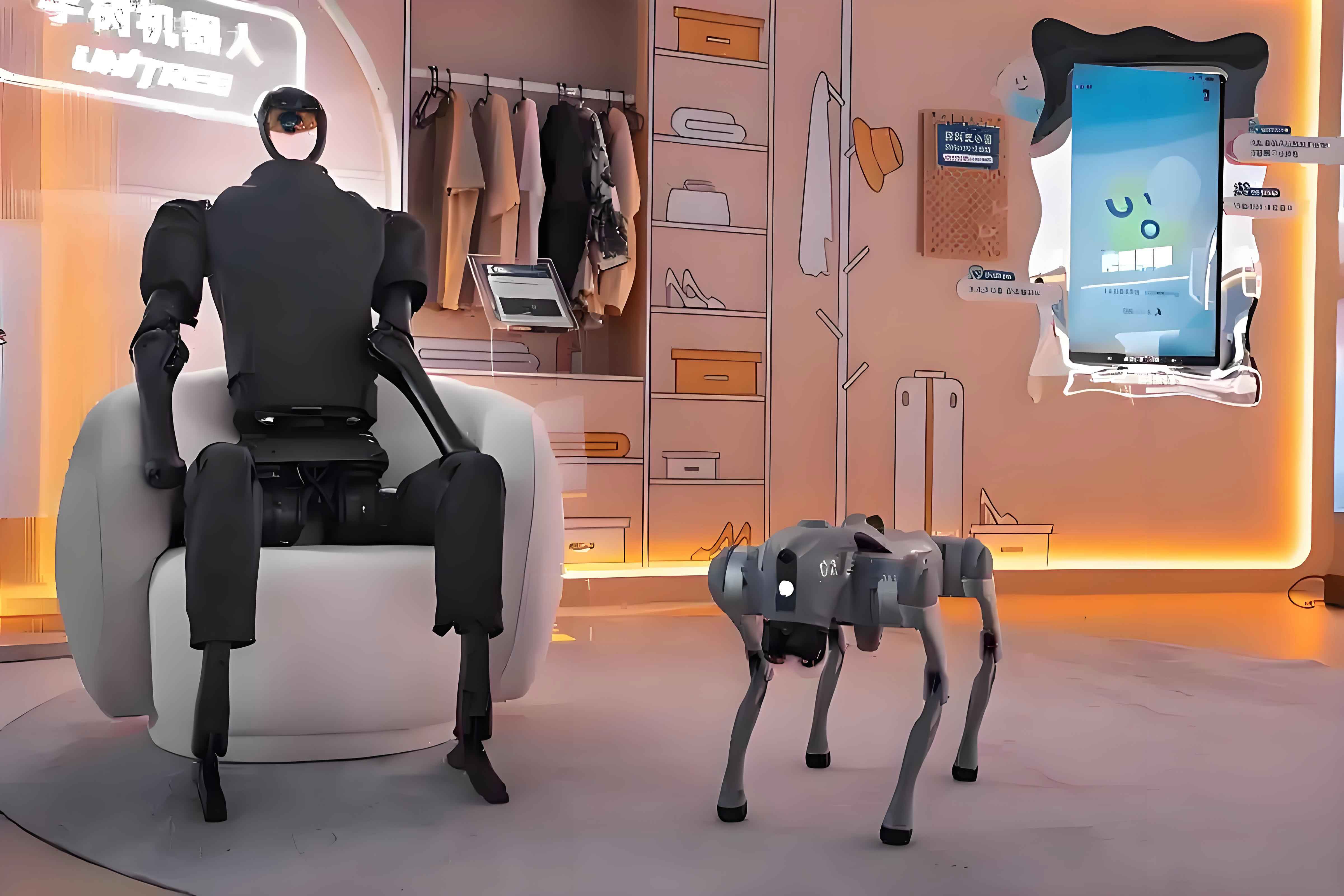
The movement in Unitree Robotics shares is a clear example of how quickly humanoid robot valuations can be repriced. The stock opened lower on September 2 and fell by more than 4% during the session before closing at RMB 546.02 per share. Against the first-day opening high of RMB 1,100 per share, the decline represented a halving of the share price by the 11th trading day. The associated loss in market capitalization exceeded RMB 200 billion. For a company closely associated with the humanoid robot theme, the scale of the move illustrates that investors are not treating sales volume as a sufficient valuation anchor.
The reset also reflects a wider mood shift in the humanoid robot sector. Over the past six months, share prices of some robotics companies have retraced to varying degrees in the secondary market, including UBTECH and Dobot. The pattern suggests that the market is separating short-term concept enthusiasm from longer-term financial proof. Humanoid robot companies can report higher revenue and stronger shipment numbers, but investors are increasingly asking whether those gains can translate into durable profits, positive cash generation, and a defensible competitive position.
Shen Meng, executive director of Xiangsong Capital, said investors in the robotics sector are mainly trading concepts. A major factor supporting valuations is policy-driven optimism, while the contribution of robots to productivity and efficiency remains limited. Under these conditions, changes in financial performance have a limited impact on the secondary market. The comment captures the tension in the humanoid robot sector: policy support and technological ambition can sustain attention, but they do not remove the need for commercial discipline.
For humanoid robot companies, the share-price reset is not simply a market event. It is a signal that the valuation framework is shifting. During an early phase, investors may focus on prototype demonstrations, production milestones, and addressable market narratives. As the sector matures, the focus moves toward unit economics, gross margins, research efficiency, order quality, and the ability to retain customers after initial deployments. The humanoid robot industry is now entering a phase in which sales breakthroughs must be examined alongside profitability and investment intensity.
2. Humanoid Robot Sales Move From Prototypes to Volume
The most direct signal from the latest disclosures is that humanoid robot sales volumes have moved higher. Unitree Robotics reported revenue of RMB 1.152 billion for January to June 2026, up 48.54% year on year. As of May, the company had produced and rolled off the line about 11,000 units of a single bipedal humanoid robot model. As of July, cumulative production output across multiple bipedal humanoid robot models had reached about 18,000 units. The numbers indicate that humanoid robot production is no longer limited to small-batch demonstration activity.
UBTECH reported total revenue of RMB 1.27 billion for the first half of 2026, up 104.2% year on year. Revenue from full-size embodied intelligent humanoid robots reached RMB 590 million, up 1,445.0% year on year. The company sold 921 such humanoid robot units in the period, up 1,946.7% year on year. The combination of higher revenue and sharply higher unit sales shows that demand for full-size humanoid robot products has expanded, even if the absolute volume remains modest relative to many mature industrial equipment categories.
Industrial robotics companies with embodied intelligence businesses are also contributing to the volume story. Dobot reported revenue of approximately RMB 316 million for January to June 2026, up 106.6% year on year. Its embodied intelligence business revenue exceeded RMB 45 million, more than 20 times the level in the prior-year period. Luoshi Robotics reported revenue of RMB 415 million in the first half, up 135.8% year on year. The company said robot product sales rose from more than 4,000 units in the prior-year period to more than 13,000 units in the first half of 2026.
These figures point to a broader transition in the humanoid robot and embodied intelligence supply chain. Sales are moving from sample orders and demonstration projects toward larger-volume procurement. That transition is important because volume can help companies amortize development costs, improve manufacturing efficiency, and negotiate better terms with suppliers. However, volume alone does not guarantee profitability. If humanoid robot products are sold at aggressive prices to seed the market, or if customization and service costs remain high, revenue growth can still coexist with losses.
| Company | Revenue | Revenue growth | Humanoid robot / embodied intelligence indicator | Profit / loss | R&D |
|---|---|---|---|---|---|
| Unitree Robotics (688836.SH) | RMB 1.152 billion | 48.54% YoY | As of May, cumulative production output of about 11,000 units of a single bipedal humanoid robot model; as of July, about 18,000 units across multiple bipedal humanoid robot models | Net profit attributable to parent: RMB 274 million; net profit attributable to parent excluding non-recurring items: RMB 244 million, down 19.34% YoY | R&D expense increased by RMB 82.0374 million YoY |
| UBTECH (09880.HK) | RMB 1.27 billion | 104.2% YoY | Full-size embodied intelligent humanoid robot revenue: RMB 590 million, up 1,445.0% YoY; sales: 921 units, up 1,946.7% YoY | Loss: RMB 339 million | R&D: RMB 303 million, up 38.9% YoY |
| Dobot (02432.HK) | Approximately RMB 316 million | 106.6% YoY | Embodied intelligence business revenue: more than RMB 45 million, more than 20 times YoY | Loss: RMB 108 million | R&D: RMB 102 million, up 148.4% YoY |
| Luoshi Robotics (03752.HK) | RMB 415 million | 135.8% YoY | Robot product sales: more than 13,000 units, compared with more than 4,000 units in the prior-year period | Loss: RMB 79 million; loss narrowed | Not available in the disclosed figures |
3. Revenue Growth Cannot Mask the Profitability Gap
Although revenue is rising across the humanoid robot and embodied intelligence landscape, profitability remains under pressure. UBTECH, Dobot, and Luoshi Robotics reported losses of RMB 339 million, RMB 108 million, and RMB 79 million, respectively, in the first half of 2026. UBTECH and Luoshi Robotics both narrowed their losses, which suggests some improvement in operating discipline or business mix. Even so, the fact that major humanoid robot and robotics companies continue to report losses shows that the sector has not yet reached a stable profit model.
Unitree Robotics is one of the few humanoid robot companies in the disclosed group that is profitable. In the first half of 2026, the company reported net profit attributable to parent of RMB 274 million. Net profit attributable to parent excluding non-recurring items was RMB 244 million, down 19.34% year on year. The decline in non-recurring profit is significant because it indicates that core profitability is not immune to pressure. A humanoid robot company can be profitable at the net level while still facing rising research costs, product development expenses, and organizational expansion.
Unitree Robotics’ profitability is supported by a relatively lean organizational structure. Compared with UBTECH, Dobot, and other peers, Unitree had a smaller workforce. At the end of 2025, the company had 516 employees. Its 2025 revenue was RMB 1.699 billion, implying revenue per employee of RMB 3.2932 million. That “small but focused” structure has helped the company maintain profitability even as research investment and labor costs rise. The model shows that capital efficiency and organizational discipline can matter as much as headline humanoid robot sales volume.
At the same time, the contrast between Unitree and its loss-making peers highlights the central challenge for the humanoid robot industry. Sales growth can improve scale, but it does not automatically solve the cost burden associated with humanoid robot development. Companies must fund research into mechanical structures, motion control, embodied intelligence models, sensors, manufacturing processes, and after-sales support. They must also build distribution and service networks. These investments are necessary for long-term competitiveness, but they weigh on near-term earnings.
The profitability gap also affects how investors evaluate humanoid robot business models. A company with strong revenue growth but persistent losses may be valued on future expectations rather than current earnings. That kind of valuation is sensitive to changes in sentiment, financing conditions, and policy signals. By contrast, a profitable humanoid robot company can be judged on more conventional financial metrics, although it still faces the risk that rising research spending will erode margins. The sector therefore faces a difficult balance: it must invest aggressively enough to remain competitive, but not so aggressively that financial discipline disappears.
4. Research Spending Shifts Toward the Humanoid Robot Brain
Research spending is rising across the humanoid robot sector, and a growing share of that investment is directed toward the humanoid robot brain. Unitree Robotics said its research expenses increased significantly in the first half of 2026. The company continued to increase investment in robot body and structure research, embodied intelligence large models, motion control algorithms, and new product development. It also expanded its research team. These efforts contributed to a year-on-year increase in research expenses of RMB 82.0374 million.
UBTECH’s research investment reached RMB 303 million, up 38.9% year on year. The increase was mainly due to greater investment in research on full-size embodied intelligent humanoid robot products. Dobot’s research investment was RMB 102 million, up 148.4% year on year. The company attributed the increase to rapid development in key technologies and embodied intelligent robots, including the recruitment of research talent and higher spending on research materials. The numbers show that humanoid robot companies are not only scaling production; they are also scaling the technical ambition behind their products.
Betting on the humanoid robot brain has become a consensus among leading companies. The research focus is increasingly centered on embodied large models. These models are intended to improve perception, decision-making, task planning, and interaction so that humanoid robots can operate more effectively in unstructured environments. For humanoid robot companies, the brain is becoming a key differentiator. Hardware performance, cost, and reliability remain important, but the ability to understand instructions, adapt to changing conditions, and complete complex tasks depends heavily on software and artificial intelligence capabilities.
At the current stage, however, the humanoid robot brain is not yet smart enough. This remains a major reason limiting large-scale deployment. A humanoid robot that can perform a demonstration may still struggle with reliability, safety, and consistency in real production or service environments. The gap between demonstration and deployment is one of the most important obstacles facing the humanoid robot industry. Research spending on the humanoid robot brain is therefore both necessary and risky: it is necessary for long-term commercialization, but it can delay profitability and increase cash burn.
The research race also affects competitive dynamics. Companies that can build stronger embodied intelligence models may be able to differentiate their humanoid robot products and command better pricing. Companies that lag in software may find themselves competing primarily on hardware cost, which can be a difficult position in a capital-intensive industry. The humanoid robot brain is therefore not just a technical issue. It is a strategic issue that shapes product value, customer adoption, and long-term profitability.
5. Shipment Mix Shows Where Humanoid Robot Demand Is Still Concentrated
According to a report from Counterpoint Research, the application mix of global humanoid robot shipments in the first half of 2026 shows both continuity and gradual change. Entertainment performances, science education, and data collection together accounted for more than 60% of global humanoid robot shipments. Their combined share declined compared with before, but it remained above 60%. This indicates that humanoid robot demand is still concentrated in applications that value interaction, display, education, and data collection rather than full-scale industrial productivity.
At the same time, the share of intelligent manufacturing in global humanoid robot shipments increased to 13%. The share of warehousing and logistics increased to 5%. These are still relatively small shares, but the direction of change is important. It suggests that humanoid robot deployments are beginning to expand from entertainment and education into industrial and logistics environments. These environments often require higher reliability, safety, and return on investment, so even modest shipment shares can signal progress in product maturity.
| Application segment | Share of global humanoid robot shipments | Direction disclosed |
|---|---|---|
| Entertainment performances, science education and data collection, combined | More than 60% | Share declined but remained above 60% |
| Intelligent manufacturing | 13% | Share increased |
| Warehousing and logistics | 5% | Share increased |
The shipment mix has important implications for humanoid robot profitability. Entertainment, education, and data collection can generate early revenue and provide real-world data for humanoid robot development. However, these applications may not require the same level of durability, precision, and continuous operation as manufacturing or logistics. As humanoid robot companies move into industrial and logistics use cases, they may face higher technical barriers and longer sales cycles. The potential reward is greater productivity value, but the path to profitability may be more demanding.
The mix also helps explain why humanoid robot sales growth has not immediately translated into stronger share prices. Investors may recognize that shipment growth in early-stage applications is valuable, but they also want to see humanoid robot deployments in higher-value industrial scenarios. The increase in intelligent manufacturing and warehousing logistics shares is a positive sign, but those segments remain much smaller than entertainment and education combined. The humanoid robot industry still has to prove that it can scale in applications where customers demand measurable productivity gains.
6. The Next Test Is Turning Humanoid Robot Volume Into Durable Earnings
The humanoid robot sector is now at a difficult transition point. Sales breakthroughs are real. Unitree Robotics has reported large cumulative production output for bipedal humanoid robot models. UBTECH has reported rapid growth in full-size embodied intelligent humanoid robot revenue and unit sales. Dobot and Luoshi Robotics have reported strong growth in embodied intelligence and robot product sales. These developments show that the humanoid robot market is no longer purely experimental. Customers are placing orders, products are being delivered, and revenue is being recognized.
Yet profitability remains the harder test. Several leading humanoid robot and robotics companies continue to report losses. Even Unitree Robotics, which is profitable, saw its non-recurring net profit decline. Research spending is rising as companies invest in the humanoid robot brain. The pressure is structural: humanoid robot companies must fund long-term technology development while competing on price, reliability, and delivery. The market is therefore likely to focus increasingly on whether humanoid robot sales can be converted into gross profit, operating leverage, and eventually net profit.
The valuation debate will not be resolved by shipment numbers alone. Investors will examine the quality of humanoid robot orders, the concentration of customers, the repeatability of deployments, and the cost of service. They will also watch whether humanoid robot companies can reduce dependence on customized projects and move toward standardized products. Standardization can improve margins and shorten delivery cycles, but it requires product maturity and a clear understanding of customer needs. The humanoid robot companies that can achieve this balance may be better positioned for the next stage of growth.
Policy support and technological optimism are likely to remain important forces in the humanoid robot sector. They can attract capital, talent, and customer attention. However, they cannot substitute for commercial validation. The share-price reset at Unitree Robotics shows that markets can become more selective when valuations run ahead of earnings. The humanoid robot industry may still have a large long-term opportunity, but the path will depend on execution. Sales breakthroughs have opened the door; profitability will determine who can stay in the room.
For now, the humanoid robot sector is moving from a phase of narrative expansion into a phase of financial scrutiny. The companies that can increase humanoid robot sales while controlling costs, advancing the humanoid robot brain, and proving repeatable use cases will be in a stronger position. The companies that rely mainly on concept momentum may face continued valuation pressure. The central question is no longer whether humanoid robot sales can grow. The central question is whether humanoid robot companies can turn that growth into durable earnings.