
WENLING, Sept. 28 — On the morning of September 28, inside the Aishida flagship store in Wenling, a humanoid robot named Aibao moved steadily between shelves, clearly explained product parameters in response to customer questions, turned sideways to avoid passing shoppers and then raised an arm to guide customers toward the relevant display area. The scene was not a rehearsed stage demonstration but a live broadcast showing the humanoid robot officially taking up a retail post.
On the same day, Aishida, together with Zhiyuan, launched a retail deployment described as “hundred stores opening, three stores live broadcast,” and simultaneously started the “Old Cookware Health Trade-in Public Welfare Campaign” community program. One hundred humanoid robots will enter one hundred stores across the country in batches, while Wenling, Shanghai and Wuxi opened simultaneous live broadcasts of the deployment. The program marks the entry of a humanoid robot manufactured in Taizhou into large-scale commercial retail scenarios.
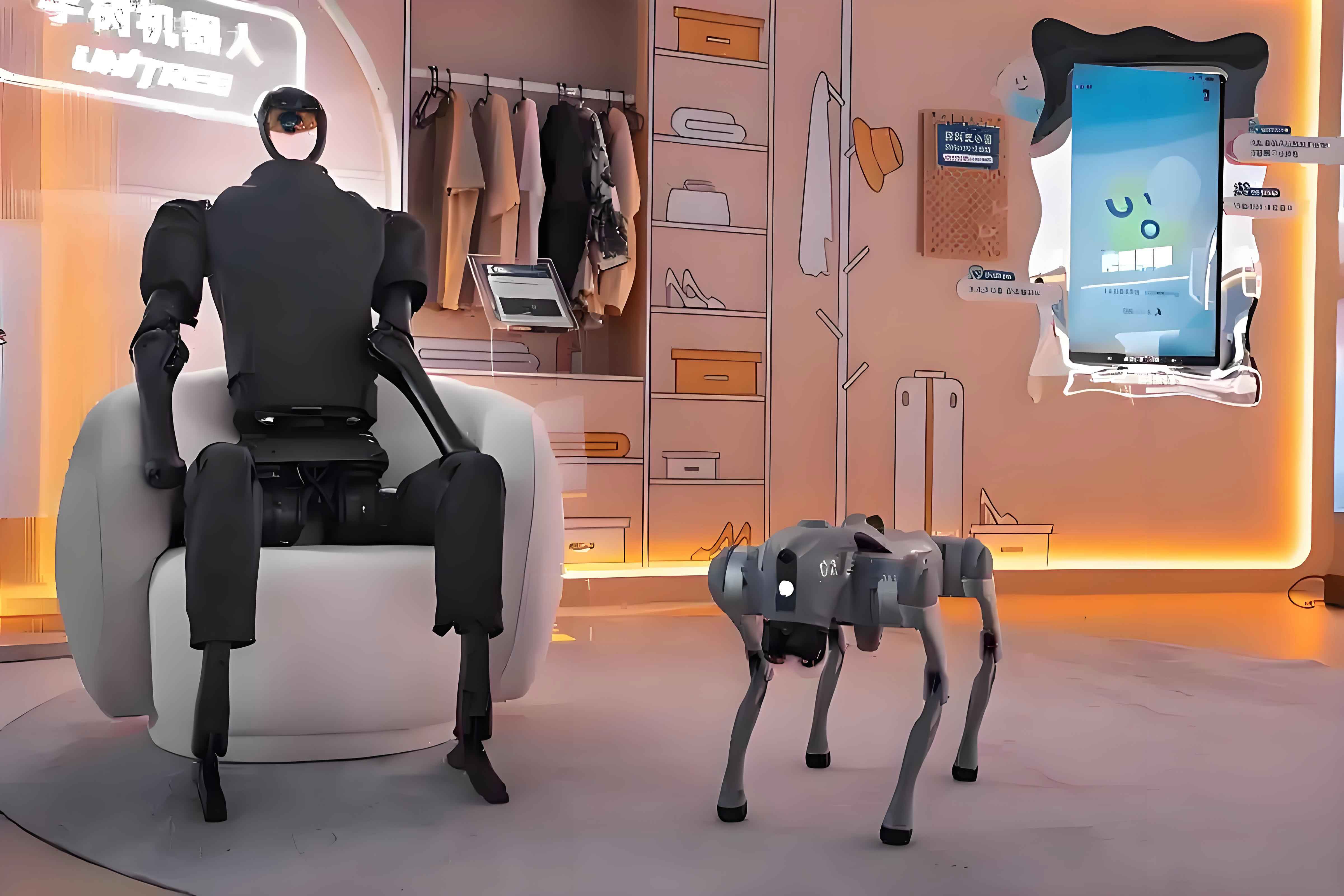
The humanoid robot deployed in this program is assigned a complete set of store guide responsibilities. Its service chain covers greeting and reception, demand recognition, product explanation, product selection recommendation, route guidance and scan-code conversion. For three consecutive days, the live broadcast will present operating data publicly, including running time, the number of customers received, interaction frequency and scene conversion rate. The arrangement amounts to an open “on-the-job scorecard” for the humanoid robot.
| Deployment element | Details disclosed in the retail launch |
|---|---|
| Program name | Hundred stores opening, three stores live broadcast |
| Robot | Aibao, a humanoid robot |
| Deployment volume | One hundred humanoid robots entering one hundred stores in batches |
| Store network | One hundred stores across the country |
| Live broadcast locations | Wenling, Shanghai and Wuxi |
| Live broadcast duration | Three consecutive days |
| Public operating metrics | Running time, customers received, interaction frequency and scene conversion rate |
| Core service functions | Greeting, demand recognition, product explanation, selection recommendation, route guidance and scan-code conversion |
| Community activity | Old Cookware Health Trade-in Public Welfare Campaign, including kitchen health education |
| Manufacturing and cooperation framework | Aishida is responsible for hardware manufacturing, scenario deployment and data collection in cooperation with Zhiyuan |
| Production plan | A Shanghai base humanoid robot component production line is soon to be established, with some humanoid robot production lines planned to move to Wenling next year and a gradual move toward a ten-thousand-unit production scale |
-
Retail Floor Becomes a Live Test Environment for the Humanoid Robot
The retail environment is fundamentally different from a laboratory or a fixed industrial line. In a store, foot traffic is random, customer needs are diverse and the humanoid robot must respond to unexpected questions while maintaining safe movement through a busy space. According to on-site staff, industrial scenarios usually require a robot to execute fixed process tasks, whereas a store tests the adaptive capacity of the humanoid robot through random customer questions, complex route avoidance and interaction pressure during peak periods.
The humanoid robot in the Wenling store demonstrated that basic service functions can run in a stable manner. Some interaction details still have room for optimization, but the overall foundation for continuous service was visible during the live broadcast. The humanoid robot was able to handle changing conditions in the store and maintain its role as a guide rather than remaining a static display.
That distinction matters for the commercial future of the humanoid robot. A machine that can walk and gesture on a stage may attract attention, but a humanoid robot that can answer questions, avoid obstacles and guide a customer to a product area must combine perception, language interaction, motion control and operational reliability. The retail floor exposes weaknesses quickly because every customer interaction is different. The humanoid robot must recognize when a person is approaching, understand whether the person needs help, deliver product information in clear language and then move toward the next task without disrupting store operations.
The live broadcast adds a layer of public accountability. Running time, customers received, interaction frequency and scene conversion rate are presented as operating indicators rather than as stage metrics. For a humanoid robot entering commercial service, these indicators connect technical performance with store value. The humanoid robot is not merely present in the store; it is expected to receive customers, explain products, recommend selections and support conversion. The live broadcast therefore turns the retail floor into a visible test of whether the humanoid robot can create practical value.
The deployment also shows how a humanoid robot can be integrated into an existing retail workflow. Store staff remain responsible for overall operations, while the humanoid robot takes on repetitive and information-intensive parts of the guide process. The humanoid robot can greet customers at the entrance, identify initial demand, explain product parameters and guide shoppers to the right display area. When a customer is ready to act, the humanoid robot can support scan-code conversion. This division of tasks does not replace the store team; it adds a new interface between the brand and the customer.
-
Full-Chain Guide Service Defines the Retail Role of the Humanoid Robot
The responsibilities assigned to the humanoid robot are organized as a full-chain service rather than a single demonstration function. Greeting and reception establish the first contact. Demand recognition helps the humanoid robot understand whether a customer is browsing, comparing products or seeking a specific item. Product explanation allows the humanoid robot to present parameters and features clearly. Selection recommendation connects customer needs with available products. Route guidance moves the customer from one area to another. Scan-code conversion supports the final step of the shopping journey.
For a humanoid robot, each step places different demands on the system. Greeting requires social presence and attention. Demand recognition requires language understanding and context. Product explanation requires accurate knowledge and clear expression. Selection recommendation requires a structured product map. Route guidance requires spatial awareness and safe movement. Scan-code conversion requires coordination between interaction and transaction support. The humanoid robot must switch between these tasks in a continuous flow, often under noisy and unpredictable conditions.
The retail deployment therefore represents more than a product showcase. It places the humanoid robot inside a real service chain and asks it to perform a role that customers can immediately understand. A shopper does not need to know how the humanoid robot works internally; the shopper only needs to know whether the humanoid robot can help. That user-centered standard is a demanding test for any humanoid robot entering commercial service.
| Service stage | Humanoid robot task | Operational test dimension |
|---|---|---|
| Greeting and reception | Welcome customers and initiate interaction | Social presence, attention and response timing |
| Demand recognition | Identify customer needs from questions and context | Language understanding and contextual interpretation |
| Product explanation | Present product parameters and features | Accuracy, clarity and consistency of information |
| Selection recommendation | Connect needs with suitable products | Structured product knowledge and recommendation logic |
| Route guidance | Lead customers toward relevant display areas | Spatial awareness, safe movement and obstacle avoidance |
| Scan-code conversion | Support the transition toward a transaction | Interaction coordination and retail workflow integration |
-
Three-City Live Broadcast Turns Operating Data Into a Public Record
The three-city live broadcast from Wenling, Shanghai and Wuxi gives the deployment a wider operational frame. Rather than presenting a single store as an isolated example, the program connects multiple locations through simultaneous live coverage. The humanoid robot is shown in different retail settings while the same service logic is applied across the network. The live broadcast also allows operating data to be presented in public view over three consecutive days.
The disclosed metrics are practical. Running time shows whether the humanoid robot can maintain service over an extended period. The number of customers received shows the scale of interaction. Interaction frequency shows how often the humanoid robot engages with shoppers. Scene conversion rate connects the service to a retail outcome. Together, these indicators describe the humanoid robot as a working system rather than a technical prototype.
The public presentation of operating data is significant for the commercialization of the humanoid robot. In many technology demonstrations, attention is focused on motion capability or staged interaction. In a retail deployment, the humanoid robot must operate within store hours, face random traffic and maintain a service standard. The live broadcast makes those conditions part of the record. The humanoid robot is evaluated not only by whether it can perform a movement, but by whether it can keep working and support store service.
The live broadcast also creates a feedback loop. Data from the humanoid robot’s daily operation can be reviewed and used to improve future performance. The retail network becomes a source of real interaction data, and the humanoid robot can be refined through repeated use. Aishida’s leadership describes this as a positive cycle: the more the humanoid robot is used, the more real data returns, and the better the model can become.
-
Community Interaction Extends the Humanoid Robot Beyond the Store
On the same day, the humanoid robot also entered the Peninsula Mingyuan community to interact with residents face to face and conduct kitchen health education. The community activity connects the retail deployment with a public welfare initiative. The humanoid robot is not confined to a commercial display area; it also appears in a community setting where residents can approach it, ask questions and receive information.
This extension is important for the social dimension of the humanoid robot. Retail stores are structured environments with shelves, display areas and customer flows. A community setting introduces a different kind of interaction, with residents who may have varied questions and different expectations. The humanoid robot must communicate in an accessible way and support educational content. The community visit shows that the humanoid robot can serve as an information interface beyond the sales floor.
The kitchen health education component also links the humanoid robot to the broader campaign. The humanoid robot becomes a channel for public communication, not only a product guide. That role can help normalize human-humanoid interaction in everyday spaces. When a humanoid robot appears in a store and then in a community, people encounter the technology in familiar contexts. The humanoid robot is presented as a service assistant that can explain, guide and inform.
-
Manufacturing Depth Supports the Commercial Path of the Humanoid Robot
The movement from technical research to large-scale store deployment is supported by Aishida’s manufacturing experience and industrial coordination. In 2016, Aishida acquired Wenling Qianjiang Robot and formally entered the industrial robot track. Over the years that followed, the company accumulated technical capability in core components such as joint modules, controllers and drive systems, forming a complete hardware manufacturing capacity.
That background is directly relevant to the humanoid robot. A humanoid robot requires compact and reliable joints, precise control, stable drive systems and a hardware architecture that can support complex motion and interaction. Manufacturing capability does not automatically guarantee success in humanoid robot development, but it provides an industrial foundation for repeatable production, quality control and scenario deployment.
In the strategic cooperation with Zhiyuan, Aishida is responsible for hardware manufacturing, scenario deployment and data collection. The arrangement builds a complete loop of algorithm, manufacturing and scenario. The humanoid robot is not developed in isolation from its application. Instead, the retail environment provides the scenario, the manufacturing base supports the hardware, and data from operation feeds back into improvement.
Chen Helin, chairman and general manager of Aishida Co., Ltd., stated that the humanoid robot component production line at the Shanghai base is soon to be established. The plan calls for some humanoid robot production lines to be transferred to Wenling next year, relying on the local precision manufacturing industrial foundation to expand capacity and gradually move toward a ten-thousand-unit production scale. The humanoid robot program therefore connects retail deployment with a longer-term manufacturing plan.
The local industrial path is a central part of the story. Wenling’s manufacturing base provides suppliers, engineering talent and production infrastructure. The humanoid robot can benefit from proximity to precision manufacturing and from the experience of an established industrial robot business. The plan to move some humanoid robot production lines to Wenling next year indicates that the deployment is linked to capacity expansion rather than remaining a limited pilot.
-
Retail Network Becomes a Training Ground for the Humanoid Robot
Chen Helin said the humanoid robot has long passed the stage of comparing walking, jumping and movement in technical demonstrations. In the past, teams competed in laboratories over which humanoid robot could perform more complex actions. Now, the real competition is to see which humanoid robot can first work stably in real scenarios and create practical value.
In that view, Aishida’s nationwide offline retail network is a differentiated advantage. Stores are natural training grounds. Every day, real human-robot interaction data can return from the frontline, continuously feeding model iteration. The humanoid robot becomes more useful through use, forming a positive cycle. The retail network provides variety, repetition and real customer behavior, all of which are difficult to reproduce fully in a laboratory.
The humanoid robot’s presence in one hundred stores creates a distributed learning environment. Each store has its own layout, traffic pattern and customer mix. The humanoid robot must adapt to different display areas and different interaction demands. The data generated across the network can help identify common challenges and location-specific needs. The humanoid robot can then be improved through software updates, service workflow adjustments and hardware refinement.
This approach treats the humanoid robot as a product in operation, not as a one-time prototype. The retail floor provides feedback on reliability, user acceptance and service value. Store staff can observe where the humanoid robot helps and where it needs support. Customers can respond to the humanoid robot’s explanations and guidance. The resulting data is grounded in daily activity rather than staged testing.
The training-ground concept also raises the standard for the humanoid robot. A humanoid robot that works well in one store may face new challenges in another. A humanoid robot that performs well in a quiet period may struggle during peak traffic. A humanoid robot that can explain one product may need a broader knowledge structure for a full product range. The retail network exposes these differences and creates pressure for continuous improvement.
-
Commercialization Requires Stable Work Rather Than Demonstration
The retail deployment reflects a broader shift in the humanoid robot industry. Technical demonstrations can show motion capability, balance and dexterity, but commercial adoption depends on stable work in real environments. A humanoid robot in a store must operate for extended periods, interact with people safely and support a clear business function. The value proposition is measured through service continuity and customer response.
The humanoid robot’s role as a store guide is a practical starting point because the task is visible and repeatable. Customers can see what the humanoid robot is doing. Store managers can evaluate whether the humanoid robot supports the customer journey. The humanoid robot can be compared with existing service processes and adjusted accordingly. The retail setting provides a clear context for assessing commercial value.
At the same time, the retail environment is demanding. A humanoid robot must handle unpredictable movement, background noise and varied customer questions. It must avoid collisions while maintaining a natural interaction flow. It must deliver accurate product information and guide customers without creating confusion. These requirements make retail a meaningful test for the humanoid robot.
The deployment does not suggest that every interaction is perfect. On-site observations noted that some interaction details still have room for optimization, while overall basic service can run stably. That balanced picture is important. Commercialization of the humanoid robot is not a single breakthrough event; it is a process of continuous deployment, data collection and improvement. The humanoid robot becomes more capable as it encounters more real situations.
-
Hardware, Algorithm and Scenario Form a Closed Loop
The cooperation between Aishida and Zhiyuan is organized around a closed loop. Aishida contributes hardware manufacturing, scenario deployment and data collection. Zhiyuan contributes algorithm capability within the strategic cooperation. The humanoid robot is therefore positioned at the intersection of manufacturing and intelligent software. The retail scenario provides the application context that connects the two.
This loop is important because the humanoid robot is a complex system. Hardware performance affects motion stability and service reliability. Algorithm performance affects perception, language interaction and decision-making. Scenario deployment affects how the humanoid robot is used and what data is generated. When these elements are connected, improvements in one area can inform the others.
The manufacturing side supports the physical humanoid robot. Joint modules, controllers and drive systems are core components that influence movement quality and durability. The scenario side supports the operational humanoid robot. Store layouts, customer flows and service scripts shape the humanoid robot’s tasks. The data side supports the learning humanoid robot. Real interactions provide examples that can be used to refine models and workflows.
The closed loop also helps align technical development with commercial needs. A humanoid robot feature that looks impressive in a laboratory may not be useful in a store. Conversely, a modest capability that reliably helps customers can create real value. By deploying the humanoid robot in retail, the program tests features against actual service demands. The humanoid robot is evaluated by its contribution to the customer journey.
-
Store Deployment Provides a Measurable Service Model
The humanoid robot’s service model in the store is measurable. Running time, customers received, interaction frequency and scene conversion rate provide a framework for evaluation. These metrics do not capture every aspect of the humanoid robot’s performance, but they establish a practical baseline. The humanoid robot can be assessed on whether it remains operational, whether it attracts and receives customers, whether it engages in interaction and whether it supports conversion.
The service model also clarifies the humanoid robot’s boundaries. The humanoid robot is not presented as a replacement for all store staff. It is assigned specific tasks within the guide process. That focus makes the deployment more realistic. The humanoid robot can excel in repetitive information delivery and initial guidance while store staff handle complex customer needs and final decisions. The combination can create a more efficient service environment.
For customers, the humanoid robot offers a new point of contact. A shopper can approach the humanoid robot, ask a question and receive a response. The humanoid robot can then guide the shopper to the relevant area. This interaction is simple, but it demonstrates the potential of the humanoid robot as a service interface. The humanoid robot can make information more accessible and help customers navigate a large store.
For the retailer, the humanoid robot provides a source of operational insight. Data from interactions can reveal common customer questions, frequently requested products and areas where guidance is needed. The humanoid robot can help identify service gaps and support store layout decisions. The humanoid robot becomes part of the store’s information system, not only a display of technology.
-
Future Expansion Points Toward Industry and Community Service
The next step for Aishida is to continue optimizing the humanoid robot’s adaptability in retail scenarios and gradually expand toward industrial production and community service. The retail deployment provides a foundation in customer-facing interaction, while industrial production and community service introduce new requirements. The humanoid robot must adapt to different tasks, different environments and different user expectations.
Industrial production may require the humanoid robot to work with tools, follow process standards and operate in structured but demanding environments. Community service may require the humanoid robot to communicate with residents, provide information and support public activities. The humanoid robot’s development path therefore extends from retail guide service to broader service roles. Each scenario adds data and experience that can support further improvement.
The Wenling intelligent manufacturing base is positioned to provide capacity and technical support for this expansion. The plan to move some humanoid robot production lines to Wenling next year and the longer-term goal of a ten-thousand-unit production scale indicate an intention to build a local commercialization path. The humanoid robot is linked to regional manufacturing capability, scenario resources and data feedback.
This local path is not only about production volume. It is about the relationship between manufacturing, deployment and improvement. A humanoid robot produced at scale must maintain quality and reliability. A humanoid robot deployed in many scenarios must adapt to varied conditions. A humanoid robot connected to data feedback must continue to improve. The combination of these factors defines the commercial maturity of the humanoid robot.
-
Public Data and Real Scenarios Strengthen Confidence in the Humanoid Robot
The decision to present three days of live operating data is a notable element of the deployment. Public data can help customers, partners and observers understand how the humanoid robot performs in real service. The humanoid robot is not evaluated only through promotional language; it is shown in operation. The live broadcast creates a record of the humanoid robot’s running time, customer reception, interaction frequency and scene conversion rate.
Transparency of this kind can support the commercialization of the humanoid robot. When operating data is visible, the discussion moves from speculation to observation. The humanoid robot’s strengths and limitations can be identified. The deployment can be adjusted based on evidence. The humanoid robot’s value can be assessed in relation to specific service tasks.
The live broadcast also demonstrates confidence in the basic stability of the humanoid robot. A live retail environment is unpredictable, and a public broadcast leaves little room for staged control. The humanoid robot must operate in the presence of customers and store activity. The fact that the deployment is presented as a live broadcast rather than a recorded demonstration reinforces the shift from technical showcase to operational service.
At the same time, the live broadcast does not remove the need for careful evaluation. A humanoid robot’s performance in one store or one city may not be identical in another. The three-city broadcast provides a broader view, but continued monitoring is necessary. The humanoid robot must be assessed over time, across locations and across customer groups. The retail network provides the conditions for that ongoing evaluation.
-
Humanoid Robot Deployment Marks a New Stage in Commercial Retail
The entry of one hundred humanoid robots into one hundred stores is a significant step for commercial retail. It moves the humanoid robot from demonstration to deployment and from a controlled stage to a live service environment. The humanoid robot is assigned a clear role and measured through operating data. The retail floor becomes a place where the humanoid robot can work, learn and improve.
The deployment also highlights the importance of scenario-based development. A humanoid robot designed without a real application may struggle to create value. A humanoid robot developed with a specific scenario can be refined through use. Retail provides a defined scenario with clear tasks, measurable outcomes and frequent interaction. The humanoid robot can develop capabilities that are directly useful to customers and stores.
The Aishida and Zhiyuan cooperation combines hardware manufacturing, scenario deployment and data collection. This combination supports the humanoid robot’s transition from prototype to product. The humanoid robot is not only a machine with advanced motion; it is a service system that includes hardware, software, data and operational support. The retail deployment tests the entire system.
The humanoid robot’s journey in retail is still developing. Some interaction details require optimization, and broader expansion will bring new challenges. However, the direction is clear. The humanoid robot is being tested in real scenarios, measured with real operating data and improved through real interaction. That is the foundation for commercial adoption.
-
Manufacturing Base and Retail Network Create a Local Commercialization Path
The combination of a manufacturing base and a retail network creates a distinctive commercialization path for the humanoid robot. The manufacturing base supports hardware production and quality control. The retail network supports scenario deployment and data collection. Together, they allow the humanoid robot to move from development to operation and back to development through feedback.
Wenling’s precision manufacturing foundation is part of this path. The plan to transfer some humanoid robot production lines to Wenling next year aligns production capacity with local industrial resources. The humanoid robot can benefit from the region’s manufacturing ecosystem while the retail network provides application space. The local path connects production, deployment and improvement.
The humanoid robot’s commercial future depends on repeatable value. A humanoid robot that can work reliably in a store, support customers and generate useful data has a stronger basis for expansion. A humanoid robot that can be manufactured at scale with consistent quality has a stronger basis for deployment. A humanoid robot that can adapt to new scenarios has a stronger basis for long-term growth. The Aishida program addresses all three dimensions.
The deployment is therefore more than a retail promotion. It is an operational experiment with manufacturing backing, scenario access and public data. The humanoid robot is placed in a real service role and evaluated through real metrics. The results will inform the next stage of the humanoid robot’s development and the broader commercialization of humanoid robot technology.
-
Conclusion: The Humanoid Robot Enters the Frontline of Everyday Service
The humanoid robot’s appearance in the Aishida flagship store shows a practical direction for commercial deployment. The humanoid robot greets customers, explains products, recommends selections, guides routes and supports conversion. It operates in a live retail environment and is measured through publicly presented operating data. The humanoid robot is no longer only a laboratory demonstration; it is a service participant in a real store.
The program’s three-city live broadcast, one-hundred-store deployment and community activity connect the humanoid robot to multiple real-world contexts. The humanoid robot is tested in retail, introduced in community education and supported by a manufacturing and data loop. The humanoid robot’s development is tied to scenario experience, hardware capability and continuous improvement.
The next phase will focus on optimizing the humanoid robot’s adaptability in retail and expanding toward industrial production and community service. With the Wenling intelligent manufacturing base providing capacity and technical support, the humanoid robot program is positioned to explore a local path for commercialization. The humanoid robot is moving from technical possibility toward everyday service, and the retail frontline is where that transition is being tested.