
The evolution of robotics is entering a profoundly transformative phase, marked by the accelerated development of humanoid robots. These machines, characterized by their anthropomorphic design, integrated sensing, and interactive capabilities, represent the confluence of advanced materials, precision manufacturing, and artificial intelligence. Widely regarded as a potential successor to the paradigm-shifting impacts of personal computers, smartphones, and new energy vehicles, the humanoid robot sector stands at the forefront of technological innovation. As a quintessential intellectual property (IP)-intensive industry, its trajectory is intrinsically mapped and propelled by patent activity. Globally, over 77,000 patents related to humanoid robots have been filed since 2015, with China, the United States, and Japan as the primary contributors. Within this landscape, a specific metropolitan region in the Yangtze River Delta has strategically positioned itself to become a pivotal hub. This article, from the analytical perspective of a regional innovation observer, conducts an in-depth examination of this region’s humanoid robot industry through the lens of patent data spanning 2015 to 2024. The analysis focuses on development directions, the protection of technological achievements, and the pathways for technological commercialization, culminating in strategic recommendations to foster industrial upgrading.
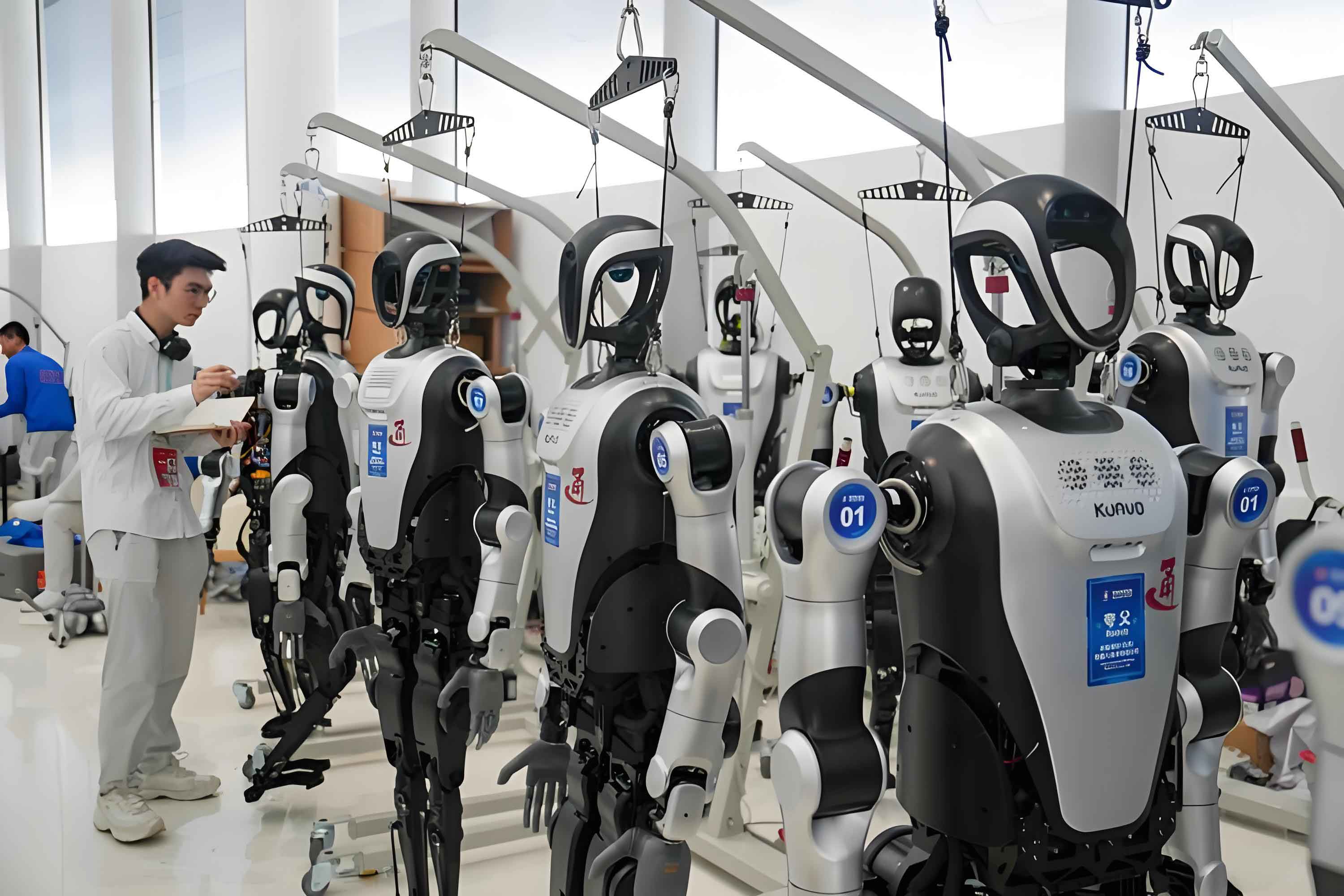
Current Developmental Status of the Local Humanoid Robot Industry
The foundation of a competitive humanoid robot ecosystem is built upon sustained innovation, which is most tangibly measured through patent filings. An analysis of patent applications provides a clear, quantitative view of the industry’s vitality, focus areas, and key players.
Analysis of Patent Application Trends
From 2015 to 2024, the region accumulated a total of 572 patent applications in the field of humanoid robots, accounting for 8.3% of its provincial total. The composition of these applications reflects a strong emphasis on fundamental invention, with 336 invention patents (58.7%), 234 utility model patents, and 2 design patents. The annual trend, acknowledging the inherent lag in patent publication, reveals a general upward trajectory, signaling growing innovative activity. A notable peak occurred in 2020 with 95 applications, indicating a period of concentrated R&D effort. The data suggests the industry is transitioning from an initial foundation-laying phase into a stage of rapid development. The effectiveness of this innovation is further revealed by patent grant rates. As shown in Table 1, the region’s invention patent grant rate stands at 57%, surpassing the provincial average but still trailing behind leading innovation hubs like Beijing and Shenzhen. This indicates room for improving the quality and robustness of patent applications.
| Region | Total Patent Applications | Granted Invention Patents | Invention Patent Grant Rate |
|---|---|---|---|
| National Total | 56,911 | 15,109 | 61% |
| Province | 6,904 | 1,614 | 53% |
| Local Region | 572 | 123 | 57% |
| Nanjing | 2,186 | 642 | 57% |
| Suzhou | 2,070 | 400 | 50% |
| Beijing | 7,285 | 2,474 | 72% |
| Shanghai | 3,867 | 941 | 58% |
| Shenzhen | 8,039 | 2,087 | 68% |
Analysis of Major Patent Assignees
The structure of innovation actors within the local humanoid robot ecosystem is clearly delineated by patent ownership. Enterprises form the core driving force, accounting for 378 patent applications (66% of the total). This underscores their role as the primary entities for technological iteration and market-oriented innovation. Leading local enterprises include companies specializing in intelligent actuation and robotic technologies. However, the absence of a single, dominant patent holder with an overwhelming portfolio suggests a fragmented landscape composed mainly of small and medium-sized enterprises (SMEs). Academia plays a significant secondary role, contributing 140 applications (24%), with a local university demonstrating notable research output in this field. Public research institutes, however, show a relatively low level of engagement, indicating a potential gap in high-level, application-oriented fundamental research dedicated to humanoid robotics.
| Applicant Type | Number of Applications | Percentage | Key Observations |
|---|---|---|---|
| Enterprises | 378 | 66% | Core innovation force; dominated by SMEs; no clear market leader. |
| Universities | 140 | 24% | Significant research contributor; one university holds ~69% of academic patents. |
| Research Institutes | 33 | 6% | Low participation; indicates a shortage of dedicated R&D teams. |
| Individuals | 21 | 4% | Minor contributor. |
Patent Portfolio and Technological Focus
Analyzing the International Patent Classification (IPC) codes associated with local patents reveals the technological strengths and biases of the regional humanoid robot industry. The concentration is heavily skewed towards mechanical and actuation systems, reflecting the region’s historical industrial base in manufacturing. As detailed in Table 3, patents in class B25J (Manipulators) constitute nearly half of all applications. Similarly, H02K (Dynamo-electric machines) represents a significant cluster, where the region’s share of national applications is notably high (2.74%), driven by several local motor manufacturers. This focus on “muscle” (actuation) and “limbs” (manipulators) is evident. In contrast, patents covering the “brain” and “senses” of the humanoid robot—such as control systems (G05D), image processing (G06T), and AI computing models (G06N)—are present but in substantially lower numbers, both in absolute terms and as a share of national activity. This imbalance highlights a critical strategic vulnerability and a major area for future growth.
| IPC Subclass | Technology Field | Local Applications | National Applications | Local Share of National |
|---|---|---|---|---|
| B25J | Manipulators | 276 | 30,698 | 0.90% |
| H02K | Dynamo-electric Machines | 116 | 4,235 | 2.74% |
| G05D | Control/Regulation Systems | 38 | 7,805 | 0.49% |
| G06T | Image Data Processing | 25 | 9,114 | 0.27% |
| G06N | Computer Systems Based on AI Models | 21 | 10,293 | 0.20% |
Diagnosis of Key Challenges in Industrial Development
While a foundation exists, a comparative and in-depth patent analysis reveals several structural and strategic challenges that could constrain the long-term competitiveness of the local humanoid robot industry.
Incomplete Patent Portfolio and Gaps in Critical Sub-fields
The regional patent portfolio for humanoid robots is not only imbalanced but also exhibits significant gaps in several core and high-value sub-fields. This deficiency becomes stark when compared to first-tier innovation cities. The reliance on external sources for key components increases system cost and inhibits vertical integration. The development of a sophisticated humanoid robot requires mastery across multiple technological domains, which can be expressed as a function of integrated capabilities:
$$C_{robot} = f(A_{actuation}, A_{sensing}, A_{control}, A_{cognition}, A_{integration})$$
Where \(C_{robot}\) is the overall capability, and \(A\) represents aptitude in Actuation, Sensing, Control, Cognition, and System Integration. Current local strength is predominantly in \(A_{actuation}\), with serious weaknesses in \(A_{sensing}\), \(A_{control}\), and \(A_{cognition}\). As Table 4 illustrates, the local share of national patents in critical areas like joint technology, reducers, machine vision, and algorithm development is minimal, especially compared to Beijing, Shenzhen, and Shanghai. Notably, there are zero patent applications in the crucial area of gait control, a fundamental challenge for bipedal humanoid robot mobility. This indicates a technological dependency that could hinder the development of fully autonomous, high-performance humanoid robot platforms.
| Technology Sub-field | National Total | Local Applications | Local Share | Key Competitor (Applications) |
|---|---|---|---|---|
| Joint Technology | 7,398 | 86 | 1.16% | Beijing (1,053) |
| Reducer Technology | 1,760 | 40 | 2.27% | Beijing (252) |
| Machine Vision | 696 | 6 | 0.86% | Beijing (54) |
| Gait Control | 59 | 0 | 0.00% | Beijing (9) |
| Algorithm Development | 5,961 | 52 | 0.87% | Beijing (764) |
Low Patent Value and Absence of Industrial Leaders
The patent landscape is characterized by a “long tail” of SMEs with modest portfolios, lacking a flagship enterprise whose patent strength can define the region’s competitive edge. The quality and impact of these patents are concerning. Metrics such as forward citation count—how often a patent is cited by subsequent applications—serve as a proxy for technological influence. The low average citation frequency and the small number of highly cited patents suggest that much of the local innovation is incremental or easily circumvented. Furthermore, patent commercialization activities, such as transfers, pledges, and licenses, are exceedingly rare. This indicates that patents are often treated as defensive assets or mere R&D output metrics rather than strategic tools for generating revenue, forming alliances, or securing market position. The almost complete absence of international patent families (only 3 patents with foreign counterparts) starkly highlights a purely domestic focus and a lack of global competitive ambition for the local humanoid robot technologies.
Shallow Industry-Academia-Research-Application Integration and Low Patent Conversion
Despite a respectable volume of academic patents, the bridge between university research and industrial application remains weak. The lower grant rate for academic patents compared to enterprise patents points to a potential misalignment with patentability criteria or a focus on publication over robust IP protection. The number of jointly filed patents between enterprises and universities is negligible (only 13), and the rate of patent transfers from academia to industry is low. This “death valley” between research and commercialization can be modeled as a leakage in the innovation value chain:
$$V_{commercial} = \eta \cdot (R_{input} + P_{input})$$
Where \(V_{commercial}\) is the realized commercial value, \(R_{input}\) is public research funding/output, \(P_{input}\) is private R&D investment, and \(\eta\) is the conversion efficiency factor. Currently, \(\eta\) is sub-optimal due to disconnects in research direction, intellectual property management, and collaborative platforms. The shortage of specialized research institutes focused on humanoid robotics exacerbates this issue, leading to a talent pipeline that may not fully meet the nuanced needs of the evolving humanoid robot industry.
Strategic Recommendations for Industrial Advancement
Addressing the identified challenges requires a multi-pronged strategy that strengthens the innovation ecosystem, rectifies technological imbalances, and deepens human capital development.
Implementing Financial Support and Catalytic Platform Policies
Given the capital-intensive and long-cycle nature of humanoid robot development, tailored financial instruments are essential. Policymakers should enhance support for IP-backed financing, encourage the establishment of dedicated venture capital funds, and develop financial products suited for the convergent technologies underpinning the humanoid robot sector. Concurrently, the strategic deployment of physical and digital platforms can lower barriers to innovation. Establishing joint innovation centers with other major regional hubs, building public verification and testing platforms for humanoid robot prototypes and software, and creating common technology service platforms are crucial. A particular advantage to leverage is the local supercomputing center. By providing tailored, accessible computing power for model training, algorithm optimization, and simulation, it can directly address the weakness in \(A_{cognition}\) and \(A_{control}\), accelerating R&D in the “brain” of the humanoid robot. The provisioning of such computational infrastructure acts as a force multiplier for local innovators.
Optimizing the Industrial Structure and Promoting Cross-Domain Integration
The patent analysis dictates a clear path for structural optimization. The strategy must involve strengthening the chain, supplementing the chain, and extending the chain. Strengthening involves cultivating leaders among existing “hidden champion” SMEs to deepen expertise in niche areas like specialized actuators or sensors. Supplementing is the urgent task of targeted R&D and investment in the identified weak links: core components (reducers, high-precision joints, force-torque sensors) and foundational software (robot operating systems, control algorithms, especially gait control). Extending involves moving up the value chain from component manufacturing to integrated system design, testing, and brand development. Furthermore, fostering an open innovation and collaborative ecosystem is vital. Supporting participation in and contribution to open-source humanoid robot software projects and foundational models can accelerate overall progress and integrate local players into global development currents.
The ultimate test for any humanoid robot technology is its application. Proactive measures are needed to drive integration with the real economy. Establishing application promotion centers to identify and demonstrate viable use cases in manufacturing (e.g., complex assembly, quality inspection), healthcare (rehabilitation, assistive care), and domestic services is critical. Exploring innovative business models, such as humanoid robot leasing or shared-service platforms, can lower adoption barriers and stimulate market formation.
Enhancing Innovation Entities and the Talent Mechanism
To overcome the fragmentation and lack of leadership, a proactive approach to attracting leading enterprises is necessary. This includes offering competitive packages to attract regional headquarters or R&D centers of established global and domestic humanoid robot leaders. Equally important is targeted investment in “chain-completing” companies that specialize in the missing core components identified earlier. Simultaneously, a robust talent strategy is non-negotiable. This involves high-level talent recruitment programs focused on the weak sub-fields, strengthened collaboration between local universities and top-tier robotics research institutions elsewhere, and curriculum development to build a local pipeline of both research scientists and skilled engineers tailored to the needs of the humanoid robot industry. The “joint innovation” model, involving multi-party research institutes, should be expanded specifically for humanoid robotics challenges.
In conclusion, the development of the humanoid robot industry is a complex marathon, not a sprint, defined by sustained innovation, strategic collaboration, and deep technological mastery. Patent data provides an unambiguous diagnostic map: the local industry has established a foothold in mechanical and actuation domains but suffers from critical gaps in core components, algorithms, and system integration, compounded by a fragmented enterprise landscape and weak industry-academia links. The proposed strategic triad—of targeted financial and platform support, a focused industrial policy to rebalance the technology portfolio and foster application, and a decisive talent and enterprise attraction strategy—provides a coherent roadmap. By executing this plan, the region can evolve from a component supplier into a recognized hub for integrated humanoid robot innovation, securing its position in the next wave of technological disruption. The journey of every advanced humanoid robot begins with a single patent, but its success depends on the ecosystem that nurtures the thousand that must follow.