
The bipedal humanoid robot stands as a pinnacle of robotics, often termed the “crown jewel” of advanced manufacturing. At the heart of its mobility and dexterity lies a critical subsystem: the joint actuator. The evolution of actuator technology directly dictates the capabilities of these machines, determining whether they can ever achieve the graceful, efficient, and robust locomotion observed in humans and animals. This article provides a comprehensive review of electric motor-driven actuator systems—encompassing motors, gear reducers, sensors, and control units—developed for bipedal humanoid robots. It traces the technological journey from traditional stiff designs to compliant and proprioceptive architectures, analyzes their core performance metrics, and discusses the prevailing challenges and promising future directions in the quest to create truly dynamic humanoid machines.
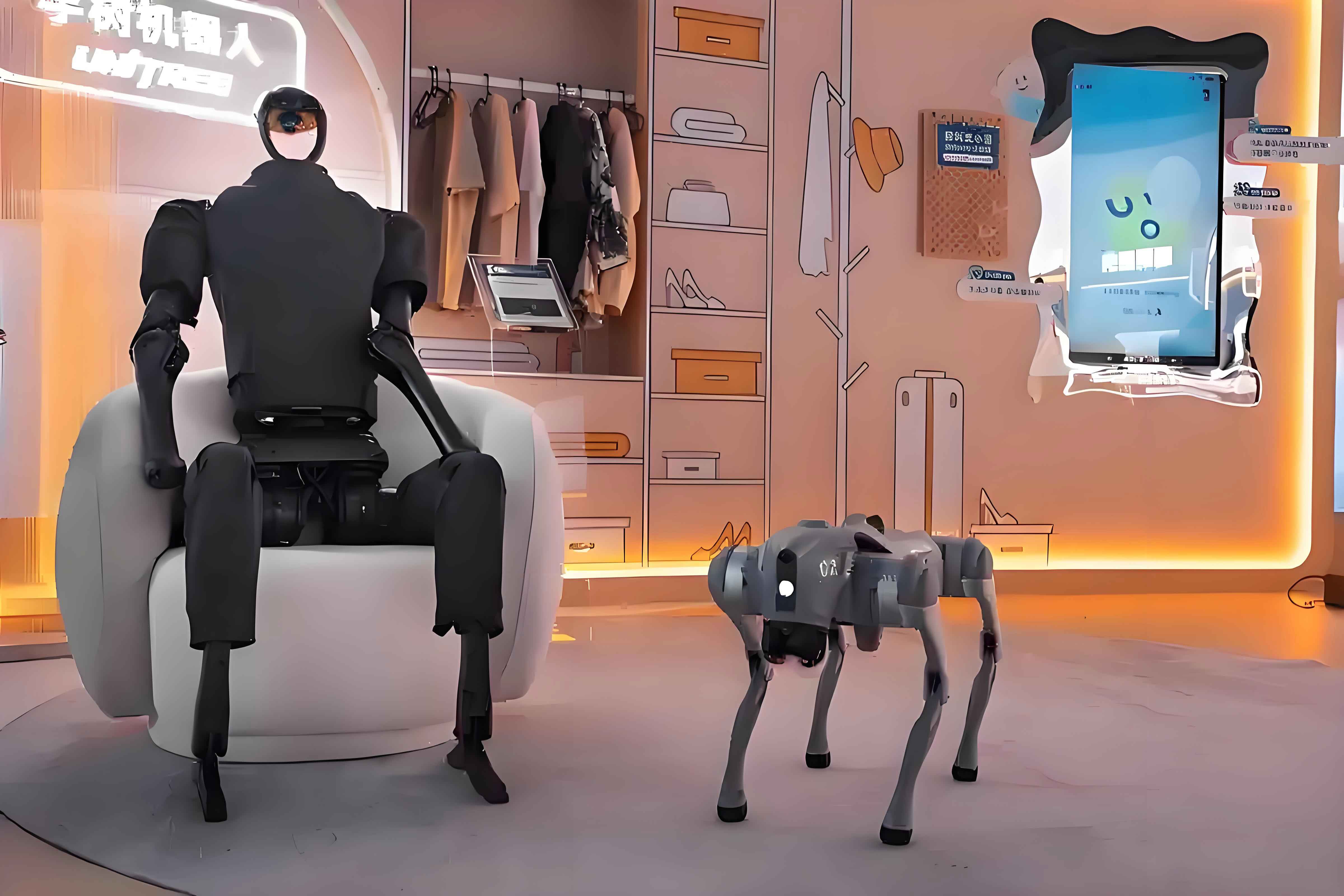
The motion profile of a bipedal humanoid robot imposes unique and stringent demands on its actuators. Unlike fixed-base industrial arms, these robots must manage dynamic walking, running, and jumping, characterized by discrete foot-ground impacts, rapid changes in stride and cadence, and significant variations in required power and energy metabolism. To approximate biological performance, actuators must exhibit an exceptional combination of high power density (W/kg), high bandwidth for force/torque control, tolerance to impact shocks, and overall energy efficiency. The actuator is not merely a component but the muscle-tendon system of the machine, and its design philosophy profoundly influences the entire robot’s architecture, control strategy, and ultimate capabilities.
The historical development of actuators for humanoid robots can be segmented into three significant phases, each marked by a shift in design paradigm. The earliest bipedal humanoid robots, such as the pioneering WAP-3 from Waseda University, relied on conventional stiff actuator (TSA) configurations. This approach, utilizing high-ratio gear reducers, became the standard for decades, enabling precise position control for stable, if somewhat rigid, walking. A major conceptual breakthrough arrived with the introduction of the Series Elastic Actuator (SEA) in the mid-1990s, which deliberately incorporated compliance between the motor and the output to improve force control, shock tolerance, and energy storage. More recently, the push for extreme dynamic performance in legged robots has led to the emergence of the Proprioceptive Actuator (PA) or quasi-direct-drive actuator, which leverages low-ratio transmissions and high-torque density motors to achieve high-fidelity force control and impressive power density without additional force sensors. Understanding the principles, trade-offs, and evolution of these three categories—Stiff, Elastic, and Proprioceptive—is essential for advancing the field of humanoid robotics.
The Traditional Stiff Actuator (TSA)
The traditional stiff actuator has been the workhorse for industrial robots and early-generation humanoid robots. Its configuration is straightforward: a high-speed electric motor (often a brushless DC motor) is coupled with a high-ratio reduction gearbox (typically harmonic drive or precision planetary), followed by an output shaft. Sensing usually includes an incremental or absolute encoder on the motor side for velocity and position feedback. Optionally, a brake may be added to hold position when powered off, and a dedicated joint torque sensor (e.g., based on strain gauges) may be placed at the output for direct force measurement. The control paradigm for a TSA is predominantly position or impedance control, relying on the high stiffness of the transmission to accurately map motor position to joint position.
Significant research effort has been devoted to the optimization and modularization of TSAs. Design methodologies often focus on the co-optimization of the motor and gearbox pair for a given task. Key performance indices include continuous and peak output torque, maximum speed, reflected inertia, and weight. The overall torque output $T_{out}$ can be expressed in terms of motor torque $T_m$, gear ratio $N$, and transmission efficiency $\eta$:
$$T_{out} = N \cdot \eta \cdot T_m$$
Similarly, the reflected inertia $J_{ref}$ at the motor shaft, which impacts control bandwidth and shock loads, is given by:
$$J_{ref} = J_m + \frac{J_{load}}{N^2}$$
where $J_m$ is the motor rotor inertia and $J_{load}$ is the inertia of the load at the output. These equations highlight the fundamental trade-off in TSA design: a high gear ratio $N$ amplifies torque but also significantly increases the reflected inertia of the load, making the joint appear “stiffer” to impacts and reducing force control bandwidth. A comparison of representative commercial and research-oriented stiff actuator modules is shown below, illustrating common configurations.
| Actuator Type / Feature | Motor + Reducer | Brake | Absolute Encoder | Torque Sensor | Integrated Control |
|---|---|---|---|---|---|
| Commercial Module A | Yes (Harmonic) | Yes | Yes | No | No |
| Commercial Module B | Yes (Cycloidal) | No | Yes | No | Yes (CAN) |
| Research Module C | Yes (Harmonic) | Yes | Yes | Yes | Yes (EtherCAT) |
| Research Module D | Yes (Planetary) | No | Yes | Yes | Yes (SERCOS) |
Despite sophisticated optimization, the TSA faces inherent limitations for dynamic humanoid robot applications. The pursuit of high torque through large gear ratios leads to increased mechanical impedance, making the joints non-backdrivable or highly resistive to external forces. This results in poor force control fidelity, high impact forces during foot strikes (which must be absorbed by mechanical structure or control), and low energy efficiency due to friction and the inability to recycle energy. Furthermore, the peak power density of such systems often plateaus well below the remarkable 500 W/kg benchmark of biological muscle, ultimately restricting the explosive dynamic potential of the humanoid robot.
Elastic and Compliant Actuators
Inspired by the musculoskeletal systems of animals, researchers developed actuators with intentional compliance to overcome the limitations of stiff designs. The biological foundation is the Hill-type muscle model, which represents muscle-tendon units as a combination of contractile (CE), series elastic (SE), and parallel elastic (PE) elements. This model inspires analogous actuator architectures designed to store and release energy, buffer impacts, and modulate impedance.
The most prominent among these is the Series Elastic Actuator (SEA). An SEA places a compliant element (e.g., a spring) in series between the gearbox output and the joint output. This spring acts as a physical filter, decoupling the motor inertia from the output and allowing for accurate and stable force/torque control based on spring deflection measurement. The force $F_{out}$ is typically given by Hooke’s law: $F_{out} = k \cdot \Delta x$, where $k$ is the spring stiffness and $\Delta x$ is its deflection. SEAs excel in providing shock tolerance and safer physical human-robot interaction, making them suitable for collaborative humanoid robots. Advanced variants include Variable Stiffness SEAs (VSEA), where the spring stiffness can be mechanically adjusted, allowing for optimization of bandwidth and energy storage across different tasks.
Parallel Elastic Actuators (PEA) take a different approach by adding an elastic element in parallel with the traditional actuator. This spring is often pre-tensioned to support static loads, such as gravity, or to match the torque-angle profile of a specific motion (like walking). The primary motor then primarily supplies the dynamic torque. This architecture can dramatically reduce the peak torque and energy consumption of the motor, as expressed by:
$$T_{motor} = T_{load} – T_{spring}(\theta)$$
where $T_{spring}(\theta)$ is the torque provided by the parallel spring as a function of joint angle $\theta$. PEAs are highly effective for cyclic, predictable motions but require careful tuning of the spring characteristic for the specific task of the humanoid robot.
To combine the benefits of series and parallel compliance and gain control over energy storage/release timing, Clutched Elastic Actuators (CEA) and Multi-Modal Elastic Actuators (MEA) have been developed. A CEA incorporates a clutch mechanism to engage or disengage a parallel or series spring. For example, a clutch can lock a parallel spring during a stance phase to store energy and release it during push-off, significantly improving energy efficiency. MEAs integrate multiple elastic elements (series, parallel) and clutches to create actuators that can switch between different impedance and energy flow modes, offering great versatility at the cost of increased mechanical and control complexity.
The Proprioceptive Actuator (PA)
The most recent trend in high-performance legged and humanoid robot actuation is the proprioceptive or quasi-direct-drive actuator. This design philosophy represents a fundamental shift: instead of adding compliance or sensors, it seeks to minimize transmission impedance altogether. A PA uses a high-torque density motor (often an outer-rotor design) paired with a very low-ratio gearbox (typically between 1:5 and 1:10). The key advantage is that the system’s reflected inertia remains very low, making it inherently backdrivable and allowing for high-bandwidth force/torque control using only motor current feedback (hence “proprioceptive,” as it senses interaction forces internally without a dedicated sensor).
The governing equations for output torque and reflected inertia still apply, but with a small $N$:
$$T_{out} = N \cdot \eta \cdot T_m, \quad J_{ref} = J_m + \frac{J_{load}}{N^2}$$
With a small $N$, the term $J_{load}/N^2$ becomes significant. Therefore, successful PA design requires minimizing the load-side inertia $J_{load}$ (through lightweight linkages) and using a motor with very high torque constant and relatively low rotor inertia $J_m$. This architecture achieves exceptional power density (exceeding 1000 W/kg in some prototypes, surpassing biological muscle) and unparalleled force control bandwidth, enabling dynamic behaviors like high-speed running and agile recovery from pushes. However, the absence of a high-resolution output encoder can create a challenge for absolute position recovery after a power cycle, prompting research into innovative multi-turn absolute encoder solutions.
Comparative Analysis and Technical Challenges
The choice of actuator type fundamentally shapes the capabilities and design of a bipedal humanoid robot. The following table synthesizes the key characteristics of the three main families.
| Characteristic | Traditional Stiff Actuator (TSA) | Series Elastic Actuator (SEA) | Proprioceptive Actuator (PA) |
|---|---|---|---|
| Core Principle | High-ratio reduction for high torque, high stiffness. | Added series elasticity for force control & shock absorption. | Low-ratio reduction for low impedance & high-bandwidth force control. |
| Force/Torque Sensing | Via current (indirect) or dedicated output sensor. | Via spring deflection (direct). | Primarily via motor current (proprioceptive). |
| Control Paradigm | Position, Velocity, Impedance Control. | Force/Torque Control, Impedance Control. | High-fidelity Force/Torque Control. |
| Power Modulation | None (limited by motor peak torque). | Good (energy storage in spring). | Poor (little to no energy storage). |
| Energy Efficiency | Low (high friction, non-backdrivable). | Moderate to High (potential for energy recycling). | High (low friction, backdrivable). |
| Shock Tolerance / Safety | Low (impacts transmitted to gears). | High (spring buffers impacts). | High (low inertia allows “giving way”). |
| Peak Power Density | Moderate (200-300 W/kg). | Moderate (similar to TSA, plus spring mass). | Very High (can exceed 1000 W/kg). |
| Typical Application | Precision industrial arms, early humanoid robots. | Collaborative robots, safe humanoids, disaster robotics. | Dynamic quadrupeds, agile humanoid robots. |
Despite significant progress, substantial challenges remain. For TSAs, the core limitation is the fundamental trade-off between torque, inertia, and bandwidth, which restricts dynamic performance. There is also a lack of standardized testing protocols for key metrics like hysteresis, stiffness, and true dynamic efficiency. For Elastic Actuators, the main challenge lies in system-level integration and control. The introduction of compliance creates an underactuated system, complicating whole-body motion control and trajectory tracking for a bipedal humanoid robot. Optimizing spring parameters and clutch engagement strategies for a wide range of motions is non-trivial. For PAs, the primary technical hurdles are in component technology: developing ultra-high-torque-density motors that are also cost-effective, and solving the absolute positioning problem upon power-up without relying on battery-backed encoders. Furthermore, the high continuous current required by PAs demands robust thermal management and power electronics.
Future Trends and Directions
The future of actuation for bipedal humanoid robots will likely be driven by bio-inspiration, integration, and component innovation. A promising frontier is deep bio-inspired design, moving beyond simple elastic analogs to study the integrated bone-muscle-tendon architecture of agile bipeds (like birds). This could lead to novel leg morphologies where the actuator is not a separate module but is fully synthesized with the limb’s structure, tendons, and passive dynamics, leading to more efficient and robust locomotion for the humanoid robot.
For existing paradigms, development will focus on refinement and integration. Stiff actuators will see continued use in non-dynamic applications but require standardization of performance benchmarking. Research in elastic actuators will trend towards holistic optimization, where the spring and clutch parameters, the robot’s morphological design, and the motion control algorithms are co-designed in a system-level optimization loop to maximize energy efficiency and task performance for the specific humanoid robot. Proprioceptive actuators present the most direct path to high dynamic performance. Their advancement hinges on breakthroughs in magnetic materials and motor topologies to increase torque density further, and on the development of novel, low-power, multi-turn absolute encoder technologies. Additionally, the exploration of hybrid systems, combining, for instance, a low-inertia PA for high-frequency response with a tunable parallel elastic element for low-frequency energy economy, is an exciting area of research.
Finally, the digital integration of actuators will evolve. With advancements in 5G and edge computing, future actuators in a humanoid robot may feature wireless communication for data and control, simplifying internal wiring, improving reliability, and enabling real-time cloud-based monitoring and diagnostics of the joint’s health and performance.
In conclusion, the actuator remains the pivotal component in the quest to create a truly capable and dynamic bipedal humanoid robot. The journey from rigid, position-controlled joints to compliant, force-controlled, and finally to low-impedance, proprioceptive systems mirrors our growing understanding of dynamic legged locomotion. While each approach has its merits and ideal applications, the overarching trend is toward actuators that are more integrated, efficient, and capable of the explosive, resilient, and efficient motion that defines biological movement. Overcoming the remaining challenges in materials, design, and control will bring us closer to the day when humanoid robots can seamlessly operate in human environments, not just as tools, but as agile and capable partners.