
In the realm of high-precision motion control, the rotary vector reducer stands as a cornerstone component for industrial robots, aerospace actuators, and advanced machine tools. Its performance directly dictates the accuracy, stability, and operational lifespan of the entire system. While traditional reliability assessments often focus on catastrophic failures or fatigue life, a more subtle and critical metric for precision components is their accuracy life. This term refers to the duration over which the transmission accuracy of a reducer degrades from its initial value to a predefined failure threshold. It fundamentally represents the ability of the rotary vector reducer to maintain its designated precision under operational loads. As the demands for higher precision and longer service intervals increase, the need for sophisticated methods to model, predict, and assess this accuracy life becomes paramount. This article delves into the degradation characteristics of the rotary vector reducer’s transmission accuracy, employing a stochastic modeling framework integrated with data-driven prediction to evaluate its reliability over time.
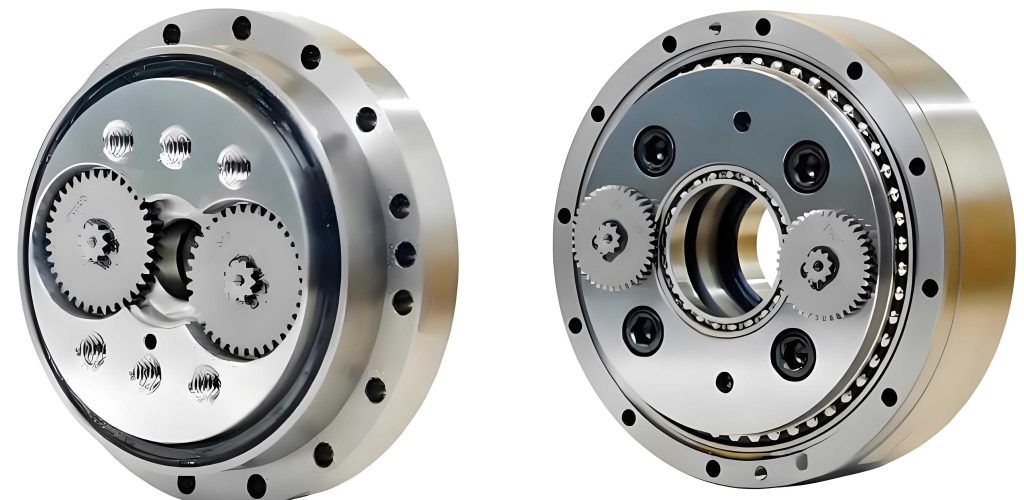
The accuracy of a rotary vector reducer is primarily quantified by its transmission error. This error arises from manufacturing imperfections, assembly misalignments, and wear during operation. Formally, it is defined as the difference between the actual output rotation angle and the theoretically expected output angle for a given input. For a reducer with a theoretical transmission ratio $$i_T$$, input angle $$\theta_{in}$$, and output angle $$\theta_{out}$$, the instantaneous transmission error $$E$$ is given by:
$$E = \frac{\theta_{in}}{i_T} – \theta_{out}$$
However, a single instantaneous error is not sufficient for characterization. The transmission accuracy, often used as the key performance indicator for a rotary vector reducer, is defined as the peak-to-peak value of the transmission error over one full revolution of the input shaft. If $$E_{m1}$$ and $$E_{m2}$$ represent the maximum and minimum values of $$E$$ over this cycle, the transmission accuracy $$\theta$$ is:
$$\theta = E_{m1} – E_{m2}$$
This value, typically measured in arcseconds (″), serves as the primary degradation indicator for assessing the accuracy life of the rotary vector reducer. Industry standards, such as those adapted from harmonic drive specifications, define accuracy classes based on thresholds for this value. A common failure threshold $$D_f$$ for a mid-grade rotary vector reducer is set at 60 arcseconds, marking the boundary between class 2 and class 3 precision. The accuracy life is then the operational time it takes for $$\theta$$ to degrade from its initial, as-manufactured value to this threshold $$D_f$$.
Modeling Accuracy Degradation with the Gamma Process
The degradation of transmission accuracy in a rotary vector reducer is not a deterministic process. It is influenced by numerous stochastic factors such as microscopic wear, lubrication condition fluctuations, and load variations. Therefore, modeling it as a random process is more appropriate than using a fixed physical law. Among stochastic processes, the Gamma process is particularly well-suited for modeling monotonic degradation where the increments are non-negative and independent. This aligns perfectly with the wear-induced degradation of mechanical accuracy in a rotary vector reducer, which generally does not improve over time.
A Gamma process $$\{X(t), t \geq 0\}$$ is characterized by the following properties:
- $$X(0) = 0$$ with probability one.
- For any time interval $$(t, t+\Delta t]$$, the degradation increment $$\Delta X(t) = X(t+\Delta t) – X(t)$$ follows a Gamma distribution: $$\Delta X(t) \sim \text{Ga}(\alpha(t+\Delta t) – \alpha(t), \beta)$$.
- Increments over disjoint time intervals are independent.
Here, $$\alpha(t)$$ is a non-decreasing, right-continuous shape function, and $$\beta > 0$$ is a constant scale parameter. Often, a power-law form $$\alpha(t) = a t^b$$ is assumed for its flexibility. The probability density function (PDF) of the degradation amount $$X(t)$$ at time $$t$$ is:
$$f_{X(t)}(x) = \frac{\beta^{\alpha(t)}}{\Gamma(\alpha(t))} x^{\alpha(t)-1} e^{-\beta x} I_{(0, \infty)}(x)$$
where $$\Gamma(\cdot)$$ is the Gamma function, and $$I_{(0, \infty)}(x)$$ is the indicator function. When the degradation indicator $$X(t)$$ (in our case, the increase in transmission error amplitude) reaches a critical failure threshold $$D_f$$, the component fails. Therefore, the reliability function $$R(t)$$, which is the probability that failure has not occurred by time $$t$$, is given by:
$$R(t) = P(X(t) < D_f) = \int_0^{D_f} f_{X(t)}(x) dx = \frac{\Gamma(\alpha(t), D_f \beta)}{\Gamma(\alpha(t))}$$
where $$\Gamma(\cdot, \cdot)$$ is the upper incomplete Gamma function. To implement this model for a rotary vector reducer, historical degradation data from testing is required to estimate the parameters $$a$$, $$b$$, and $$\beta$$. This can be achieved using methods like the method of moments or maximum likelihood estimation (MLE) on the observed degradation increments.
Data Acquisition and Vibration Signal Analysis
To perform the reliability assessment, a controlled degradation test was conducted on a specific model of rotary vector reducer. The reducer was operated under a constant accelerated load condition (1.5 times the rated torque) at its rated input speed. Periodically, the operation was halted to measure the transmission accuracy $$\theta$$, providing the direct degradation data. Concurrently, during operation, tri-axial vibration signals were continuously acquired from the reducer’s housing using piezoelectric accelerometers. Vibration analysis is a powerful, non-intrusive tool for condition monitoring, as the signals carry rich information about the internal mechanical state of the rotary vector reducer, including gear mesh conditions, bearing health, and developing backlash—all of which correlate with declining transmission accuracy.
Vibration signals were sampled at 2 kHz. From the raw time-series data, multiple statistical features were extracted from the time domain, frequency domain, and time-frequency domain to form a comprehensive feature set characterizing the operational state. The goal is to find a mapping between these vibration features and the concurrent transmission accuracy. For effective modeling, features that exhibit a relatively monotonic trend with operational time (and hence with degradation) are preferred. The following features were selected for this study:
- Root Mean Square (RMS): The energy indicator of the vibration signal.
- Variance: Measures the signal’s power around its mean.
- Kurtosis Factor: Indicates the “peakedness” or impulsiveness of the signal, sensitive to early-stage faults.
- Time-Frequency Total Energy: An energy measure from a time-frequency representation (e.g., wavelet transform), capturing non-stationary behavior.
Extracted feature data from a segment of the test are exemplified below:
| Operating Time (h) | RMS | Variance | Kurtosis | TF Energy |
|---|---|---|---|---|
| 500 | 1.5000 | 1.8449 | 7.2721 | 0.8974 |
| 500 | 1.3333 | 1.7910 | 8.5758 | 1.1145 |
| 1000 | 1.1806 | 1.3694 | 7.6425 | 0.8692 |
| 1500 | 0.9167 | 1.0762 | -0.7543 | 0.5547 |
| 2000 | -0.1250 | -0.2932 | -9.5952 | -0.2637 |
| 2500 | -1.9306 | -3.2753 | -15.0549 | -1.0526 |
| 3000 | -2.9583 | -6.4206 | -18.7732 | -0.8150 |
The transmission accuracy values measured at these time points serve as the target labels for building a predictive model.
Gaussian Process Regression for Accuracy Prediction
To enable real-time or periodic assessment of the rotary vector reducer’s state without disassembly for direct accuracy measurement, a predictive model is constructed. The model uses the extracted vibration features as input to predict the current transmission accuracy. Among various machine learning regression techniques, Gaussian Process Regression (GPR) offers significant advantages. It is a non-parametric, Bayesian approach that not only provides a point prediction but also gives a measure of uncertainty (prediction variance) for each estimate. This probabilistic output is highly valuable for reliability analysis.
A Gaussian process is a collection of random variables, any finite number of which have a joint Gaussian distribution. It is completely specified by its mean function $$m(\mathbf{x})$$ and covariance function (kernel) $$k(\mathbf{x}, \mathbf{x}’)$$. Given a training dataset with inputs $$\mathbf{X} = [\mathbf{x}_1, …, \mathbf{x}_n]$$ and targets $$\mathbf{y} = [y_1, …, y_n]$$, the GPR model assumes $$y = f(\mathbf{x}) + \epsilon$$, where $$\epsilon \sim \mathcal{N}(0, \sigma_n^2)$$ is Gaussian noise. For a new test input $$\mathbf{x}_*$$, the joint distribution of the observed targets and the predicted function value $$f_*$$ is:
$$\begin{bmatrix}
\mathbf{y} \\
f_*
\end{bmatrix} \sim \mathcal{N}\left(
\mathbf{0},
\begin{bmatrix}
K(\mathbf{X}, \mathbf{X}) + \sigma_n^2 I & K(\mathbf{X}, \mathbf{x}_*) \\
K(\mathbf{x}_*, \mathbf{X}) & k(\mathbf{x}_*, \mathbf{x}_*)
\end{bmatrix}
\right)$$
where $$K(\mathbf{X}, \mathbf{X})$$ is the $$n \times n$$ covariance matrix of the training points. The predictive distribution for $$f_*$$ is then derived as a Gaussian with mean and variance:
$$\bar{f}_* = K(\mathbf{x}_*, \mathbf{X})[K(\mathbf{X}, \mathbf{X}) + \sigma_n^2 I]^{-1} \mathbf{y}$$
$$\mathbb{V}[f_*] = k(\mathbf{x}_*, \mathbf{x}_*) – K(\mathbf{x}_*, \mathbf{X})[K(\mathbf{X}, \mathbf{X}) + \sigma_n^2 I]^{-1} K(\mathbf{X}, \mathbf{x}_*)$$
The performance of GPR depends heavily on the choice of the kernel function and its hyperparameters (like length scales). To optimize these hyperparameters, a Genetic Algorithm (GA) was employed, leading to a GA-optimized GPR (GA-GPR) model. This model was trained on 120 feature-label pairs and tested on 60 unseen pairs. For comparison, standard Backpropagation Neural Network (BPNN) and Particle Swarm Optimized BPNN (PSO-BP) models were also developed. Key model parameters are listed below:
| Model | Key Parameter | Value/Specification |
|---|---|---|
| GA-GPR | Mean Function | @meanConst |
| Covariance Function | @covRQiso (Rational Quadratic) | |
| Inference | @infGaussLik | |
| Likelihood | @likGauss | |
| PSO-BP | Particle Number | 80 |
| Max Iterations | 1000 | |
| Learning Rate | 0.01 | |
| BP | Max Epochs | 1000 |
| Target Error | 0.001 |
The predictive performance was evaluated using Root Mean Square Error (RMSE), Relative Error (RE), and the Coefficient of Determination (R²). The results clearly demonstrate the superiority of the GA-GPR model for predicting the transmission accuracy of the rotary vector reducer.
| Model | RMSE (arcsec) | RE | R² | Run Time (s) |
|---|---|---|---|---|
| BP Network | 2.25 | 2.47 | 0.9624 | 4.60 |
| PSO-BP Network | 1.13 | 1.42 | 0.9876 | 7.22 |
| GA-GPR | 0.36 | 0.49 | 0.9981 | 1.61 |
Integrating Prediction into Reliability Assessment
The core innovation of this approach lies in fusing the high-fidelity predictive model with the stochastic degradation model to perform a dynamic reliability assessment. The process is as follows:
- Offline Gamma Process Fitting: The historical, directly measured transmission accuracy degradation data is used to fit the initial Gamma process model. Using MLE, the prior parameters $$\alpha_0(t)$$ and $$\beta_0$$ are estimated.
- Online Prediction via GA-GPR: During operation, only vibration signals are collected. The trained GA-GPR model uses the extracted features to predict the current transmission accuracy value $$\hat{\theta}_t$$.
- Bayesian Updating of the Degradation Model: The predicted accuracy value $$\hat{\theta}_t$$ is treated as a new piece of evidence for the current degradation state. According to Bayesian theory, when the prior distribution of the scale parameter $$\beta$$ is a conjugate Gamma prior ($$\text{Ga}(\alpha_0, \beta_0)$$), and given an observed degradation amount $$x_t$$ at time $$t$$, the posterior distribution of $$\beta$$ is also Gamma. The posterior parameters are updated as:
$$\alpha_{\text{post}} = \alpha_0 + t, \quad \beta_{\text{post}} = \beta_0 + x_t$$
The posterior mean estimate for the scale parameter becomes:
$$\hat{s} = \frac{x_t + \beta_0}{t + \alpha_0 – 1}$$
This updated parameter $$\hat{s}$$ (where $$\hat{s} = 1/\hat{\beta}_{\text{post}}$$ in some parameterizations) reflects the most current understanding of the degradation rate for this specific rotary vector reducer. - Real-Time Reliability Calculation: The updated parameters are plugged back into the reliability function. The probability that the rotary vector reducer’s accuracy is still within the acceptable threshold $$D_f$$ (60 arcseconds) at the current operating time $$t$$ is calculated as:
$$R(t) = P(X(t) < D_f) = \int_0^{D_f} \frac{(\hat{s})^{-t}}{\Gamma(t)} x^{t-1} e^{-x/\hat{s}} dx$$
Plotting this function over time yields a dynamically updated reliability curve for the accuracy life of the unit under test.
Applying this methodology to the test data for the rotary vector reducer yielded insightful results. The initial reliability curve, based only on population-level prior data, showed a certain decay profile. However, as predictions from the GA-GPR model were fed into the Bayesian updating process, the reliability curve was adjusted. The analysis showed that at 1,000 hours of operation, the assessed reliability of the rotary vector reducer maintaining better than 60-arcsecond accuracy was 0.9963. By 3,000 hours, this reliability had decreased to approximately 0.4391. The point where the reliability curve crossed a threshold like 0.9 (or a defined acceptable risk level) provides a practical estimate for the accuracy life. For this specific unit under the test conditions, the predicted accuracy life was approximately 2,879 hours.
Conclusion
This study presents a comprehensive framework for assessing the accuracy life of rotary vector reducers, moving beyond traditional failure analysis to focus on precision degradation. The transmission accuracy, derived from transmission error measurements, was established as a valid and critical degradation indicator. The inherent randomness of the wear process was effectively captured using a Gamma stochastic process model. To overcome the limitation of requiring frequent direct accuracy measurement, a data-driven prediction link was established. By extracting monotonic features from readily available vibration signals and employing a Genetic Algorithm-optimized Gaussian Process Regression model, highly accurate predictions of the current transmission accuracy were achieved. This predictive capability, demonstrated to be superior to standard neural network models, enabled the dynamic updating of the stochastic degradation model’s parameters via Bayesian inference. The final output is a real-time or periodic assessment of the reliability function for the rotary vector reducer’s accuracy life. This integrated approach provides a powerful tool for predictive maintenance, remaining useful life estimation, and design validation for high-precision rotary vector reducers, ensuring their performance aligns with the stringent demands of modern precision engineering applications.