
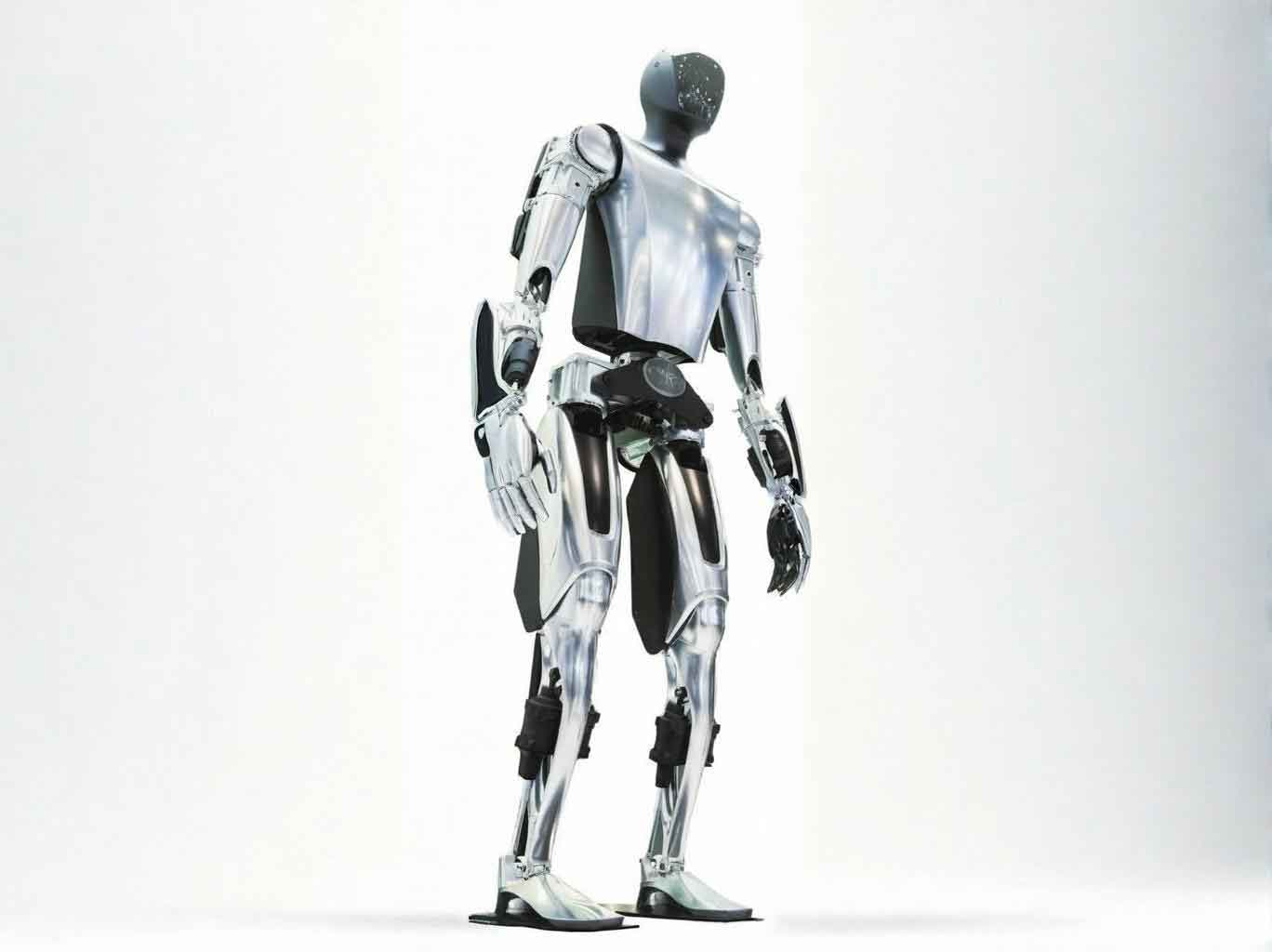
From my perspective as an observer and analyst of technological evolution, the rapid ascent of embodied AI robot systems represents one of the most tangible and transformative frontiers in contemporary computing. These are not merely software algorithms running in isolation but intelligent agents endowed with a physical form, enabling them to perceive, reason, and act directly within our shared environment. The fundamental promise of an embodied AI robot lies in this closed-loop interaction: sensing the world, processing that information to understand context and causality, and executing physical actions to achieve a goal. This creates a synergistic value far greater than the sum of its parts—software intelligence and hardware actuation. The developmental trajectory of the embodied AI robot is not just a technical narrative; it is a compelling indicator of a nation’s capacity for integrative innovation, merging advancements in machine vision, tactile sensing, mechanical engineering, and cognitive computing into a single, cohesive platform. This convergence is laying a robust industrial and intellectual foundation for next-generation technological sovereignty.
The intrinsic significance of the embodied AI robot can be modeled as a function of its integrative capabilities. We can conceptualize its potential impact (I) as being driven by its Intelligence (Iq), its Physical capability (P), and its Degree of integration (D) with human environments and workflows.
$$ I = f(I_q, P, D) = \alpha \cdot I_q^{\beta} + \gamma \cdot \log(P) + \delta \cdot D $$
Where \(\alpha, \beta, \gamma, \delta\) are scaling constants related to specific application domains. This formula suggests that impact grows super-linearly with intelligence (Iq), logarithmically with raw physical power (P), and linearly with seamless integration (D). The true challenge and opportunity lie in maximizing all three variables simultaneously.
Core Value Proposition and Intrinsic Significance
The value embedded within the embodied AI robot paradigm extends across economic, innovative, and societal dimensions, effectively acting as a catalyst for broader technological progress.
1. A Vanguard for Emerging Future Industries
The embodied AI robot serves as a foundational archetype for a host of future industries, from advanced personal assistance and cognitive manufacturing to autonomous exploration and interactive healthcare. Its development model demonstrates how to orchestrate complex innovation ecosystems. Success in this field requires aligning with macro-strategic goals, tolerating high initial R&D costs and failure rates, and fostering deep collaboration across disciplinary silos. The embodied AI robot thus pioneers a new innovation pathway, compelling governments to refine policy frameworks and service models that support high-risk, high-reward “deep tech.” Furthermore, it forces early and necessary conversations about ethical norms—such as safety, controllability, and value alignment—setting a crucial precedent for other nascent technologies like quantum computing and neuromorphic engineering. The successful scaling of the embodied AI robot industry creates a blueprint for cultivating other revolutionary sectors that will define the next era of productive capacity.
2. A Catalyst for Confidence in Original Innovation
The visible progress in embodied AI robot platforms has a profound psychological and practical effect on the broader innovation landscape. It demonstrates that tackling “hard” problems involving multi-domain integration is not only possible but can yield functional, market-ready systems. This success attracts top-tier talent and focused venture capital, creating a virtuous cycle. The development process inherently breaks down traditional innovation barriers, as it demands that companies with expertise in specific components—whether in advanced actuators, compliant materials, or real-time simulation—come together. This necessity fosters a collaborative, rather than purely competitive, ecosystem focused on solving system-level challenges. The following table contrasts traditional robotics development with the integrative approach required for advanced embodied AI robot systems:
| Aspect | Traditional Industrial Robotics | Advanced Embodied AI Robot |
|---|---|---|
| Primary Objective | Repeatability, precision, speed in structured tasks. | Adaptability, reasoning, and safe interaction in unstructured environments. |
| Innovation Model | Incremental improvements within a known domain (e.g., faster servo). | Convergent innovation across AI, materials, mechanics, and HCI. |
| Key Challenge | Mechanical reliability and path optimization. | Cross-modal perception, causal understanding, and embodied learning. |
| Ecosystem Structure | Vertical integration or clear vendor-buyer relationships. | Horizontal collaboration among specialized firms in a tightly-coupled stack. |
| Outcome | Higher factory automation. | New service economies and human capability augmentation. |
This collaborative, system-focused approach is key to achieving the original, breakthrough innovations that push the entire field forward, building collective confidence in tackling other “moonshot” technological challenges.
3. An Enabler for Personalized Human-Centric Applications
Perhaps the most direct value of the embodied AI robot is its potential to meet highly individualized human needs in diverse scenarios. Unlike a stationary computer, an embodied AI robot can physically navigate to a person, manipulate objects on their behalf, and provide companionship through physical presence. Its utility function can be tailored:
$$ U_{\text{robot}} = \sum_{i} w_i \cdot C(S_i, A_i) $$
Here, \(U_{\text{robot}}\) is the total utility provided, \(w_i\) are weights for different service domains \(i\), and \(C(S_i, A_i)\) is a competence function measuring how well the robot performs service \(S_i\) given its capabilities and the environmental context \(A_i\). Applications span from domestic assistance (cleaning, fetching items) to specialized care (physiotherapy for the elderly, educational support for children). In healthcare, for instance, an embodied AI robot can provide consistent, patient-specific rehabilitation exercises while collecting precise movement data for clinicians. By taking over repetitive or physically demanding tasks, it frees human time and energy for more creative, strategic, and interpersonal endeavors, thereby augmenting human potential and quality of life.
Practical Obstacles and Systemic Challenges
Despite its promise, the path to ubiquitous and robust embodied AI robot adoption is fraught with significant technical, ethical, and regulatory hurdles. These are not mere engineering bugs but fundamental challenges that must be addressed for the technology to mature responsibly.
1. Inadequate Privacy and Data Protection Frameworks
The very nature of an embodied AI robot that provides personalized service necessitates continuous, intimate data collection. It processes audio, video, tactile, and spatial data from private spaces, creating an unprecedented surveillance footprint. The risk profile extends beyond simple data leakage to more subtle harms. The robot’s learning algorithms, trained on potentially biased datasets, may internalize and perpetuate social biases, leading to discriminatory behaviors in decision-support roles. Furthermore, the constant interaction with a system that may subtly influence behavior poses a long-term risk to the development of human autonomy and values. The data collection equation for an embodied AI robot in a home environment highlights the scale:
$$ D_{\text{collected}}(t) = \int_{0}^{t} (V(\tau) + A(\tau) + L(\tau) + T(\tau)) \, d\tau $$
Where \(V\) is visual data, \(A\) is audio, \(L\) is locational/kinematic data, and \(T\) is tactile data. The integral over time \(t\) shows how data mass accumulates continuously. Current consent models and data governance structures are ill-equipped to handle this pervasive, multi-modal data stream, leaving a critical gap in user protection.
2. Unresolved Core Technological Bottlenecks
The “embodiment” aspect presents fiendishly difficult problems in hardware and low-level control that pure software AI does not face. Key performance indicators (KPIs) for a useful embodied AI robot—such as dexterity, safe force control, energy efficiency, and robust balancing—remain major research challenges. The actuation and control problem can be summarized as finding an optimal policy \(\pi^*\) that maps high-level tasks to low-level motor torques while respecting physical constraints:
$$ \pi^* = \arg\min_{\pi} \mathbb{E} \left[ \sum \mathcal{L}_{\text{task}} + \lambda_1 \mathcal{L}_{\text{safety}} + \lambda_2 \mathcal{L}_{\text{energy}} \right] $$
Subject to: \( \tau_{\min} \leq \tau(t) \leq \tau_{\max}, \quad \dot{q}_{\min} \leq \dot{q}(t) \leq \dot{q}_{\max} \)
Here, \(\mathcal{L}_{\text{task}}\) is the cost for failing the primary objective, \(\mathcal{L}_{\text{safety}}\) penalizes unsafe contact or states, \(\mathcal{L}_{\text{energy}}\) models power consumption, and \(\lambda\) are weighting parameters. The constraints on joint torques \(\tau\) and velocities \(\dot{q}\) represent physical limits of motors and materials. Breakthroughs in compliant actuators (“artificial muscles”), high-density power sources, and sim-to-real transfer learning are still nascent. Without fundamental advances here, the embodied AI robot will remain clumsy, inefficient, and unsafe for prolonged close interaction.
3. Immature and Unstable Interactive Environments & Scenarios
The real world is an open-ended, non-stationary, and exceptionally complicated environment for an embodied AI robot. While controlled lab demos are impressive, operational reliability in dynamic human spaces (homes, hospitals, public streets) is low. The robot’s perception and planning systems, often trained on limited datasets, fail when encountering novel situations (“edge cases”). This makes delineating clear, viable application scenarios difficult. For example, while an embodied AI robot for elder care is a compelling concept, the risks associated with lifting a person, administering medicine, or responding to a medical emergency are immense. Public trust, built on demonstrated safety and reliability over long periods, is currently lacking. Furthermore, the social and ethical role of the embodied AI robot is ambiguous—is it a tool, a partner, or a potential moral agent? This ambiguity creates uncertainty for developers, regulators, and users alike, slowing down deployment and acceptance.
4. Lack of Industry Standards and Regulatory Oversight
The current rush to develop embodied AI robot platforms occurs in a regulatory vacuum. There are no universally accepted standards for safety testing, performance benchmarking, interoperability, or ethical compliance. This leads to fragmentation, market confusion, and significant risk. The following table outlines the critical gaps in the current governance landscape:
| Governance Dimension | Current State | Ideal State |
|---|---|---|
| Safety Certification | Ad-hoc, based on modified industrial equipment standards. | Domain-specific standards (home, healthcare, public) for dynamic physical interaction. |
| Performance Benchmarking | Proprietary metrics; no common tasks or datasets. | Open suites of standardized physical and cognitive tests (e.g., an “embodied AI robot” olympics). |
| Data & Privacy | General data laws (like GDPR) applied post-hoc. | Privacy-by-design principles mandated for sensor fusion and data lifecycle. |
| Liability & Insurance | Unclear; falls on manufacturer or user based on existing product liability. | Clear frameworks for apportioning liability between developer, operator, and potentially the AI system itself. |
| Interoperability | Closed ecosystems; no common API for skills or data. | Open communication protocols and modular skill architectures. |
Without these standards and oversight mechanisms, the market risks being flooded with poorly conceived or dangerous products, causing public backlash and stifling the responsible growth of the entire sector.
Pathways for Alleviation and Responsible Advancement
Navigating these obstacles requires a concerted, multi-stakeholder approach that balances innovation acceleration with prudent safeguards. The goal is to steer the development of the embodied AI robot onto a trajectory of sustainable and beneficial growth.
1. Elevating Privacy and Ethical Guardrails
Protection must be engineered into the embodied AI robot from the ground up. This involves developing novel techniques for on-device processing and “federated learning,” where the AI model improves from user interactions without raw private data ever leaving the robot. Data minimization principles should be enforced: an embodied AI robot should only collect data strictly necessary for its immediate, user-consented task. Algorithmic audits for bias must become routine, and robots should be programmed with explicit ethical constraints, such as Asimov-inspired rules refined for modern context, hard-coded into their decision-making layers. Public awareness campaigns are needed to educate users that the embodied AI robot is an assistant, not a surrogate decision-maker, preserving human agency and critical thinking.
2. Fortifying the Policy and Innovation Support Ecosystem
Governments have a pivotal role in de-risking the fundamental research required for core technological breakthroughs. This includes sustained public funding for basic research in soft robotics, embodied cognition, and energy systems. Policy tools should encourage pre-competitive collaboration through innovation clusters and public-private research institutes. A streamlined regulatory “sandbox” can allow companies to test advanced embodied AI robot applications in controlled real-world settings under regulatory supervision. Talent pipeline development is crucial, requiring updated curricula that blend robotics, AI, and cognitive science. Incentives should reward long-term, patient capital investment in core technology over short-term, application-focused demos.
3. Cultivating Stable Application Scenarios through Gradual Integration
Instead of aiming for a general-purpose embodied AI robot immediately, the focus should be on excelling in well-defined, lower-risk scenarios. Success in these domains will build the technical stack and public trust necessary for broader expansion. A phased approach is logical:
$$ \text{Scenario Evolution:} \quad \text{Structured (Factory)} \rightarrow \text{Semi-structured (Warehouse)} \rightarrow \text{Controlled Public (Mall)} \rightarrow \text{Private Dynamic (Home)} $$
Each phase presents increasing environmental complexity and interaction freedom. Extensive field testing and iterative refinement within each phase are essential. For high-stakes scenarios like elderly care, initial roles should be limited to non-contact monitoring, social companionship, and fetching items, gradually expanding responsibilities as safety and reliability are proven over millions of interaction hours. Clear legal and social definitions must be established, unequivocally framing the embodied AI robot as a tool under human direction, devoid of legal personhood or moral agency.
4. Instituting Comprehensive Standards and Dynamic Governance
The international community must collaborate to establish the missing standards. This includes:
Safety Standards: ISO and IEC should lead in creating new safety categories for physically interactive robots, focusing on human-robot collision safety, fail-safe mechanisms, and cybersecurity for physical systems.
Benchmarking: Academic and industry consortia must develop open-source physical testbeds and performance metrics that allow for fair comparison and drive research progress.
Dynamic Regulation: Regulatory bodies need to adopt agile, outcome-based oversight rather than rigid, prescriptive rules. This could involve mandatory safety incident reporting, periodic third-party audits of critical AI components, and liability insurance requirements scaled to the robot’s autonomy level and application risk. The governance model itself must be adaptive, evolving alongside the capabilities of the embodied AI robot.
In conclusion, the journey of the embodied AI robot from a compelling research vision to a beneficial societal reality is one of the defining technological endeavors of our time. Its development encapsulates the immense potential and profound responsibilities of the AI age. By clearly recognizing its intrinsic value, honestly confronting its formidable obstacles, and proactively implementing the multifaceted alleviation strategies outlined—from hardened ethical frameworks and sustained core research to phased deployment and intelligent regulation—we can guide this powerful technology. The objective is to ensure that the embodied AI robot evolves as a steadfast ally in human progress, amplifying our capabilities and enriching our lives while steadfastly upholding our shared values and safety. The path forward requires not just engineering excellence, but also wisdom, foresight, and an unwavering commitment to a human-centric future.