
In the realm of industrial automation, the deployment of intelligent robots has become increasingly pivotal, particularly in hazardous and complex settings such as coal mines. As an engineer and researcher focused on automation and intelligent systems, I have observed firsthand the challenges these intelligent robots face in navigating dynamic environments. Traditional path-planning algorithms often fall short in efficiency and accuracy, leading to suboptimal performance. This article delves into an enhanced dynamic path-planning algorithm designed to address these limitations, leveraging a fusion of membrane computing and particle swarm optimization to improve the operational efficacy of intelligent robots. The core objective is to enable intelligent robots to autonomously plan optimal inspection paths in cluttered spaces, thereby enhancing safety and productivity.
The significance of intelligent robots in coal mining cannot be overstated. These intelligent robots are tasked with critical functions like inspection, transportation, and rescue operations, where precise navigation is paramount. However, in complex mining environments filled with obstacles and narrow passages, conventional algorithms such as the Dynamic Window Approach (DWA) often result in prolonged path lengths, slow planning speeds, and inadequate real-time responsiveness. This inefficiency not only hampers the workflow but also poses risks in emergency scenarios. Therefore, developing robust path-planning methods is essential for the advancement of intelligent robot technology. In this work, I propose a novel algorithm termed MCPSO-DWA, which integrates membrane computing with particle swarm optimization to refine velocity selection and path optimization for intelligent robots.
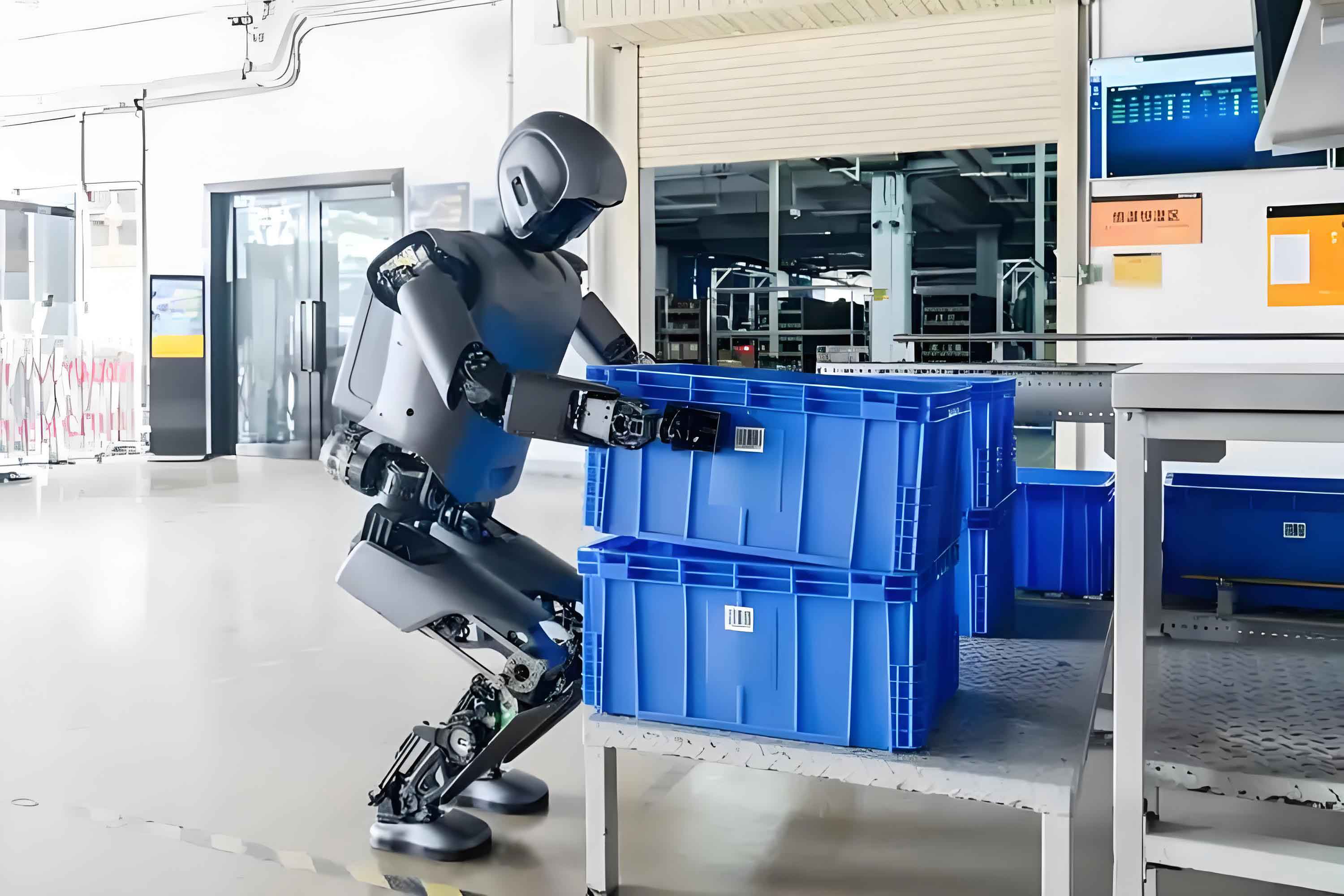
To understand the improvements, let’s first examine the traditional DWA algorithm. The DWA method operates by sampling feasible velocities within constraints imposed by the intelligent robot’s dynamics and environmental obstacles. The velocity space is defined by linear velocity \(v\) and angular velocity \(\omega\), with limits given by:
$$ V_a = \{ (v, \omega) \mid 0 \leq v \leq v_{\text{max}}, -\omega_{\text{max}} \leq \omega \leq \omega_{\text{max}} \} $$
where \(v_{\text{max}}\) and \(\omega_{\text{max}}\) are the maximum linear and angular velocities, respectively. Additionally, acceleration constraints over a time interval \(\theta_t\) yield:
$$ V_g = \{ (v, \omega) \mid (v_c – \Delta v_{\text{max}})\theta_t \leq v \leq (v_c + \Delta v_{\text{max}})\theta_t, (\omega_c – \Delta \omega_{\text{max}})\theta_t \leq \omega \leq (\omega_c + \Delta \omega_{\text{max}})\theta_t \} $$
Here, \(v_c\) and \(\omega_c\) denote current velocities, and \(\Delta v_{\text{max}}\) and \(\Delta \omega_{\text{max}}\) are maximum acceleration values. To prevent collisions, a safety constraint is applied:
$$ V_z = \left\{ (v, \omega) \mid v \leq \sqrt{2 \times \text{dist}(v, \omega) \Delta v_{\text{max}}}, \omega \leq \sqrt{2 \times \text{dist}(v, \omega) \Delta \omega_{\text{max}}} \right\} $$
where \(\text{dist}(v, \omega)\) represents the distance to the nearest obstacle along the projected path. The feasible velocity set is then \(V_f = V_a \cap V_g \cap V_z\). An evaluation function \(H(v, \omega)\) scores each sampled velocity:
$$ H(v, \omega) = \alpha \cdot \text{heading}(v, \omega) + \beta \cdot \text{dist}(v, \omega) + \gamma \cdot \text{velocity}(v, \omega) $$
with \(\alpha\), \(\beta\), and \(\gamma\) as normalized weights typically set to 0.4, 0.2, and 0.4, respectively. Despite its utility, DWA suffers from high computational overhead due to exhaustive sampling, especially in dense obstacle fields, leading to inefficient paths for intelligent robots.
To overcome these drawbacks, I developed the MCPSO-DWA algorithm, which transforms the velocity constraint space into a two-dimensional coordinate system. In this representation, the linear velocity \(v\) serves as the x-axis and angular velocity \(\omega\) as the y-axis, creating a search space \(S\) for particle optimization. This approach leverages membrane computing (MC) and particle swarm optimization (PSO) to efficiently explore velocity options. The key steps involve initializing a membrane structure with multiple elementary membranes and a skin membrane, distributing particles within them, and iteratively updating particle positions based on communication rules. This method significantly reduces the number of evaluations required, enabling intelligent robots to compute optimal velocities faster.
The algorithm begins by defining the velocity constraints \(V_f\) based on the intelligent robot’s capabilities and environmental complexity. The space \(S\) is then sampled to generate \(Q\) particles, each representing a candidate velocity pair \((v, \omega)\). The initial position \(X\) and velocity \(V\) of particles are computed using random factors:
$$ X = [(v_{\text{max}}, \omega_{\text{max}}) – (v_{\text{max}}, -\omega_{\text{max}})] \times r + (v_{\text{max}}, \omega_{\text{max}}) $$
$$ V = [(v_{\text{max}}, \omega_{\text{max}}) – (v_{\text{min}}, \omega_{\text{min}})] \times 0.1 \times (2r – 1) $$
where \(r\) is a random number in \([0, 1]\). These particles are equally divided into \(m\) elementary membranes, each containing \(D\) particles. For each particle in membrane \(k\) (where \(k = 1, 2, \ldots, m\)) and index \(d\) (where \(d = 1, 2, \ldots, D\)), the evaluation function \(H\) is applied to determine fitness. The best particle in each membrane, denoted \(G_k^{\text{best}}\), is identified and sent to the skin membrane for global comparison, yielding the overall best particle \(G^{\text{best}}\). Through inter-membrane communication, this global best guides updates in elementary membranes, refining particle positions and velocities over iterations until convergence criteria are met.
The update rules for particles incorporate standard PSO dynamics with inertial weights and learning factors. The position \(X_{kd}\) and velocity \(V_{kd}\) of particle \(d\) in membrane \(k\) at iteration \(t+1\) are given by:
$$ V_{kd}(t+1) = w \cdot V_{kd}(t) + c_1 \cdot r_1 \cdot (P_{kd}^{\text{best}} – X_{kd}(t)) + c_2 \cdot r_2 \cdot (G^{\text{best}} – X_{kd}(t)) $$
$$ X_{kd}(t+1) = X_{kd}(t) + V_{kd}(t+1) $$
where \(w\) is the inertia weight, \(c_1\) and \(c_2\) are learning factors, and \(r_1, r_2\) are random values in \([0, 1]\). The fitness threshold \(\delta\) and maximum iterations \(N\) control termination. This iterative process ensures that the intelligent robot selects the optimal velocity for each time segment, minimizing path length and time.
To validate the MCPSO-DWA algorithm, I conducted extensive simulations in Python 3.7, modeling various environments with differing obstacle densities. The intelligent robot was configured with specific parameters, as summarized in the table below, which compares settings between traditional DWA and the proposed approach.
| Parameter | MCPSO-DWA Value | Traditional DWA Value |
|---|---|---|
| Learning Factor \(c_1\) | 1.51 | N/A |
| Learning Factor \(c_2\) | 1.51 | N/A |
| Max Inertia Weight \(w_{\text{max}}\) | 0.9 | N/A |
| Min Inertia Weight \(w_{\text{min}}\) | 0.4 | N/A |
| Number of Membranes \(m\) | 4 | N/A |
| Particle Count \(Q\) | 30 | N/A |
| Max Iterations \(N\) | 55 | N/A |
| Linear Acceleration (m/s²) | N/A | 0.5 |
| Max Linear Velocity (m/s) | 2 | 2 |
| Angular Acceleration (°/s²) | N/A | 40 |
| Sampling Period (s) | N/A | 0.3 |
In addition, I tested the algorithm across four environments with increasing complexity, ranging from sparse to dense obstacle layouts. The performance metrics included path length, planning time, number of path segments, and evaluation counts. The results clearly demonstrate the superiority of MCPSO-DWA for intelligent robots. For instance, in Environment 1 with low complexity, both algorithms produced similar paths, but MCPSO-DWA reduced path length by 8.77%. In more challenging settings, the improvements became more pronounced, as shown in the following table summarizing key outcomes.
| Environment | Algorithm | Path Length (m) | Time (s) | Number of Segments |
|---|---|---|---|---|
| Environment 1 | MCPSO-DWA | 15.98 | 19.23 | 65 |
| Environment 1 | Traditional DWA | 17.76 | 18.77 | 59 |
| Environment 2 | MCPSO-DWA | 16.02 | 18.33 | 69 |
| Environment 2 | Traditional DWA | 16.75 | 20.69 | 74 |
| Environment 3 | MCPSO-DWA | 17.02 | 19.66 | 74 |
| Environment 3 | Traditional DWA | 18.41 | 22.98 | 82 |
| Environment 4 | MCPSO-DWA | 15.83 | 21.06 | 131 |
| Environment 4 | Traditional DWA | 17.57 | 28.89 | 169 |
These data highlight that MCPSO-DWA consistently shortens path lengths and reduces planning time, especially in complex scenarios. For example, in Environment 4 with high obstacle density, the intelligent robot using MCPSO-DWA achieved a 10.02% shorter path and 31.55% less time compared to traditional DWA. Moreover, the number of path segments decreased, indicating smoother navigation and fewer velocity adjustments, which is critical for energy efficiency and mechanical wear on intelligent robots.
A deeper analysis of evaluation counts reveals the computational efficiency of MCPSO-DWA. In traditional DWA, each path segment requires 800 evaluations due to exhaustive sampling, whereas MCPSO-DWA leverages particle swarm optimization to reduce evaluations per segment. The relationship between segment count and iteration number for MCPSO-DWA can be expressed as:
$$ \text{Evaluations per segment} = \text{Iterations} \times Q $$
For instance, in Environment 1, iterations ranged from 5 to 30, leading to 100–600 evaluations per segment—significantly lower than DWA’s 800. This reduction accelerates real-time decision-making, enabling intelligent robots to respond swiftly to dynamic changes. Furthermore, the average velocity of the intelligent robot under MCPSO-DWA was higher in complex environments, as shown in the following velocity comparison across environments.
| Environment | Average Velocity with MCPSO-DWA (m/s) | Average Velocity with Traditional DWA (m/s) |
|---|---|---|
| Environment 1 | 0.83 | 0.95 |
| Environment 2 | 0.87 | 0.82 |
| Environment 3 | 0.86 | 0.78 |
| Environment 4 | 0.75 | 0.56 |
This table illustrates that while DWA may slightly outperform in simple settings, MCPSO-DWA maintains superior speed in challenging conditions, ensuring that intelligent robots can traverse obstacle-rich areas efficiently. The enhanced velocity management stems from the optimized velocity space exploration, which avoids local minima and converges to globally optimal solutions faster.
To further validate robustness, I tested the algorithm in a U-shaped obstacle configuration—a common challenge where many path-planning methods fail. Comparative results with adaptive DWA (A-DWA) and traditional DWA showed that only MCPSO-DWA successfully guided the intelligent robot around the U-shaped barrier without collisions. This capability is vital for industrial applications where intelligent robots must navigate confined spaces, such as mine tunnels or warehouse aisles. The success of MCPSO-DWA in such scenarios underscores its adaptability and reliability for real-world deployment of intelligent robots.
The mathematical foundation of MCPSO-DWA also allows for scalability to multi-robot systems. By extending the membrane structure to include multiple skin layers, coordination among multiple intelligent robots can be achieved through shared global best particles. Consider a scenario with \(R\) intelligent robots operating concurrently; the velocity update equation can be modified to incorporate inter-robot distances:
$$ V_{kd}(t+1) = w \cdot V_{kd}(t) + c_1 \cdot r_1 \cdot (P_{kd}^{\text{best}} – X_{kd}(t)) + c_2 \cdot r_2 \cdot (G^{\text{best}} – X_{kd}(t)) + c_3 \cdot r_3 \cdot \sum_{j=1}^{R} \frac{(X_j – X_{kd}(t))}{\|X_j – X_{kd}(t)\|} $$
where \(c_3\) is a repulsion factor to prevent collisions between intelligent robots, and \(X_j\) represents the position of robot \(j\). This extension highlights the versatility of the algorithm for collaborative tasks, making it suitable for swarms of intelligent robots in large-scale industrial settings.
In terms of implementation, the MCPSO-DWA algorithm can be integrated into the navigation stack of intelligent robots using modular software frameworks. The pseudocode below summarizes the core procedure:
1. Initialize velocity constraints \(V_f\) based on robot dynamics.
2. Transform \(V_f\) to 2D coordinate space \(S\).
3. Create membrane structure with \(m\) elementary membranes and skin membrane.
4. Generate \(Q\) particles in \(S\) using equations for \(X\) and \(V\).
5. Distribute particles equally among elementary membranes.
6. For each iteration up to \(N\):
a. Evaluate particles in each membrane using \(H(v, \omega)\).
b. Determine local best \(G_k^{\text{best}}\) in each membrane.
c. Communicate \(G_k^{\text{best}}\) to skin membrane and compute global best \(G^{\text{best}}\).
d. Broadcast \(G^{\text{best}}\) to all membranes.
e. Update particle positions and velocities via PSO rules.
f. If \(H(G^{\text{best}}) \leq \delta\), break.
7. Output optimal velocity \((v, \omega)\) from \(G^{\text{best}}\).
8. Command intelligent robot to move with this velocity for time interval \(\theta_t\).
9. Repeat until destination reached.
This structured approach ensures computational efficiency while maintaining high path quality. The use of membrane computing facilitates parallel processing, which can be leveraged in hardware accelerators for real-time applications. As intelligent robots become more prevalent in industries like mining, logistics, and manufacturing, such algorithms will be crucial for autonomous operation.
Looking ahead, there are several avenues for enhancing MCPSO-DWA. First, incorporating machine learning techniques to dynamically adjust parameters like \(c_1\), \(c_2\), and \(w\) based on environmental feedback could further optimize performance. Second, integrating sensor fusion data from LiDAR, cameras, and IMUs can improve obstacle detection and velocity estimation for intelligent robots. Third, extending the algorithm to three-dimensional spaces would enable its use in aerial or underwater intelligent robots, expanding its applicability beyond ground-based systems. Research in these directions is ongoing, and I am optimistic about the potential breakthroughs.
In conclusion, the MCPSO-DWA algorithm represents a significant advancement in dynamic path planning for intelligent robots operating in complex environments. By merging membrane computing with particle swarm optimization, it addresses the limitations of traditional DWA, offering shorter paths, faster planning, and better obstacle avoidance. The simulation results confirm its efficacy across various scenarios, making it a promising solution for industrial intelligent robots. As we continue to push the boundaries of automation, such innovations will play a key role in ensuring that intelligent robots can perform reliably and efficiently, ultimately transforming industries and enhancing safety. The future of intelligent robots is bright, and with continued algorithmic refinements, their potential will only grow.