
The intensification of poultry production has become the dominant model globally to meet rising consumer demand for poultry products. This shift towards large-scale operations, while economically efficient, introduces significant challenges in animal husbandry management. Among these, the timely detection and removal of sick and dead birds is paramount. Delays or inefficiencies in this process can lead to rapid disease transmission, bacterial proliferation, and substantial economic losses. Furthermore, manual removal is labor-intensive, poses biosecurity risks to workers, and can cause stress to the remaining flock. Consequently, the automation of mortality removal has emerged as a critical research frontier within precision livestock farming. The core component enabling this automation is the robotic end effector—the device that physically interacts with and retrieves the carcass. This article provides a comprehensive review and analysis of research progress in end effector design for this specific application, categorizing systems by housing type, comparing their mechanisms, and exploring future directions informed by advancements in related agricultural robotics.
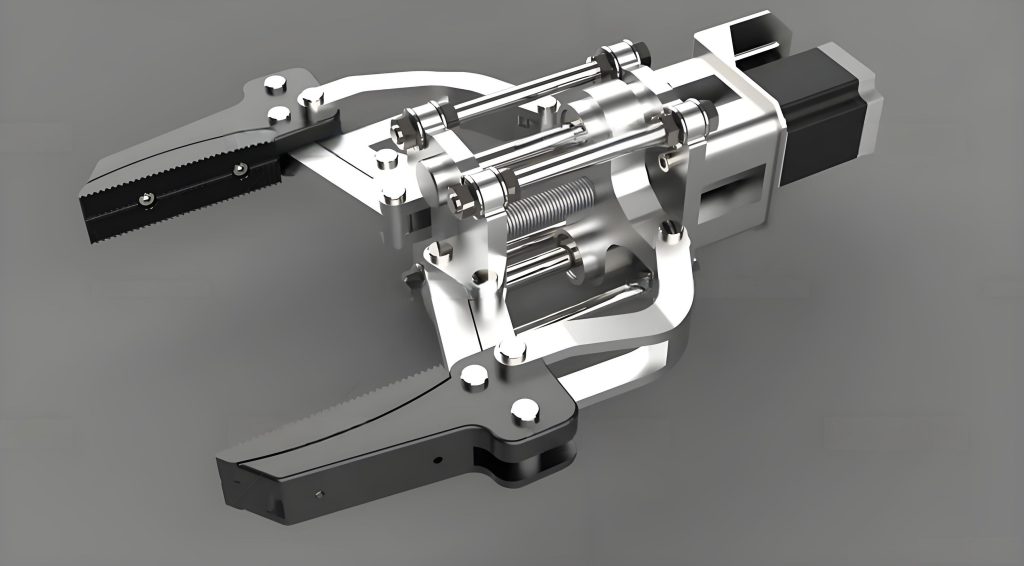
The development of an effective removal end effector is a complex mechatronic challenge. It must operate reliably within the constrained, unstructured, and often harsh environment of a poultry house. Key design constraints include: adapting to varying bird sizes and rigormortis states, minimizing physical damage to the carcass (which is important for post-mortem analysis), avoiding disturbance or injury to live birds, functioning effectively amidst litter, feathers, and manure, and integrating seamlessly with vision systems for targeting and robotic manipulators for positioning. The choice of design philosophy is heavily influenced by the housing system: cage-based versus cage-free (including floor and aviary) rearing.
End Effectors for Cage-Free (Floor and Aviary) Systems
In cage-free environments such as floor barns or multi-tier aviaries, spatial constraints are somewhat relaxed compared to battery cages. The absence of cage barriers simplifies access but introduces challenges related to navigating around live birds and coping with uneven litter surfaces. End effector designs for these systems can be broadly classified into two categories: integrated planar collection systems and discrete manipulator grippers.
Integrated Planar Collection Systems: These are typically larger, wheeled or tracked mobile units designed for floor-rearing systems. The end effector is an integral part of the vehicle’s front-end mechanism. A representative concept involves a horizontal sweeping or gathering apparatus. For instance, one documented system employs two rotating or pivoting panels that converge to gently herd a identified carcass onto a conveyor belt integrated into the platform. The primary function of this type of end effector is guiding and initial displacement rather than precise gripping. The mechanical advantage is simplicity and the ability to handle potential clusters of mortalities. The governing principle for the panel’s motion and force can be modeled to ensure it moves the carcass without causing excessive deformation. The required quasi-static pushing force $F_{push}$ must overcome the friction between the carcass and the litter:
$$F_{push} > \mu_{carcass-litter} \cdot m \cdot g$$
where $\mu_{carcass-litter}$ is the coefficient of friction, $m$ is the mass of the bird, and $g$ is gravitational acceleration. These systems prioritize robust displacement over delicate manipulation.
Discrete Manipulator Grippers: For multi-tier aviary systems with narrower walkways, a more targeted approach using a robotic arm is preferred. Here, the end effector is a specialized gripper attached to the arm’s wrist. Research has demonstrated grippers designed to securely grasp a bird’s legs. This method offers high precision, minimizes contact with the body (potentially reducing disease spread risk), and allows for direct vertical lifting and transfer to a collection bin. The grip must be firm enough to prevent dropping during the rapid accelerations of the robotic arm. The required gripping force $F_{grip}$ per contact point can be related to the inertial forces during maximum acceleration $a_{max}$:
$$F_{grip} \ge \frac{m \cdot a_{max}}{2 \cdot \mu_{grip-leg}}$$
where $\mu_{grip-leg}$ is the friction coefficient between the gripper pad and the bird’s leg. This design highlights a trade-off: targeted, low-disturbance removal versus the need for precise visual localization of the grippable features (legs).
| End Effector Type | Typical Mechanism | Advantages | Disadvantages | Key Design Parameter |
|---|---|---|---|---|
| Integrated Planar | Rotating/Pivoting Panels, Conveyors | Robust, handles clusters, simple control | Bulky, less precise, may disturb litter/birds | Panel sweep velocity $v_{sweep}$, conveyor speed |
| Discrete Leg Gripper | Two or Three-finger Adaptive Gripper | Precise, minimal body contact, low disturbance | Requires precise leg detection/positioning, complex control | Gripper jaw force $F_{grip}$, compliance adaptation |
End Effectors for Cage-Based Systems
Cage-based production, particularly for laying hens, presents the most formidable challenge for automation. The end effector must not only grasp the carcass but also first negotiate the cage door—a confined space often filled with live birds. This dual requirement has led to innovative, space-optimized designs, primarily falling into two evolutionary branches: simplified multi-finger hands and specialized clamping mechanisms.
Simplified Multi-Finger (Underactuated) Hands: These designs draw inspiration from robotic manipulators but dramatically simplify actuation to reduce size, weight, and complexity. A prevalent design uses a single actuator to drive multiple linkage-driven “fingers” through a differential mechanism. As the actuator retracts, the fingers close synchronously, conforming to the shape of the bird’s body. The kinematic relationship governing finger closure is critical. For a single finger with two phalanges and a torsional spring model for underactuation, the torque balance can be expressed as:
$$\tau_{act} = J(\theta)^T \cdot F_{contact}$$
where $\tau_{act}$ is the actuator torque, $J(\theta)$ is the Jacobian matrix mapping joint angles $\theta$ to fingertip motion, and $F_{contact}$ is the vector of contact forces. This underactuated design allows the end effector to envelop the carcass securely with a single motor, adapting passively to its geometry. Its advantage is a relatively natural and secure enveloping grasp; its challenge is ensuring it can reliably acquire a carcass that may be slumped in a corner amidst other birds.
Specialized Clamping Mechanisms: These designs prioritize mechanical simplicity and strength for the specific task of extraction. They often feature two opposing plates or curved surfaces that close horizontally or vertically to clamp the bird, typically across the torso or neck. Actuation is commonly via compact pneumatic cylinders or linear electric actuators. The fundamental requirement is to generate sufficient clamping force $F_{clamp}$ to overcome gravity and friction during extraction, without causing damage. A two-stage process is sometimes employed: first, a “hook” or “draw” mechanism pulls the carcass away from the cage back and into a more accessible position; second, the main clamp engages for the final removal. The static force model for the clamping stage is:
$$F_{clamp} \cdot \mu_{clamp-body} \ge m \cdot g$$
where $\mu_{clamp-body}$ is the friction between the clamp surface and the bird’s feathers/body. These end effector designs excel in providing a strong, reliable hold in tight spaces but may apply higher point pressures to the carcass.
| End Effector Type | Typical Mechanism | Advantages | Disadvantages | Key Design Parameter |
|---|---|---|---|---|
| Underactuated Multi-Finger | Single-motor driven linkage system | Shape-adaptive, secure enveloping grasp | Mechanically complex, can snag on cage wires | Linkage ratios, spring constants $k_{spring}$ |
| Two-Stage Clamp | Initial hook/draw + final pneumatic clamp | High extraction force, mechanically simple, space-efficient | Less adaptive, higher point pressure on carcass | Clamp stroke $s_{clamp}$, cylinder pressure $P$ |
| Basic Horizontal Clamp | Opposing plates driven by linear actuator | Very simple control, robust | Requires precise alignment, may crush carcass | Clamp closing force $F_{close}$, plate width |
Inspiration from End Effectors in Broader Agricultural Robotics
The field of agricultural robotics offers a rich repository of design principles that can inform the development of more advanced poultry mortality end effector designs. These systems have successfully tackled similar challenges of delicate handling, environmental variability, and target isolation.
Compliant and Soft Gripping: Harvesting robots for fragile fruits (e.g., tomatoes, strawberries) and mushrooms frequently employ compliant materials and soft robotic principles. For example, a mushroom harvesting end effector might use a flexible, conformable suction cup made of silicone. The suction pressure $P_{suction}$ required to lift an object is given by:
$$P_{suction} = \frac{m \cdot g}{A_{effective} \cdot \eta}$$
where $A_{effective}$ is the effective seal area and $\eta$ is a safety factor. Translating this to poultry, a compliant, softly-padded gripping surface on a clamping end effector could distribute pressure more evenly, reducing carcass damage and improving grip on irregular shapes. Variable stiffness materials could allow an end effector to be soft for initial contact and then stiffen for secure lifting.
Enveloping and Isolating Designs: To avoid disturbing adjacent produce, some fruit-picking end effectors use multi-degree-of-freedom mechanisms that envelope the target. A “wrapping” or “encircling” end effector for tomatoes gently surrounds the fruit before detachment. Analogously, a cage-based poultry end effector could incorporate thin, deployable flexible bands or nets that encircle the carcass, isolating it from neighboring live birds before lifting. This would address a major challenge in crowded cages.
Sensor Feedback Integration: Advanced agricultural end effectors integrate force/torque, tactile, and proximity sensors to modulate grip. A force-controlled end effector could use a simple model like a PID controller to adjust grip force $F_{grip}(t)$ in real-time:
$$F_{grip}(t) = K_p \cdot e(t) + K_i \cdot \int e(t) dt + K_d \cdot \frac{de(t)}{dt}$$
where $e(t)$ is the error between a desired “touch” force signal and the actual measured force. Implementing such feedback in a poultry removal end effector would be a significant step towards ensuring gentle, reliable handling across a wide range of carcass sizes and turgidity states.
Synthesis, Challenges, and Future Directions
The evolution of mortality removal end effector technology reflects a direct response to the specific geometric and husbandry constraints of different poultry housing systems. From simple planar pushers to sophisticated underactuated grippers, the core objective remains: reliable, sanitary, and low-disturbance removal. However, several persistent challenges must be overcome for widespread adoption:
- Dealing with Occlusion and Positioning: In cages, a carcass is often partially obscured by live birds or cage wires. The end effector must either be able to reach through clutter or work in tandem with a separate tool to first reposition the target.
- Hygiene and Decontamination: The end effector will contact diseased tissue and become contaminated. Future designs must incorporate easy-clean surfaces, disinfectant spray systems, or even disposable contact covers to prevent becoming a fomite for disease spread.
- Universal Design for Bird Size and State: An end effector must handle day-old chicks to end-of-lay hens, and from recently deceased to fully rigid carcasses. Compliance, adaptive sizing, and variable force control are essential.
- Integration with Perception and AI: The end effector‘s effectiveness is contingent on accurate detection (live vs. dead, type of mortality) and pose estimation by vision systems. Co-design of the perception pipeline and the end effector geometry is necessary.
Future research directions are likely to converge on hybrid, intelligent, and bio-inspired solutions:
- Hybrid Mechanism End Effectors: Combining the best features of existing designs—for example, an initial underactuated finger stage to gently gather and position, followed by a soft clamp for extraction.
- Bio-Inspired and Soft Robotics: Designs mimicking the gentle yet firm grip of a bird’s beak or the enveloping motion of a snake could lead to breakthroughs in adaptability and low damage. Pneumatic soft grippers with granular jamming or fiber-reinforced actuators are promising avenues.
- Active Perception in the End Effector: Embedding miniaturized cameras, tactile sensor arrays, or even olfactory sensors directly into the end effector fingers could provide real-time feedback for grip adjustment and confirmation of successful acquisition.
- Standardization and Modularity: Developing a modular end effector interface that can be quickly swapped on a mobile robotic platform would allow a single robot to perform multiple tasks (mortality removal, egg collection, health inspection) in a poultry house.
In conclusion, the automated removal of poultry mortalities represents a critical and complex problem in modern livestock management. The end effector is the pivotal technological component that translates automated detection into physical action. While significant progress has been made, tailoring designs to specific housing systems and overcoming the challenges of hygiene, variability, and integration remain active areas of research. By drawing inspiration from broader advancements in agricultural robotics, material science, and soft robotics, the next generation of poultry mortality removal end effector systems will be more adaptive, gentle, and intelligent, ultimately contributing to more sustainable, efficient, and humane poultry production systems.