
The evolution of urban mobility and the exponential growth in global vehicle ownership have precipitated a critical challenge: the severe shortage of parking space. Traditional parking structures, often characterized by inefficient space utilization, driver stress, and time consumption, are increasingly inadequate. In this context, the emergence of the AGV (Automated Guided Vehicle) Intelligent Robot Parking Garage represents a paradigm shift. This system, arguably the most advanced form of automated parking, leverages cutting-edge robotic technology to create a fully automated, high-density, and user-friendly parking solution. The core of this system is the intelligent robot—a sophisticated autonomous vehicle designed specifically for the precise and safe transportation of cars within a dedicated facility. The implementation of such systems delivers profound economic, political, and social benefits by optimizing resource allocation, alleviating urban congestion, enhancing citizen convenience, and contributing to the fabric of a smarter, more harmonious city.
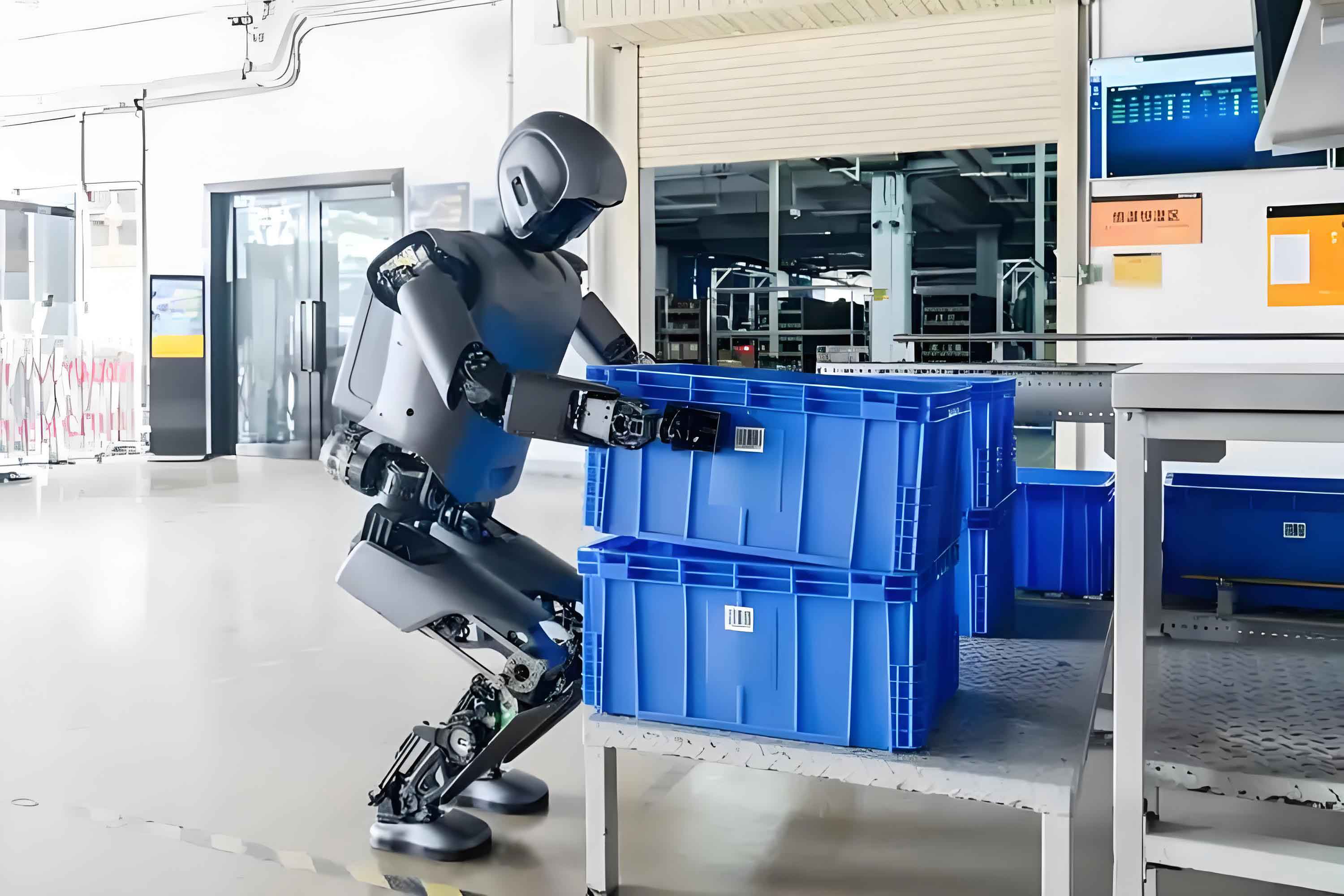
The operational principle of an AGV Intelligent Robot Parking Garage is fundamentally different from conventional or even semi-automated mechanical parking systems. Drivers or users only need to drive their vehicles into a designated transfer cabin at the entrance. Once the vehicle is properly positioned and the user exits, the system’s sensors scan the vehicle’s dimensions and wheel placement. An intelligent robot is then dispatched, navigates to the transfer cabin, securely lifts or engages with the vehicle, and transports it to an optimally calculated storage location within the dense storage grid. The entire storage and retrieval process is managed by a central control system, requiring no human intervention in the storage area, thus maximizing safety and density.
Core Technology of the Parking Intelligent Robot
The efficacy of the entire garage hinges on the capabilities of the parking intelligent robot. These robots are engineered marvels integrating navigation, perception, manipulation, and communication technologies. Their design must account for payload capacity (standard passenger vehicles), precise positioning (< ±10 mm), robust safety protocols, and efficient energy management.
The primary technological differentiators among various intelligent robot solutions lie in their navigation methods and vehicle交接 (handover) mechanisms.
| Navigation Technology | Principle | Advantages | Considerations |
|---|---|---|---|
| Laser SLAM (Simultaneous Localization and Mapping) | Uses rotating LiDAR sensors to create and continuously update a map of the environment, while simultaneously determining the robot’s position within it. | High accuracy, flexibility (no fixed tracks), adaptable to layout changes. | Higher sensor cost; performance can be affected by highly reflective or absorbent surfaces. |
| Magnetic Tape/Guidance | Follows a pre-defined path marked by magnetic tape or strips embedded in the floor. | Low cost, reliable, simple technology. | Inflexible; path changes require physical re-taping. Prone to damage or magnetic interference. |
| Natural Feature Navigation (Visual SLAM) | Uses optical cameras and algorithms to recognize natural or artificial landmarks (walls, columns, signs) for navigation. | No infrastructure needed on the floor, highly flexible. | Dependent on consistent lighting and landmark visibility; computationally intensive. |
| Hybrid (e.g., LiDAR + Inertial + Magnetic Markers) | Combines multiple methods (e.g., LiDAR for general navigation, discrete magnetic nails for precise position calibration). | Offers redundancy, high precision (e.g., <5mm at target points), and robustness. | More complex system integration and calibration. |
The vehicle交接 mechanism defines how the intelligent robot physically interacts with and transports the car. The choice impacts system speed, infrastructure cost, and mechanical complexity.
| Vehicle Handover Type | Mechanism | Process Flow | Key Parameters |
|---|---|---|---|
| Comb/梳齿 Type | The robot has a set of mobile “comb” tines. These interleave with a fixed set of tines on a stationary platform or another robot to transfer the vehicle. | 1. Robot aligns under vehicle on fixed comb. 2. Robot raises its tines, lifting the vehicle. 3. Robot departs with vehicle. | Tine strength/stiffness critical. Max speed: ~1.5 m/s. High efficiency for direct transfers. |
| Pallet/车抬板 Type | Each parking space holds a pallet. The robot slides under and lifts the entire pallet carrying the vehicle. | 1. User parks on a pallet in cabin. 2. Robot lifts and transports pallet+vehicle. 3. At destination, robot lowers pallet. | Requires one pallet per parking spot. Lower mechanical complexity for robot. Efficiency reduced by pallet management. |
| Tire-clamp/夹持式 Type | The robot uses clamping arms to grip the vehicle’s tires directly, lifting the chassis. | 1. Robot positions under vehicle. 2. Clamping arms close on tires. 3. Robot lifts and transports vehicle. | Must adapt to varied tire sizes/positions. Simpler station infrastructure. Careful pressure control required. |
| Forklift Type | Similar to warehouse AGVs, uses forks to engage with a special sled or frame under the vehicle. | Vehicle must be parked on a dedicated sled. Robot engages forks with sled. | Common in adapted industrial AGVs. Dependent on sled availability and positioning. |
In-Depth Technical Analysis and System Components
A fully functional AGV Intelligent Robot Parking Garage is a complex cyber-physical system. Its performance can be modeled and analyzed through several key technical lenses.
1. Control System and Traffic Scheduling
The Warehouse Management System (WMS) or Central Control System is the “brain.” It must solve complex, real-time scheduling and path-planning problems to optimize throughput. The core challenge is minimizing the Average Access Time (AAT) for users while maximizing the utilization of multiple intelligent robot agents. This is a multi-agent resource scheduling problem.
Let $R = \{r_1, r_2, …, r_n\}$ be the set of intelligent robot agents. Let $J = \{j_1, j_2, …\}$ be the set of jobs (store/retrieve requests). Each job $j_k$ has an origin $O_k$, a destination $D_k$, and a submission time $T_k^s$. The system must assign a robot $r_i$ to each job and compute an optimal collision-free path $\pi_{i,k}$ from its current position $P(r_i)$ to $O_k$ and then to $D_k$.
A simplified objective function for the scheduler might be to minimize the total weighted completion time:
$$ \text{Minimize } Z = \sum_{k} w_k (C_k – T_k^s) $$
where $C_k$ is the completion time of job $j_k$, and $w_k$ is a priority weight (e.g., higher for retrieval requests). This is subject to constraints:
- Non-interference: Paths $\pi_{i,k}$ and $\pi_{i’,k’}$ must not cause spatial-temporal collisions. This is often ensured by using zone control, traffic rules, or real-time re-planning algorithms like Velocity Obstacles.
- Battery constraints: $E(r_i) \ge E_{threshold}$ for assigned jobs, where $E(r_i)$ is the remaining battery of robot $r_i$.
Common algorithms used include:
| Algorithm Type | Application in Intelligent Robot Garage |
|---|---|
| Dijkstra’s / A* Algorithm | Finds the shortest path for a single robot on a graph representation of the garage layout. |
| Multi-Agent Path Finding (MAPF) | Solves paths for all robots simultaneously to avoid deadlocks and conflicts (e.g., CBS – Conflict-Based Search). |
| Vehicle Routing Problem (VRP) Heuristics | Used for batch scheduling when multiple jobs can be assigned to one robot in a sequence to reduce empty travel. |
2. Sensor Fusion and Localization
Precise localization is non-negotiable. A typical high-precision intelligent robot employs sensor fusion. A common model uses LiDAR scans matched against a pre-built map (for global localization) fused with wheel odometry and inertial measurement unit (IMU) data. The state estimation can be framed as a Bayesian filtering problem, often solved by a Kalman Filter or its non-linear variant, the Extended Kalman Filter (EKF).
Let the robot’s state at time $t$ be $\mathbf{x}_t = [x_t, y_t, \theta_t]^T$ representing 2D position and orientation. The prediction step uses motion model $\mathbf{x}_t = f(\mathbf{x}_{t-1}, \mathbf{u}_t) + \mathbf{w}_t$, where $\mathbf{u}_t$ is control input (e.g., wheel encoder counts) and $\mathbf{w}_t$ is process noise. The update step uses observation model $\mathbf{z}_t = h(\mathbf{x}_t) + \mathbf{v}_t$, where $\mathbf{z}_t$ is the sensor measurement (e.g., LiDAR point cloud matched to map) and $\mathbf{v}_t$ is measurement noise. The EKF linearizes $f$ and $h$ to estimate the posterior state $\hat{\mathbf{x}}_t$.
The final positioning error $\sigma_{pos}$ must satisfy: $\sigma_{pos} \ll W_{vehicle}/2$, where $W_{vehicle}$ is the vehicle width, to ensure safe handling in narrow aisles.
3. Energy Management and Sustainability
AGV intelligent robots are electrically powered, primarily by Lithium-ion batteries. Energy autonomy is crucial for 24/7 operation. The energy consumption per transport cycle $E_{cycle}$ can be modeled as:
$$ E_{cycle} = E_{travel} + E_{lift} + E_{auxiliary} $$
where $E_{travel} = \int_{t_0}^{t_f} (F_{roll} + F_{acc}) v(t) \, dt$ (over the travel path), $E_{lift} = m g h / \eta_{lift}$ (energy to lift vehicle mass $m$ by height $h$), and $E_{auxiliary}$ powers computing, sensors, and communications.
Efficient systems employ opportunity charging. Robots autonomously navigate to charging stations when their state of charge (SoC) falls below a threshold $SoC_{low}$, or during predicted low-demand periods. The required number of charging spots $N_{charge}$ in a garage with $N_r$ robots can be estimated by:
$$ N_{charge} \approx \left\lceil \frac{N_r \cdot \bar{E}_{cycle} / \bar{T}_{cycle}}{P_{charge}} \cdot T_{charge} \right\rceil $$
where $\bar{T}_{cycle}$ is average cycle time, $P_{charge}$ is charging power, and $T_{charge}$ is required charging time to reach $SoC_{high}$.
Comparative Advantages and Quantitative Benefits
The superiority of the AGV intelligent robot system over traditional parking is not merely qualitative but can be quantified across multiple dimensions.
1. Space Efficiency and Parking Density
Traditional parking requires generous space for driving lanes, turning radii, and door clearance. An AGV garage eliminates almost all of this. The space saving translates directly into increased parking capacity. The density multiplier $\rho$ can be expressed as:
$$ \rho = \frac{N_{AGV}}{N_{Traditional}} \approx \frac{A_{floor} / (W_{car} \cdot L_{car})}{A_{floor} / ((W_{car}+C_w) \cdot (L_{car}+C_l) + A_{lane})} $$
where $C_w$ and $C_l$ are clearance margins needed for human exit/entry, and $A_{lane}$ is the area allocated per parking spot for access lanes. Typically, $\rho$ ranges from **1.4 to 2.0**, meaning a 40% to 100% increase in the number of parking spots within the same building footprint. Furthermore, the required clear height per parking level can be reduced by approximately 0.5 to 0.8 meters since no human occupancy or ventilation standards are as stringent, leading to lower construction costs or more levels within the same building envelope.
2. Economic and Operational Analysis
The total cost of ownership (TCO) analysis reveals compelling economics despite higher initial capital expenditure (CapEx).
| Cost/Benefit Factor | Traditional Parking Garage | AGV Intelligent Robot Garage | Quantitative Impact |
|---|---|---|---|
| Construction Cost (per spot) | Baseline Cost (Cbase) | ~1.2 to 1.5 × Cbase (higher tech cost) | Higher initial CapEx. |
| Land Efficiency | 1× (Baseline spots/area) | 1.4× to 2.0× spots/same area | Effective cost per spot on valuable land is lower. |
| Operational Staff | Requires attendants, security, cashiers. | Fully unmanned operation; remote monitoring only. | OPEX reduction of 60-80% on labor. |
| Damage & Liability | High risk of user-inflicted scratches, dents, collisions. | Virtually eliminated. Controlled by intelligent robot. | Reduces insurance premiums and maintenance claims. |
| Revenue Potential | Standard hourly/daily rates. | Premium pricing for security, convenience, and speed. Higher turnover rate. | Increased revenue per spot per day. |
| Energy Consumption | Continuous lighting, ventilation for human comfort. | Minimal lighting/ventilation in storage area. Robot charging is main load. | Overall energy use can be 30-50% lower. |
The Return on Investment (ROI) period is often attractive for projects in high-density urban centers with expensive land. A simplified ROI calculation, ignoring financing, is:
$$ T_{ROI} \approx \frac{C_{CapEx, AGV} – C_{CapEx, Trad}}{\Delta AnnualCashFlow} $$
where $\Delta AnnualCashFlow$ includes increased revenue, reduced OPEX, and lower opportunity cost of land.
3. Social and Urban Planning Benefits
The benefits extend beyond economics into the social and political realm, aligning with smart city goals.
| Benefit Category | Description |
|---|---|
| Traffic Congestion Mitigation | Reduces “cruising for parking,” which can account for ~30% of urban traffic. Faster entry/exit minimizes queueing at garage entrances. |
| Safety and Security | No pedestrian-vehicle conflict inside. Vehicles are protected from theft, vandalism, and environmental damage. Enhances user perception of safety, especially at night. |
| Accessibility and Inclusion | Eliminates the challenge of parking in tight spaces for all drivers, regardless of skill level. Simplifies parking for people with mobility challenges. |
| Urban Aesthetics and Land Use | Facilities can be built with smaller footprints and façades, preserving urban landscape. Can be constructed underground or in irregularly shaped plots unusable for traditional garages. |
| Environmental Impact | Reduces emissions from cruising vehicles. Encourages the use of dedicated parking structures over street parking, freeing up curb space for green areas, cycling lanes, or pedestrian zones. |
| Data Generation | Operates as a data node in the IoT network of a smart city, providing insights into parking demand patterns for better urban planning. |
Market Trends, Challenges, and Future Trajectory
The global market for AGV intelligent robot parking is in a growth phase, driven by urbanization, smart city investments, and automotive trends like ride-hailing and eventual autonomous vehicles.
Current Challenges and Mitigations
- High Initial Investment: The cost of intelligent robot fleets and control software is significant. Mitigation lies in standardized, modular designs, economies of scale as adoption increases, and innovative financing models like Parking-as-a-Service (PaaS).
- Technical Complexity and Reliability: System downtime is unacceptable. Solutions involve robust fault-tolerant design, redundant critical components (e.g., sensors, communication), and comprehensive predictive maintenance using AI to analyze robot health data.
- Interoperability and Standardization: Lack of universal standards can lead to vendor lock-in. Industry consortia are working on standard communication protocols (e.g., VDA 5050 for AGV-Controller communication) and interface definitions.
- Public Acceptance and Trust: Handing over a valuable asset to a machine requires trust. Transparent user interfaces, real-time status updates, and insurance-backed guarantees are key to adoption.
- Handling Exceptional Vehicles: Very long, wide, low-clearance, or damaged vehicles pose challenges. Systems may require designated oversized compartments or manual override protocols.
Future Development Directions
The next generation of these systems will be even more integrated and intelligent:
- Deep AI Integration: Beyond scheduling, AI will be used for anomaly detection (e.g., detecting fluid leaks from parked cars), predictive capacity planning, and dynamic pricing models.
- Symbiosis with Autonomous Vehicles (AVs): The ultimate vision is for self-driving cars to drop themselves at the garage entrance and communicate directly with the intelligent robot management system, creating a seamless mobility chain.
- Multi-Functional Hubs: AGV garages will evolve into urban logistics hubs where intelligent robots not only park cars but also handle last-mile package delivery, electric vehicle charging/battery swapping, and vehicle servicing in the storage bay.
- Advanced Robotics: Development of faster, more agile robots using technologies like omnidirectional wheels (Mecanum, omni wheels) for tighter maneuvers, and more adaptive gripping mechanisms.
- Decentralized Control with Blockchain: For multi-owner or public-private partnership garages, blockchain could provide secure, transparent, and automated transaction logging and access control.
Conclusion
The AGV Intelligent Robot Parking Garage is far more than an automated version of a traditional facility; it is a re-imagination of static transportation infrastructure using dynamic robotic agents. At its heart lies the sophisticated intelligent robot, a symbol of the convergence of mechanical engineering, robotics, artificial intelligence, and IoT. The quantifiable advantages in spatial density, economic efficiency, safety, and user experience present a compelling case for its adoption. While challenges in cost and complexity remain, the trajectory is clear: as cities grow denser and smarter, and as vehicle technology advances, the role of the fully automated, high-throughput, and user-centric parking solution powered by intelligent robots will become increasingly central. It represents a critical piece in solving the urban mobility puzzle, transforming parking from a persistent problem into a seamless, efficient, and even revenue-generating service that enhances the quality of urban life and paves the way for the transportation ecosystems of the future.