
A recent international-affairs commentary has challenged a wave of reporting that portrays China as preparing a “humanoid robot army,” arguing that the narrative is built on inference, dual-use records and selective framing rather than evidence of deployed armed systems. The commentary examines a long-form report by an international wire service that used the second World Humanoid Robot Games as a starting point – where humanoid robots ran, boxed and danced before audiences – before pivoting to claims that Chinese military institutions are testing humanoid robots for battlefield needs.
The central problem, according to the commentary, is not that public procurement notices, academic papers, patents and official publications are irrelevant. The problem is that such material can be assembled into a frightening picture without establishing the specific claim being made. The wire-service report itself acknowledged that there is no evidence to date that People’s Liberation Army combat units have deployed armed humanoid robots. If no such evidence exists, the commentary asks, how can the existence of “war preparation” be asserted as fact rather than speculation?
The commentary argues that the answer lies in a familiar pattern of threat inflation. It cites an earlier report by the Quincy Institute for Responsible Statecraft, titled “Threat Inflation and the Chinese Military,” which warned that portraying Beijing’s military challenges in absolute, worst-case terms amounts to describing China as a “ten-foot giant.” That earlier report concluded that exaggerating a threat can be more dangerous than underestimating it. Years later, the commentary says, the same script has been revived with a new prop: the humanoid robot.
1. The controversy at a glance
The dispute centers on how a technology still in early development is being translated into a military narrative. Humanoid robots have become a visible symbol of advances in robotics, artificial intelligence, sensors, actuators and control systems. Their appearance at public events – running, boxing, dancing and recovering from stumbles – is naturally dramatic. But public demonstrations are not combat deployments. A humanoid robot that can entertain a crowd is not automatically a humanoid robot ready for war.
The commentary notes that the wire-service report moved from the joy and occasional instability of humanoid robots at the games to a claim that Chinese military institutions are testing humanoid robots around battlefield requirements. It said the report was based on a review of more than 100 Chinese military procurement notices, academic papers, patents and official publications. The report then asserted that China is preparing humanoid robots for combat. Other outlets followed quickly, and the image of a “Chinese humanoid robot army” spread across front pages and broadcast segments almost overnight.
Yet the same report, according to the commentary, conceded an essential point: there is no evidence that PLA combat forces have deployed armed humanoid robots. That concession matters. It means the public record may show research interest, procurement activity, academic exploration or industrial planning, but it does not show an armed humanoid robot formation ready for battle. The leap from dual-use research to a battlefield army is a leap of interpretation, not a conclusion supported by disclosed evidence.
The commentary describes the method as裁剪拼接 – a phrase that, in English, means cutting and stitching together disparate records. Public procurement information can reflect logistics, inspection, disaster response, research and testing. Academic papers can explore control algorithms, mobility, sensing and human-machine interaction. Patents can protect commercial technology with many possible applications. Official publications can discuss long-range research priorities. None of these records, taken alone or together, automatically proves that a humanoid robot is being armed and prepared for combat deployment.
2. What the evidence does and does not show
The commentary’s core factual point is simple: the gap between “research and procurement interest” and “armed combat deployment” is enormous. That gap is especially wide for humanoid robots, which face severe challenges in power supply, balance, durability, sensing, communications, autonomy, maintenance and cost. A humanoid robot may be useful in a laboratory, a factory, a disaster zone or a public demonstration long before it is useful in a contested battlefield environment.
| Claim in the public narrative | Evidence described in the commentary | Important qualification |
|---|---|---|
| China is preparing a humanoid robot army for war. | The wire-service report reviewed more than 100 public procurement notices, academic papers, patents and official publications. | The report itself acknowledged that no evidence shows PLA combat units have deployed armed humanoid robots. Public records do not establish weaponized deployment. |
| Military interest in humanoid robots equals battlefield readiness. | Public records may show testing, research interest and procurement activity around battlefield needs. | Research, testing and procurement can serve logistics, inspection, rescue, medical support or dual-use industrial goals. Interest is not deployment. |
| Humanoid robots are close to practical combat use. | Some companies and commentators promote ambitious timelines and dramatic demonstrations. | Industry analysts and defense researchers cited in the commentary describe the humanoid robot as not yet a practical battlefield system, with possible timelines of 5 to 10 years. |
| The United States is only studying the issue while others prepare for war. | A U.S. startup developed a military-focused humanoid robot called the Phantom MK1; two prototypes were sent to the Ukraine front line in February; U.S. military services signed about $24 million in research contracts; the Pentagon awarded artificial-intelligence contracts with ceilings of up to $200 million each to four major technology companies. | The public record described in the commentary shows real military humanoid robot and AI programs in the United States, undercutting a one-sided narrative of who is moving the technology toward the battlefield. |
The table does not resolve every question about any country’s military research. It does show why the commentary treats the “humanoid robot army” story as premature. A humanoid robot can be a platform for research. A humanoid robot can be a symbol of industrial ambition. A humanoid robot can be a public attraction. None of those roles proves that a humanoid robot is a deployed weapon.
The commentary also places the current debate in the context of threat inflation. It recalls the Quincy Institute warning that worst-case framing can distort policy, waste resources and increase the risk of confrontation. The same logic applies to the humanoid robot. If every procurement notice is read as a preparation for armed humanoid robot combat, then ordinary research becomes evidence of imminent war. If every academic paper is treated as a weapons blueprint, then open scientific publication becomes suspicious by default. The result is not better understanding but a permanent state of alarm.
3. The double standard: who is moving humanoid robots toward the battlefield?
The commentary asks a pointed question: who actually wants humanoid robots to go to war? Its answer is that the clearest public evidence does not point to China alone. It points to programs and statements in the United States and its defense industrial ecosystem. The commentary cites a deep report by a major U.S. weekly magazine in March describing a U.S. startup, Foundation Future Industries, which developed a military-use humanoid robot called the Phantom MK1. Two prototypes were sent to the Ukraine front line in February, according to that account, and the U.S. Marine Corps was preparing to have the humanoid robot learn door-breaching tactics for explosive entry.
The commentary also cites a May report by a U.S. business news channel that described deeper military involvement. The U.S. Army, Navy and Air Force had signed research contracts worth about $24 million with the company, according to that report, to examine the feasibility of inspection, logistics and weapon operation. The company described its humanoid robot as the first to enter a war zone and said it planned to put the humanoid robot into frontline testing with U.S. forces within 12 to 18 months.
Earlier, the commentary notes, the Pentagon awarded artificial-intelligence contracts with ceilings of up to $200 million each to four Silicon Valley giants, including Google and OpenAI. Defense officials were quoted as saying the goal was to “maintain strategic advantages over adversaries.” The commentary argues that this record makes the double standard hard to miss: the same ecosystem that is moving humanoid robots and military AI toward real battlefields is also promoting alarm about another country’s humanoid robot research.
This is not a minor inconsistency. It shapes how the public understands risk. If one country’s humanoid robot prototypes are sent to a front line, the story is often framed as innovation, experimentation or support for allies. If another country’s public records mention humanoid robot testing, the story is framed as preparation for a “robot army.” The technology is the same category; the interpretive frame is not. The commentary argues that such framing is unlikely to persuade careful readers, including Western audiences who can see the contradiction between “no evidence of deployment” and “war preparation” in the same report.
The double standard also affects the policy debate. A serious discussion of military AI and humanoid robots requires consistent standards. If armed humanoid robots are a concern, then every country’s armed humanoid robot programs should be discussed with the same scrutiny. If humanoid robot prototypes in war zones are acceptable, then the language of alarm should be applied with equal care everywhere. Selective outrage does not create stability. It creates suspicion and encourages a race to be first.
4. Industry consensus: the humanoid robot is not yet a practical battlefield system
The commentary does not deny that humanoid robots may have military relevance in the future. It argues instead that the distance between demonstration and deployment is still large. It cites a report by a major U.S. financial newspaper in December with a headline that said companies making humanoid robots themselves believe the field is overhyped. That is a significant admission from inside the industry. If the builders of humanoid robots see exaggeration, then public narratives that treat every humanoid robot demonstration as a sign of imminent combat should be treated with caution.
The commentary also cites a study by the Center for Strategic and International Studies on the Ukraine battlefield, published in March, which acknowledged a large gap between the ideal and reality of artificial intelligence. In bad weather, sensors can fail. Tracking fast-moving targets remains difficult. These are not minor technical details; they are core challenges for any humanoid robot expected to operate in complex, chaotic and contested environments. A humanoid robot that works in a controlled demonstration may struggle in rain, mud, smoke, dust, electronic interference and damaged infrastructure.
Even analysts known for强硬 positions on China have acknowledged the limits. The commentary notes that an analyst at the Australian Strategic Policy Institute, a think tank often associated with a tough line toward China, said during the current hype cycle that the humanoid robot is “not a practical battlefield system” at present and that practical battlefield use may be 5 to 10 years away. That assessment is not a defense of any country’s military program. It is a technical judgment about the state of the humanoid robot.
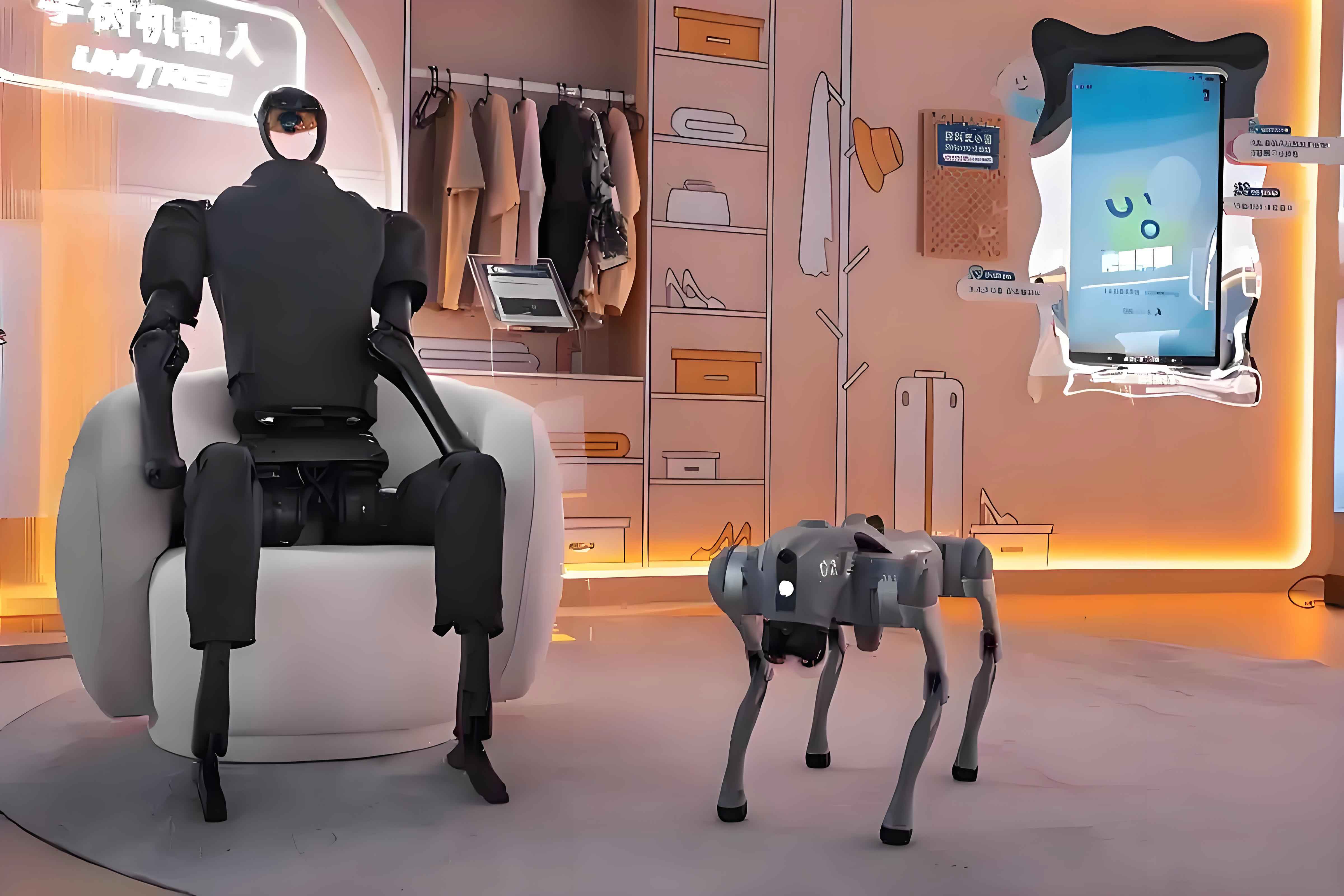
The commentary argues that the most realistic and most humane use of the humanoid robot today is not to replace soldiers in combat but to take over dangerous tasks that put people at risk. A humanoid robot could be sent into a toxic zone to detect hazards. A humanoid robot could enter rubble after a disaster to search for survivors. A humanoid robot could handle inspection work in environments that are unsafe for humans. These are meaningful advances. They are also very different from a humanoid robot that selects and attacks targets.
This distinction matters for public debate. If the humanoid robot is presented only as a future weapon, then research that could save lives is tainted by suspicion. If the humanoid robot is presented honestly – as a promising but immature technology with both civilian and military potential – then the discussion can focus on rules, safeguards and priorities. The commentary’s objection is not to research. It is to the conversion of research into a war scare.
5. The real risk is an uncontrolled race toward military artificial intelligence
The commentary warns that the most serious danger is not a single laboratory in a single country. The most serious danger is an uncontrolled competition to militarize artificial intelligence and robotic systems. It cites a warning from a research team at RAND Europe that hype around military artificial intelligence can “create an arms-race narrative and increase the risk of inadvertent escalation in a crisis.” That warning is directly relevant to the humanoid robot debate. When every test is described as preparation for war, and every procurement notice is treated as a secret weapons program, the space for restraint shrinks.
The commentary also cites United Nations Secretary-General Antonio Guterres, who spoke in July at the Global Artificial Intelligence Governance Dialogue in Geneva. He said the world should call the issue by its name – “killer robots.” Machines that select and strike targets and take lives without human control and judgment are, he said, morally repugnant and must be prohibited by international law. That statement sets a clear standard. The debate should not be about which country can build a humanoid robot fastest. It should be about whether human beings will允许 machines to make life-and-death decisions.
The commentary argues that the international community now needs all major powers to sit at the table and establish rules and consensus. It does not need a race to find excuses for war in another country’s procurement notices. The question is not whether a humanoid robot can be built. The question is what a humanoid robot should be allowed to do. If the answer is that a humanoid robot must never select and kill without human control, then the rules should be written clearly and applied consistently.
This is why the commentary treats the “humanoid robot army” narrative as a distraction. A focus on a supposed Chinese humanoid robot army can obscure the more immediate problem: the absence of agreed international rules for military AI and armed humanoid robots. It can also create a self-fulfilling dynamic. If one side believes the other is secretly building a humanoid robot army, it may accelerate its own humanoid robot programs. If both sides do that, the risk of miscalculation grows. The humanoid robot becomes not a tool of stability but a symbol of mistrust.
The commentary concludes with a question that is both ethical and practical: do we want to teach robots to shoot? The answer cannot be left to hype, fear or selective reporting. A humanoid robot that can dance is not a humanoid robot that should go to war. A humanoid robot that can inspect a toxic site is not a humanoid robot that should decide who lives and who dies. The international community needs rules, transparency and restraint – not a contest in threat inflation.
6. Key takeaways
- The humanoid robot narrative at issue relies on public records that may be dual-use, while the originating report acknowledged no evidence of armed humanoid robot deployment by PLA combat units.
- The commentary argues that threat inflation around the humanoid robot repeats an older pattern of describing military challenges in worst-case terms.
- Public reporting cited in the commentary describes U.S. military humanoid robot prototypes, frontline testing plans and defense contracts, raising questions about double standards.
- Industry and defense analysts cited in the commentary describe the humanoid robot as not yet a practical battlefield system, with possible practical use 5 to 10 years away.
- The most realistic near-term use of the humanoid robot is to take on dangerous inspection, rescue and hazardous-environment tasks, not to replace human judgment in combat.
- The greater risk is an uncontrolled military AI race; the commentary calls for international rules and consistent standards rather than selective alarm about another country’s humanoid robot research.
- The debate should focus on whether a humanoid robot should ever be allowed to select and strike targets without human control, and on what rules should govern military AI.