
Anhui Province has introduced a new implementation framework aimed at accelerating the high-quality development of its robot industry, with industrial robots positioned as a near-term competitive priority and humanoid robot development placed at the center of its future-oriented industrial layout. The policy, titled Implementation Opinions on Promoting the High-Quality Development of the Robot Industry and issued as Wan Zheng Ban [2026] No. 9 by the provincial government office, was presented at a policy interpretation press conference held by the Information Office of the Anhui Provincial People’s Government on September 28, 2026.
The new framework sets a clear long-term direction for Anhui’s robot sector. By 2030, the province aims to place industrial robot output among the country’s front ranks and to move humanoid robot output into the national first tier. By 2035, Anhui intends to achieve further progress in both industrial robot and humanoid robot output and to build a robot industry cluster with important national influence. The policy also identifies robot and embodied intelligence as strategic tracks in which Anhui has a foundation, advantages, and a leading position, and it describes these tracks as among the most certain opportunities during the province’s 15th Five-Year Plan period.
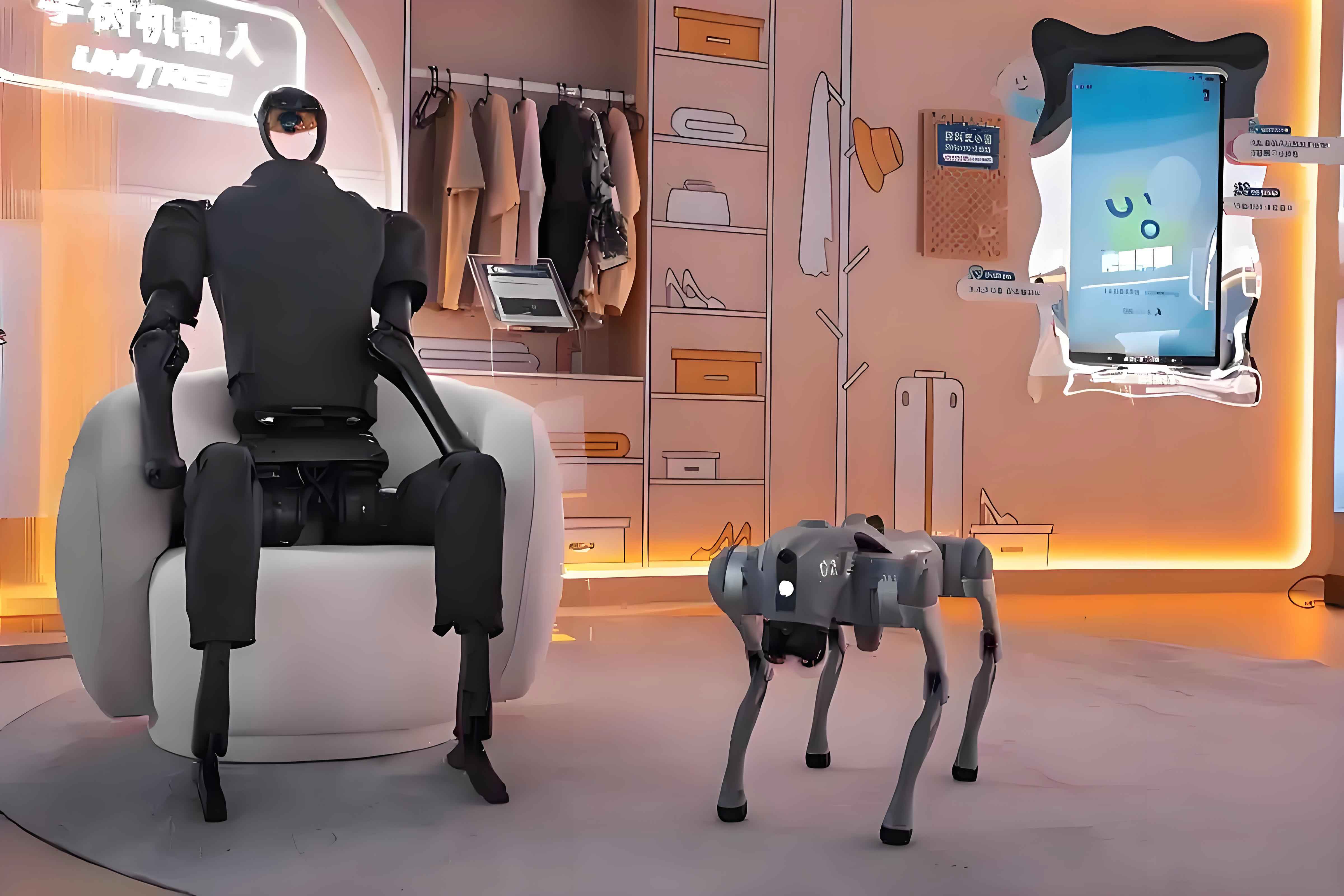
- Policy context and strategic positioning
The implementation opinions reflect a carefully structured effort to strengthen Anhui’s position in an increasingly competitive national robot landscape. The province states that robot and embodied intelligence are fields with both a solid industrial base and clear strategic potential, and it argues that a window of intense national competition requires advance planning and an upgraded approach. The policy positions the robot industry as a new and emerging pillar industry for Anhui, with industrial robots serving as the main field for advancing competitiveness and humanoid robot development serving as a key area for future layout.
Anhui’s approach is not limited to a single product category. The province intends to concentrate resources on gaining advantage in selected high-potential segments, creating several industry “peaks” before moving toward a broader “plateau” across the full industrial chain and the full innovation ecosystem. This logic gives both industrial robots and humanoid robot technologies a defined role: industrial robots provide scale, application experience, and near-term industrial momentum, while humanoid robot innovation provides a pathway toward future breakthroughs, new forms of embodied intelligence, and long-term strategic differentiation.
The policy framework is systematic. It proposes 7 aspects and 23 measures designed to reinforce strengths and close gaps. In industrial layout, the framework emphasizes leveraging existing integrated-machine advantages while addressing shortcomings in core components and model algorithms. In task allocation, it seeks to mobilize provincial departments and resources while encouraging cities to pursue differentiated development and stronger industrial coordination. In policy design, it combines common and routine measures with Anhui-specific and potentially high-impact unconventional measures.
This balanced structure is important for the humanoid robot sector. A humanoid robot is not a standalone product; it depends on advanced components, sensing, control, artificial intelligence, model algorithms, testing, and application scenarios. By combining near-term industrial robot scale with future-oriented humanoid robot development, Anhui is attempting to create a policy environment in which supply-chain improvements, innovation platforms, and application demand can reinforce one another.
- Industrial base and current performance
Anhui’s robot industry has already formed a layout led by Hefei and Wuhu as dual cores, with other cities providing multi-point support. The province has also built a full-chain conversion channel that runs from basic research to pilot verification and then to industrialization. This structure provides a foundation for both industrial robot expansion and humanoid robot development, because it links research capacity, testing and validation, and commercial application within a coordinated regional system.
In terms of industrial scale, Anhui’s robot industry and comprehensive competitiveness are in the country’s first echelon. Industrial robot output has exceeded a monthly average of 5,000 units. Service robot output grew by 84.1 percent year on year from January to August 2026. In the humanoid robot field, 31 prototypes have been developed. These figures are not presented as final endpoints; they indicate the existing base on which the new implementation opinions intend to build.
The humanoid robot figure is especially significant because it shows that Anhui has already moved beyond purely conceptual discussion. The development of 31 humanoid robot prototypes provides a platform for further work in component integration, control systems, embodied intelligence, testing, and scenario validation. At the same time, the policy recognizes that prototype development must be connected to productization, supply-chain maturity, and application expansion if humanoid robot innovation is to become a durable industrial advantage.
| Indicator | Policy direction or reported baseline |
|---|---|
| Industrial robot output | Enter the country’s front ranks by 2030 and achieve further progress by 2035 |
| Humanoid robot output | Enter the national first tier by 2030 and achieve further progress by 2035 |
| Long-term cluster goal | Build a robot industry cluster with important national influence by 2035 |
| Policy architecture | 7 aspects and 23 measures |
| Industrial robot output baseline | Monthly average exceeded 5,000 units |
| Service robot output growth | Up 84.1 percent year on year from January to August 2026 |
| Humanoid robot prototype development | 31 prototypes developed |
| Regional layout | Hefei and Wuhu as dual cores, with other cities providing multi-point support |
| Automotive industry base | 7 vehicle enterprises, including Chery, NIO, and JAC, with a relatively complete component support system |
| Automotive-robot application examples | NIO F2 factory selected as a global lighthouse factory; JAC Zunjie super factory equipped with more than 1,800 intelligent robots |
| Innovation platform base | More than 400 intelligent connected new energy vehicle science and technology innovation platforms |
- Development goals through 2030 and 2035
The implementation opinions establish a two-stage goal structure. By 2030, Anhui aims to place industrial robot output among the national front ranks and to move humanoid robot output into the national first tier. By 2035, the province intends to make further progress in both industrial robot and humanoid robot output and to complete the construction of a robot industry cluster with important national influence.
The humanoid robot goal is notable because it links a future-oriented technology to a measurable industrial outcome. The policy does not treat the humanoid robot as a purely experimental category. Instead, it places humanoid robot output within a broader development timeline that connects research, prototyping, product development, and industrial scale. This approach gives research institutions, enterprises, and local governments a shared reference point for coordinating humanoid robot work across the province.
The 2035 cluster goal extends beyond output figures. A nationally influential robot industry cluster implies a dense ecosystem of enterprises, suppliers, research platforms, testing facilities, talent, finance, and application scenarios. For the humanoid robot sector, such an ecosystem is essential because humanoid robot development draws on mechanical design, actuators, sensors, control algorithms, artificial intelligence models, chips, materials, and systems integration. The cluster objective therefore provides a framework for connecting humanoid robot innovation to the wider robot industry and to related sectors such as automobiles and intelligent connected new energy vehicles.
- Seven key task areas
Around these development goals, Anhui has deployed 7 key tasks. These tasks cover industrial layout, scientific and technological innovation, investment and talent recruitment, enterprise cultivation, scenario application support, fiscal and financial support, and high-level industrial cooperation platforms. Together, they form a coordinated policy package rather than a set of isolated measures.
- Optimize industrial development layout. This task includes strengthening industrial research and planning, highlighting key industrial development priorities, promoting spatially differentiated layout, and deepening vehicle-robot coordinated development. For the humanoid robot sector, this means aligning research planning, regional specialization, and automotive-related capabilities with the long-term humanoid robot roadmap.
- Strengthen industrial scientific and technological innovation. This task includes building an innovation platform system, strengthening key technology research, and supporting the development of hit products. The humanoid robot field can benefit from platform building, component and algorithm breakthroughs, and product-oriented innovation that moves prototypes toward market-ready systems.
- Coordinate investment and talent recruitment. This task focuses on attracting high-quality enterprises and high-level talent teams. Humanoid robot development depends on interdisciplinary talent in mechanics, electronics, control, artificial intelligence, and systems engineering, making talent recruitment a central element of the policy.
- Cultivate high-quality enterprises in a graded manner. The policy aims to support enterprises at different stages of growth, from early-stage innovators to larger industrial players. This is relevant to humanoid robot companies that may begin with prototypes and specialized components before scaling into integrated systems.
- Strengthen scenario application support. Application scenarios provide demand-side pull for robot products. For the humanoid robot sector, scenarios in manufacturing, logistics, testing, and service environments can support iterative improvement and product validation.
- Increase fiscal and financial support. Financial support can help enterprises manage the long development cycles and high research intensity associated with robot technologies, including humanoid robot platforms and core components.
- Build high-level industrial cooperation platforms. Cooperation platforms can connect enterprises, research institutions, suppliers, and users, creating a shared environment for humanoid robot innovation and industrial coordination.
| Task area | Main focus | Relevance to humanoid robot development |
|---|---|---|
| Industrial layout | Research planning, priority setting, spatial coordination, and vehicle-robot coordination | Aligns humanoid robot planning with regional strengths and automotive-related capabilities |
| Scientific and technological innovation | Innovation platforms, key technology research, and hit products | Supports humanoid robot components, algorithms, systems integration, and product validation |
| Investment and talent recruitment | High-quality enterprises and high-level talent teams | Builds the interdisciplinary humanoid robot talent base needed for sustained innovation |
| Enterprise cultivation | Graded support for enterprises at different growth stages | Helps humanoid robot innovators move from prototypes to scalable products |
| Scenario application support | Demand-side application expansion | Provides testing and iteration environments for humanoid robot systems |
| Fiscal and financial support | Financial tools for industrial development | Supports long-cycle humanoid robot research and commercialization |
| Cooperation platforms | High-level industrial collaboration | Connects humanoid robot enterprises, suppliers, researchers, and users |
- Industrial layout and regional coordination
Anhui’s industrial layout is built around Hefei and Wuhu as dual cores, with other cities providing multi-point support. The implementation opinions emphasize spatially differentiated development and stronger industrial coordination. This approach is designed to avoid duplication and to encourage cities to build on their respective strengths while contributing to a shared provincial robot industry system.
For the humanoid robot sector, regional coordination can play a practical role. Humanoid robot development requires a wide range of capabilities, including precision components, sensing, control, artificial intelligence, testing, and systems integration. A coordinated layout allows different locations to specialize in different parts of the humanoid robot value chain while maintaining links to integrated-machine development, research platforms, and application scenarios.
The policy also stresses vehicle-robot coordinated development as part of the industrial layout task. This connection is especially relevant to humanoid robot innovation because automotive manufacturing provides demanding environments for robotics, including assembly, inspection, logistics, and testing. The automotive sector also offers experience in quality control, supply-chain management, and large-scale manufacturing that can inform humanoid robot product development and production.
- Innovation platforms and key technology research
Anhui’s innovation foundation is broad. The province hosts high-level platforms such as the provincial open automotive ecosystem laboratory, the provincial future intelligent connected new energy vehicle innovation center, and the new energy and intelligent connected vehicle Anhui laboratory. These platforms have deep technical accumulation in frontier fields such as artificial intelligence, machine vision, and large models. More than 400 intelligent connected new energy vehicle science and technology innovation platforms are located in the province, and a considerable number of them focus on research directions including robot and embodied intelligence.
This innovation base is directly relevant to humanoid robot development. A humanoid robot requires the integration of perception, decision-making, motion control, and interaction, and these functions draw on artificial intelligence, machine vision, models, and advanced computing. The existence of a large platform system can support collaborative research, shared testing, and the translation of laboratory results into humanoid robot prototypes and products.
The implementation opinions call for building an innovation platform system, strengthening key technology research, and supporting the development of hit products. In the humanoid robot context, key technology research may cover actuators, sensors, control systems, embodied intelligence models, and system integration. Hit-product support can help transform humanoid robot prototypes into products with clear application value and market potential.
- Enterprise cultivation, investment, and talent
The policy gives significant attention to enterprises and talent. It calls for coordinated investment and talent recruitment, including efforts to attract high-quality enterprises and high-level talent teams. It also calls for graded cultivation of high-quality enterprises and increased fiscal and financial support. These measures are intended to build a stronger industrial ecosystem around robot development.
For the humanoid robot sector, enterprise cultivation must address the full innovation chain. Some enterprises may focus on core components, others on control algorithms, sensing, artificial intelligence models, or integrated humanoid robot systems. A graded approach can support firms at different stages, from start-ups working on early humanoid robot prototypes to larger enterprises capable of scaling production and integrating complex systems.
Talent is equally important. Humanoid robot development requires interdisciplinary teams that combine mechanical engineering, electronics, control theory, computer science, artificial intelligence, and industrial design. The policy’s emphasis on high-level talent teams is therefore closely connected to the humanoid robot objective. By attracting and retaining such teams, Anhui aims to strengthen its capacity for original humanoid robot innovation and application development.
- Scenario applications and ecosystem building
Anhui plans to strengthen scenario application support and to expand the use of robots in real-world environments. The province has prioritized application trials in areas such as automobile manufacturing and urban transportation, and it is accelerating the creation of a networked industrial cluster described as “vehicle plus components plus robot plus artificial intelligence.” In Hefei, Wuhu, and other new energy vehicle industry clusters, a number of innovative enterprises focused on autonomous driving and intelligent robots have already emerged.
These application scenarios are important for humanoid robot development because they provide structured environments for testing and iteration. Automobile manufacturing, for example, involves repetitive tasks, quality requirements, and complex production lines that can generate demand for robotic systems. Humanoid robot technologies may initially be validated in specific tasks and controlled environments before expanding to broader applications.
The policy’s ecosystem approach also supports the humanoid robot sector by linking robots to artificial intelligence, components, and vehicles. A humanoid robot is a complex system that benefits from advances in adjacent fields. By building a networked industrial cluster, Anhui can encourage interaction among suppliers, technology developers, manufacturers, and end users, creating a more favorable environment for humanoid robot innovation and commercialization.
- Automotive-robot integration as a distinctive strength
Anhui has placed strong emphasis on the integrated development of intelligent connected new energy vehicles and robotics. The province is a major automotive province, with 7 vehicle enterprises including Chery, NIO, and JAC, as well as a relatively complete component support system. Robot and embodied intelligence technologies have been deeply embedded in the entire automotive industry chain, empowering links such as research and development design, vehicle manufacturing, and testing and validation.
Several examples illustrate this integration. The NIO F2 factory has been selected as a global lighthouse factory, and the JAC Zunjie super factory is equipped with more than 1,800 intelligent robots. These examples show how robotics can be applied at scale in automotive production and how automotive manufacturing can serve as a demanding testbed for robot technologies. For the humanoid robot sector, this environment offers valuable lessons in reliability, safety, systems integration, and production-line coordination.
Automotive technology migration and reuse are also accelerating. Anhui’s automotive industry has accumulated capabilities in artificial intelligence, machine vision, large models, and intelligent systems, and these capabilities can be adapted to robot development. The humanoid robot field can benefit from this cross-sector technology transfer, especially in perception, decision-making, control, and system integration.
The policy’s focus on vehicle-robot coordinated development therefore goes beyond simple co-location. It seeks to connect automotive manufacturing demand, robot technology supply, and artificial intelligence innovation. Humanoid robot development can draw on this connection by accessing testing environments, engineering talent, component suppliers, and application partners. At the same time, advances in humanoid robot technology can contribute to the automotive sector by improving flexibility, automation, and intelligent interaction in production and service environments.
- Building a full-chain conversion pathway
Anhui has already established a full-chain conversion pathway from basic research to pilot verification and industrialization. This pathway is a significant institutional asset for the robot industry, including the humanoid robot sector. Basic research can generate new concepts and technologies; pilot verification can test performance, reliability, and manufacturability; and industrialization can connect products to markets and scale.
For humanoid robot development, the conversion pathway helps address a common challenge: the gap between prototype demonstration and practical product development. A humanoid robot prototype may demonstrate basic functions, but commercial success depends on cost, reliability, safety, maintainability, and application fit. A full-chain pathway can provide the testing, engineering, and industrial resources needed to close this gap.
The implementation opinions support this pathway through innovation platforms, enterprise cultivation, scenario applications, and financial support. By coordinating these measures, Anhui aims to create an environment in which humanoid robot research can move more efficiently from laboratory work to pilot testing and then to industrial application.
- Policy implementation and long-term outlook
The implementation opinions set a long-term direction for Anhui’s robot industry while recognizing the need for coordinated action across government, enterprises, research institutions, and application sectors. The policy’s 7 aspects and 23 measures provide a broad framework, and the province’s existing industrial base provides a starting point. The dual-core layout of Hefei and Wuhu, the multi-point support from other cities, the full-chain conversion pathway, and the strong automotive industry all contribute to the policy’s implementation potential.
The humanoid robot objective is one of the most forward-looking elements of the framework. By aiming to move humanoid robot output into the national first tier by 2030 and to achieve further progress by 2035, Anhui is linking humanoid robot development to a long-term industrial strategy. The province’s 31 humanoid robot prototypes provide an initial foundation, while the broader innovation platform system, enterprise cultivation measures, and scenario application support can help advance humanoid robot technologies toward productization and scale.
At the same time, the policy recognizes that industrial robots remain a primary near-term field for competition. The goal of placing industrial robot output among the national front ranks by 2030 reflects the importance of scale, manufacturing capability, and application experience. Industrial robot strength can support humanoid robot development by building supply chains, engineering talent, and customer relationships that can later be adapted to humanoid robot systems.
The 2035 cluster goal brings these strands together. A robot industry cluster with important national influence will depend on more than individual products or enterprises. It will require a dense ecosystem of research platforms, component suppliers, integrated-machine developers, testing facilities, talent, finance, and application scenarios. Within that ecosystem, the humanoid robot can serve as a flagship technology that demonstrates advanced integration and future potential, while industrial robots provide industrial scale and near-term market traction.
Anhui’s policy direction is therefore both incremental and strategic. It builds on existing strengths in industrial robots, automotive manufacturing, and innovation platforms, and it sets a long-term path toward humanoid robot development and a nationally influential robot industry cluster. The implementation opinions do not rely on a single breakthrough or a single enterprise. Instead, they combine industrial layout, innovation, talent, enterprise cultivation, applications, finance, and cooperation platforms into a coordinated framework.
For enterprises, research institutions, and local governments, the policy creates a shared reference for action. Humanoid robot development can be connected to platform building, key technology research, talent recruitment, enterprise cultivation, and scenario applications. Industrial robot growth can continue to provide scale and experience. Automotive-robot integration can serve as a distinctive bridge between sectors. Together, these elements support Anhui’s stated goal of moving from selected industry peaks toward a broad robot industry plateau with national influence.
The coming period will test how effectively the framework translates into coordinated implementation. The policy’s emphasis on differentiated city development, resource coordination, and full-chain conversion suggests that implementation will depend on sustained collaboration across the province. The humanoid robot field, in particular, will require long-term commitment because it combines complex technology, interdisciplinary talent, supply-chain development, and application validation. Anhui’s existing 31 humanoid robot prototypes and its broader innovation base provide a starting point, while the 2030 and 2035 goals set a clear direction for continued work.
With industrial robots as a near-term competitive priority and humanoid robot development as a future-oriented strategic focus, Anhui is seeking to build a robot industry that is broad in scope, deep in innovation, and connected to major application sectors. The policy’s success will be measured not only in output figures but also in the strength of the ecosystem that supports industrial robots, humanoid robot technologies, component suppliers, research platforms, and application users. That ecosystem approach is central to the province’s ambition to build a nationally influential robot industry cluster by 2035.