
Two embodied intelligence industry technology innovation alliances in Liaoning Province and Shenyang City have completed their formation procedures and formally entered the stage of entity-based operation. The Liaoning Embodied Intelligence Industry Technology Innovation Alliance and the Shenyang Embodied Intelligence Industry Technology Innovation Alliance reached this milestone on August 28, marking a new phase for coordinated work in the embodied intelligence sector. More than 100 initiating units joined the two alliances, covering universities, research institutes, leading enterprises, investment institutions, service agencies, and other participants across the full chain. An embodied intelligence collaboration platform integrating industry, academia, research, application, and capital has begun to take shape.
Embodied intelligence is a frontier core track of artificial intelligence and a key lever for Liaoning to cultivate new quality productive forces and empower the transformation and upgrading of manufacturing. In June, during the Shenyang Robot Conference, the two alliances were unveiled. The latest meeting reviewed and approved the alliance charter and elected the council, the technical expert committee, and other organizational bodies, laying institutional and organizational foundations for the standardized operation of the alliances. The move signals that embodied intelligence in Liaoning and Shenyang is moving from a broad strategic concept toward structured, platform-based, and task-oriented implementation.
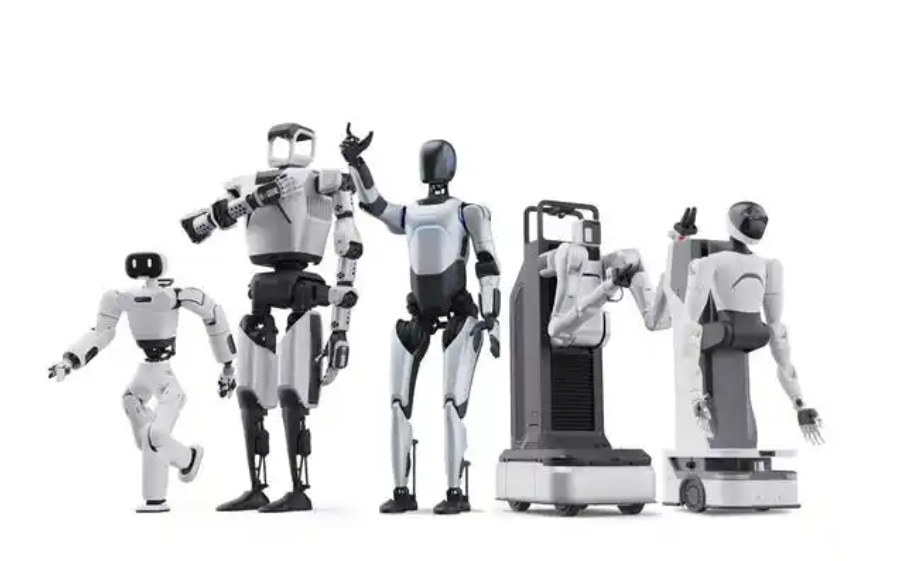
The formation of the two alliances reflects the growing recognition that embodied intelligence requires cooperation across disciplinary boundaries, industrial sectors, and stages of innovation. Embodied intelligence is not limited to software algorithms or isolated laboratory demonstrations. It connects perception, decision-making, control, mechanical systems, sensors, actuators, human-machine interaction, and real-world application environments. Because of this complexity, the development of embodied intelligence depends on close coordination among universities, research institutes, leading enterprises, investment institutions, and service organizations. The two alliances are designed to serve exactly this purpose.
1. From Unveiling to Formal Operation: Embodied Intelligence Alliances Take Organizational Shape
The Liaoning Embodied Intelligence Industry Technology Innovation Alliance and the Shenyang Embodied Intelligence Industry Technology Innovation Alliance were unveiled in June during the Shenyang Robot Conference. Their formal operation on August 28 followed the completion of necessary formation processes. The meeting approved the alliance charter, elected the council, established the technical expert committee, and created other organizational bodies. These steps provide the governance structure needed for the alliances to operate in a normalized and sustainable manner.
The significance of this transition should not be underestimated. For embodied intelligence, the challenge is often not only whether a single technology can be developed, but whether different actors can align around shared goals, shared standards, shared platforms, and shared application scenarios. The two alliances are intended to create a durable mechanism for such alignment. By moving into entity-based operation, the alliances can now undertake regular coordination, project planning, technical exchange, resource matching, and industry-academia-research cooperation.
The initiating units of the two alliances exceed 100 in number. These units include universities and research institutes, leading enterprises, investment and service institutions, and other entities across the full chain. This broad composition gives the alliances the potential to connect basic research, applied research, technology development, product prototyping, manufacturing scale-up, market application, and capital support. For embodied intelligence, such a full-chain approach is essential because the field sits at the intersection of artificial intelligence, robotics, advanced manufacturing, sensing, communications, and service industries.
2. Alliance Leadership and Structure: A Full-Chain Embodied Intelligence Network
The leadership structure of the two alliances reflects a balance between industrial leadership, academic strength, research capacity, and investment support. The Liaoning Embodied Intelligence Industry Technology Innovation Alliance has Shenyang Industrial Investment Group as its chair unit. Northeastern University serves as the co-chair unit. Dalian University of Technology, the Shenyang Institute of Automation of the Chinese Academy of Sciences, SIASUN Robot, and 15 institutions in total serve as vice-chair units. The Shenyang Embodied Intelligence Industry Technology Innovation Alliance has its chair unit placed at Shenyang Xinju Innovation Technology Co., Ltd., which is also associated with the Northeast Asia Embodied Intelligence Innovation Center.
This structure places embodied intelligence at the center of a regional innovation network. The involvement of Shenyang Industrial Investment Group suggests that capital allocation and industrial investment will be connected to embodied intelligence development. The participation of Northeastern University and Dalian University of Technology brings academic research and talent cultivation into the framework. The participation of the Shenyang Institute of Automation of the Chinese Academy of Sciences and SIASUN Robot connects the alliance to research and robotics capabilities. The Shenyang alliance, led by Shenyang Xinju Innovation Technology Co., Ltd., provides a focused platform for embodied intelligence innovation in the city.
| Alliance | Chair Unit | Co-Chair Unit | Vice-Chair Units and Key Participants | Main Focus |
|---|---|---|---|---|
| Liaoning Embodied Intelligence Industry Technology Innovation Alliance | Shenyang Industrial Investment Group | Northeastern University | Dalian University of Technology, Shenyang Institute of Automation of the Chinese Academy of Sciences, SIASUN Robot, and 15 institutions in total | Provincial-level coordination for embodied intelligence research, industrial application, investment, and policy support |
| Shenyang Embodied Intelligence Industry Technology Innovation Alliance | Shenyang Xinju Innovation Technology Co., Ltd., associated with the Northeast Asia Embodied Intelligence Innovation Center | Not specified in the available information | More than 100 initiating units across universities, research institutes, enterprises, investment institutions, and service agencies | City-level implementation of embodied intelligence innovation, platform building, and scenario development |
The table above summarizes the organizational highlights of the two embodied intelligence alliances. It shows that the alliances are not single-purpose bodies. They are designed to combine provincial and municipal coordination, industrial investment, academic research, applied research, enterprise participation, and capital support. In the field of embodied intelligence, this kind of multi-actor structure is important because innovation cycles are often longer and more complex than those in purely software-based industries.
The two alliances also reflect a broader trend in which regions seek to build specialized innovation ecosystems around strategic technologies. Embodied intelligence is increasingly viewed as a technology family that can connect artificial intelligence with physical machines, robots, sensors, manufacturing systems, and service environments. By creating alliances dedicated to embodied intelligence, Liaoning and Shenyang are seeking to concentrate resources and expertise in a way that supports both technological breakthroughs and industrial application.
3. Three Core Tasks for Embodied Intelligence Development
After entering operation, the alliances will focus on three core tasks. These tasks define the practical work agenda for embodied intelligence in the region and provide a framework for cooperation among members.
- Jointly tackle product research and development and key technologies for embodied intelligence and embodied intelligence robots. This task emphasizes collaborative research and development in embodied intelligence and embodied intelligence robots. It includes efforts to address key technologies, strengthen product development, and connect different capabilities across the alliance. The goal is to move embodied intelligence from isolated advances toward integrated systems and market-ready solutions.
- Promote the application of frontier technologies in smart manufacturing, health care and wellness services, logistics, and other scenarios. This task focuses on the real-world landing of embodied intelligence technologies. Smart manufacturing, health care and wellness services, and logistics are identified as priority scenarios. In these settings, embodied intelligence can support automation, interaction, perception, decision-making, and flexible operation. The alliances aim to bring frontier embodied intelligence technologies into practical use.
- Build a normalized technical exchange and service platform and systematically address common bottlenecks encountered by enterprises. This task calls for regular technical exchange, service support, and problem-solving mechanisms. Many enterprises face common bottlenecks in embodied intelligence, including technology integration, talent shortages, testing environments, standards, and market access. A normalized platform can help identify these bottlenecks, share solutions, and coordinate collective action.
These three core tasks are closely connected. Technology research and development for embodied intelligence requires application scenarios to validate and refine innovations. Application scenarios require reliable technologies and products. Both require a platform for exchange, matching, and problem-solving. Together, the three tasks create a cycle in which embodied intelligence research, development, demonstration, and deployment can reinforce one another.
| Core Task Area | Embodied Intelligence Focus | Collaboration Mechanism |
|---|---|---|
| Joint research and development | Embodied intelligence and embodied intelligence robot products, key technologies, and integrated systems | Collaborative projects among universities, research institutes, enterprises, and investment institutions |
| Scenario application | Smart manufacturing, health care and wellness services, logistics, and other application environments | Pilot projects, demonstration scenarios, and industry-academia-research cooperation |
| Platform building | Technical exchange, service support, and shared solutions for common bottlenecks | Normalized exchange activities, expert committees, and service mechanisms for enterprises |
The emphasis on common bottlenecks is particularly relevant to embodied intelligence. Enterprises working on embodied intelligence often need access to multidisciplinary talent, testing facilities, real-world data, component suppliers, system integrators, and application customers. No single company can easily master the entire chain. By creating a platform for systematic problem-solving, the alliances can reduce duplication, improve resource efficiency, and accelerate the translation of embodied intelligence research into products and services.
4. Laboratory Cooperation: Bridging Research Resources and the Industrial End
At the meeting, Shenyang Xinju Innovation Technology Co., Ltd. signed agreements with Northeastern University, Qingdao University of Technology, Jinzhi Bianliang Robotics Technology (Shenyang) Co., Ltd., and Hengyuan Zhiqi Embodied Intelligence Technology (Shanghai) Co., Ltd. The parties will work together to build embodied intelligence robot laboratories. These laboratories are intended to open channels for interaction between scientific research resources and the industrial end. They will also provide physical carriers for key technology research, high-end talent joint training, and cooperative innovation.
This laboratory cooperation is an important step for embodied intelligence in the region. Embodied intelligence research requires environments where algorithms, hardware, sensors, actuators, control systems, and human-machine interaction can be tested together. A laboratory focused on embodied intelligence robots can serve as a shared space for experimentation, prototyping, validation, and talent development. By linking universities, technology companies, and an innovation center, the agreements help connect knowledge creation with industrial application.
The participation of Northeastern University and Qingdao University of Technology brings academic research and educational capacity into the embodied intelligence cooperation framework. The participation of Jinzhi Bianliang Robotics Technology (Shenyang) Co., Ltd. and Hengyuan Zhiqi Embodied Intelligence Technology (Shanghai) Co., Ltd. brings enterprise perspectives, technology development experience, and market orientation. Shenyang Xinju Innovation Technology Co., Ltd., through its connection with the Northeast Asia Embodied Intelligence Innovation Center, provides an organizing platform for these efforts. The result is a cooperative structure that supports embodied intelligence from research to application.
5. Policy Support: Embodied Intelligence as a Key Future Industry
Liaoning has included embodied intelligence in the province’s key layout of future industries. The province will coordinate the implementation of major science and technology projects, deploy various innovation platforms, guide social capital toward the embodied intelligence track, and continue to improve the policy support system. The overall aim is to create a favorable ecosystem for the development of embodied intelligence and related industries.
This policy orientation gives the two alliances a broader framework. Embodied intelligence is not treated as a standalone research topic. It is positioned within future industry planning, major science and technology projects, innovation platform deployment, social capital guidance, and policy support. Such an integrated approach can help address the long-term needs of embodied intelligence development, including sustained research funding, talent attraction, infrastructure, testing environments, standards, and market cultivation.
For embodied intelligence, policy support is especially important because the field combines high technical uncertainty with broad application potential. Early-stage research may require public investment and platform support. Later-stage commercialization may require industrial investment, market access, and application scenarios. A policy system that spans research, development, demonstration, and deployment can help bridge these stages. The alliances, with more than 100 initiating units, can serve as a mechanism for translating policy intentions into coordinated action.
6. Embodied Intelligence and the Transformation of Manufacturing
Embodied intelligence is closely connected to the transformation and upgrading of manufacturing. In manufacturing environments, embodied intelligence can support robots and intelligent machines that perceive their surroundings, adapt to changing conditions, make decisions, and interact with people and other machines. These capabilities are relevant to flexible production, quality inspection, material handling, assembly, logistics, and human-robot collaboration.
Liaoning has a strong industrial base and a tradition in robotics and advanced manufacturing. The development of embodied intelligence can help connect this industrial base with artificial intelligence, sensing, control, and software innovation. The two alliances are designed to support this connection by bringing together universities, research institutes, leading enterprises, investment institutions, and service agencies. The emphasis on smart manufacturing as an application scenario reflects the practical orientation of embodied intelligence development.
The transformation of manufacturing also requires a skilled workforce. Embodied intelligence demands talent in artificial intelligence, robotics, mechanical engineering, electronic engineering, control science, computer science, human-machine interaction, and systems integration. The laboratory cooperation announced at the meeting includes high-end talent joint training as one of its goals. This link between embodied intelligence research and talent development is essential for long-term industrial capacity.
7. Application Scenarios: Smart Manufacturing, Health Care and Wellness, Logistics
The alliances will promote the application of frontier embodied intelligence technologies in smart manufacturing, health care and wellness services, logistics, and other scenarios. These scenarios illustrate the breadth of embodied intelligence. In smart manufacturing, embodied intelligence can support adaptive robots, collaborative robots, intelligent logistics systems, and autonomous production equipment. In health care and wellness services, embodied intelligence can support assistive devices, rehabilitation robots, service robots, and human-machine interaction systems. In logistics, embodied intelligence can support autonomous mobile robots, sorting systems, warehouse automation, and flexible handling solutions.
These scenarios are not simply markets for embodied intelligence products. They are also sources of technical challenges and innovation requirements. Real-world environments are often unstructured, dynamic, and unpredictable. Embodied intelligence systems must operate under constraints related to safety, reliability, efficiency, and cost. By focusing on application scenarios, the alliances can help ensure that embodied intelligence research addresses practical needs and that technology development is tested against real conditions.
The scenario-based approach also encourages cross-sector cooperation. Manufacturing enterprises, health care providers, logistics companies, technology developers, universities, and research institutes can work together to define problems, develop solutions, and evaluate results. The alliances provide a platform for this kind of cooperation. For embodied intelligence, such cross-sector collaboration is often necessary because the technology must be integrated into existing workflows, facilities, and service systems.
8. Investment, Talent, and the Innovation Ecosystem
The involvement of investment and service institutions in the two alliances reflects the importance of capital and professional services for embodied intelligence. Embodied intelligence ventures often face long development cycles, high research costs, complex testing requirements, and uncertain market pathways. Investment institutions can provide financial resources, while service agencies can provide legal, intellectual property, consulting, testing, and market development support. Together with universities, research institutes, and enterprises, these actors form the innovation ecosystem needed for embodied intelligence.
Liaoning’s plan to guide social capital toward the embodied intelligence track is consistent with this ecosystem approach. Social capital can help scale promising embodied intelligence technologies, support startups, and accelerate the commercialization of research results. At the same time, public policy and alliance coordination can help reduce risk, align standards, and create demonstration scenarios. The combination of public support, private investment, academic research, and industrial application is a common pattern in emerging technology fields, and embodied intelligence is no exception.
Talent is another central element. Embodied intelligence requires researchers, engineers, technicians, product managers, and entrepreneurs who understand both artificial intelligence and physical systems. The alliances can support talent development through joint laboratories, technical exchange platforms, university-enterprise cooperation, and high-end talent training. The laboratory cooperation between Shenyang Xinju Innovation Technology Co., Ltd. and its partners is one example of how embodied intelligence talent development can be linked to research and industrial practice.
9. A Regional Platform with National and International Relevance
The two alliances are regional platforms, but their work has broader relevance. Embodied intelligence is a global research and industrial frontier. Regions that build strong embodied intelligence ecosystems can attract talent, investment, enterprises, and international cooperation. Liaoning and Shenyang, with their industrial base, research institutions, and robotics tradition, are seeking to position themselves in this field.
The Northeast Asia Embodied Intelligence Innovation Center, associated with Shenyang Xinju Innovation Technology Co., Ltd., suggests a regional and international orientation. The participation of institutions such as Northeastern University, Dalian University of Technology, the Shenyang Institute of Automation of the Chinese Academy of Sciences, SIASUN Robot, Qingdao University of Technology, Jinzhi Bianliang Robotics Technology (Shenyang) Co., Ltd., and Hengyuan Zhiqi Embodied Intelligence Technology (Shanghai) Co., Ltd. indicates that the embodied intelligence network extends beyond a single city or institution. Such diversity can support knowledge exchange, technology transfer, and market expansion.
For embodied intelligence, regional cooperation can be especially valuable. Different regions may have different strengths in research, manufacturing, components, software, applications, and capital. By connecting these strengths, alliances can help build more complete embodied intelligence value chains. The Liaoning and Shenyang alliances are positioned to play this coordinating role within their respective scopes while also connecting to wider networks.
10. Next Steps and Long-Term Significance
With the charter approved, the council elected, the technical expert committee established, and other organizational bodies created, the two embodied intelligence alliances now have the foundation for regular operation. Their next steps will focus on the three core tasks: joint research and development of embodied intelligence and embodied intelligence robots, application of frontier technologies in smart manufacturing, health care and wellness services, logistics, and other scenarios, and the construction of a normalized technical exchange and service platform.
These tasks will require sustained effort. Embodied intelligence is a challenging field that combines artificial intelligence with physical systems. Progress depends on advances in perception, cognition, decision-making, control, mechanics, materials, energy, communication, and human-machine interaction. It also depends on integration across these areas. The alliances can help by organizing collaborative projects, sharing resources, identifying common bottlenecks, and connecting research with application.
The formal operation of the Liaoning Embodied Intelligence Industry Technology Innovation Alliance and the Shenyang Embodied Intelligence Industry Technology Innovation Alliance is therefore more than an administrative milestone. It is a step toward building a durable ecosystem for embodied intelligence in the region. By bringing together more than 100 initiating units across universities, research institutes, leading enterprises, investment institutions, and service agencies, the alliances create a platform for cooperation that spans the full chain of embodied intelligence innovation.
As embodied intelligence continues to develop, the ability to coordinate across disciplines, sectors, and institutions will be a decisive factor. The two alliances are designed to support that coordination. Their work will connect embodied intelligence research with manufacturing transformation, health care and wellness services, logistics, investment, talent development, and policy support. In doing so, they aim to help Liaoning and Shenyang strengthen their position in the embodied intelligence field and contribute to the broader development of the embodied intelligence industry.
The establishment and operation of the two alliances also highlight the importance of long-term commitment. Embodied intelligence cannot be advanced through isolated projects alone. It requires continuous exchange, shared platforms, stable cooperation, and practical application. The alliances provide a mechanism for this continuity. Through their core tasks, leadership structure, laboratory cooperation, and policy alignment, they create a framework in which embodied intelligence research, development, and application can move forward together.
In the coming period, the alliances are expected to facilitate further collaboration among their members, support embodied intelligence technology development, promote embodied intelligence applications, and help address common challenges. Their progress will be closely tied to the broader development of embodied intelligence in Liaoning and Shenyang. The formal start of entity-based operation marks a new stage for this effort and provides a platform for sustained work in the embodied intelligence sector.