
The provincial government general office of Anhui has issued the Implementation Opinions on Promoting High-Quality Development of the Robot Industry, a policy document designed to set a clear direction for the province’s robot industry and to strengthen the role of industrial robots and humanoid robot products in the province’s modern industrial system. The document, identified as Document No. [2026] 9, was announced at a press conference held by the provincial government information office on September 28.
According to the Implementation Opinions, Anhui is setting two major milestones. By 2030, the province’s industrial robot output is expected to enter the national forefront, while humanoid robot output is expected to enter the national first tier. At the same time, output in 10 or more sub-sectors, including spraying, explosion-proof equipment, warehousing and logistics, photovoltaic cleaning, and smart commercial supermarkets, is expected to be domestically leading. By 2035, the province aims to further improve its ranking in both industrial robot and humanoid robot output and to build a robot industry cluster with significant national influence.
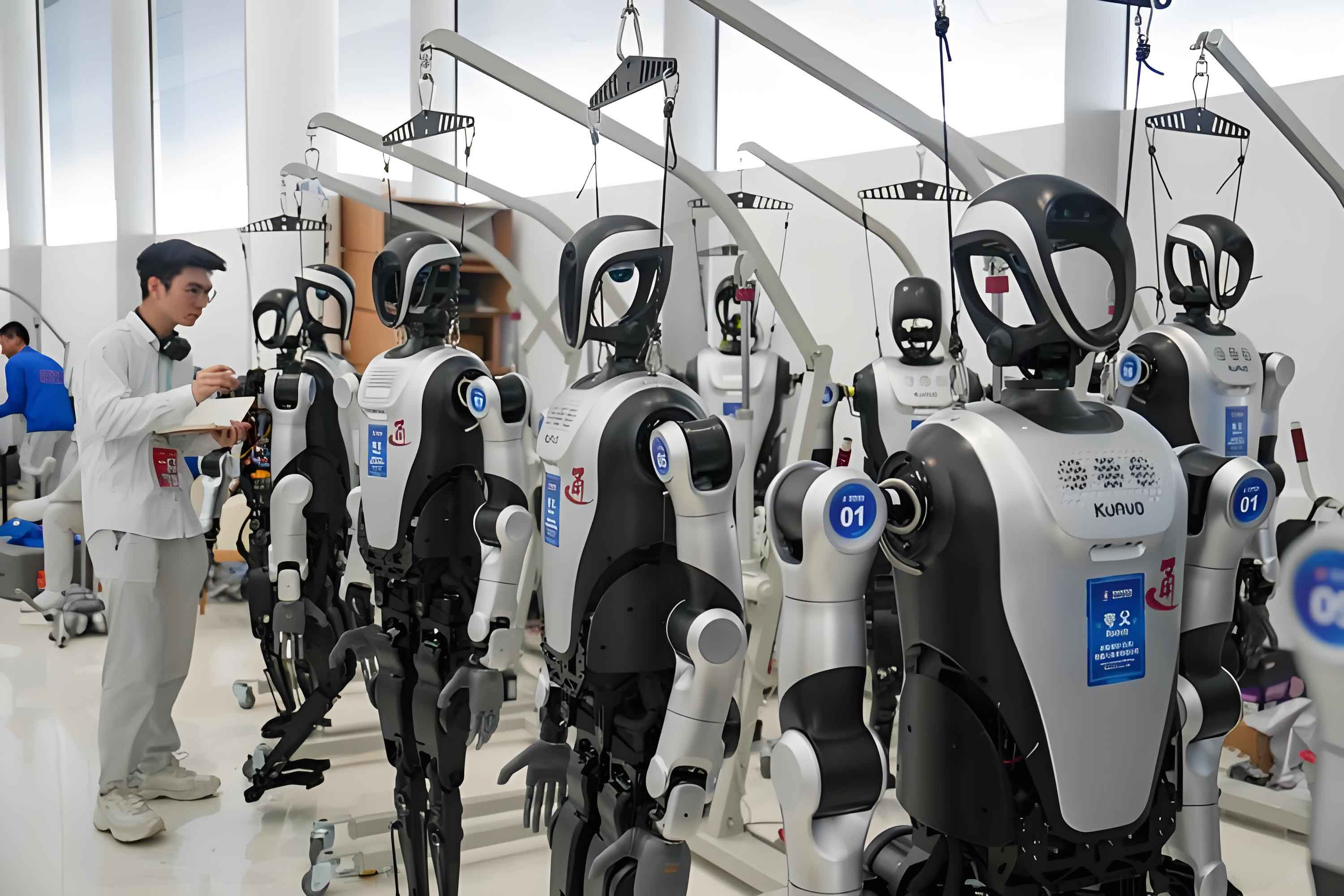
The policy framework places humanoid robot development within a broader robot industry strategy. It does not treat the humanoid robot as an isolated product category. Instead, it links humanoid robot progress to industrial robot scale, core component supply, model algorithms, enterprise cultivation, scenario opening, and financial support. The result is a policy design that seeks to connect the humanoid robot agenda with the province’s wider manufacturing base and innovation system.
The Implementation Opinions state that Anhui will pursue a dual-track approach. On one side, the province will highlight its whole-machine advantages. On the other side, it will focus on filling shortcomings in core components and model algorithms. This approach is intended to support both industrial robots and humanoid robot products. The document also calls on cities across the province to pursue differentiated development and to strengthen industrial coordination and supporting facilities.
For the humanoid robot sector, the policy’s emphasis on core components and model algorithms is significant. A humanoid robot depends on integrated advances in sensing, control, actuation, computing, and software. By identifying core components and model algorithms as areas to be strengthened, the Implementation Opinions signal that Anhui intends to address bottlenecks that affect the competitiveness of the humanoid robot supply chain. The same policy direction also supports the industrial robot base, because many component and algorithm capabilities are shared across robot categories.
The Implementation Opinions set out 7 key tasks and 23 specific measures. These tasks cover industrial layout, scientific and technological innovation, investment and talent attraction, enterprise cultivation, scenario applications, fiscal and financial support, and cooperation platforms. The structure indicates that the policy is not limited to production targets. It also addresses the innovation system, the enterprise ecosystem, market demand, and the financial tools needed to support robot industry development.
1. Policy Targets Place Humanoid Robot Output Within a Broader Robot Industry Vision
The 2030 target is the first major anchor of the policy. By that year, Anhui aims to place its industrial robot output in the national forefront and its humanoid robot output in the national first tier. The policy also sets a sub-sector goal: output in 10 or more specialized robot fields should be domestically leading. These fields include spraying, explosion-proof applications, warehousing and logistics, photovoltaic cleaning, and smart commercial supermarkets.
The inclusion of humanoid robot output in the 2030 target gives the sector a clear place in the province’s industrial agenda. It also indicates that the humanoid robot is expected to move from research and demonstration toward production and market application. The policy does not present the humanoid robot as a standalone ambition. It places the humanoid robot alongside industrial robots and specialized robot products, suggesting that shared supply chains, shared talent pools, and shared application experience will be important.
The 2035 target extends the vision further. By then, Anhui aims to improve its ranking in both industrial robot and humanoid robot output and to build a robot industry cluster with significant national influence. This long-term horizon suggests that the policy is intended to support sustained industrial development rather than a short-term campaign. For the humanoid robot sector, the 2035 goal implies that the province expects continued progress in product maturity, supply chain depth, and market application.
The Implementation Opinions also frame the robot industry as part of a modern industrial system. The policy’s targets are therefore not only about volume. They are also about industrial position, supply chain capability, and cluster influence. In this context, the humanoid robot becomes one of the visible frontiers of a broader effort to upgrade manufacturing and innovation capacity.
| Policy Dimension | Stated Target or Measure |
|---|---|
| 2030 industrial robot target | Industrial robot output enters the national forefront. |
| 2030 humanoid robot target | Humanoid robot output enters the national first tier. |
| 2030 sub-sector target | Output in 10 or more sub-sectors, including spraying, explosion-proof equipment, warehousing and logistics, photovoltaic cleaning, and smart commercial supermarkets, is domestically leading. |
| 2035 target | Industrial robot and humanoid robot output further improve in ranking, and a robot industry cluster with significant national influence is built. |
| Key tasks | 7 key tasks and 23 specific measures are deployed. |
| Industrial layout | Highlight whole-machine advantages, fill shortcomings in core components and model algorithms, and promote differentiated city development and industrial coordination. |
| Innovation | Build enterprise-type platforms with ecosystem leadership, support robot-related science and technology programs, and support blockbuster products. |
| Investment and talent | Target whole-machine enterprises, key component enterprises, and ecosystem partners; support qualified cities in issuing global top talent recruitment calls. |
| Enterprise cultivation | Cultivate ecosystem-leading platform enterprises, technology-based enterprises, and supporting enterprises; support mergers and acquisitions, restructuring, and service-oriented manufacturing. |
| Scenario applications | Encourage government agencies, public institutions, and enterprises to open scenarios; build typical robot scenarios and districts; replicate mature scenarios quickly. |
| Fiscal and financial support | Arrange RMB 500 million in provincial fiscal funds each year; establish a robot industry fund cluster with a scale of RMB 10 billion; build a 5-in-1 fiscal-financial coordination system covering fiscal funds, funds, credit, guarantees, and insurance. |
| Cooperation platforms | Build high-level industrial cooperation platforms, form a high-level strategic advisory committee, upgrade the industry association, and host major brand events. |
2. Seven Key Tasks and 23 Measures Connect Humanoid Robot Goals With Implementation
The Implementation Opinions deploy 7 key tasks and 23 specific measures. This structure is important because it translates the humanoid robot target into a set of policy actions. The tasks cover the industrial layout, the innovation system, investment and talent attraction, enterprise cultivation, scenario applications, fiscal and financial support, and cooperation platforms.
The first task area concerns industrial layout. The policy calls for highlighting whole-machine advantages while addressing weaknesses in core components and model algorithms. For the humanoid robot sector, this means that the province intends to support the complete product while also strengthening the underlying supply chain. A humanoid robot cannot be competitive without reliable components and capable algorithms. By naming these areas, the policy creates a link between the humanoid robot goal and the province’s component and software base.
The second task area concerns scientific and technological innovation. The policy calls for differentiated development of enterprise-type platforms with ecosystem leadership. It also identifies the robot industry as a key support direction for the provincial science and technology tackling plan, industrial chain collaborative innovation, and related policies. The document further supports the development of blockbuster products. For the humanoid robot sector, these measures suggest that innovation support will be organized around platforms, products, and industrial chain collaboration.
The third task area concerns investment and talent attraction. The policy calls for targeted recruitment of excellent whole-machine enterprises, key component enterprises, and ecosystem partners from around the world and across the country. It also supports qualified cities in issuing global top talent recruitment calls. This measure is relevant to the humanoid robot sector because humanoid robot development requires integrated teams across mechanical engineering, electronics, control, artificial intelligence, and manufacturing.
The fourth task area concerns enterprise cultivation. The policy calls for tiered cultivation of ecosystem-leading platform enterprises, technology-based enterprises, and supporting enterprises. It also supports mergers and acquisitions, restructuring, and the development of service-oriented manufacturing. For the humanoid robot sector, this approach suggests that the policy intends to build a multi-layer enterprise ecosystem rather than focusing only on a few final-product makers.
The fifth task area concerns scenario applications. The policy encourages government agencies, public institutions, and enterprises to take the lead in opening scenarios. It calls for building typical robot scenarios and districts and for quickly replicating mature scenarios. For the humanoid robot sector, scenario opening is a practical route to testing, feedback, and product improvement. The policy’s language indicates that demonstration and application are treated as part of industrial development.
The sixth task area concerns fiscal and financial support. The policy states that Anhui will arrange RMB 500 million in provincial fiscal funds each year to support industrial development. It will also establish a robot industry fund cluster with a scale of RMB 10 billion. The province will build a 5-in-1 fiscal-financial coordination system that combines fiscal funds, funds, credit, guarantees, and insurance. For the humanoid robot sector, this package is intended to provide support across different stages of development.
The seventh task area concerns cooperation platforms. The policy calls for building high-level industrial cooperation platforms, forming a high-level strategic advisory committee, upgrading the industry association, and hosting major brand events. These measures are designed to support coordination, expertise, and industry visibility. For the humanoid robot sector, such platforms can help connect enterprises, researchers, investors, and application partners.
3. Industrial Layout Emphasizes Whole-Machine Advantages and Humanoid Robot Supply Chain Gaps
The Implementation Opinions place strong emphasis on industrial layout. The policy calls for highlighting whole-machine advantages while focusing on filling shortcomings in core components and model algorithms. It also calls on cities to pursue differentiated development and to strengthen industrial coordination and supporting facilities.
This layout has direct implications for the humanoid robot sector. A humanoid robot is a complex whole-machine product, but its performance depends on many specialized parts and software systems. By linking whole-machine advantages with core component and model algorithm improvements, the policy recognizes that humanoid robot competitiveness cannot be built on assembly alone. It requires a supply chain that can support precision, reliability, and intelligence.
The policy’s call for differentiated city development is also relevant. Different cities in Anhui may have different industrial bases, research strengths, and application opportunities. The Implementation Opinions do not prescribe a single model for all cities. Instead, it calls for differentiated development and strengthened coordination. For the humanoid robot sector, this approach could allow different locations to specialize in different parts of the value chain, such as components, algorithms, whole-machine integration, testing, or application demonstration.
The emphasis on industrial coordination and supporting facilities suggests that the policy is concerned with the broader ecosystem around robot production. A humanoid robot supply chain requires coordination among component suppliers, software developers, testing services, and final producers. By calling for strengthened coordination and supporting facilities, the Implementation Opinions signal that the province intends to support the industrial environment around robot production, not only individual projects.
The humanoid robot target also benefits from the policy’s attention to specialized robot sub-sectors. The document names spraying, explosion-proof equipment, warehousing and logistics, photovoltaic cleaning, and smart commercial supermarkets as areas where Anhui aims to be domestically leading. These sub-sectors may not directly produce humanoid robot products, but they can contribute experience in reliability, automation, sensing, and application integration. That experience can support the humanoid robot supply chain and application ecosystem.
4. Innovation Platforms and Blockbuster Products Support Humanoid Robot Breakthroughs
The Implementation Opinions assign a central role to scientific and technological innovation. The policy calls for differentiated development of enterprise-type platforms with ecosystem leadership. It also makes the robot industry a key support direction for the provincial science and technology tackling plan, industrial chain collaborative innovation, and related policies. The document supports the development of blockbuster products.
For the humanoid robot sector, the platform approach is significant. Humanoid robot development requires integration across multiple disciplines and component systems. Enterprise-type platforms with ecosystem leadership can bring together capabilities that are difficult to assemble within a single traditional project. The policy’s emphasis on differentiation suggests that platforms may be designed around specific strengths rather than a single uniform model.
The inclusion of the robot industry in the provincial science and technology tackling plan and industrial chain collaborative innovation policies indicates that humanoid robot research can be connected to broader innovation programs. This is important because humanoid robot progress depends on long-term research in areas such as actuation, perception, control, and intelligence. The policy’s support for blockbuster products also suggests that innovation is expected to lead to market-relevant outputs.
The humanoid robot is a product category where “blockbuster” potential depends on usefulness, reliability, and cost. The Implementation Opinions do not set out a detailed product roadmap, but its innovation measures create a policy framework in which humanoid robot products can be supported through platforms, collaborative projects, and product development. The policy’s language indicates that innovation support is intended to be connected to industrial application and product competitiveness.
The innovation task also complements the industrial layout task. While the industrial layout addresses supply chain gaps and whole-machine advantages, the innovation task addresses the platforms and programs that can generate new capabilities. For the humanoid robot sector, the combination of these two tasks is important. It links the supply chain to the innovation system and places the humanoid robot within a broader effort to improve robot industry competitiveness.
5. Investment and Talent Campaigns Target Humanoid Robot Leaders and Ecosystem Partners
The Implementation Opinions include a targeted investment and talent strategy. The policy calls for attracting excellent whole-machine enterprises, key component enterprises, and ecosystem partners from around the world and across the country. It also supports qualified cities in issuing global top talent recruitment calls.
This strategy is relevant to the humanoid robot sector in several ways. First, humanoid robot development requires whole-machine enterprises that can integrate complex systems. Second, it requires key component enterprises that can supply actuators, sensors, control systems, and other critical parts. Third, it requires ecosystem partners that can provide software, testing, application development, and other supporting services. The policy’s targeted approach recognizes these different layers.
The support for qualified cities to issue global top talent recruitment calls is also notable. Humanoid robot development depends on specialized talent across engineering and software disciplines. By allowing cities to issue global recruitment calls, the policy creates a mechanism for attracting talent through local initiatives. The Implementation Opinions do not specify the details of these calls, but the measure indicates that talent attraction is treated as a key part of the robot industry strategy.
The investment and talent task is connected to the enterprise cultivation task. Attracting enterprises and talent is not an end in itself. The policy aims to build an ecosystem in which whole-machine enterprises, component suppliers, technology-based firms, and supporting enterprises can grow together. For the humanoid robot sector, this ecosystem approach is essential because humanoid robot products depend on a wide range of capabilities.
The policy’s focus on global and national partners also suggests that Anhui intends to position its robot industry within a broader competitive landscape. The humanoid robot target is national in scope, and the policy’s investment and talent measures reflect the need to compete for enterprises and talent. At the same time, the policy calls for differentiated city development, which suggests that local strengths will be important in attracting specific types of enterprises and talent.
6. Enterprise Cultivation Builds Humanoid Robot Champions and Supporting Firms
The Implementation Opinions call for tiered cultivation of enterprises. The policy aims to cultivate ecosystem-leading platform enterprises, technology-based enterprises, and supporting enterprises. It also supports mergers and acquisitions, restructuring, and the development of service-oriented manufacturing.
For the humanoid robot sector, tiered cultivation is a practical approach. Humanoid robot development requires large platform enterprises that can lead integration and ecosystem building. It also requires technology-based enterprises that can develop specialized components, algorithms, and software. Supporting enterprises are needed for manufacturing, testing, and services. By addressing these different layers, the policy seeks to build a complete enterprise ecosystem.
The support for mergers and acquisitions and restructuring is also relevant. The robot industry is capital-intensive and technology-intensive. Enterprises may need to combine capabilities, acquire specialized knowledge, or restructure to scale. The policy’s support for these activities indicates that enterprise growth is expected to occur through multiple pathways, including organic development and strategic combination.
The promotion of service-oriented manufacturing adds another dimension. Robot products often require integration, maintenance, training, and application support. Service-oriented manufacturing can help enterprises move beyond product sales and build closer relationships with users. For the humanoid robot sector, service-oriented manufacturing may become important as products move into application scenarios that require customization and ongoing support.
The enterprise cultivation task also connects to the humanoid robot output target. The 2030 goal of entering the national first tier in humanoid robot output requires enterprises that can produce at scale and compete nationally. The policy’s tiered cultivation approach suggests that Anhui intends to support both leading enterprises and the supporting firms that make large-scale production possible.
7. Scenario Opening Paves the Way for Humanoid Robot Commercialization
The Implementation Opinions place significant emphasis on scenario applications. The policy encourages government agencies, public institutions, and enterprises to take the lead in opening scenarios. It calls for building typical robot scenarios and districts and for quickly replicating mature scenarios. This approach is directly relevant to the humanoid robot sector.
Humanoid robot development requires real-world testing and feedback. Laboratory testing is important, but application scenarios provide data, operational experience, and user insight. By encouraging public institutions and enterprises to open scenarios, the policy creates opportunities for robot products to be tested in practical environments. The policy’s call for typical robot scenarios and districts suggests that demonstration areas may be used to concentrate applications and learning.
The rapid replication of mature scenarios is also important. Once a robot application proves useful in one setting, it can be adapted to similar settings elsewhere. This replication logic can support the commercialization of humanoid robot products. The policy’s language indicates that scenario development is not only about demonstration. It is also about moving mature applications into broader use.
The scenario task connects to the industrial and innovation tasks. Scenario applications can generate demand and feedback, which can inform product development. They can also help enterprises understand which capabilities are most valuable in real use. For the humanoid robot sector, scenario opening is therefore a bridge between technology development and market adoption.
The policy’s encouragement of government agencies and public institutions to open scenarios is notable because these actors can provide early application opportunities. At the same time, the policy also includes enterprises, which suggests that commercial scenarios will be part of the approach. The combination of public and commercial scenarios can support a broad range of robot applications.
8. Fiscal and Financial Package Backs Humanoid Robot Scale-Up
The Implementation Opinions include a substantial fiscal and financial support package. Anhui will arrange RMB 500 million in provincial fiscal funds each year to support industrial development. The province will establish a robot industry fund cluster with a scale of RMB 10 billion. It will also build a 5-in-1 fiscal-financial coordination system covering fiscal funds, funds, credit, guarantees, and insurance.
This package is designed to support the robot industry across different stages and needs. Fiscal funds can support policy objectives and public-good activities. Industry funds can provide equity investment and support enterprise growth. Credit can provide working capital and investment financing. Guarantees can reduce financing barriers. Insurance can help manage risks. The 5-in-1 framework indicates that the policy intends to use multiple financial tools in a coordinated way.
For the humanoid robot sector, this support is relevant because humanoid robot development can require long research cycles, specialized equipment, and substantial testing. The policy’s financial package does not specify allocations to individual humanoid robot projects, but it creates a general support framework that can be applied to robot industry development. The fund cluster and fiscal funds can support enterprises at different stages, while credit, guarantees, and insurance can address financing and risk-management needs.
The scale of the fund cluster is also notable. A robot industry fund cluster with a scale of RMB 10 billion indicates that the policy intends to mobilize significant financial resources. For the humanoid robot sector, such a fund cluster could support capital-intensive activities such as product development, testing, and scale-up. The policy does not detail the investment criteria, but the existence of the fund cluster signals a long-term financial commitment to the robot industry.
The fiscal and financial task also connects to the enterprise cultivation and investment tasks. Financial support can help enterprises grow, attract partners, and invest in technology. For the humanoid robot sector, the combination of enterprise cultivation and financial support can create a more supportive environment for companies seeking to develop and scale humanoid robot products.
9. Cooperation Platforms and Industry Governance Strengthen Humanoid Robot Momentum
The Implementation Opinions call for building high-level industrial cooperation platforms. The policy also calls for forming a high-level strategic advisory committee, upgrading the industry association, and hosting major brand events. These measures are intended to support coordination, expertise, and industry development.
For the humanoid robot sector, cooperation platforms can play an important role. Humanoid robot development involves multiple stakeholders, including enterprises, research institutions, component suppliers, software developers, and application partners. High-level cooperation platforms can help connect these stakeholders and support collaborative projects. A high-level strategic advisory committee can provide expertise and guidance on industry development.
The upgrade of the industry association is also relevant. Industry associations can support standards, information sharing, and coordination among enterprises. For the humanoid robot sector, association capacity can help address common challenges and promote collaboration. Major brand events can raise the profile of the robot industry and create opportunities for exchange and partnership.
The cooperation platform task complements the other tasks in the Implementation Opinions. Industrial layout, innovation, investment, enterprise cultivation, scenario applications, and financial support all require coordination among different actors. Cooperation platforms can help align these efforts and support the implementation of the policy. For the humanoid robot sector, such platforms can help maintain momentum and support the development of a connected ecosystem.
The policy’s emphasis on high-level platforms and advisory mechanisms also suggests that the province intends to approach robot industry development in a structured way. The humanoid robot target is ambitious, and achieving it will require coordination across policy areas. The cooperation platform measures provide a mechanism for that coordination.
10. Official Commitment Points to Implementation and Policy Fulfillment
The Implementation Opinions are accompanied by a clear implementation commitment. The provincial Department of Industry and Information Technology will play a leading and coordinating role. It will work with member units of the provincial robot industry promotion group to accelerate task implementation and policy fulfillment. The department aims to enhance whole-industrial-chain competitiveness, promote high-quality development of the robot industry, and inject strong momentum into the construction of a modern industrial system.
This commitment is important for the humanoid robot sector because policy targets require implementation. The Implementation Opinions set out 7 key tasks and 23 specific measures. The department’s role in coordinating task implementation and policy fulfillment indicates that the policy is intended to move from document to action. For the humanoid robot sector, this means that the targets, innovation measures, enterprise cultivation efforts, scenario opening, and financial support are expected to be followed through by responsible agencies.
The reference to whole-industrial-chain competitiveness is also significant. The humanoid robot sector depends on the entire industrial chain, from components and algorithms to whole machines and applications. By emphasizing whole-chain competitiveness, the department’s commitment aligns with the policy’s focus on supply chain gaps and ecosystem development. The humanoid robot goal is therefore connected to a broader effort to strengthen the robot industry chain.
The policy’s implementation outlook also emphasizes high-quality development. The humanoid robot target is not only about output volume. It is also about industrial capability, innovation, and cluster influence. The Implementation Opinions connect these dimensions through their targets, tasks, and support measures. The official commitment to policy fulfillment suggests that the province intends to pursue these dimensions together.
For enterprises, researchers, investors, and application partners in the humanoid robot sector, the policy provides a framework for engagement. The Implementation Opinions identify priority areas, support mechanisms, and coordination platforms. The humanoid robot target gives the sector a clear place in the province’s robot industry strategy. The next phase will focus on implementation, including the fulfillment of tasks and policies, the development of enterprise ecosystems, the opening of scenarios, and the use of fiscal and financial support.
The policy’s overall message is that Anhui intends to pursue robot industry development with a combination of production targets, innovation support, enterprise cultivation, scenario applications, and financial backing. Within that framework, the humanoid robot is positioned as a key frontier. The 2030 goal of entering the national first tier in humanoid robot output and the 2035 goal of further improving rankings and building a nationally influential cluster provide a long-term direction. The Implementation Opinions, with 7 key tasks and 23 specific measures, set out the policy architecture for pursuing that direction.
As the province moves toward implementation, the humanoid robot sector will be shaped by the interaction of industrial layout, technology innovation, talent attraction, enterprise growth, scenario opening, and financial support. The policy’s emphasis on core components, model algorithms, whole-machine advantages, and ecosystem coordination reflects the complexity of humanoid robot development. The official commitment to task implementation and policy fulfillment indicates that the province intends to turn the framework into concrete action. For the humanoid robot industry, the policy establishes a clear target and a structured support system, while leaving implementation details to the responsible agencies and the evolving industrial ecosystem.