
Facing a first half of the year in which revenue was hard to grow and profit was even harder to secure, automakers are opening a second front and shifting competition toward technology. Among the many options available, the humanoid robot sector, which has attracted intense attention over the past two years, has become a new target for automakers seeking a second growth curve.
XPeng, Li Auto, BYD and other automakers are either developing humanoid robot products in-house, setting up independent subsidiaries, or entering the sector through industrial investment. Public information shows that nearly 20 automakers have already made moves in the humanoid robot field. As embodied intelligence moves from the laboratory toward industrialization, automakers are becoming an important force on this new track, and the humanoid robot has emerged as a central symbol of that ambition.
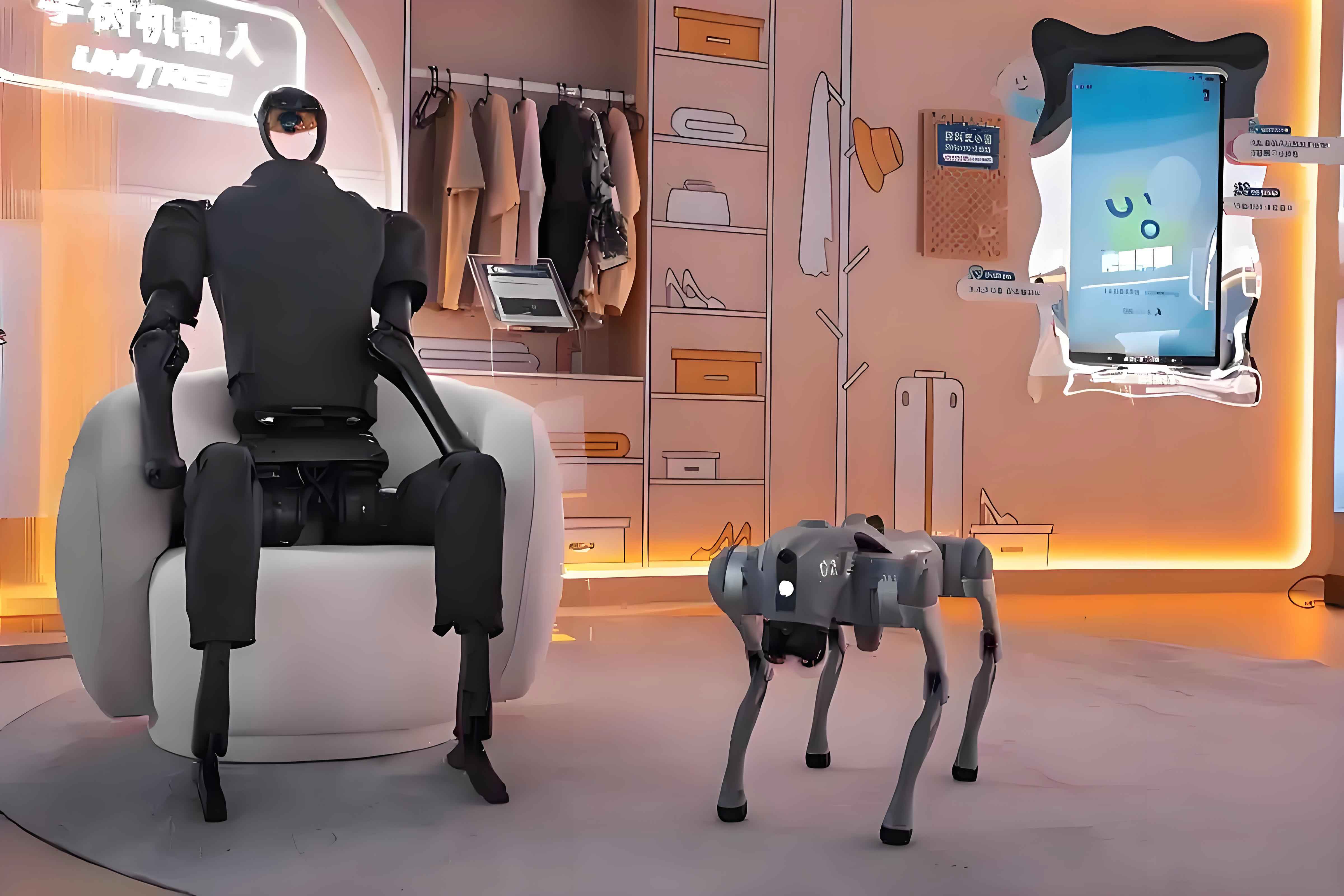
The push is not limited to one company or one strategy. Some automakers are building humanoid robot teams directly. Some are creating independent robot companies. Others are using capital and partnerships to secure positions in a humanoid robot supply chain that is still forming. The common thread is a search for growth beyond conventional vehicle manufacturing, and the humanoid robot has become the most visible expression of that search.
- Automakers Move From Vehicles to Humanoid Robots
XPeng has moved earlier than many of its peers among the new-generation automakers. Recently, XPeng Robotics announced that its first financing round exceeded USD 900 million. XPeng CEO He Xiaopeng disclosed that the XPeng IRON humanoid robot is scheduled to enter large-scale mass production from the end of 2026, with commercial applications first landing in XPeng stores and campuses. In 2027, XPeng IRON is expected to begin large-scale deliveries to external customers in retail and service-sector scenarios in China and overseas markets.
XPeng unveiled its new-generation IRON humanoid robot in November 2025. On June 10, 2026, He Xiaopeng announced that he would concurrently serve as CEO of the robot business and said that XPeng Robotics had reached the eve of mass production and commercialization. The statement underlined how closely the company now links its future to the humanoid robot opportunity.
Other new-generation automakers have also brought embodied intelligence into their technology plans. In May 2026, Li Auto CEO Li Xiang said the company would pursue both autonomous driving, described as the “first half” of embodied intelligence, and general-purpose humanoid robots, described as the “second half.” He said a humanoid robot product had already been approved for research and development. On the company’s second-quarter earnings call, Li Xiang repeated that Li Auto had chosen to develop batteries and chips in-house because they are among the most important technical barriers in the embodied intelligence industry, a field in which the humanoid robot is a flagship application.
Leapmotor said at its 2026 interim results meeting that new energy vehicle makers with all-domain self-development capabilities are in a position to enter the embodied intelligence robot field. The company said it has already made plans in this area. For Leapmotor, the humanoid robot is not yet a marketed product, but it is part of a broader technology roadmap that extends beyond vehicles.
NIO has chosen a different route: invest rather than build. In April 2026, NIO CEO Li Bin stated clearly that NIO would not pursue robotaxis and would not build robots. More recently, at an all-hands meeting on smart driving, Li Bin announced that Ren Shaoqing, NIO’s head of smart driving, had founded an independent company focused on physical AI foundation models and embodied intelligence. NIO will act as a strategic shareholder, invest in the company and conduct deep cooperation with it. The move shows that even automakers that do not build a humanoid robot themselves can still participate in the humanoid robot ecosystem through investment and technical collaboration.
Major domestic independent brands and joint-venture automakers have also entered the field. On June 3, 2026, BYD Executive Vice President Li Ke said in an interview that BYD is developing robots and that its current focus is first on industrial robots. BYD confirmed that the specific launch timing of its robot products has not yet been determined. Seres, GAC, Chery and other automakers have also launched or displayed humanoid robot products. BAIC Group recently established Yuanqi Physical Intelligence Technology, a company whose business also covers robots and artificial intelligence.
Tesla is a global representative of automakers’ humanoid robot ambitions. In 2021, Elon Musk announced the Optimus program. Second-quarter results materials in 2026 showed that Tesla is installing the first-generation Optimus production line and plans to start production. The humanoid robot has therefore become part of Tesla’s long-term manufacturing and artificial intelligence narrative, not merely a laboratory demonstration.
Beyond in-house development, cooperation and industrial investment have become important ways for automakers to build positions in the humanoid robot industry. On August 25, 2026, BYD signed a strategic cooperation agreement with humanoid robot company Pasini to push robot business breakthroughs in industrial manufacturing scenarios. In July 2026, ModelBest and Geely’s artificial intelligence center jointly released an embodied intelligence agent framework. Public information also shows that BYD has participated in financing for Zhiyuan Innovation; BAIC Capital has invested in humanoid robot and embodied intelligence companies including Robot Era, Xiaoyu Zhizao and Pudu Robotics; GAC Capital led an investment in force sensor company Bluepoint Touch; and Geely Capital has invested in Unitree and Robot Era.
- Self-Development, Subsidiaries and Investment Define the Humanoid Robot Playbook
The humanoid robot playbook being written by automakers is not a single model. It combines self-development, independent subsidiaries, strategic cooperation and industrial investment. Each route reflects a different assessment of risk, timing and the maturity of the humanoid robot supply chain. It also reflects how automakers interpret the relationship between vehicles, embodied intelligence and the humanoid robot as a future product category.
For companies such as XPeng and Tesla, self-development is central. The humanoid robot is treated as a platform that can draw on autonomous driving perception, decision-making, control and computing capabilities. For Li Auto, the humanoid robot is linked to a broader embodied intelligence strategy in which autonomous driving and general-purpose humanoid robots are described as two halves of the same technological journey. For BYD, the initial focus on industrial robots suggests a step-by-step approach in which the humanoid robot may follow after industrial automation and manufacturing applications are better understood.
For NIO, investment and partnership allow the company to participate in the humanoid robot field without taking on the full burden of building a robot business. For BAIC, GAC and Geely, industrial investment and cooperation provide windows into specialized humanoid robot technologies, components and applications. The result is a diverse humanoid robot ecosystem in which automakers are not only potential manufacturers but also investors, customers, suppliers and testing partners.
Automaker Approach to the Humanoid Robot Opportunity Publicly Disclosed Humanoid Robot Status XPeng Self-development and dedicated robot business IRON humanoid robot; first financing round exceeded USD 900 million; mass production planned from the end of 2026 in stores and campuses; external deliveries expected in 2027 in retail and service scenarios in China and overseas. Li Auto Self-development within an embodied intelligence strategy Humanoid robot product project approved for research and development; autonomous driving described as the first half and general-purpose humanoid robots as the second half of embodied intelligence; in-house batteries and chips treated as key technical barriers. Leapmotor Planning and self-development capabilities States that new energy vehicle makers with all-domain self-development capabilities can enter the embodied intelligence robot field; says it has plans in this area. NIO Investment and strategic cooperation rather than building robots Will not pursue robotaxis and will not build robots; smart driving head founded an independent company focused on physical AI foundation models and embodied intelligence; NIO will be a strategic shareholder and cooperate deeply. BYD Self-development plus cooperation and investment Developing robots with an initial focus on industrial robots; product launch timing not yet determined; strategic cooperation with Pasini on industrial manufacturing; participated in financing for Zhiyuan Innovation. Seres, GAC and Chery Product development and showcases Have launched or displayed humanoid robot products; GAC Capital led an investment in Bluepoint Touch, a force sensor company relevant to humanoid robot development. BAIC Subsidiary creation and industrial investment Established Yuanqi Physical Intelligence Technology, covering robots and artificial intelligence; BAIC Capital has invested in Robot Era, Xiaoyu Zhizao, Pudu Robotics and other embodied intelligence companies. Tesla Self-development and manufacturing scale-up Optimus program announced in 2021; first-generation Optimus production line being installed in 2026 with plans to start production. Geely Cooperation and investment Geely artificial intelligence center and ModelBest jointly released an embodied intelligence agent framework in July 2026; Geely Capital has invested in Unitree and Robot Era. The table shows that the humanoid robot is no longer a peripheral experiment for the auto industry. It has become a strategic option that spans research and development, manufacturing, investment and commercial deployment. The humanoid robot is also a test of whether automakers can transfer capabilities developed for vehicles into a new product category with different cost structures, supply chains and customer expectations.
- Why Automakers Are Targeting the Humanoid Robot Market
Why are automakers so interested in building humanoid robots? Cui Dongshu, head of the passenger car market information joint committee at the China Automobile Dealers Association, said the core motivation is the search for a second growth curve. With competition in the passenger vehicle market becoming increasingly intense, automakers are looking for new growth space, and the humanoid robot offers one of the most compelling long-term narratives.
The humanoid robot is widely viewed as a potential breakthrough product after computers, smartphones and new energy vehicles. If that expectation materializes, the humanoid robot could become a large-scale platform that combines artificial intelligence, advanced manufacturing, sensors, actuators, power systems and software. Automakers do not want to be absent from such a platform, especially when the humanoid robot can draw on technologies and industrial capabilities they already possess.
Cui Dongshu said automakers have a strong hand in the humanoid robot field, perhaps even stronger than many humanoid robot startups. On one hand, automakers have accumulated capabilities in perception, decision-making, control and computing through autonomous driving, and these capabilities can be extended toward embodied intelligence and the humanoid robot. On the other hand, components such as motors, batteries and controllers, as well as the supply chain management, quality control and large-scale manufacturing capabilities that automakers have built over many years, overlap with the humanoid robot industry.
The auto industry is also supplying talent to the embodied intelligence sector. The founders of several embodied intelligence companies, including Vita Dynamics, Tashi and Zhijian Dynamics, came from automakers. This flow of talent reinforces the connection between vehicle technology and the humanoid robot ecosystem. It also shows that the humanoid robot is not only a manufacturing challenge but also a software, artificial intelligence and systems integration challenge.
Li Ke, BYD’s executive vice president, has said that in the end, competition in robots will depend on who has the strongest manufacturing capability, software capability and hardware capability. He has also said that automotive-related capabilities and robots share common origins. That view helps explain why automakers believe they can compete in the humanoid robot market even though the humanoid robot remains a young and uncertain product category.
Automakers also bring capital, supply chains and channels. Cui Dongshu noted that if the humanoid robot eventually moves from industrial scenarios to commercial services and even household consumption, automakers’ existing stores, after-sales networks and overseas channels could become new sales and service networks for the humanoid robot. The humanoid robot could therefore benefit not only from automotive engineering but also from automotive distribution and customer service infrastructure.
Automotive Capability How It Relates to the Humanoid Robot Strategic Value for Automakers Autonomous driving perception, decision-making, control and computing Can be extended toward embodied intelligence and humanoid robot autonomy Shortens development paths for humanoid robot software and intelligence Motors, batteries and controllers Overlap with humanoid robot actuators, power and control systems Creates opportunities for component reuse and supply-chain leverage Supply chain management, quality control and large-scale manufacturing Relevant to humanoid robot cost reduction and production reliability Supports the transition from prototypes to commercial humanoid robot production Talent in artificial intelligence, software and vehicle engineering Feeds embodied intelligence and humanoid robot ventures Strengthens the humanoid robot ecosystem and startup formation Capital and industrial investment experience Enables stakes in humanoid robot startups and component suppliers Provides exposure to the humanoid robot value chain without full self-development Stores, after-sales networks and overseas channels Could serve future humanoid robot sales and service Offers a potential distribution advantage if the humanoid robot reaches commercial and consumer markets The logic is clear: the humanoid robot is a convergence product. It requires artificial intelligence, hardware, manufacturing, data and service networks. Automakers possess several of these elements, even if they do not yet possess a mature humanoid robot supply chain. The humanoid robot therefore becomes a way to test whether automotive capabilities can be recombined into a new growth engine.
- Factories Become Early Proving Grounds for Humanoid Robots
In terms of specific application scenarios, Cui Dongshu believes automakers can follow a more realistic path for the humanoid robot: business-to-business first, then consumer; specialized first, then general-purpose. In practice, that means prioritizing industrial scenarios such as factory handling, assembly and quality inspection, then moving to reception service robots in dealership showrooms, and later expanding to inspection and guide services in shopping malls and industrial parks.
He said the automobile factory is one of the more ideal landing scenarios for the humanoid robot because tasks such as handling, loading and unloading, assembly and quality inspection have a certain degree of repetition while also containing flexible requirements. Automakers can put the humanoid robot into their own factories for testing, continuously obtain data in real environments and then use that data to iterate products. The factory becomes both a customer and a laboratory for the humanoid robot.
There are already examples of humanoid robot deployment in automotive manufacturing environments. In 2025, at BAIC New Energy’s Xiangjie super factory, a UBTech industrial humanoid robot went online in the final assembly workshop to perform instrument-line material inspection tasks. In 2026, a humanoid robot named Nengzai No. 1 took a post on SAIC’s battery mass-production line, undertaking tasks such as cell gripping and loading. These deployments are early, but they show how the humanoid robot can be tested in real production environments.
For automakers, the factory is attractive because it offers controlled conditions, measurable tasks and a clear return-on-investment logic. A humanoid robot that can handle repetitive material movement or inspection work may not need to be fully general-purpose. It can be a specialized humanoid robot or an industrial humanoid robot focused on a defined set of tasks. That approach may generate earlier cash flow and operational data than a push toward a fully general-purpose humanoid robot.
The factory also creates a data loop. A humanoid robot working in a vehicle plant can generate data on movement, gripping, error correction and human-machine collaboration. That data can then be used to improve the humanoid robot’s software and hardware. Automakers that already operate complex manufacturing lines may therefore have an advantage in testing and refining humanoid robot applications, even if they are not yet leaders in humanoid robot artificial intelligence.
Still, the factory path is not a shortcut to easy commercialization. Automotive manufacturing is demanding, and a humanoid robot must meet safety, reliability and productivity requirements. The humanoid robot must also integrate with existing production systems and workflows. These challenges explain why automakers are proceeding carefully, often starting with industrial robots, specialized humanoid robot tasks or pilot projects rather than immediately pursuing general-purpose humanoid robot deployment at scale.
- Supply-Chain Gaps and Commercialization Risks Remain
But “technology homology” does not mean simple replication. Automakers can rely on mature component supply chains to achieve scale manufacturing in vehicles, while the humanoid robot still has many core components and industrial-chain segments in a stage of rapid development. Tesla also emphasized this point on its second-quarter earnings call: scaling Optimus is highly difficult because many robot components lack mature supply chains and require the rebuilding of a supply system.
Cui Dongshu said automakers can use specialized robots to generate cash flow and then feed that cash flow back into higher-level humanoid robot research and development, avoiding the trap of making only demonstration prototypes. Humanoid robot research and development still requires continuous investment, and commercial profitability will take time. In the short term, it will be difficult for the humanoid robot to form a profit contribution equal to the automaker’s main vehicle business.
Some core component supply chains for the humanoid robot are still incomplete, and there is a risk that investments may not pay off. Automakers cannot expect short-term monetization from the humanoid robot. The humanoid robot is a long-cycle technology bet that requires patient capital, engineering discipline and a realistic understanding of which applications can generate revenue first.
The humanoid robot also faces uncertainty in demand. Industrial customers may adopt humanoid robots only if they can demonstrate reliability and economic value. Commercial service customers may have different requirements for interaction, safety and appearance. Household consumers may demand even higher levels of safety and usability. Each market segment requires a different product definition, and automakers must avoid assuming that a humanoid robot designed for one scenario will automatically succeed in another.
Another risk is organizational. A humanoid robot business may compete with the vehicle business for capital, talent and management attention. It may also require different software development cycles, customer service models and supply-chain relationships. Automakers that succeed in the humanoid robot field will likely be those that can create focused teams, clear milestones and realistic commercial pathways while still leveraging the parent company’s manufacturing and technology base.
The humanoid robot therefore represents both opportunity and discipline. The opportunity is a potentially large new market that draws on automotive capabilities. The discipline is the need to avoid overpromising, to invest in core components and to build a supply chain that can support reliable humanoid robot production at scale. The humanoid robot is not a simple extension of the car business, even though it shares technologies and industrial logic with the car business.
- A Closer Look at Humanoid Robot Moves Across the Auto Industry
The breadth of activity shows that the humanoid robot has become a cross-industry project. XPeng is pushing a self-developed humanoid robot toward mass production and external delivery. Li Auto is linking the humanoid robot to an embodied intelligence strategy that includes autonomous driving. Leapmotor is evaluating how all-domain self-development can support a humanoid robot program. NIO is using investment and partnership to participate in the humanoid robot ecosystem without building robots itself.
BYD is combining in-house development with cooperation and investment, starting with industrial robots and exploring humanoid robot applications through partners. Seres, GAC and Chery have launched or displayed humanoid robot products. BAIC has created a dedicated physical intelligence subsidiary and invested in humanoid robot and embodied intelligence companies. Tesla is installing a first-generation Optimus production line. Geely is working through cooperation and investment, including an embodied intelligence agent framework and stakes in humanoid robot companies.
Strategic Route Automakers Using or Exploring the Route Implication for the Humanoid Robot Sector In-house humanoid robot development XPeng, Li Auto, Tesla, BYD in selected areas Builds proprietary humanoid robot technology and deep integration with automotive capabilities Independent subsidiary or dedicated business unit XPeng robot business, BAIC Yuanqi Physical Intelligence Technology Creates focus, separate incentives and potential external financing for humanoid robot teams Strategic cooperation BYD and Pasini, Geely artificial intelligence center and ModelBest Combines automotive manufacturing reach with specialized humanoid robot and artificial intelligence expertise Industrial investment NIO, BAIC Capital, GAC Capital, Geely Capital, BYD Gives automakers exposure to humanoid robot startups, components and supply-chain innovation Factory pilot deployment BAIC New Energy with UBTech, SAIC battery line deployment Tests humanoid robot reliability, data collection and industrial return on investment Commercial and service exploration XPeng stores and campuses, future retail and service scenarios Extends the humanoid robot from factories toward customer-facing applications The humanoid robot race among automakers is therefore not a single contest. It is a set of parallel experiments in technology, manufacturing, investment and commercialization. Some automakers will build humanoid robots themselves. Some will invest in humanoid robot specialists. Some will become customers for humanoid robots in their own factories. Some will do all three. The common factor is a belief that the humanoid robot can become a significant platform and that automakers have relevant capabilities to contribute.
Public information shows that nearly 20 automakers have already entered the humanoid robot field. That number is likely to be remembered as an early signal rather than a final count. The humanoid robot industry is still young, and the competitive landscape is still forming. Automakers are positioning themselves for a market that may take years to mature, but they are also using the humanoid robot to sharpen their artificial intelligence, robotics and advanced manufacturing capabilities in the present.
For the auto industry, the humanoid robot is a second front with high uncertainty and high potential. It is a test of whether automotive capabilities in perception, decision-making, control, computing, motors, batteries, controllers, supply chains, quality control and large-scale manufacturing can be transferred into a new product category. It is also a test of whether automakers can move from vehicles to embodied intelligence without underestimating the difficulty of the humanoid robot supply chain.
The early evidence suggests a pragmatic path. Automakers are starting with industrial robots and factory pilots. They are using investment and cooperation to fill gaps in the humanoid robot supply chain. They are developing humanoid robot products for stores, campuses and service scenarios. They are preparing for a future in which the humanoid robot may move from business-to-business applications to consumer applications. Each step is designed to generate data, reduce risk and build capability.
Whether the humanoid robot becomes the next breakthrough product after computers, smartphones and new energy vehicles remains uncertain. What is already clear is that automakers no longer view the humanoid robot as a distant laboratory curiosity. They view it as a strategic extension of their technology and manufacturing base, a potential second growth curve, and a new arena in which the competition will be decided by manufacturing capability, software capability and hardware capability.
The humanoid robot race is therefore underway. It is being fought in research and development centers, factory workshops, investment committees and commercial pilot programs. Automakers are using every route available: self-development, subsidiaries, cooperation and industrial investment. The humanoid robot may not deliver immediate profits, but it has already changed how automakers think about the future of mobility, intelligence and manufacturing. That change alone makes the humanoid robot one of the most important stories in the auto industry’s search for a second front.
The auto industry’s move into humanoid robots is still at an early stage. The humanoid robot remains a complex product with an immature supply chain, uncertain demand and long development cycles. Yet the direction is clear. Automakers are using their capabilities in autonomous driving, components, supply-chain management and large-scale manufacturing to enter the humanoid robot field. They are testing humanoid robots in factories, investing in humanoid robot startups, forming partnerships and preparing commercial applications.
The humanoid robot is not simply a new machine for automakers. It is a new test of organizational focus, capital discipline and technological integration. Companies that can turn automotive capabilities into reliable humanoid robot products may gain a position in a potentially large future market. Companies that treat the humanoid robot as a short-term promotional tool may find that the technology and supply-chain challenges are greater than expected.
For now, the humanoid robot has given automakers a second front and a new sense of direction. The competition will not be decided overnight. It will be shaped by factory data, component breakthroughs, software iterations, commercial pilots and patient investment. The humanoid robot may eventually become a major product category, or it may remain a narrower industrial and commercial tool for longer than expected. In either case, automakers have already made the humanoid robot a central part of their long-term technology strategy, and the humanoid robot will remain a key keyword in the next phase of competition across the auto industry.