
The humanoid robot sector has continued to heat up in 2026, and automakers are moving deeper into the race. From Tesla’s ongoing iteration of Optimus to Xpeng Group’s humanoid robot business completing a first financing round of more than USD 900 million, and from GAC, Chery, BYD and Li Auto disclosing new humanoid robot progress to NIO and Leapmotor confirming their own strategic moves, the automaker push into humanoid robot development has evolved from isolated forward-looking exploration into an industry-wide strategic wave. Industry experts say automakers possess shared supply chain systems, factory environments for real-world testing and a strong cost-control culture, giving them advantages as they use humanoid robot ventures to explore a second growth curve.
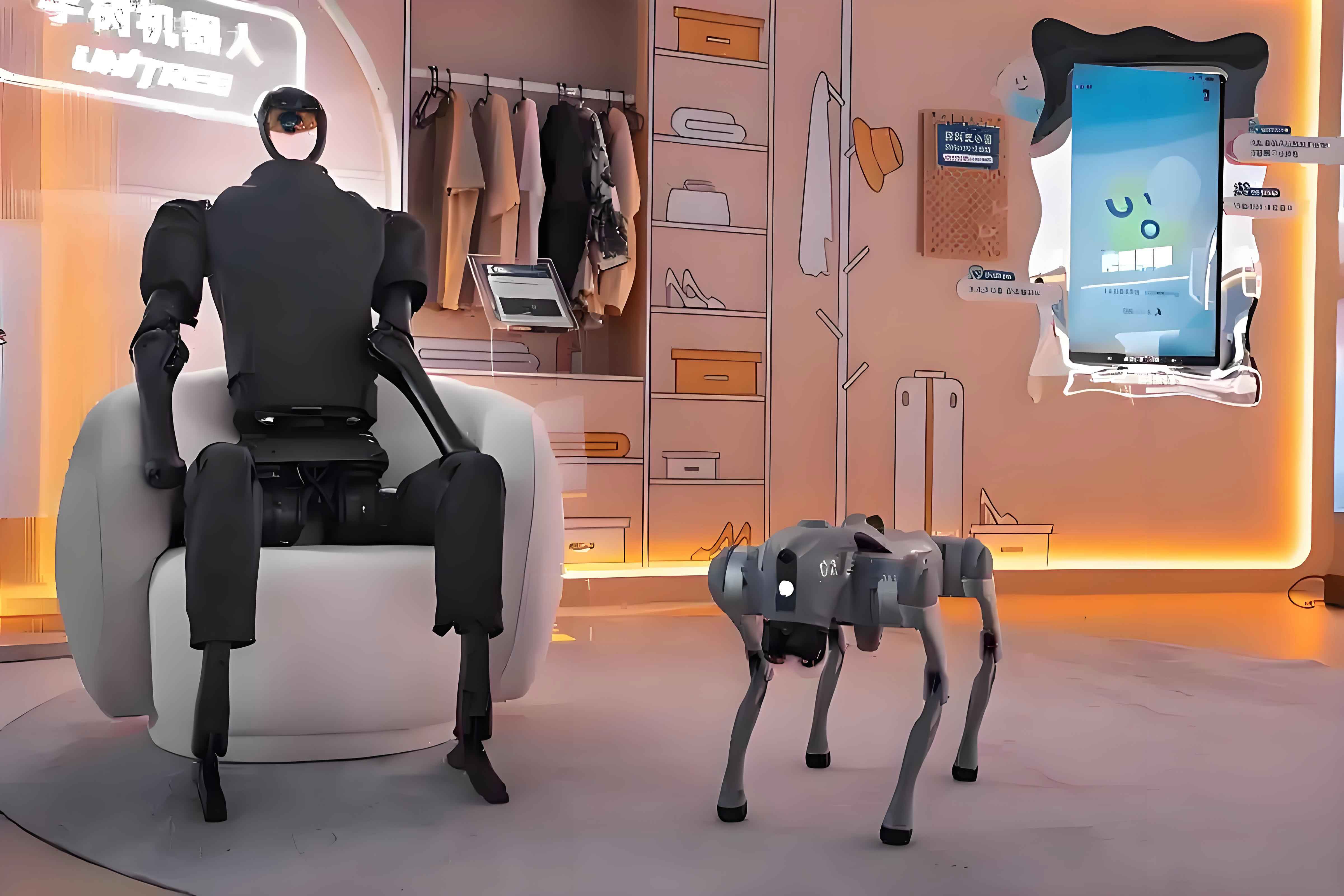
The strategic logic is becoming clearer as the humanoid robot market attracts more capital and more industrial participants. Automakers are not entering the humanoid robot field from a standing start. Many of the core components, software architectures, manufacturing processes and quality systems used in electric vehicles overlap with those required for humanoid robot development. At the same time, the automotive industry faces pressure on profitability and long-term growth, making the humanoid robot opportunity increasingly attractive as a potential source of new revenue, new profit pools and new valuation narratives.
Company disclosures and public statements show that the humanoid robot race is no longer confined to technology startups. Major automakers are deploying capital, creating dedicated subsidiaries, setting mass-production timetables and preparing commercial deployment scenarios. The humanoid robot market is therefore becoming a new front in the broader competition over artificial intelligence, advanced manufacturing, embodied intelligence and future mobility.
1. Automakers accelerate humanoid robot bets
In 2026, leading automakers have clearly accelerated their humanoid robot layouts. Dense announcements covering financing, product launches and mass-production schedules demonstrate both determination and investment. The humanoid robot sector is moving from concept demonstrations toward industrial deployment, and automakers are positioning themselves across the value chain.
In August, Xpeng Group announced that its humanoid robot business had completed a first financing round of more than USD 900 million. The post-money valuation exceeded USD 6.3 billion. The round was led by IDG Capital, with Gaorong Ventures participating, while Tencent and Alibaba joined as strategic investors. The scale of the financing underlined investor appetite for humanoid robot businesses tied to automakers with manufacturing experience and artificial intelligence capabilities.
He Xiaopeng, chairman and CEO of Xpeng Group, said at the company’s second-quarter earnings meeting that he had personally served as CEO of the robot business since June to mobilize resources across the group and accelerate humanoid robot mass production. The direct involvement of the group’s top leadership signals that the humanoid robot business is being treated as a core strategic priority rather than a side project.
He Xiaopeng said that starting in September the company would demonstrate a series of distinctive capabilities. Xpeng plans to enter the mass-production stage from the end of the year, beginning with commercial scenario applications in Xpeng stores and parks. In 2027, Xpeng IRON is expected to be officially launched, serving external customers in retail and service scenarios and beginning scaled deliveries in China and overseas markets. Monthly capacity next year can be rapidly raised to several thousand units depending on market demand, according to He Xiaopeng.
Chery Automobile’s humanoid robot layout is also substantial. Anhui Mojia Zhichuang Robot Technology Co., Ltd. was established by Chery in January 2025, after more than two years of incubation within the group. The humanoid robot unit has been positioned as a key part of Chery’s broader artificial intelligence strategy.
Zhang Guibing, executive vice president of Chery Automobile and general manager of Mojia Robotics, said that Mojia’s angel round post-money valuation had reached CNY 2.5 billion and that a second financing round would be launched soon. He said Mojia Robotics is a critical layout in Chery’s artificial intelligence strategy and that there is no upper limit on research and development investment in Mojia. In the group’s strategy, Mojia is positioned as the core business of a third growth curve, following the automotive main business and the user ecosystem second growth curve.
GAC Group’s incubated Huilun Technology officially landed in Guangzhou Huangpu in February. The company fully undertakes GAC Group’s humanoid robot research and development and commercialization business. It recently completed more than CNY 100 million in financing. Its main commercial product, the fourth-generation wheel-legged humanoid robot GoMate Mini, has been deployed in nearly 50 units across seven representative projects and has secured orders worth nearly CNY 10 million.
NIO CEO William Li announced at a smart-driving all-hands meeting that Ren Shaoqing, the head of smart driving, had founded an independent company focused on physical artificial intelligence foundation models and embodied intelligence. NIO will invest as a strategic shareholder and cooperate with the new company in areas including embodied intelligence, algorithm models, intelligent hardware, new energy and computing infrastructure. Ren Shaoqing will continue to serve as head of NIO’s smart-driving business.
Leapmotor also formally confirmed its humanoid robot business layout during its 2026 interim results conference call. Li Tengfei, vice president of Leapmotor, said that new energy vehicle companies, especially those with full-domain self-development capabilities, are among the enterprises best positioned to make humanoid robots. The statement reflects a broader belief that automakers’ integrated capabilities in software, hardware, manufacturing and supply chain management can be transferred to the humanoid robot field.
Tesla’s continued iteration of Optimus remains a reference point for the global humanoid robot race. BYD and Li Auto are also among the head automakers that have disclosed humanoid robot progress. The entry of these companies has widened the competitive field and reinforced the view that humanoid robot development may become an extension of the automotive industry’s advanced manufacturing and artificial intelligence capabilities.
2. Key humanoid robot initiatives at a glance
The following table summarizes selected humanoid robot initiatives disclosed by automakers and related companies. The table is based on publicly disclosed facts and does not include estimated figures beyond the information available in company statements and industry remarks.
| Company | Humanoid robot move | Disclosed details |
|---|---|---|
| Tesla | Continued iteration of Optimus | Optimus remains a prominent reference point in the global humanoid robot race. |
| Xpeng Group | Humanoid robot business financing and IRON commercialization | First financing round of more than USD 900 million; post-money valuation above USD 6.3 billion; IRON mass production planned from the end of 2026; commercial deployment starting in stores and parks; official launch in 2027 for retail and service customers in China and overseas; monthly capacity can rise to several thousand units depending on demand. |
| Chery Automobile | Mojia Robotics | Established in January 2025 after more than two years of internal incubation; angel round post-money valuation of CNY 2.5 billion; second financing round expected soon; positioned as a third growth curve core business; no upper limit on research and development investment. |
| GAC Group | Huilun Technology and GoMate Mini | Huilun Technology landed in Guangzhou Huangpu in February; completed more than CNY 100 million in financing; fourth-generation wheel-legged humanoid robot GoMate Mini deployed in nearly 50 units across seven representative projects; orders worth nearly CNY 10 million. |
| NIO | Strategic investment in a physical artificial intelligence and embodied intelligence company | Ren Shaoqing founded an independent company focused on physical artificial intelligence foundation models and embodied intelligence; NIO will be a strategic shareholder; cooperation covers embodied intelligence, algorithm models, intelligent hardware, new energy and computing infrastructure. |
| Leapmotor | Humanoid robot business confirmed | Leapmotor confirmed its humanoid robot business layout during its 2026 interim results call; vice president Li Tengfei said new energy vehicle companies with full-domain self-development capabilities are among the best positioned to make humanoid robots. |
3. Why humanoid robot supply chains favor automakers
Industry participants generally agree that automakers’ collective entry into the humanoid robot sector is not blind diversification. It is built on a high degree of supply chain synergy, similar technical paths and the availability of owned scenarios for real-world testing. These factors lower the barrier to entry for automakers and create a foundation for faster humanoid robot iteration.
From a supply chain perspective, Guan Mingyu, a senior partner at McKinsey, said that a substantial part of core humanoid robot technology overlaps with intelligent vehicles. Motors, actuators, power electronics, permanent magnets and precision bearings are among the components whose value chains overlap heavily with electric vehicles. This overlap means that automakers can leverage existing supplier relationships, manufacturing know-how and quality systems when developing humanoid robot products.
Zhang Guibing of Chery offered a more specific estimate. He said that roughly 70 percent of the humanoid robot can be synergized with automotive capabilities, especially in supply chain reuse. That level of overlap can shorten development cycles, reduce procurement complexity and improve cost efficiency for humanoid robot programs backed by automakers.
The overlap also creates a significant cost advantage. Guan Mingyu noted that the production cost of humanoid robots remains high and constrains the further expansion of the sector. Automakers, by contrast, have built their businesses around large-scale manufacturing and quality control systems. Cost control is a core competence for automakers, and that competence can be applied to humanoid robot development and production.
For the humanoid robot industry, automaker participation may help solve one of the sector’s most persistent challenges: moving from small-batch demonstrations to reliable, scalable and affordable production. The humanoid robot market needs suppliers capable of delivering precision components at acceptable costs, and automakers’ procurement scale and manufacturing discipline may accelerate the maturation of upstream supply chains.
The supply chain advantage is not limited to hardware. Automakers also bring experience in software integration, sensor fusion, electronic architecture, safety validation and large-scale quality management. These capabilities are relevant to humanoid robot development, where hardware and software must work together in complex real-world environments. As the humanoid robot market grows, automakers may be able to transfer proven automotive processes into new product categories.
However, supply chain overlap does not automatically guarantee commercial success. Humanoid robot products require different form factors, different safety standards and different use cases from vehicles. Automakers must still adapt their supply chains, engineering teams and business models to the specific demands of the humanoid robot market. The advantage lies in the starting point, not in the final outcome.
4. Technology spillover from smart driving to humanoid robots
At the technology level, the closed loops of perception, decision-making and execution in smart driving are highly similar to those required by humanoid robots. This similarity has created a technology spillover effect from intelligent vehicles to humanoid robot systems. Automakers with advanced smart-driving capabilities may be able to reuse algorithms, models, sensors and computing architectures in humanoid robot development.
Lu Wenliang, a special researcher on the automotive industry at the Institutes of Science and Development, Chinese Academy of Sciences, described this as a technology spillover phenomenon. He said that the end-to-end large models used in smart driving share underlying technologies with humanoid robots. The underlying logic of extending technology from smart driving to humanoid robots is the same, even though the application scenarios differ.
Zhang Guibing said that automakers making humanoid robots are essentially systematically migrating mature capabilities from the automotive industry to the humanoid robot sector. In technology, voice interaction from smart cockpits and perception and decision-making capabilities from autonomous driving can be used for humanoid robot interaction, as well as for the humanoid robot’s brain and cerebellum functions. This enables integrated software and hardware development.
In manufacturing, automakers can rely on mature large-scale manufacturing systems and quality control capabilities to give humanoid robots a foundation for mass production and stable delivery. The humanoid robot market requires not only innovation but also reliability, repeatability and serviceability. Automakers have experience in building products that must meet strict safety and durability standards at scale.
The technology spillover is particularly relevant in artificial intelligence. Smart driving systems rely on large volumes of data, simulation, model training and real-world validation. Humanoid robots face similar challenges in perception, planning and control. Automakers that have built data pipelines and artificial intelligence training infrastructure for vehicles may be able to adapt those capabilities to humanoid robot development.
The humanoid robot also requires advances in embodied intelligence. A humanoid robot must perceive its environment, understand instructions, plan actions and execute physical tasks safely. These requirements overlap with autonomous driving in areas such as sensor fusion, scene understanding, motion planning and fail-safe control. The difference is that humanoid robots operate in more varied environments and must interact with humans and objects in more flexible ways.
For automakers, the technical challenge is to move from vehicle-specific systems to general-purpose humanoid robot platforms. The humanoid robot market may reward companies that can combine artificial intelligence models, precision hardware and cost-effective manufacturing. Automakers with strong software and hardware integration capabilities may have an advantage, but they must also learn the specific requirements of humanoid robot use cases in retail, service, logistics and industrial environments.
5. Factories and stores as humanoid robot training grounds
One of the most distinctive advantages automakers hold is their own factories and stores, which can serve as natural training grounds for humanoid robots. Guan Mingyu noted that automakers can act both as manufacturers and as the first major customer, using humanoid robots in their own operations. This is significant for data calibration and product iteration.
Factories provide structured environments where humanoid robots can perform repetitive tasks, move materials, inspect equipment and support logistics. Stores provide customer-facing environments where humanoid robots can interact with people, provide information and support service operations. These environments give automakers opportunities to test humanoid robot capabilities in real-world conditions before offering products to external customers.
Xpeng’s plan to begin commercial scenario applications in its stores and parks from the end of 2026 illustrates this approach. By deploying humanoid robots in its own facilities first, Xpeng can gather operational data, identify problems and improve the product before scaling to external customers in 2027. The humanoid robot can be tested in controlled but realistic environments, reducing the risk of early commercial deployment.
GAC’s Huilun Technology has already deployed its GoMate Mini humanoid robot in seven representative projects with nearly 50 units. Such deployments provide valuable experience in real-world operation and help refine the humanoid robot’s capabilities. The orders worth nearly CNY 10 million also suggest that early commercial demand exists for humanoid robot products in selected scenarios.
Chery’s manufacturing base and operational footprint can similarly support humanoid robot testing. Zhang Guibing said that robots entering car factories may first be applied in logistics because the scenarios are easier to match. The factory environment offers repeatable tasks and clear operational boundaries, making it a practical starting point for humanoid robot deployment.
Automakers’ stores and service centers also provide opportunities for humanoid robots to interact with customers. These environments can help humanoid robot developers collect data on human-robot interaction, language understanding, navigation and task execution. The humanoid robot can be evaluated not only on technical performance but also on user experience, safety and commercial value.
The ability to use owned scenarios as training grounds may shorten the feedback loop between development and deployment. Instead of waiting for external customers to validate the humanoid robot, automakers can run pilots inside their own operations and make improvements quickly. This iterative approach may be particularly important in the early stages of the humanoid robot market, when product maturity and reliability are still being established.
At the same time, internal deployment is not the same as full commercial success. Factories and stores are controlled environments, while external customers may require humanoid robots to operate in more complex and unpredictable settings. Automakers will need to demonstrate that their humanoid robot products can meet safety, reliability and cost requirements across a wider range of use cases.
6. Cost, orders, and the upstream humanoid robot supply chain
The mass production of humanoid robots requires a wide range of precision components, including harmonic reducers, torque sensors and dexterous hands. Xu Haidong, deputy secretary-general of the China Association of Automobile Manufacturers, said that humanoid robot mass production requires these precision components to fall to acceptable cost levels. The humanoid robot industry cannot scale without a competitive and reliable upstream supply chain.
Orders and确定性需求 from electric vehicle startups are becoming a core driving force for the upstream supply chain to mature. The demand from automakers and their humanoid robot units can give suppliers the volume visibility needed to invest in capacity, improve yields and reduce costs. This is especially important for humanoid robot components that require precision manufacturing and specialized know-how.
Automakers’ entry into the humanoid robot market can therefore have a catalytic effect on the entire supply chain. When automakers commit to humanoid robot programs and set production targets, suppliers can plan more confidently. The humanoid robot market needs not only innovation at the system level but also scale at the component level. Automakers are well positioned to help create that scale.
However, the cost challenge remains significant. Humanoid robots require many components that are still expensive relative to the target price points for mass-market adoption. The humanoid robot industry must reduce costs without compromising performance, safety or reliability. Automakers’ experience in cost engineering and large-scale procurement can help, but the humanoid robot supply chain will still need dedicated investment and technological progress.
The upstream supply chain also needs to develop standards and testing methods for humanoid robot components. Automakers are accustomed to working with standardized automotive-grade components and rigorous validation processes. Applying similar discipline to humanoid robot components may improve quality and interoperability, but it may also require new standards tailored to humanoid robot applications.
Commercial orders are an important signal of market readiness. GAC’s Huilun Technology has secured nearly CNY 10 million in orders, and Xpeng plans to begin commercial deployment in stores and parks before launching IRON to external customers in 2027. These early commercial activities can provide feedback to the supply chain and help identify bottlenecks in production, installation, maintenance and service.
The humanoid robot market is still in an early stage, and the path to mass production will require coordination across automakers, component suppliers, software developers and service providers. Automakers can play a leading role because they combine manufacturing scale, supply chain management and customer-facing operations. But the humanoid robot supply chain must mature in parallel, and cost reduction will remain a central challenge.
7. The strategic case for a humanoid robot second curve
Automakers’ rush into humanoid robots has a clear strategic rationale. Guan Mingyu noted that the profit margin of the automotive main business has fallen to a low level, while global vehicle production has long hovered around 80 million to 90 million units per year, leaving relatively limited room for growth. When an industry faces profit pressure and limited growth space, capital markets are unlikely to assign high valuations. Automakers urgently need new business growth points and profit sources, and the humanoid robot provides an important possibility.
The search for a second growth curve is therefore a key driver of automaker humanoid robot investment. The humanoid robot market is still nascent, but it offers the potential for high-value software and services, differentiated hardware and new commercial applications. Automakers hope to capture value beyond vehicle sales by building humanoid robot platforms and related artificial intelligence capabilities.
He Xiaopeng calculated the economics of the humanoid robot business at Xpeng’s earnings meeting. He said that the technical threshold for high-end general-purpose robots is extremely high and that high-quality supply is scarce. Therefore, each IRON humanoid robot’s revenue and gross profit contribution over its full lifecycle, including hardware sales and recurring revenue from software artificial intelligence model capability upgrades, will be significantly higher than the current automotive business’s average selling price and gross profit per vehicle.
He Xiaopeng said he hopes that after humanoid robot mass production, commercialization in China and overseas can be quickly implemented, bringing considerable gross profit growth and supporting research and development investment in physical artificial intelligence. The goal is to continuously expand technological leadership. This statement highlights the strategic link between humanoid robot commercialization and artificial intelligence investment.
Zhang Guibing of Chery offered another long-term perspective. He said that with the emergence of autonomous driving and Robotaxi, vehicle use costs will fall significantly. In the future, consumers may prefer shared mobility rather than purchasing vehicles, and the automotive market may face the possibility of contraction. Perhaps ultimately all automakers that survive will make humanoid robots. The humanoid robot is therefore not only a growth opportunity but also a potential hedge against long-term changes in the automotive business model.
The strategic case for humanoid robots also extends to talent, technology and brand positioning. Automakers that build humanoid robot capabilities can attract artificial intelligence and robotics talent, develop new intellectual property and signal technological ambition to investors and customers. The humanoid robot can become a platform for innovation that strengthens the automaker’s broader technology ecosystem.
Nevertheless, the second-curve argument must be tested by execution. The humanoid robot market is highly competitive, and automakers face competition from dedicated robotics companies, technology giants and startups. Automakers’ advantages in supply chain, manufacturing and training grounds must be converted into compelling humanoid robot products and viable business models. The humanoid robot opportunity is large, but the path to profitability is not guaranteed.
8. Commercialization paths for humanoid robots
The commercialization path for humanoid robots is still being defined. Early deployments are likely to focus on controlled environments where tasks are repeatable and safety risks can be managed. Factories, warehouses, stores and parks are among the initial scenarios being explored by automakers and their humanoid robot units.
Xpeng plans to start with its own stores and parks before offering IRON to external customers in retail and service scenarios in 2027. This phased approach allows the company to validate the humanoid robot in its own operations before expanding to broader markets. The humanoid robot can be tested in customer-facing settings, logistics support and service tasks, generating data and operational experience.
GAC’s GoMate Mini is a wheel-legged humanoid robot, a design that may offer advantages in mobility and stability for certain tasks. Its deployment in seven representative projects and nearly 50 units suggests that early commercial projects are already underway. The humanoid robot’s ability to secure nearly CNY 10 million in orders indicates that some customers see practical value in the product.
Chery’s Mojia Robotics is positioned as a core business in the group’s third growth curve. The humanoid robot unit’s internal incubation and planned financing suggest a long-term commitment to building a standalone robotics business. Chery’s manufacturing expertise and supply chain scale may support the humanoid robot’s path to mass production.
NIO’s approach focuses on strategic investment and cooperation in physical artificial intelligence and embodied intelligence. By supporting an independent company founded by its smart-driving head, NIO can explore humanoid robot-related technologies while maintaining its own strategic position. The humanoid robot ecosystem may benefit from such partnerships between automakers and specialized technology teams.
Leapmotor’s confirmation of its humanoid robot business reflects the view that full-domain self-development capabilities are a strong foundation for robotics. The humanoid robot requires integrated capabilities across software, hardware, manufacturing and cost control. Automakers with strong self-development capabilities may be able to move faster in developing humanoid robot platforms.
Across these approaches, a common theme is that humanoid robot commercialization will likely be gradual. Early applications will be selected based on technical feasibility, safety and commercial value. As the humanoid robot becomes more capable and costs decline, the range of applications may expand. The humanoid robot market will require patience and sustained investment.
The service and retail sectors may offer early opportunities because humanoid robots can interact with customers, provide information and perform repetitive tasks. Industrial and logistics applications may also grow as humanoid robots demonstrate reliability and cost effectiveness. The ultimate scale of the humanoid robot market will depend on technological progress, cost reduction and the ability to meet real customer needs.
9. Manufacturing and deployment challenges for humanoid robots
Despite the optimism, experts caution that the path from factory internships to large-scale mass production will take time. The humanoid robot must overcome technical, operational and commercial challenges before it can achieve widespread adoption. Automakers’ advantages may shorten the journey, but they do not eliminate the difficulty.
Zhang Guibing said that the first phase of humanoid robot deployment in car factories will likely focus on logistics because the scenarios are easier to match. Expanding into vehicle assembly may take five or even ten years. Vehicle assembly requires humanoid robots to perform complex tasks with high precision, safety and reliability. The humanoid robot must be able to handle diverse parts, adapt to variations and work safely alongside human workers.
Lu Wenliang noted that the industry is generally in a transition stage from upgrading body motion capabilities to upgrading intelligent brains. Most demonstrations on the market remain at the remote-control stage. True embodied intelligence still requires a qualitative breakthrough in the closed loop of perception, decision-making and execution. The humanoid robot must not only move but also understand, reason and act autonomously in unstructured environments.
Manufacturing humanoid robots at scale also requires robust quality control, supply chain coordination and after-sales service. Automakers have experience in these areas, but humanoid robots introduce new challenges. The humanoid robot has many joints, sensors and actuators that must work together reliably. Maintenance and repair may be more complex than for vehicles, and safety standards for humanoid robots are still evolving.
Deployment challenges include integration with existing workflows, employee training and customer acceptance. Humanoid robots must demonstrate that they can work safely and effectively in environments designed for humans. They must also prove their economic value compared with existing automation solutions and human labor. The humanoid robot market will require clear return-on-investment cases for customers.
Regulatory and ethical considerations may also affect humanoid robot deployment. Safety standards, data privacy, liability and human-robot interaction rules will need to be developed. Automakers are accustomed to regulation in the automotive sector, but humanoid robots may face different regulatory frameworks depending on the application and jurisdiction.
The humanoid robot industry must also manage expectations. Technical demonstrations can generate excitement, but commercial success requires reliable products, real customer demand and sustainable business models. Automakers’ entry into the humanoid robot market adds resources and credibility, but it also raises the bar for execution.
10. From factory logistics to assembly: the humanoid robot climb
The progression from factory logistics to vehicle assembly illustrates the humanoid robot’s long climb toward higher-value tasks. Logistics scenarios are relatively structured: humanoid robots can move materials, transport parts and support inventory management. These tasks may require less dexterity and complex decision-making than assembly, making them a practical starting point.
Assembly tasks require humanoid robots to manipulate complex objects, follow detailed procedures and adapt to variations. The humanoid robot must have dexterous hands, force sensing and precise control. It must also be able to work safely near human workers and comply with manufacturing quality standards. These requirements are demanding and may take years to meet at scale.
Automakers’ factories provide an ideal environment for this progression. Humanoid robots can start with simpler logistics tasks and gradually take on more complex responsibilities as their capabilities improve. The factory can serve as a controlled testbed where humanoid robots are evaluated on productivity, safety and reliability. Data from these deployments can feed back into product development.
However, the factory is only one part of the humanoid robot journey. External commercial scenarios, such as retail, service and healthcare, may present different challenges. Humanoid robots in stores must interact with customers, navigate crowded spaces and handle unpredictable situations. Humanoid robots in service environments must provide useful assistance while maintaining safety and privacy.
The humanoid robot market will likely develop in stages. Early adopters may use humanoid robots for specific tasks where the value proposition is clear. As technology improves and costs decline, humanoid robots may expand into more applications. The pace of adoption will depend on demonstrated performance and customer confidence.
Automakers’ experience in scaling complex products can help them manage the humanoid robot climb. They understand the importance of supplier quality, manufacturing discipline and field service. They also understand that new products require continuous improvement based on real-world data. The humanoid robot may follow a similar path, moving from early deployments to broader commercialization over time.
11. Investment and competition in the humanoid robot race
Investment in the humanoid robot sector is accelerating, and automakers are becoming important participants. Xpeng’s humanoid robot financing round of more than USD 900 million and post-money valuation above USD 6.3 billion demonstrate the scale of capital flowing into the sector. Chery’s Mojia Robotics angel round post-money valuation of CNY 2.5 billion and GAC’s Huilun Technology financing of more than CNY 100 million show that automaker-backed humanoid robot units are attracting investor interest.
The involvement of strategic investors such as Tencent and Alibaba in Xpeng’s humanoid robot financing highlights the intersection of artificial intelligence, cloud computing, software ecosystems and advanced hardware. The humanoid robot is not only a mechanical product but also an artificial intelligence platform that may require significant computing, data and software capabilities.
Competition in the humanoid robot market is intensifying. Automakers are competing with dedicated robotics companies, technology giants and startups. Each group brings different strengths. Automakers offer supply chain scale, manufacturing expertise and real-world deployment scenarios. Technology companies offer artificial intelligence, computing and software capabilities. Robotics startups offer specialized innovation and agility.
The humanoid robot race may therefore involve partnerships and ecosystems rather than isolated competition. NIO’s strategic investment in a company focused on physical artificial intelligence and embodied intelligence is an example of how automakers may collaborate with specialized technology teams. Xpeng’s decision to bring its humanoid robot business under direct leadership while raising external capital shows how automakers may combine internal commitment with external investment.
Capital intensity is likely to remain high. Humanoid robot development requires investment in research and development, talent, manufacturing, testing and commercialization. Automakers with strong balance sheets and cash flow may have an advantage, but they also face pressure to allocate capital efficiently. The humanoid robot business must eventually demonstrate a path to returns.
The competitive landscape may also be shaped by standards and platforms. If humanoid robot hardware and software become standardized, scale may become more important. If humanoid robots remain highly customized, specialized innovation may matter more. Automakers’ manufacturing capabilities may be more valuable in standardized, high-volume scenarios, while startups may excel in niche applications.
For investors, the humanoid robot opportunity is attractive but uncertain. The sector has the potential to create large new markets, but the timing and scale of commercialization remain unclear. Automakers’ participation adds credibility and resources, but it also raises expectations. The humanoid robot race will test the ability of automakers to innovate beyond their core business.
12. Outlook: a long humanoid robot endurance run
Experts say the automaker crossover into humanoid robots is both a strategic extension supported by supply chain synergy, technology reuse and scenario self-consistency, and an endurance run that must pass through a long climb. The final outcome of the industry transformation remains to be tested by time.
The humanoid robot opportunity is compelling because it connects several powerful trends: artificial intelligence, embodied intelligence, advanced manufacturing, automation and the search for new growth. Automakers are well positioned to participate because they possess many of the required capabilities. Their supply chains overlap with humanoid robot components, their smart-driving technologies can spill over into humanoid robot perception and decision-making, and their factories and stores can serve as training grounds.
Yet the humanoid robot market is still in its early stages. The industry must move from demonstrations to reliable products, from remote-controlled operation to true embodied intelligence, and from small-scale pilots to mass production. These transitions will require technical breakthroughs, cost reductions, supply chain maturity and customer acceptance. The humanoid robot will not become ubiquitous overnight.
Automakers’ humanoid robot strategies will likely differ. Some may focus on internal deployment and industrial applications. Others may target consumer and service markets. Some may build humanoid robot businesses in-house, while others may invest in external companies or form partnerships. The diversity of approaches reflects the uncertainty and opportunity in the humanoid robot market.
The humanoid robot race also has implications beyond individual companies. It may accelerate the development of artificial intelligence, precision manufacturing and robotics ecosystems. It may create new jobs and new skills while changing existing workflows. It may reshape competition in the automotive industry by opening new growth avenues and redefining the boundaries between vehicles, robots and artificial intelligence.
For now, the humanoid robot remains a long-term strategic bet. Automakers are investing with the expectation that the humanoid robot market will grow and that their capabilities will give them an edge. The coming years will reveal which companies can convert supply chain advantages, technology spillover and training-ground scenarios into commercially successful humanoid robot products.
The humanoid robot market is moving quickly, but the endurance run has only just begun. Automakers have entered the race with capital, talent and industrial resources. The next phase will be defined by execution, product maturity and real customer value. The humanoid robot may become a second growth curve for some automakers, but it will require patience, discipline and sustained innovation to reach that goal.