
The Beijing Humanoid Robot Innovation Center has announced that RoboMIND, its open-source dataset for embodied intelligence, has surpassed 20 million global downloads. The milestone marks a significant moment for the international humanoid robot research community, because the dataset doubled its download volume in only one month. That rapid increase reflects broad recognition of the value of open, standardized, and reusable physical-world data for humanoid robot development. It also highlights how Beijing is building a data infrastructure designed to help humanoid robot systems understand the real world rather than merely process text or simulate controlled laboratory conditions.
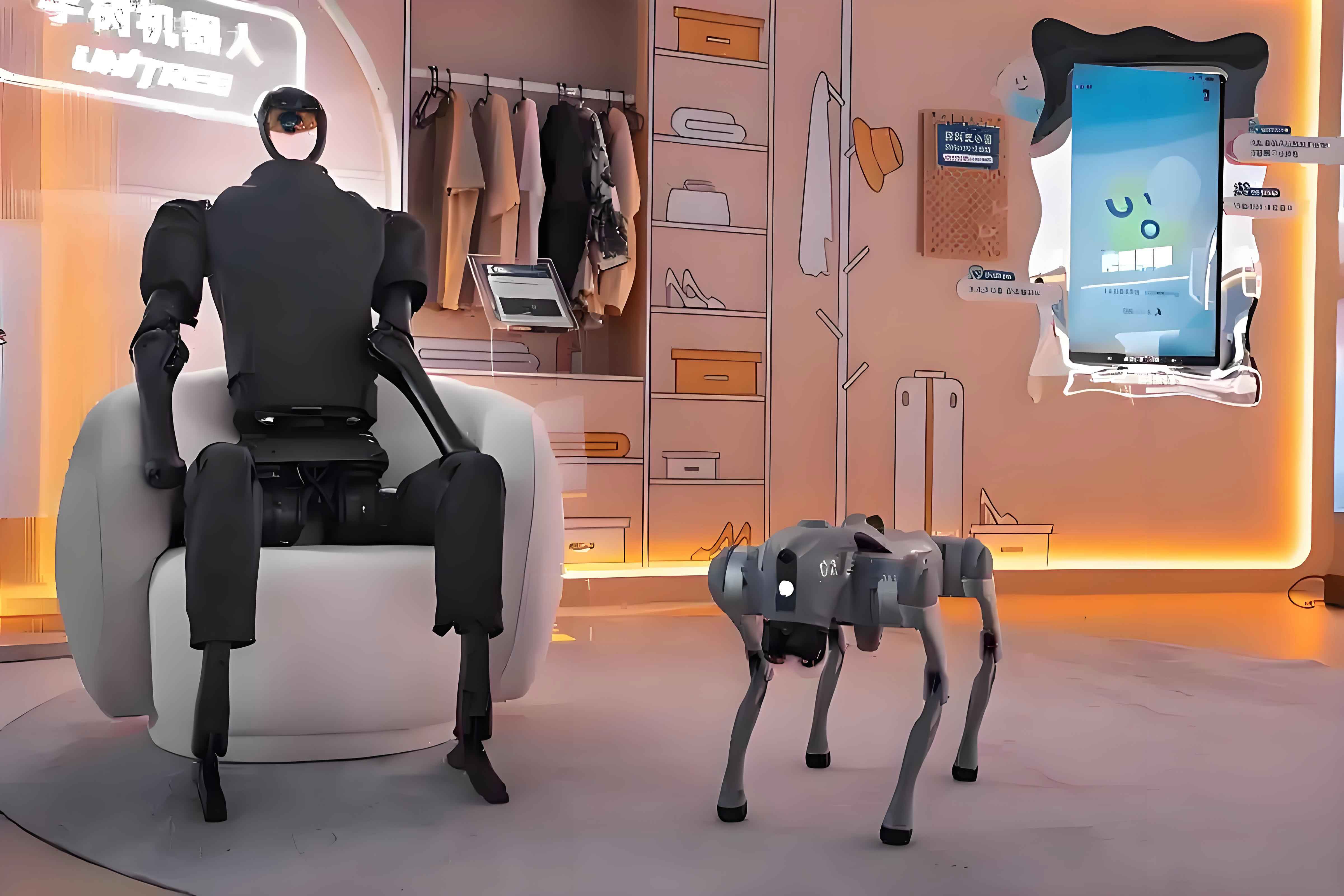
The significance of the announcement extends beyond a single download figure. Humanoid robot research depends on large volumes of high-quality interaction data drawn from physical environments. A humanoid robot must learn how to grasp objects, adjust its posture, respond to changes in lighting, navigate around obstacles, and handle materials with different levels of friction and rigidity. Those tasks cannot be mastered through text alone. They require demonstration, measurement, annotation, validation, and repeated training. The RoboMIND milestone therefore offers a clear signal that the global humanoid robot ecosystem is seeking shared data resources that reduce duplication and accelerate innovation.
Beijing’s data super factory is central to that effort. The facility is designed as a large-scale environment where humanoid robot training data can be collected, processed, standardized, and distributed. Its work supports the broader goal of building a data foundation for embodied intelligence, a field in which humanoid robot systems must convert physical experience into actionable models. The announcement comes as competition in the humanoid robot sector intensifies worldwide, with research institutions, startups, and established technology companies all seeking reliable data to improve perception, planning, manipulation, and mobility.
1. A Global Milestone for Open Humanoid Robot Data
The announcement by the Beijing Humanoid Robot Innovation Center places RoboMIND among the most visible open-source data efforts supporting humanoid robot development. More than 20 million downloads indicate that the dataset is being used across a wide range of research and development contexts. The fact that downloads doubled within a single month suggests accelerating demand for standardized embodied data. For the humanoid robot community, such demand is not surprising. The field has reached a stage where algorithmic progress depends heavily on access to diverse, high-quality, and well-annotated physical interaction data.
Open-source data plays a distinct role in humanoid robot innovation. Unlike proprietary datasets that remain inside individual companies, open datasets allow university laboratories, small robotics firms, and independent researchers to test ideas against common benchmarks. That shared foundation can improve reproducibility and encourage comparison across humanoid robot systems. It can also reduce the cost of building data collection pipelines from scratch. When a humanoid robot research team can begin with a standardized dataset, it can devote more resources to model design, control strategies, safety evaluation, and real-world deployment.
The global response to RoboMIND also demonstrates that data sharing can strengthen rather than weaken an innovation ecosystem. The humanoid robot sector benefits when researchers can build on common resources and contribute improvements back to the community. A dataset that is open to global developers can support cross-border collaboration, encourage diverse experimentation, and help identify best practices for data collection and annotation. In this sense, the download milestone is not only a measure of popularity. It is evidence that open data is becoming part of the infrastructure of humanoid robot research.
The Beijing Humanoid Robot Innovation Center has positioned RoboMIND as a resource for the global research community. The dataset is fully open to developers, and its growth reflects the value of that openness. For a humanoid robot to operate in homes, factories, warehouses, hospitals, and other complex environments, it must be trained on data that captures the variability of those settings. A single laboratory cannot easily produce all the necessary variation. An open ecosystem, supported by shared standards and reusable datasets, can expand the range of experiences available to humanoid robot developers.
2. Inside the Data Super Factory
The data super factory operated by the Beijing Humanoid Robot Innovation Center covers nearly 6,000 square meters. Within that space, more than 40 simulated real-scene zones are arranged to reflect environments in which humanoid robot systems are expected to operate. These zones include home life, supermarkets, industrial assembly, warehousing and logistics, medical assistance, and special operations. The layout allows data collectors and humanoid robot platforms to work across multiple scenarios without leaving the facility. It also allows the center to generate data that reflects the practical demands of different industries.
Inside the facility, data collectors wear capture equipment and repeatedly perform practical actions. They grasp objects, switch equipment on and off, sort parts, organize materials, and adjust posture. Each action is recorded with attention to detail, because a humanoid robot must learn not only the final outcome but also the sequence of movements, force adjustments, and spatial relationships that make the action successful. The resulting data are intended to help humanoid robot systems recognize patterns, generalize across objects, and improve manipulation performance.
The facility also includes a motion capture area. There, motion capture specialists wearing specialized equipment perform complex movements while optical capture cameras record the details from above. This setup allows the center to collect precise information about human motion and translate it into data that can support humanoid robot learning. Motion capture is particularly valuable for humanoid robot research because it provides structured information about joint movement, balance, coordination, and posture. Such information can help humanoid robot developers build controllers and learning models that imitate or adapt human strategies.
Every day, the high-quality data collected in these environments flow into the center’s data platform. The data then pass through multiple stages of cleaning, annotation, validation, and quality inspection. Only after those stages are complete do they become standardized samples for algorithm model training. This pipeline is essential for humanoid robot development. Raw sensor data can be noisy, inconsistent, and difficult to use. Standardization makes the data more accessible, comparable, and reusable across different humanoid robot platforms and research teams.
3. A Multi-Scenario Engine for Humanoid Robot Training
The data super factory has built a scenario matrix that covers family life, industrial production, commercial services, and other domains. This matrix is important because humanoid robot capabilities cannot be developed in a narrow setting. A humanoid robot that performs well in a laboratory may struggle in a home filled with clutter, a supermarket with reflective surfaces, an industrial assembly line with moving equipment, or a warehouse with variable lighting and tight spaces. By collecting data across multiple environments, the center helps humanoid robot developers expose their models to a wider range of physical conditions.
The task library and action sample library are being continuously expanded. This expansion supports the long-term goal of producing 1,000,000 hours of high-quality humanoid robot interaction data. Such a target reflects the scale required for advanced embodied intelligence. Humanoid robot learning benefits from diversity: different objects, different surfaces, different weights, different spatial layouts, and different human instructions. The more varied the data, the greater the chance that a humanoid robot can generalize beyond the specific examples it has seen during training.
The facility deploys 40 configurations totaling more than 150 robot devices. This multi-model collaborative collection system allows the center to gather data across different robot forms and sensing setups. A humanoid robot platform may have different degrees of freedom, different grippers, different camera placements, and different control interfaces. By collecting data across configurations, the center can support broader compatibility and help developers adapt models across platforms. Multi-model collection also strengthens the dataset’s value as a shared resource for the humanoid robot community.
The scenario matrix and multi-robot setup together create a data engine that supports both scale and diversity. Scale is necessary because humanoid robot models require large amounts of experience. Diversity is necessary because real-world environments are unpredictable. The center’s approach addresses both requirements by organizing collection across realistic settings and multiple robot configurations. This combination is central to the data super factory concept: it is not simply a storage facility or a single laboratory, but an integrated environment for producing standardized humanoid robot training resources.
4. RoboMIND Scale, Open Access, and Reported Metrics
RoboMIND has been open source since December 2025. Since then, it has released more than 300,000 dual-arm manipulation trajectories covering more than 700 practical tasks. The dataset is fully open to global developers. These figures are important because dual-arm manipulation is a core capability for humanoid robot systems. Many real-world tasks require two hands, coordinated motion, force control, and spatial reasoning. By providing a large set of dual-arm trajectories, RoboMIND gives humanoid robot researchers a foundation for studying manipulation strategies, imitation learning, and task generalization.
The data base itself was completed in less than one year. It has deployed 40 configurations totaling more than 150 robot devices and has established a multi-model collaborative collection system. Its annual data production capacity can reach 180,000 hours. It has already delivered nearly 30,000 hours of high-quality data externally, and more than 70 percent of its capacity serves industry customers. These reported figures show that the facility is not only a research initiative but also an operational data production environment connected to industrial needs.
The table below summarizes the reported figures associated with RoboMIND and the Beijing humanoid robot data base. The table is intended to provide a clear reference for readers following the development of open data infrastructure for humanoid robot research.
| Reported Metric | Figure | Relevance to Humanoid Robot Development |
|---|---|---|
| Global RoboMIND downloads | More than 20 million | Indicates widespread international demand for open humanoid robot data |
| Download growth in one month | Doubled | Shows accelerating adoption of shared embodied intelligence resources |
| Released dual-arm manipulation trajectories | More than 300,000 | Supports humanoid robot manipulation learning and imitation research |
| Covered practical tasks | More than 700 | Expands task diversity for humanoid robot generalization |
| Simulated real-scene zones | More than 40 | Provides varied physical environments for humanoid robot training |
| Data base area | Nearly 6,000 square meters | Enables large-scale collection across multiple scenarios |
| Robot configurations | 40 | Supports multi-model collaborative data collection |
| Robot devices | More than 150 | Increases collection throughput and platform diversity |
| Annual data production capacity | 180,000 hours | Reflects industrial-scale humanoid robot data generation |
| High-quality data delivered externally | Nearly 30,000 hours | Shows practical transfer of data to external users |
| Capacity serving industry customers | More than 70 percent | Demonstrates close connection between data production and industry demand |
| Long-term humanoid robot interaction data target | 1,000,000 hours | Sets a scale goal for future embodied intelligence research |
| Tiangong humanoid robot 100-meter result | 8.64 seconds | Provides a performance example linked to large-scale training data |
5. Industrial Demand and the Case for Standardized Data
The rapid adoption of RoboMIND reflects a broader challenge in the humanoid robot sector. High-quality embodied data has been scarce, data formats have often been inconsistent across organizations, and the data ecosystem has been fragmented. Many companies have had to invest heavily in building their own collection systems. That raises research and development costs and creates barriers for smaller players. For a humanoid robot startup or a university research team, building a large-scale physical data pipeline can be prohibitively expensive. Open, standardized datasets can reduce that burden and allow more teams to focus on core innovation.
Standardization is particularly important for humanoid robot development because the field spans many disciplines. Mechanical engineers, control specialists, computer vision researchers, machine learning experts, and human-robot interaction designers all need access to data in usable forms. If every laboratory uses different annotation rules, sensor conventions, and task definitions, collaboration becomes difficult. A standardized dataset can provide a common language for humanoid robot research. It can also support benchmarking, reproducibility, and fair comparison of different approaches.
The reported download figure therefore validates a practical need. Developers are not simply downloading data for curiosity. They are using it to train models, test algorithms, and evaluate humanoid robot capabilities. The demand is especially strong among small and medium-sized enterprises and academic teams that may lack the resources to build extensive data collection facilities. By making RoboMIND fully open to global developers, the Beijing Humanoid Robot Innovation Center helps lower the entry threshold for humanoid robot research and broadens participation in the field.
Open data also has a role in preventing excessive concentration of technical advantage. When large firms build proprietary datasets, they can accumulate advantages that are difficult for smaller organizations to match. Open datasets do not eliminate competition, but they can ensure that a baseline of high-quality data is available to a wider community. That supports a more diverse humanoid robot ecosystem and encourages innovation from multiple directions. It also creates opportunities for industry-academia-research collaboration, because universities and companies can work from shared data foundations.
6. Standards, Evaluation, and the Complete Data Loop
The Beijing humanoid robot data base is deeply involved in the formulation of national and industry standards. It has built a standardized system covering data collection, annotation, evaluation, and delivery. This system is intended to provide unified data specifications for the wider industry. Standards are essential for humanoid robot development because they make it easier to compare datasets, combine resources, and validate results. Without common specifications, data collected by different organizations may be difficult to integrate or reuse.
The center’s work extends beyond producing individual datasets. It is building a complete data loop that connects collection, annotation, training, evaluation, deployment, and scenario feedback. In this loop, data collected from physical environments support model training. The trained models are evaluated and deployed in real or simulated scenarios. The results of deployment generate feedback that can inform further data collection. This iterative process is well suited to humanoid robot development, because real-world performance often reveals gaps that are not visible in laboratory tests.
A complete data loop can improve both the quantity and quality of humanoid robot training resources. Collection without evaluation may produce large but unusable datasets. Evaluation without deployment may miss practical challenges. Deployment without feedback may fail to capture new edge cases. By connecting these stages, the data base aims to create a continuous improvement cycle. That cycle can help humanoid robot systems become more robust, adaptable, and safe in real environments.
The emphasis on standards also supports international collaboration. Humanoid robot research is a global endeavor, and shared data specifications can make cross-border cooperation more effective. Researchers from different countries can use common task definitions, annotation rules, and evaluation metrics. That reduces friction and allows the community to focus on scientific and engineering challenges. The RoboMIND milestone shows that demand for such shared standards is already strong.
7. Why Physical-World Data Matters for Humanoid Robot Intelligence
Humanoid robot intelligence differs from language model intelligence in important ways. Language models primarily learn from text and can capture statistical patterns in language. A humanoid robot, by contrast, must understand the physical world. It must know how hard to grip an object, how much force to apply when turning a handle, how far it can reach without losing balance, and how changing light or sudden obstacles affect perception. These variables are dynamic and context-dependent. They cannot all be predetermined through manually written code.
Physical-world data allows a humanoid robot to learn from experience. When a humanoid robot observes demonstrations of grasping, sorting, assembling, and organizing, it can extract patterns that relate perception to action. It can learn how objects behave when pushed, lifted, or rotated. It can learn how surfaces affect friction and how spatial constraints shape movement. Over time, these learned patterns can support more flexible and generalizable behavior. The data super factory is designed to produce exactly this kind of experience at scale.
The complexity of the physical world is one reason why embodied data is so valuable. Objects may be soft or hard, smooth or rough, light or heavy. Environments may be bright or dim, crowded or open, static or dynamic. A humanoid robot must cope with all these variations. It also must respond to unexpected events, such as a dropped object, a moving person, or a sudden change in surface conditions. Training data that captures these variations helps humanoid robot models become more resilient.
For these reasons, high-quality data has become a core fuel for embodied intelligence. The humanoid robot sector needs data that is not only large in volume but also rich in diversity and carefully annotated. The RoboMIND dataset and the Beijing data base are positioned to meet that need. Their value lies in the combination of realistic scenarios, standardized processing, and open access. Together, these elements support the development of humanoid robot systems that can understand and operate in the real world.
8. Breaking Barriers Across the Humanoid Robot Ecosystem
The open-source nature of RoboMIND has far-reaching implications for the humanoid robot ecosystem. By sharing data globally, the initiative helps break down data barriers that have slowed collaboration and duplicated effort. Small robot companies and university research teams can access high-quality data without building every collection pipeline themselves. That lowers the research threshold and allows more participants to contribute to humanoid robot innovation. A broader pool of participants can lead to more diverse ideas and faster progress.
Open data can also help prevent the formation of technology monopolies in the humanoid robot sector. When a few large organizations control most high-quality data, smaller players may struggle to compete. Open datasets create a shared baseline that supports fairer participation. They do not replace proprietary innovation, but they ensure that foundational resources are available to a wider community. This can strengthen the entire humanoid robot supply chain, from sensors and actuators to software platforms and system integration.
The collaborative potential of open data extends to industry-academia-research partnerships. Universities can use RoboMIND for teaching and fundamental research. Startups can use it to prototype new humanoid robot capabilities. Established companies can use it to benchmark their systems and identify gaps. Research institutes can contribute new annotations, evaluation methods, and task definitions. Over time, this shared ecosystem can produce a virtuous cycle in which data, algorithms, and applications reinforce one another.
For the humanoid robot community, the key lesson is that data infrastructure is not a secondary concern. It is a foundational layer that shapes what researchers can build and how quickly they can validate their ideas. The RoboMIND download milestone demonstrates that the community is ready to use shared resources. The next challenge is to ensure that those resources continue to grow in scale, diversity, quality, and accessibility. Beijing’s data super factory is one of the efforts addressing that challenge.
9. Beijing’s Role in Building the Humanoid Robot Data Foundation
Beijing is systematically strengthening the underlying data foundation for the humanoid robot industry. The data super factory is part of a broader effort to connect data collection, annotation, training, evaluation, deployment, and scenario feedback. This effort is intended to provide a durable infrastructure that supports many organizations rather than a single product or platform. By building shared capabilities, Beijing can help the humanoid robot sector reduce duplication and accelerate development.
The facility’s long-term goal is to produce 1,000,000 hours of high-quality humanoid robot interaction data. Reaching that goal will require continuous expansion of the scenario matrix, task library, and action sample library. It will also require robust quality control and standardized processes. The reported annual capacity of 180,000 hours provides a foundation for scaling, while the delivery of nearly 30,000 hours of high-quality data shows that the facility is already operational. More than 70 percent of capacity serving industry customers indicates strong commercial relevance.
Beijing’s approach emphasizes both openness and standards. RoboMIND is open to global developers, while the data base participates in national and industry standards for collection, annotation, evaluation, and delivery. This combination can help create an ecosystem in which data is both widely accessible and reliable. For humanoid robot developers, reliability is crucial. A dataset that is large but poorly annotated may be less useful than a smaller dataset with consistent, high-quality labels. Standards help ensure that open data can be trusted and reused.
The data foundation also supports the training of humanoid robot models that must operate across domains. A humanoid robot intended for home use may need different skills from one designed for industrial assembly, but both benefit from broad physical-world experience. By covering family life, industrial production, commercial services, medical assistance, special operations, and logistics, the data base helps humanoid robot developers build models that can transfer across tasks. This cross-domain capability is essential for the long-term deployment of humanoid robot systems.
10. Performance Validation and the Value of Training Data
The value of large-scale training data can be seen in performance validation. At the recent World Humanoid Robot Games, the Tiangong humanoid robot ran the 100-meter race in 8.64 seconds. The result was supported by massive training data produced by the data base. While a sprint result is only one measure of humanoid robot capability, it illustrates how data-driven training can contribute to physical performance. Running requires coordination, balance, actuation control, and rapid response to dynamic conditions. These are all areas in which humanoid robot research benefits from extensive data and iterative testing.
Performance validation is important because it connects data production to real outcomes. A dataset is most valuable when it helps humanoid robot systems improve in measurable ways. The Tiangong result provides one example of how data from the Beijing facility can support humanoid robot development. It also highlights the importance of evaluation. Without rigorous testing, it is difficult to know whether data collection is producing useful improvements. The center’s emphasis on evaluation and feedback helps close that gap.
At the same time, humanoid robot performance must be evaluated across many dimensions. Speed is important, but so are safety, reliability, manipulation accuracy, energy efficiency, and human-robot interaction. A humanoid robot that can run quickly may still struggle to handle fragile objects or navigate a crowded room. The data base’s multi-scenario approach addresses this broader range of capabilities. By collecting data in homes, supermarkets, factories, warehouses, medical settings, and special operations environments, the facility supports a more comprehensive view of humanoid robot competence.
The reported metrics and performance example together suggest that the data super factory is moving from infrastructure building toward practical impact. The download milestone shows global demand. The delivered data hours show operational capacity. The industry customer share shows commercial relevance. The Tiangong result shows performance validation. These elements form a coherent picture of how open data and large-scale collection can support the humanoid robot ecosystem.
11. The Road Ahead for Humanoid Robot Data Infrastructure
The road ahead for humanoid robot data infrastructure will require continued investment in scale, diversity, quality, and governance. Scale is needed because humanoid robot models must learn from many experiences. Diversity is needed because real environments vary widely. Quality is needed because noisy or inconsistent data can undermine training. Governance is needed because data collection and sharing raise important questions about privacy, safety, and responsible use. The Beijing data base’s work on standards and evaluation is relevant to all these dimensions.
Open-source datasets such as RoboMIND can play a central role in the next phase of humanoid robot development. They provide a common foundation for benchmarking and collaboration. They allow smaller organizations to participate in advanced research. They encourage reproducibility and transparency. They also create opportunities for the community to contribute improvements, such as new annotations, task definitions, and evaluation protocols. The 20 million download milestone is a sign that the humanoid robot community values these benefits.
At the same time, open data must be paired with strong quality control and clear standards. A large dataset is not automatically a useful dataset. Humanoid robot developers need data that is accurately labeled, consistently formatted, and relevant to real tasks. The data super factory’s processing pipeline, which includes cleaning, annotation, validation, and quality inspection, is designed to meet that need. Its participation in national and industry standards further supports reliability and interoperability.
The long-term goal of producing 1,000,000 hours of high-quality humanoid robot interaction data sets a clear direction. Achieving that goal will require sustained collaboration across data collectors, engineers, researchers, standards bodies, and industry users. It will also require a balance between openness and sustainability. The humanoid robot sector needs shared resources that can grow over time and remain accessible to a broad community. Beijing’s data super factory is one model for how that balance might be achieved.
12. Conclusion: Data as Core Fuel for Humanoid Robot Progress
The announcement that RoboMIND has surpassed 20 million global downloads is a milestone for open humanoid robot data. It shows that standardized, reusable, and globally accessible datasets are in strong demand. It also shows that Beijing’s data super factory is contributing to the humanoid robot ecosystem at a meaningful scale. The facility’s nearly 6,000 square meters of collection space, more than 40 simulated real-scene zones, 40 robot configurations, more than 150 robot devices, and annual capacity of 180,000 hours provide a substantial foundation for humanoid robot training data.
The reported release of more than 300,000 dual-arm manipulation trajectories and more than 700 practical tasks demonstrates the breadth of the dataset. The delivery of nearly 30,000 hours of high-quality data, with more than 70 percent of capacity serving industry customers, shows that the facility is connected to practical needs. The long-term target of 1,000,000 hours of high-quality humanoid robot interaction data points to the scale required for future progress. The Tiangong humanoid robot’s 8.64-second 100-meter result offers one example of how training data can support performance.
For the humanoid robot community, the broader meaning is clear. High-quality physical-world data is a core fuel for embodied intelligence. It helps humanoid robot systems understand objects, surfaces, spaces, lighting, obstacles, and human actions. It supports manipulation, mobility, and task generalization. It also enables collaboration by providing shared benchmarks and resources. Open datasets can lower barriers for small companies and universities, encourage diverse participation, and reduce the risk of excessive concentration of data advantages.
The next stage of humanoid robot development will depend on how effectively the ecosystem can produce, standardize, share, and evaluate data. The RoboMIND milestone and the Beijing data super factory offer a compelling example of how open data infrastructure can support that effort. As humanoid robot research advances toward real-world deployment, the ability to learn from diverse physical experience will remain essential. The data foundation being built today will shape the capabilities of the humanoid robot systems of tomorrow.