
In recent years, the frequency and severity of natural disasters and human-induced crises have underscored the urgent need for advanced technological solutions in rescue operations. As a researcher deeply immersed in the fields of robotics and biomimetics, I have observed a growing convergence between biological principles and engineering design, particularly in the development of rescue robots. The integration of bionic design—drawing inspiration from nature—into robotic systems offers transformative potential for enhancing efficiency, adaptability, and safety in hazardous environments. This article delves into the application and development of bionic design in rescue robots, examining current methodologies, challenges, and future trajectories. Through this exploration, we aim to provide a holistic framework that guides the evolution of bionic robots toward greater autonomy and effectiveness in life-saving missions.
The concept of bionic design is rooted in the age-old human practice of observing and emulating nature. From the intricate structure of spider webs to the agile movements of serpents, biological systems have evolved over millennia to optimize survival in diverse conditions. In robotics, bionic design transcends mere imitation; it involves a deep understanding of biological mechanisms and their translation into engineered systems. This approach enables the creation of bionic robots that mimic not only the form but also the function and behavior of living organisms. The core of bionic design lies in its multidisciplinary nature, bridging biology, mechanics, materials science, and artificial intelligence. For rescue operations, where unpredictability and complexity are paramount, bionic robots offer a promising avenue to navigate rubble, detect survivors, and perform tasks that are perilous for human responders.
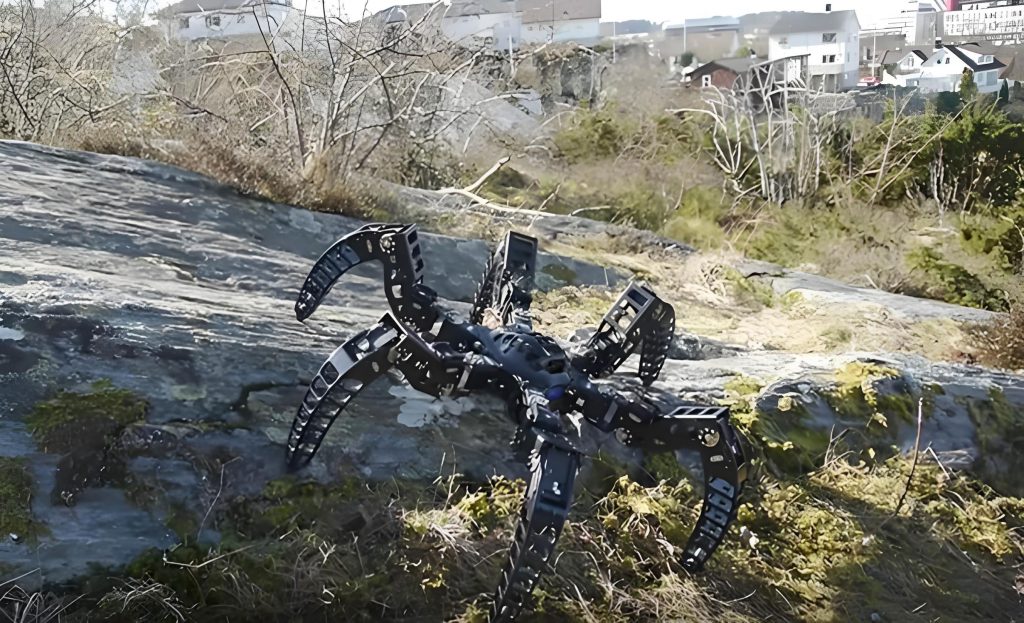
To appreciate the significance of bionic design in rescue robotics, it is essential to review the historical and contemporary landscape of rescue robots. Early developments were driven by catastrophic events, such as earthquakes and terrorist attacks, which highlighted the limitations of human-led rescue efforts. Initial models often relied on remote-controlled platforms with limited autonomy, but advancements in sensors, actuators, and control systems have gradually enabled more sophisticated capabilities. However, despite progress, current rescue robots face persistent challenges, including poor adaptability to uneven terrains, low energy efficiency, and insufficient integration of multiple functions. These shortcomings underscore the necessity for innovative approaches, and bionic design emerges as a key strategy to overcome these hurdles. By learning from nature, we can develop bionic robots that are not only mechanically robust but also inherently adaptable to dynamic environments.
Fundamentals of Bionic Design in Robotics
Bionic design, at its essence, involves the systematic study of biological systems to derive principles for technological innovation. In the context of robotics, this can be categorized into several dimensions: morphological imitation (shape), functional emulation (capabilities), structural replication (internal architecture), and behavioral mimicry (movement and response). Each dimension contributes to the development of bionic robots that excel in specific tasks. For instance, the locomotion of insects inspires multi-legged robots capable of traversing rough terrain, while the sensory organs of animals inform the design of advanced perception systems. The mathematical representation of bionic principles often involves biomechanical models, which can be expressed through equations governing motion, force, and energy. Consider the dynamics of a legged bionic robot, where the gait pattern can be modeled using Lagrangian mechanics:
$$L = T – V$$
Here, \( T \) represents the kinetic energy and \( V \) the potential energy of the system. By optimizing this Lagrangian, we can derive efficient control strategies for bionic robot movement. Additionally, the concept of biomimicry extends to materials science, where natural composites—such as nacre or spider silk—inspire lightweight yet strong materials for robotic structures. The integration of these elements fosters the creation of bionic robots that are both resilient and efficient, crucial for rescue scenarios where durability and agility are paramount.
Current State of Rescue Robots: A Bionic Perspective
The evolution of rescue robots has been marked by incremental improvements, yet significant gaps remain when compared to biological systems. Traditional robots often employ wheeled or tracked mechanisms, which, while stable, struggle in cluttered or unstable environments like collapsed buildings. In contrast, bionic robots, inspired by animals such as snakes, spiders, or birds, exhibit superior maneuverability. For example, snake-like bionic robots can navigate narrow crevices, while avian-inspired drones can access aerial viewpoints. However, the adoption of bionic design is not without challenges. Many existing bionic robots are prototypes with limited real-world deployment, and their control systems often lack the intelligence of biological counterparts. To illustrate the diversity of bionic rescue robots, Table 1 summarizes key types, their inspirations, and applications.
| Bionic Robot Type | Biological Inspiration | Key Features | Rescue Applications |
|---|---|---|---|
| Snake-like Robot | Serpents | Flexible body, undulatory motion | Searching in narrow spaces, pipeline inspection |
| Multi-legged Robot | Insects (e.g., spiders) | Stable gait, load-bearing capacity | Traversing rubble, carrying supplies |
| Soft Robot | Octopus or caterpillars | Compliant structure, safe interaction | Handling fragile survivors, confined exploration |
| Aerial Robot | Birds or insects | Flight agility, rapid deployment | Mapping disaster zones, delivering sensors |
Despite these advancements, the field grapples with issues like energy consumption and autonomy. Biological systems are inherently energy-efficient, often utilizing passive dynamics or elastic energy storage. For bionic robots, achieving similar efficiency requires innovative design, such as incorporating variable stiffness actuators or harvest energy from the environment. Moreover, the intelligence of bionic robots is a critical area for improvement. While current models can perform pre-programmed tasks, they lack the adaptive learning seen in animals. This gap motivates the exploration of advanced control paradigms, such as neural networks, which we will discuss later.
Application Methods of Bionic Design in Rescue Robots
The application of bionic design in rescue robots encompasses multiple strategies, each targeting specific aspects of performance. Below, we delve into three primary methods: mimicking animal motion and balance systems, utilizing biomimetic materials, and enhancing perceptual capabilities through bio-inspired sensors.
1. Imitating Animal Motion and Balance Systems
In rescue operations, mobility is a fundamental requirement. Biological organisms have evolved diverse locomotion strategies that allow them to move efficiently across various terrains. By studying these strategies, we can design bionic robots with enhanced motion capabilities. For instance, the hexapodal gait of insects provides stability on uneven surfaces, which is crucial for navigating disaster rubble. The kinematic model of a multi-legged bionic robot can be described using forward kinematics equations:
$$x = f(\theta)$$
where \( x \) is the end-effector position and \( \theta \) represents joint angles. Through inverse kinematics, we can compute optimal joint configurations for desired movements. Similarly, the dynamic balance of bipedal or quadrupedal robots can be achieved by emulating the vestibular systems of mammals, using gyroscopes and accelerometers to maintain equilibrium. The control law for such balance can be expressed as:
$$\tau = J^T F + M(\theta)\ddot{\theta} + C(\theta, \dot{\theta})$$
Here, \( \tau \) is the joint torque, \( J \) the Jacobian matrix, \( F \) the external force, \( M \) the inertia matrix, and \( C \) the Coriolis and centrifugal terms. Implementing these principles allows bionic robots to adapt their posture in real-time, much like animals adjusting to slopes or obstacles. Moreover, the concept of central pattern generators (CPGs)—neural circuits found in vertebrates that produce rhythmic motions—can be simulated in software to generate naturalistic gaits for bionic robots. This bio-inspired control reduces computational load and enhances robustness, enabling bionic robots to traverse complex environments with minimal human intervention.
2. Utilizing Biomimetic Materials for Enhanced Performance
Materials play a pivotal role in the functionality of bionic robots. Traditional robotics often relies on rigid metals and plastics, which can be heavy, brittle, or unsafe in human interactions. In contrast, biomimetic materials, inspired by biological tissues, offer superior properties such as flexibility, self-healing, and environmental responsiveness. For rescue robots, these materials can lead to significant improvements in durability and adaptability. For example, hydrogels—similar to the extracellular matrix in animals—can be used to create soft actuators that mimic muscle contractions. The stress-strain relationship of such materials can be modeled using hyperelastic theories, such as the Mooney-Rivlin equation:
$$W = C_{10}(I_1 – 3) + C_{01}(I_2 – 3)$$
where \( W \) is the strain energy density, \( I_1 \) and \( I_2 \) are invariants of the deformation tensor, and \( C_{10}, C_{01} \) are material constants. By tailoring these constants, we can design materials that withstand large deformations, ideal for bionic robots operating in cramped spaces. Additionally, composite materials inspired by bone or shell structures provide high strength-to-weight ratios, reducing the overall mass of bionic robots and extending their operational time. Table 2 compares traditional and biomimetic materials used in rescue robots.
| Material Type | Examples | Properties | Advantages in Bionic Robots |
|---|---|---|---|
| Traditional | Steel, aluminum, ABS plastic | High stiffness, predictable behavior | Structural integrity, ease of manufacturing |
| Biomimetic | Shape-memory alloys, dielectric elastomers, bio-polymers | Flexibility, self-healing, lightweight | Adaptability, energy efficiency, safe interaction |
The integration of biomimetic materials also facilitates novel actuation mechanisms. For instance, pneumatic artificial muscles (PAMs), inspired by human muscles, provide compliant and powerful movements for bionic robots. These actuators can be controlled using pressure regulation, enabling smooth and force-sensitive operations—essential for handling survivors or delicate objects. As research progresses, we anticipate the development of multi-functional materials that combine sensing, actuation, and structural roles, leading to more integrated and efficient bionic robots.
3. Enhancing Perceptual Capabilities through Bio-Inspired Sensing
Perception is a cornerstone of effective rescue operations. Biological systems possess sophisticated sensory organs that detect visual, auditory, tactile, and chemical cues, allowing them to interpret their surroundings with remarkable acuity. In bionic robots, replicating these capabilities can significantly boost situational awareness and autonomy. Vision systems inspired by compound eyes of insects, for example, enable wide-field views and motion detection, useful for surveying disaster zones. The image processing can be formulated as a convolution operation:
$$I_{\text{output}}(x,y) = \sum_{i=-k}^{k} \sum_{j=-k}^{k} I_{\text{input}}(x-i, y-j) \cdot K(i,j)$$
where \( I \) represents image intensity and \( K \) is a kernel mimicking photoreceptor responses. Similarly, auditory sensors modeled after mammalian ears can detect faint sounds, such as calls for help or tapping from trapped individuals. Signal processing techniques like Fourier transforms decompose these sounds into frequency components for analysis:
$$X(f) = \int_{-\infty}^{\infty} x(t) e^{-i 2\pi f t} dt$$
Tactile sensing, inspired by skin mechanoreceptors, allows bionic robots to gauge contact forces and textures, preventing damage to survivors or structures. These sensors often utilize piezoelectric or capacitive elements, whose output can be calibrated to measure pressure distribution. Moreover, olfactory sensors—emulating the olfactory bulbs of animals—can detect gas leaks or chemical hazards in post-disaster environments. By fusing data from multiple bio-inspired sensors, bionic robots can construct a comprehensive understanding of their environment, enabling informed decision-making. This multisensory integration is often implemented using Bayesian inference:
$$P(H|E) = \frac{P(E|H) P(H)}{P(E)}$$
where \( H \) represents hypotheses about the environment and \( E \) is sensory evidence. Such probabilistic frameworks enhance the reliability of bionic robots in noisy or uncertain conditions, common in rescue scenarios.
Future Trends in Bionic Design for Rescue Robots
As technology advances, the trajectory of bionic design in rescue robots points toward greater integration, intelligence, and multifunctionality. We identify three key trends that will shape the next generation of bionic robots: the adoption of biomimetic neural network control, the convergence of structure, materials, and drive systems, and the development of versatile, multi-role platforms.
1. Biomimetic Neural Network Control for Autonomous Operation
Current control systems for bionic robots often rely on pre-defined algorithms or remote operation, which limit adaptability in dynamic environments. Biological nervous systems, however, exhibit remarkable plasticity and learning capabilities. By emulating these neural architectures, we can develop control systems that enable bionic robots to learn from experience and respond to novel situations. Artificial neural networks (ANNs), particularly deep reinforcement learning models, offer a pathway to achieve this. The learning process can be formalized as optimizing a reward function \( R \) through policy gradients:
$$\nabla_{\theta} J(\theta) = \mathbb{E} \left[ \nabla_{\theta} \log \pi_{\theta}(a|s) R \right]$$
where \( \theta \) are network parameters, \( \pi_{\theta} \) the policy, \( a \) actions, and \( s \) states. For bionic robots, this means they can practice navigation in simulated disaster environments, gradually improving their ability to avoid obstacles or identify survivors. Additionally, spiking neural networks (SNNs), which mimic the temporal coding of biological neurons, provide energy-efficient alternatives for real-time control. These networks can be implemented on neuromorphic hardware, reducing power consumption—a critical factor for extended rescue missions. As these technologies mature, we envision bionic robots that autonomously coordinate with human responders, adapting their strategies based on real-time feedback and collective intelligence.
2. Integrated Structure-Material-Drive Systems
The future of bionic robots lies in holistic design, where structural components, materials, and actuators are co-engineered to function as a unified system. In nature, organisms exhibit such integration; for instance, muscles and bones work synergistically to produce movement. Translating this to robotics involves developing “smart” materials that can sense, actuate, and provide structural support simultaneously. Concepts like electroactive polymers (EAPs) or liquid crystal elastomers (LCEs) enable this by changing shape in response to electrical or thermal stimuli. The actuation strain \( \epsilon \) in such materials can be modeled as:
$$\epsilon = d_{ij} E_j$$
for piezoelectric materials, where \( d_{ij} \) is the piezoelectric coefficient and \( E_j \) the electric field. By embedding these materials into the skeleton of a bionic robot, we can create limbs that bend, twist, or extend without discrete joints, reducing mechanical complexity and increasing reliability. Furthermore, additive manufacturing techniques, such as 4D printing, allow the fabrication of structures that self-assemble or adapt to environmental changes. This integration not only enhances performance but also simplifies maintenance and scalability, making bionic robots more deployable in resource-limited settings.
3. Multifunctional Bionic Robots for Comprehensive Rescue
Rescue operations demand a wide range of tasks, from search and detection to medical assistance and psychological support. Future bionic robots will evolve into multifunctional platforms capable of addressing these diverse needs. For example, a single bionic robot might combine the locomotion of a spider for terrain traversal, the sensing capabilities of a bat for acoustic imaging, and the dexterity of a primate for tool manipulation. This versatility can be achieved through modular design, where different bionic modules—each inspired by a specific organism—are attached to a central chassis as needed. The optimization of such modular systems can be framed as a combinatorial problem:
$$\min_{M} \sum_{i} c_i(M) \quad \text{subject to} \quad f_j(M) \geq \tau_j$$
where \( M \) is a set of modules, \( c_i \) costs, and \( f_j \) performance thresholds. Beyond physical tasks, multifunctional bionic robots could incorporate telepresence features, allowing survivors to communicate with loved ones, or dispense emergency supplies like water or medicine. These robots might also employ swarm intelligence, inspired by insect colonies, to collaboratively map disaster zones or lift heavy debris. By embracing multifunctionality, bionic robots will transition from specialized tools to integral partners in rescue teams, amplifying human capabilities and saving more lives.
Conclusion
The journey of bionic design in rescue robots is one of continuous innovation, driven by the profound wisdom of nature. As we refine our understanding of biological systems and leverage cutting-edge technologies, bionic robots will become increasingly adept at navigating the chaos of disaster scenarios. From mimicking animal locomotion to integrating smart materials and neural controls, each advancement brings us closer to robots that not only assist but also empathize—through safe interactions and holistic support. The future holds immense promise for bionic robots that operate with the grace of living creatures and the precision of engineered systems. As researchers and practitioners, we must foster interdisciplinary collaboration, ensuring that these developments translate into real-world solutions that enhance global resilience. Ultimately, by learning from nature, we empower ourselves to protect and preserve life in its most vulnerable moments.