
As a researcher immersed in the field of robotics, I am continually inspired by how nature’s designs can be harnessed to create advanced machines. Bionic robots, which emulate biological systems, represent a transformative approach to overcoming locomotion challenges. In this article, I delve into two groundbreaking developments in bionic robotics: a flea-inspired jumping robot and an earthworm-like soft robot. These bionic robots showcase the potential of biomimicry to enable remarkable feats, from explosive jumps to adaptive crawling. Through detailed analysis, mathematical modeling, and comparative tables, I explore the principles, performance, and future directions of these innovative bionic robots. The integration of formulas and tables will help summarize key insights, emphasizing the engineering marvels behind these nature-inspired machines.
The concept of bionic robots is rooted in the observation of biological organisms that have evolved efficient solutions for movement, sensing, and survival. By mimicking these solutions, engineers can design robots with enhanced capabilities, such as agility, robustness, and energy efficiency. Bionic robotics spans a wide spectrum, from aerial drones inspired by birds to underwater vehicles modeled after fish. The two examples discussed here—inspired by fleas and earthworms—highlight how bionic robots can address specific locomotion needs in diverse environments. Throughout this discussion, I will use the term “bionic robot” frequently to underscore the biomimetic foundation of these technologies.
Let me begin with the flea-inspired jumping bionic robot. This bionic robot draws inspiration from the flea’s ability to jump distances many times its body length, a trait enabled by specialized anatomy and energy storage mechanisms. The bionic robot replicates this through a micro-piston engine that converts electrical energy into mechanical motion. When a high-voltage discharge occurs between electrodes in a piston chamber, the air inside heats up rapidly, causing expansion that drives a piston. This process can be described using thermodynamic principles. For instance, the ideal gas law governs the state of the air:
$$PV = nRT$$
where \(P\) is pressure, \(V\) is volume, \(n\) is the number of moles, \(R\) is the gas constant, and \(T\) is temperature. Heating increases \(T\), leading to an increase in \(P\) at constant \(V\), or expansion if \(V\) is allowed to change. In the bionic robot, the expansion does work on the piston, storing elastic energy. Assuming adiabatic expansion for rapid processes, we have:
$$PV^\gamma = \text{constant}$$
with \(\gamma\) as the heat capacity ratio. The work done \(W\) during expansion is:
$$W = \int_{V_i}^{V_f} P \, dV$$
This work translates into kinetic energy for jumping. The bionic robot’s launch velocity \(v\) can be derived from energy conservation. If the stored energy \(E_s\) is converted entirely to kinetic energy \(E_k = \frac{1}{2} m v^2\), then:
$$v = \sqrt{\frac{2E_s}{m}}$$
where \(m\) is the mass of the bionic robot. In practice, losses due to friction and heat dissipation reduce efficiency, but the design optimizes this conversion. The jumping trajectory follows projectile motion equations. For a launch angle \(\theta\) relative to horizontal, the jumping distance \(d\) and height \(h\) are:
$$d = \frac{v^2 \sin(2\theta)}{g}$$
$$h = \frac{v^2 \sin^2(\theta)}{2g}$$
where \(g\) is gravitational acceleration. Experiments with this bionic robot reported \(d = 296.25 \, \text{mm}\) and \(h = 156.28 \, \text{mm}\), with a body length \(L \approx 3.4 \, \text{mm}\). Thus, the ratios are:
$$\frac{d}{L} = 87 \quad \text{and} \quad \frac{h}{L} = 46$$
These metrics underscore the extraordinary performance of this bionic robot. Additionally, the bionic robot can crawl due to asymmetric friction during piston firing. The crawling speed \(v_c\) on flat surfaces is given by:
$$v_c = \frac{\Delta x}{\Delta t}$$
where \(\Delta x\) is displacement per cycle and \(\Delta t\) is cycle time. Measured \(v_c = 0.16 \, \text{m/s}\). Table 1 summarizes the key specifications of this flea-inspired bionic robot.
| Parameter | Symbol | Value | Description |
|---|---|---|---|
| Body Length | \(L\) | 3.4 mm | Length of the robot chassis |
| Jumping Distance | \(d\) | 296.25 mm | Maximum horizontal distance per jump |
| Jumping Height | \(h\) | 156.28 mm | Maximum vertical height per jump |
| Distance Ratio | \(d/L\) | 87 | Ratio of jump distance to body length |
| Height Ratio | \(h/L\) | 46 | Ratio of jump height to body length |
| Crawling Speed | \(v_c\) | 0.16 m/s | Average speed on flat surfaces |
| Actuation Mechanism | — | Electro-thermal micro-piston | High-voltage discharge heats air for expansion |
| Power Source | — | External electrical supply | Currently requires wired power |
| Mass | \(m\) | Not specified (lightweight) | Estimated from millimeter-scale design |
The energy efficiency \(\eta_j\) of this bionic robot can be defined as the ratio of kinetic energy at launch to electrical energy input:
$$\eta_j = \frac{\frac{1}{2} m v^2}{E_{\text{elec}}}$$
where \(E_{\text{elec}}\) is the energy from the discharge. Optimizing \(\eta_j\) is crucial for extending operational autonomy. Despite its achievements, this bionic robot faces limitations, such as dependency on external power and sensitivity to environmental conditions. Future iterations may incorporate onboard capacitors or batteries, making this bionic robot more self-sufficient.
Now, let me turn to the earthworm-inspired soft bionic robot. This bionic robot mimics the peristaltic movement of earthworms, which use alternating contractions of longitudinal and circumferential muscles to generate retrograde waves for locomotion. The bionic robot employs pneumatic soft actuators (PSAs) that elongate or compress when air is pumped in or out, replicating antagonistic muscle actions. Each PSA module functions as a constant-volume fluid chamber, similar to an earthworm’s coelomic cavity. When air is added, the module elongates; when air is removed, it compresses. The entire bionic robot comprises five PSA modules connected in series, totaling 45 cm in length and 605 g in weight.
The kinematics of peristaltic motion can be modeled using wave equations. Consider a wave propagating along the bionic robot’s body with displacement \(u(x,t)\) at position \(x\) and time \(t\):
$$u(x,t) = A \sin(kx – \omega t)$$
where \(A\) is amplitude, \(k = 2\pi/\lambda\) is wave number, \(\lambda\) is wavelength, and \(\omega = 2\pi f\) is angular frequency with \(f\) as wave frequency. The wave speed \(c\) is:
$$c = \frac{\omega}{k} = f\lambda$$
For earthworm-like locomotion, retrograde waves (moving opposite to the direction of motion) generate forward thrust. The net crawling speed \(v_w\) depends on wave parameters and frictional interactions. If each actuator cycle produces a displacement \(\delta\) per wave period \(T = 1/f\), then:
$$v_w = \frac{\delta}{T}$$
In experiments, this bionic robot achieved \(v_w = 1.35 \, \text{mm/s}\). The force generation involves pressure dynamics. For a PSA module, the elongation \(\Delta L\) under positive pressure \(P_+\) and compression \(\Delta C\) under negative pressure \(P_-\) can be linearly approximated:
$$\Delta L = \alpha P_+ \quad \text{and} \quad \Delta C = \beta P_-$$
where \(\alpha\) and \(\beta\) are compliance coefficients. Measured values show \(\Delta L = 97.1 \, \text{mm}\) at \(P_+ = 1 \, \text{MPa}\) and \(\Delta C = 0.5 \, \text{mm}\) at \(P_- = 1.113 \, \text{MPa}\). The bionic robot’s motion is governed by balancing axial forces from actuation with frictional forces. Using Newton’s second law:
$$m \ddot{x} = F_{\text{axial}} – F_{\text{friction}}$$
where \(F_{\text{axial}}\) is the net force from peristalsis, and \(F_{\text{friction}} = \mu N\) with \(\mu\) as friction coefficient and \(N\) as normal force. A passive friction pad on the ventral side enhances grip, allowing forward motion. Table 2 details the specifications of this earthworm-inspired bionic robot.
| Parameter | Symbol | Value | Description |
|---|---|---|---|
| Total Length | \(L_t\) | 45 cm | Length with 5 PSA modules |
| Weight | \(m_w\) | 605 g | Mass of the robot |
| Number of Modules | \(N_m\) | 5 | PSA modules in series |
| Max Elongation per Actuator | \(\Delta L\) | 97.1 mm | At 1 MPa positive pressure |
| Max Compression per Actuator | \(\Delta C\) | 0.5 mm | At 1.113 MPa negative pressure |
| Crawling Speed | \(v_w\) | 1.35 mm/s | Average speed on planar surfaces |
| Actuation Type | — | Pneumatic | Air-based elongation/compression |
| Pressure Range | \(P\) | -1.113 to 1 MPa | Negative and positive pressures used |
| Constant Volume Assumption | — | Approximated | Mimics earthworm’s coelomic fluid |
The locomotion efficiency \(\eta_w\) of this bionic robot can be expressed as the ratio of useful work against friction to pneumatic energy input:
$$\eta_w = \frac{F_{\text{friction}} \cdot v_w}{P_{\text{avg}} \cdot Q}$$
where \(P_{\text{avg}}\) is average pressure and \(Q\) is airflow rate. Improving \(\eta_w\) involves optimizing wave patterns and material compliance. This bionic robot demonstrates how soft robotics can benefit from biological inspiration, enabling movement in multi-terrain environments such as soil, pipes, or confined spaces.
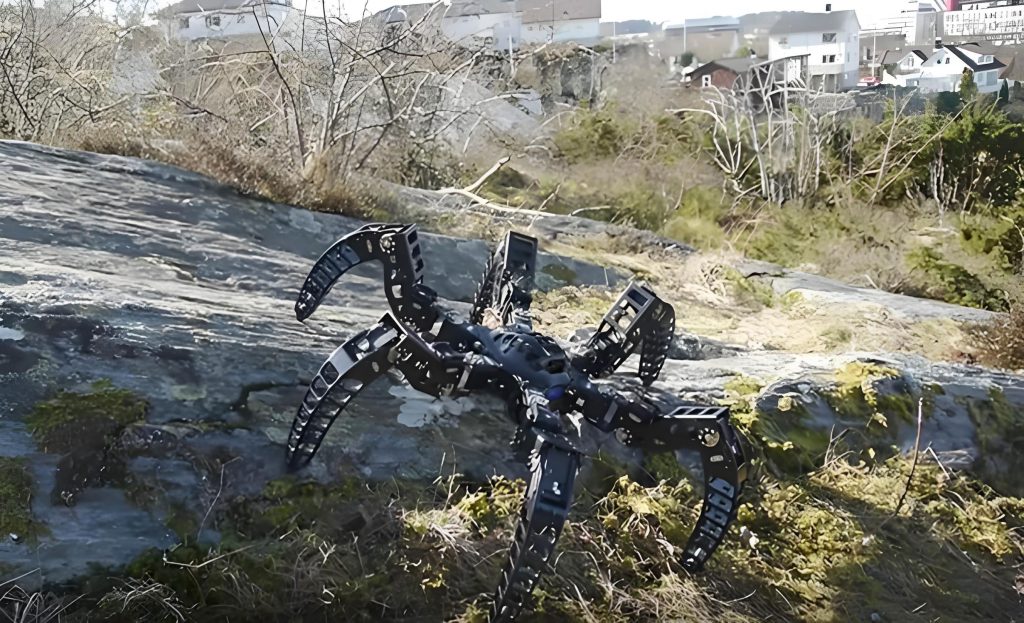
The image above illustrates the concept of bionic robots in action, highlighting their biomimetic forms. Such visualizations help convey how bionic robots bridge biological principles and engineering applications. As shown, bionic robots often embody the morphology and movement strategies of their natural counterparts, leading to novel capabilities.
Comparing these two bionic robots reveals complementary strengths. The jumping bionic robot excels in rapid, discrete movements for obstacle clearance, while the earthworm bionic robot offers continuous, adaptive crawling for stable traversal. Both bionic robots leverage nature-inspired mechanisms but differ in scale, actuation, and energy use. Table 3 provides a comparative analysis, emphasizing the diversity within bionic robotics.
| Aspect | Flea-Inspired Jumping Bionic Robot | Earthworm-Inspired Soft Bionic Robot |
|---|---|---|
| Biological Inspiration | Flea (Siphonaptera) jumping anatomy | Earthworm (Lumbricina) peristaltic locomotion |
| Locomotion Mode | Ballistic jumping and frictional crawling | Continuous crawling via peristaltic waves |
| Size Scale | Millimeter (3.4 mm body length) | Centimeter (45 cm total length) |
| Weight | Lightweight (assumed sub-gram) | 605 g |
| Actuation Method | Electro-thermal micro-piston expansion | Pneumatic soft actuator elongation/compression |
| Energy Source | External high-voltage electricity | Pneumatic pump (air supply) |
| Speed Metrics | 0.16 m/s crawling; jump instantaneous | 1.35 mm/s crawling |
| Key Performance Ratios | Jump distance/body length = 87; jump height/body length = 46 | Elongation ratio = ~2.16 at 1 MPa |
| Environmental Adaptation | Suited for open or debris-filled areas | Suited for confined, uneven, or subterranean spaces |
| Potential Applications | Search and rescue, surveillance, payload delivery | Underground exploration, pipeline inspection, planetary research |
From a mathematical perspective, the design of bionic robots can be optimized using control theory and dynamics. For the jumping bionic robot, the optimal launch angle \(\theta^*\) for maximum distance on level ground is \(\theta^* = 45^\circ\), but practical constraints like takeoff geometry may alter this. The energy storage can be modeled as a spring-mass-damper system:
$$m \ddot{x} + b \dot{x} + kx = F(t)$$
where \(b\) is damping coefficient, \(k\) is stiffness, and \(F(t)\) is the force from air expansion. Solving this differential equation yields insights into timing and efficiency. For the earthworm bionic robot, the peristaltic wave can be optimized by tuning \(A\), \(k\), and \(\omega\) to maximize \(v_w\) while minimizing energy loss. The work done per cycle \(W_{\text{cycle}}\) is:
$$W_{\text{cycle}} = \oint F_{\text{axial}} \, dx$$
where the integral is over one wave period. These models guide the development of more advanced bionic robots.
The applications of bionic robots are vast and transformative. The flea-inspired bionic robot could be deployed in disaster scenarios to jump over rubble, navigate collapsed structures, or deliver sensors to inaccessible areas. Its small size makes it ideal for covert operations or environmental monitoring. Conversely, the earthworm-inspired bionic robot is tailored for subterranean tasks, such as soil sampling, mining inspection, or search and rescue in tunnels. Its soft body allows safe interaction with delicate environments, and its modular design enables scalability. Both bionic robots could contribute to space exploration: the jumper for low-gravity worlds like asteroids, and the crawler for burrowing into Martian regolith.
Future research in bionic robotics will likely focus on enhancing autonomy, adaptability, and multifunctionality. For instance, integrating sensing capabilities like cameras or chemical sensors into bionic robots would enable real-time data collection. Energy harvesting from the environment—such as solar, thermal, or vibrational sources—could power bionic robots indefinitely. Additionally, combining multiple bio-inspired features might yield hybrid bionic robots; imagine a robot that jumps like a flea and crawls like an earthworm for versatile terrain negotiation. Materials science will play a key role, with advances in shape-memory alloys, dielectric elastomers, and self-healing polymers improving durability and performance.
To quantify progress, we can define metrics for bionic robot evolution. Let \(B\) represent a bionic robot’s overall capability, which could be a function of locomotion efficiency \(\eta\), adaptability index \(A_d\), and autonomy level \(A_u\):
$$B = f(\eta, A_d, A_u)$$
For example, a simple linear model might be:
$$B = w_1 \eta + w_2 A_d + w_3 A_u$$
where \(w_i\) are weighting factors. Tracking \(B\) over time would help assess advancements in bionic robotics. Table 4 proposes a framework for evaluating bionic robots based on such metrics.
| Metric | Description | Formula | Target for Improvement |
|---|---|---|---|
| Locomotion Efficiency (\(\eta\)) | Ratio of useful work to energy input | \(\eta = \frac{W_{\text{useful}}}{E_{\text{in}}}\) | Maximize through better actuation |
| Adaptability Index (\(A_d\)) | Ability to handle diverse terrains | \(A_d = \sum_{i} \alpha_i T_i\) (weighted terrain scores) | Increase via soft materials and control |
| Autonomy Level (\(A_u\)) | Degree of self-sufficiency in power and decision | \(A_u = \frac{t_{\text{autonomous}}}{t_{\text{total}}}\) (time ratio) | Achieve full autonomy |
| Biomimetic Fidelity (\(F_b\)) | Similarity to biological counterpart | \(F_b = \text{correlation}(R_{\text{robot}}, R_{\text{bio}})\) | Enhance through detailed emulation |
| Scalability (\(S\)) | Ease of scaling to different sizes | \(S = \frac{P_{\text{large scale}}}{P_{\text{prototype}}}\) (performance ratio) | Maintain performance across scales |
As bionic robots evolve, they will increasingly interact with humans and ecosystems. Ethical considerations, such as environmental impact and privacy, must be addressed. However, the benefits—from saving lives in disasters to unlocking scientific discoveries—are profound. The flea and earthworm bionic robots discussed here are early steps toward a future where bionic robots are commonplace in industry, medicine, and exploration.
In conclusion, bionic robots represent a powerful synergy between biology and engineering. The flea-inspired jumping robot and earthworm-inspired soft robot exemplify how biomimicry leads to innovative locomotion solutions. Through mathematical modeling, such as the formulas for energy conversion and wave propagation, and tabular summaries of specifications, we gain a deeper understanding of these bionic robots. The repeated emphasis on “bionic robot” throughout this article highlights the core concept: learning from nature to build better machines. As research progresses, bionic robots will become more capable, autonomous, and integrated into our world, continuing the timeless tradition of drawing inspiration from the natural world to advance human technology. The journey of bionic robotics is just beginning, and the possibilities are as vast as nature itself.