
The automotive industry, a perennial pioneer in automation, is at the dawn of a new transformative era. Following the paradigm of “software-defined vehicles,” a new wave of “software-defined automation” is emerging, with the humanoid robot at its forefront. This shift is driven by the convergence of advanced artificial intelligence, sophisticated sensing, and bipedal mobility, promising to automate tasks previously deemed too complex or costly for traditional robotics. As one industry observer noted, if progress meets expectations, these humanoid machines could perform nearly all automated tasks in an economically viable manner, including work traditionally reserved for human hands.
The core appeal lies in their form factor. A humanoid robot, designed to operate in environments built for humans, can theoretically navigate factory floors, use existing tools, and interact with workstations without extensive and costly re-engineering of the physical space. The enabling technology is not just advanced mechanics but, more crucially, the software stack. Continually upgraded sensory systems grant these robots the ability to “perceive” their surroundings. When task requirements change, significant hardware重构 is often unnecessary; instead, adaptation is achieved through software training and AI model updates. This represents a fundamental leap from hard-coded, single-purpose automation to flexible, general-purpose robotic assistants.
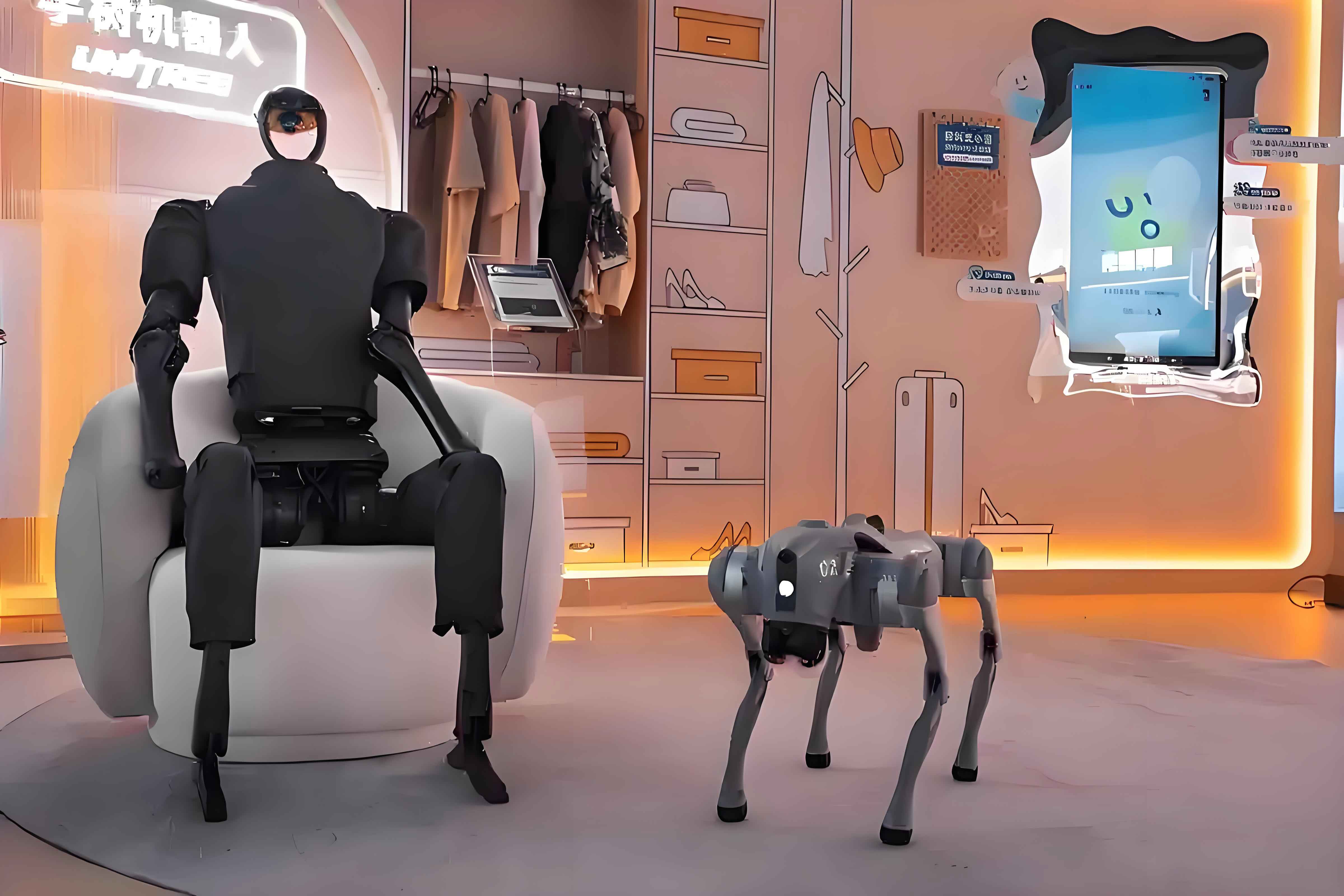
This potential has spurred a global race among automotive manufacturers to test and integrate humanoid robots. Their goal is to validate the technology’s suitability for the complex, precision-driven world of car manufacturing and to identify optimal application scenarios. A leading German automotive manufacturer has been a high-profile early adopter, testing second-generation commercial humanoid robots from a US-based AI company at its US assembly plant. These units, standing approximately 1.7 meters tall with a mass of 70 kg and a payload capacity of 20 kg, underwent initial trials in the body shop, focusing on loading sheet metal parts into welding fixtures. Reports indicate a single humanoid robot could handle around 1,000 parts per day. The collaboration continues with further optimization rounds, reflecting a strategic commitment to shepherd the technology from development to deployment.
Another premium German automaker is testing a different model of humanoid robot, developed by another American robotics firm, at its digital factory campus and other locations. With similar specifications—1.73 meters in height, 73 kg mass, and a 25 kg payload—this humanoid robot is being primed for intralogistics. Its initial duties are envisioned to include parts delivery, kitting, and component inspection. The company’s vision is for these humanoid robots to gradually integrate deeply into the production line as the technology matures. In China, the leading new energy vehicle manufacturer is collaborating with a top domestic robotics company to explore the application potential of humanoid robots in final assembly and logistics. These robots, known for their bipedal locomotion and dexterous manipulation, are seen as a solution for repetitive yet flexible tasks on the production line.
The momentum extends beyond carmakers to major automotive suppliers. Several global tier-1 suppliers have announced pilot projects within their production networks. One European supplier group is testing various humanoid robot models, including those from companies in which it holds a minority stake, and is positioning itself to supply critical components like joint modules and drive systems for the future humanoid robot ecosystem. Another has formed a strategic partnership with a Canadian AI robotics firm, aiming to equip its factories with general-purpose AI robots and potentially involve its manufacturing expertise in scaling production.
Morphological Debate: Bipedal, Quadrupedal, or Hybrid?
The ideal form factor for a next-generation factory robot is not settled. While the humanoid robot with two legs and two arms captures the imagination, practical considerations of stability, cost, and task-specific needs lead to a spectrum of designs.
| Morphology | Key Advantages | Primary Limitations | Typical Automotive Applications |
|---|---|---|---|
| Bipedal Humanoid | Maximum compatibility with human environments and tools; high potential for general-purpose tasks. | Complex control, high cost, lower stability/payload compared to dedicated machines. | Complex assembly, parts handling in constrained spaces, multi-task stations. |
| Quadrupedal | Excellent stability and mobility on rough terrain; lower cost than advanced humanoids. | Limited manipulation capability (typically no arms). | Factory inspection, scanning for digital twins, remote monitoring in hazardous areas. |
| Mobile Manipulator (Wheeled + Arms) | High efficiency on flat floors, stable base for manipulation, often more cost-effective. | Limited to navigable terrain (stairs, significant obstacles are challenging). | Logistics, parts delivery, machine tending, assembly line kitting. |
| Upper-body on Fixed Base | High precision and payload, simplified control, lower cost. | No mobility; fixed work envelope. | Precision assembly, screw driving, component testing at a fixed station. |
This diversity is evident in the market. A prominent US robotics company, known for its advanced bipedal research, has commercially deployed its quadrupedal robot for factory scanning and digital twin creation in several automotive plants. In contrast, leading Chinese robotics firms have achieved mass production of full-sized humanoid robots capable of complex manipulation and bipedal walking, targeting both industrial and service sectors. Other manufacturers offer modular approaches, where a humanoid upper torso can be mounted on a wheeled mobile base or a fixed pedestal, acknowledging that bipedal locomotion is not always essential. Some automotive engineers argue that for optimal efficiency in a structured factory, a “wheeled base + dual-arm” configuration might be the most practical form of humanoid robot for many tasks.
Targeted Applications and the Path to Integration
The envisioned integration of the humanoid robot into automotive manufacturing is targeted and incremental. The core value propositions center on three areas:
- Enhancing Safety and Ergonomic Relief: Taking over tasks that are dangerous, ergonomically taxing, or performed in hazardous environments (e.g., handling sharp parts, working near high heat or chemicals).
- Enabling Flexible Human-Robot Collaboration: Working alongside humans in unstructured or semi-structured tasks, where the robot handles the heavy, repetitive, or precise elements while the human provides oversight and complex decision-making.
- Mitigating Labor Shortages: Providing a automation solution for roles that are difficult to fill, particularly those requiring physical stamina or occurring in multiple, variable locations.
The initial application scenarios are predictably those with lower risk and higher clarity of function. The table below outlines a potential adoption roadmap:
| Phase | Timeline | Primary Applications | Technology Focus | Economic Driver |
|---|---|---|---|---|
| Pilot & Validation | Present – 2027 | Intralogistics (part delivery), Factory Inspection & Scanning, Simple Parts Handling | Reliable navigation, basic object recognition, safe HRI (Human-Robot Interaction) | Proof-of-concept, data collection, process validation. |
| Scaled Deployment | 2028 – 2035 | Kitting & Sequencing, Quality Inspection, Machine Tending, Low-Complexity Assembly (e.g., bolt driving) | Advanced dexterous manipulation, multi-sensor fusion for QC, task learning from demonstration. | Total Cost of Ownership (TCO) undercutting dedicated automation for mid-volume flexible tasks. |
| Mature Integration | 2035+ | Complex Final Assembly (e.g., wire harness routing, flexible hose connection), Cross-Station Multi-Tasking, Full-Cycle Repair Operations | Advanced AI for reasoning and planning, fine manipulation of non-rigid objects, robust failure recovery. | TCO significantly lower than human labor for a broad range of skilled tasks; flexibility as a core production asset. |
Economic Viability: Modeling the Cost-Benefit Equation
The ultimate determinant for the widespread adoption of the humanoid robot will be economic feasibility. The argument hinges on the robot’s versatility reducing the capital expenditure associated with task-specific automation and its ability to operate across multiple shifts without fatigue.
A simplified model for the Return on Investment (ROI) period for a humanoid robot can be expressed as:
$$ ROI\_period (years) = \frac{C_r}{S – M} $$
Where:
\( C_r \) = Initial cost of the humanoid robot system (acquisition, integration).
\( S \) = Annual labor cost savings (including wages, benefits, overhead).
\( M \) = Annual maintenance and operational cost of the humanoid robot.
The annual savings \( S \) is a function of the number of equivalent full-time employees (FTEs) displaced, their fully-loaded hourly cost \( C_h \), and annual working hours \( H \):
$$ S = n \times C_h \times H $$
Current industry analyses suggest that early-generation humanoid robots could automate a significant portion of manual tasks. If a single unit can offset labor equivalent to 2-3 FTEs per shift, the economics become compelling in high-wage regions. Some market studies project an initial payback period of around 1.4 years, potentially falling to under 0.5 years by 2030 as robot costs decrease through mass production and performance improves.
The cost reduction is expected to follow a learning curve model, often approximated by:
$$ C_r(N) = C_0 \times N^{-b} $$
Where:
\( C_r(N) \) is the cost of the \(N\)th unit produced.
\( C_0 \) is the cost of the first production unit.
\( N \) is the cumulative production volume.
\( b \) is the learning coefficient (typically between 0.1 and 0.3 for complex hardware).
This model implies that as companies like Tesla, Figure AI, and others ramp up production to announced targets of tens of thousands of units annually, the unit cost of a humanoid robot could fall dramatically, accelerating adoption.
Technical Challenges and Industry Skepticism
Despite the optimism from robotics companies and early-adopter manufacturers, significant hurdles remain. Prominent research institutes have pointed out that while the humanoid robot possesses “transformative potential,” its current state of technological maturity places it firmly in a phase of experimentation and adaptation for automotive production and logistics.
The core challenges are multifaceted:
1. Dexterous Manipulation: While locomotion has seen great advances, replicating the fine motor skills, tactile feedback, and adaptive force control of a human hand for tasks like routing flexible wiring or installing interior trim remains a monumental AI and mechatronics challenge.
2. Reliability and Mean Time Between Failures (MTBF): Industrial environments demand extreme reliability. A humanoid robot must operate for thousands of hours with minimal unscheduled downtime, a standard current prototypes are far from achieving.
3. Safety Certification: Ensuring safe operation in dynamic environments alongside humans requires new standards and rigorous certification processes that are still under development.
4. Total Cost of Ownership (TCO): Beyond the purchase price, costs for integration, programming, maintenance, energy, and potential downtime must be competitive with both human labor and traditional automation.
The table below summarizes the key technical metrics that need to be achieved for successful industrial deployment:
| Performance Metric | Current State (Pilot Phase) | Target for Scalable Industrial Use |
|---|---|---|
| Uptime / Reliability | ~80-90% in controlled demo settings | >99.5% (aligned with industrial equipment) |
| Task Cycle Time | Often slower than human operator | Consistently matches or exceeds human speed for targeted tasks |
| Energy Efficiency | High power consumption, frequent recharging | Full-shift (8+ hours) operation on a single charge/battery |
| Object Recognition & Handling | Limited to known, rigid objects in predictable poses | Generalized recognition and manipulation of novel, deformable objects in clutter |
| Autonomy Level | High-level teleoperation or scripted tasks | Full autonomy for defined workflows with exception-handling capability |
Conclusion: A Gradual Revolution
The entrance of the humanoid robot into automotive manufacturing marks the beginning of a long-term evolutionary path rather than an imminent revolution. The industry is currently in a critical period of validation, where real-world testing in active factories is separating hype from tangible potential. The “software-defined automation” paradigm, powered by AI, is the true differentiator, allowing a single hardware platform—the humanoid robot—to be adapted to a multitude of tasks through software updates.
The journey will be incremental. Initial applications in logistics and inspection will pave the way for more complex roles in assembly and quality control. Success will depend not only on breakthroughs in robotics hardware but also on parallel advancements in AI reasoning, simulation-to-real transfer, and robust safety systems. Economic models suggest a compelling cost trajectory, but this relies on achieving the scale of production that leading companies are now planning. While skepticism regarding immediate readiness is warranted, the concerted push by global automotive leaders and their supplier ecosystem indicates a strong belief that the humanoid robot will eventually become a versatile and economically transformative tool on the factory floor, reshaping the very nature of automotive production in the decades to come.