
The field of robotics is undergoing a profound transformation, increasingly drawing inspiration from the boundless ingenuity of nature. A bionic robot, or biomimetic robot, is a machine designed to mimic the morphology, movement, sensory mechanisms, or behavioral principles of biological organisms. The development of such systems, particularly humanoid robots, holds immense promise for addressing critical societal challenges such as aging populations, labor shortages in healthcare and services, and for pioneering entirely new industries and employment opportunities. This article provides a comprehensive analysis of the technological principles, current developmental status, and future trajectories of bionic robot technology.
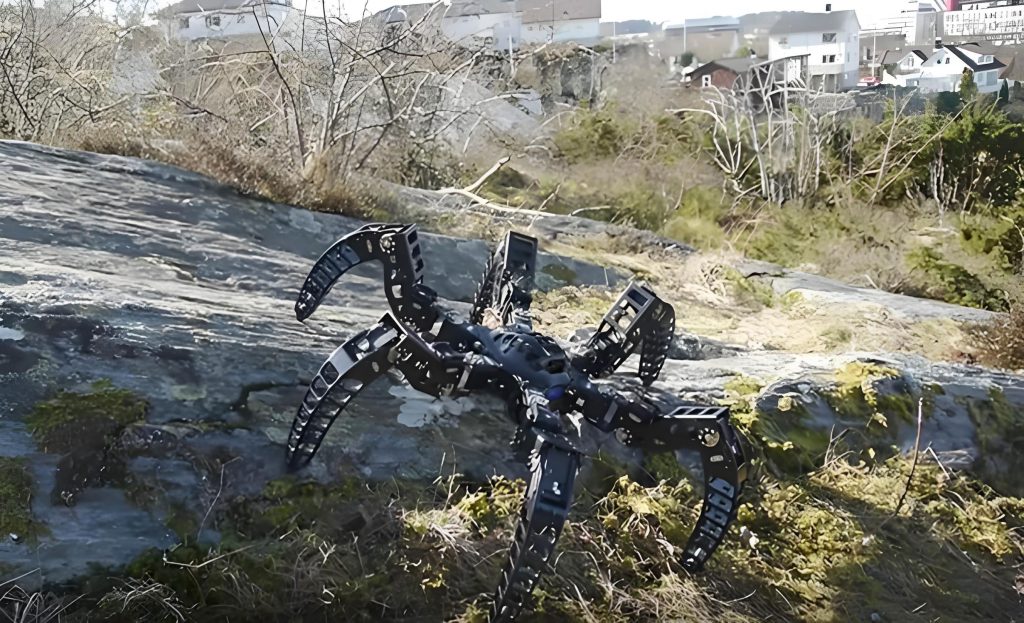
Bionics, the foundational science for bionic robot design, is an interdisciplinary field that studies the structure, function, principles, and behaviors of biological systems to inform engineering design. Since the first symposium on bionics in 1960, the field has matured significantly. The evolution of the bionic robot represents an advanced stage in robotics, where the goal is not merely to replicate appearance but to capture the efficiency, adaptability, and resilience of life. Modern research is pushing boundaries, moving towards hybrid systems that integrate control systems with biological tissues, creating “living” machines that possess physiological form, motion, and even aspects of life-like perception and neural regulation.
Fundamentals of Bionics in Robotics
The design of a bionic robot rests on several core principles extracted from biological observation:
- Morphological Mimicry: Copying the physical shape and skeletal structure (exo- or endo-skeleton) of an organism to achieve similar mechanical advantages.
- Kinematic/Dynamic Mimicry: Imitating the movement patterns (gaits, undulations, flapping) and the underlying forces and energy transfers.
- Material/Structural Mimicry: Utilizing or developing materials that replicate the properties of biological tissues (e.g., muscle-like actuators, skin-like sensors).
- Sensory-Perceptual Mimicry: Implementing sensor arrays and processing algorithms that emulate biological senses (vision, touch, proprioception).
- Behavioral/Control Mimicry: Adopting control architectures (e.g., central pattern generators, neural networks) that yield adaptive and robust behaviors seen in animals.
The mathematical modeling of a bionic robot often starts with its kinematics and dynamics. For a robotic limb or a fish tail, the forward kinematics can be described using the Denavit-Hartenberg (D-H) convention or geometric models. The dynamic model, crucial for control, is frequently derived using the Lagrangian formulation:
$$ L = T – V $$
where \( T \) is the total kinetic energy and \( V \) is the total potential energy of the system. The equations of motion are then given by:
$$ \frac{d}{dt} \left( \frac{\partial L}{\partial \dot{q}_i} \right) – \frac{\partial L}{\partial q_i} = \tau_i $$
where \( q_i \) are the generalized coordinates (e.g., joint angles) and \( \tau_i \) are the generalized forces (torques). For a swimming bionic robot, fluid dynamics models like Lighthill’s elongated body theory are employed to relate body motion to thrust:
$$ T = – \frac{d}{dt} \int_{body} m v \, ds – \frac{1}{2} \rho \frac{d}{dt} \int_{body} v \phi_n \, ds $$
where \( m \) is the virtual mass, \( v \) is the lateral velocity, \( \rho \) is fluid density, and \( \phi_n \) is the potential function.
Technological Principles of Bionic Robots
The realization of a functional bionic robot hinges on advances in several key technological domains, integrated into a cohesive system.
1. Mechanism and Actuation
This involves designing the physical structure and the “muscles” of the robot. Traditional electric motors and hydraulic/pneumatic actuators are being complemented or replaced by innovative solutions for better biomimesis:
- Artificial Muscles: Materials like Shape Memory Alloys (SMAs), Dielectric Elastomer Actuators (DEAs), and Pneumatic Artificial Muscles (PAMs) contract and expand like biological muscle, offering high power-to-weight ratios and compliant motion.
- Tendon-Driven Mechanisms: Mimicking musculoskeletal systems, cables or tendons transmit force from remote actuators, allowing for compact, lightweight, and dexterous limbs, essential for humanoid bionic robot hands.
- Underactuated & Compliant Mechanisms: Designs with fewer actuators than degrees of freedom, often using passive compliance (springs, elastic elements) to absorb impacts and adapt to uneven terrain, much like animal limbs.
The force \( F \) generated by a simple pneumatic artificial muscle can be approximated by:
$$ F = \frac{\pi D_0^2 P}{4} (3 \cos^2 \theta – 1) $$
where \( D_0 \) is the initial diameter, \( P \) is the internal pressure, and \( \theta \) is the braid angle.
2. Sensing and Perception
A bionic robot interacts with its world through sensors. Research focuses on creating sensor skins and multimodal perception systems:
- Tactile Sensing: Arrays of pressure, strain, or capacitive sensors embedded in flexible substrates create an artificial skin capable of detecting contact, force distribution, and texture.
- Proprioception: Encoders, inertial measurement units (IMUs), and torque sensors provide the robot with awareness of its own body position and movement.
- Computer Vision: Stereo cameras, depth sensors (LiDAR, ToF), and event-based cameras are used to emulate and sometimes surpass biological vision for navigation and object manipulation.
- Sensor Fusion: Data from disparate sensors is fused using algorithms (Kalman Filters, Bayesian networks) to create a coherent world model, akin to multisensory integration in the brain.
3. Control and Intelligence
This is the “nervous system” of the bionic robot. Control strategies have evolved from rigid pre-programming to adaptive, learning-based systems:
- Central Pattern Generators (CPGs): Inspired by neural circuits in spinal cords, CPGs are networks of coupled oscillators that generate rhythmic motion patterns (e.g., walking, swimming) without requiring high-level continuous control. The dynamics of a simple oscillator can be modeled as:
$$ \ddot{x} + \omega^2 x = \epsilon \dot{x}(1 – x^2) $$ - Hierarchical Control Architecture: Often a three-layer structure: Planning (high-level task), Coordination (gait/sequence generation), and Execution (low-level servo control).
- Machine Learning: Reinforcement learning, deep learning, and imitation learning are used to teach bionic robots complex skills like locomotion over rough terrain or dexterous manipulation, allowing them to adapt rather than being explicitly programmed.
- Neurorobotics & BMI: The frontier of control involves direct neural interfaces. Electroencephalography (EEG) and Electromyography (EMG) signals can be decoded to control a bionic robot limb or exoskeleton, creating a closed loop between biological and artificial systems.
Stability for legged bionic robots, especially bipeds, is often analyzed using the Zero Moment Point (ZMP) criterion. A robot is dynamically stable if the ZMP remains within the convex hull of its support polygon. The ZMP coordinates \((x_{zmp}, y_{zmp})\) can be calculated from:
$$ x_{zmp} = \frac{\sum_{i=1}^n m_i (\ddot{z}_i + g) x_i – \sum_{i=1}^n m_i \ddot{x}_i z_i – \sum_{i=1}^n I_{iy} \dot{\omega}_{iy}}{\sum_{i=1}^n m_i (\ddot{z}_i + g)} $$
where \( m_i \) is the mass of link \( i \), \( (x_i, z_i) \) its CoM coordinates, \( I_{iy} \) its moment of inertia, and \( \omega_{iy} \) its angular acceleration.
Current Developmental Status of Bionic Robots
The development of bionic robots is categorized by their operational environment, each with unique challenges and inspired organisms.
1. Terrestrial Bionic Robots
This is the most diverse category, drawing inspiration from the vast array of land animals.
| Type | Biological Inspiration | Representative Examples/State | |
|---|---|---|---|
| Humanoid Robots | Humans | Bipedal locomotion, dexterous manipulation, social interaction sensors, whole-body dynamics control. | Boston Dynamics’ Atlas (dynamic mobility), Honda’s ASIMO (historic), SoftBank’s Pepper (social), DLR’s David/Karlsruhe Arm (dexterous manipulation). |
| Multi-legged Robots | Insects, Arachnids, Crustaceans | Static/dynamic stability, terrain adaptability, distributed foot-force control, CPG-based gait control. | Boston Dynamics’ Spot (quadruped), ANYmal (quadruped for inspection), Sprawl-style hexapods (cockroach-inspired). |
| Snake/Serpentine Robots | Snakes, Worms | Hyper-redundant serial linkage, lateral undulation/con-certina/rolling gaits, ability to traverse narrow, complex 3D spaces. | CMU’s Snake Robots, Hirose’s ACM series, for search & rescue, pipe inspection. |
| Jumping Robots | Kangaroos, Frogs, Grasshoppers | Energy storage-release mechanisms (springs, elastic tendons), posture control for mid-air orientation and landing stability. | Salto (UC Berkeley), EPFL’s jumping robot, utilizing a spring-loaded linkage for high efficiency. |
Humanoid robots represent a pinnacle, integrating advancements in locomotion, balance, and manipulation. Modern systems like the DLR Hand-Arm System feature over 20 degrees of freedom, tactile sensing, and torque-controlled compliance, enabling human-like dexterity. Legged robots have evolved from rigid, statically stable walkers to dynamic, perceptive machines like Spot, which can navigate unstructured environments autonomously.
2. Aerial Bionic Robots (Bio-inspired UAVs)
Inspired by birds, insects, and bats, these robots offer superior agility and efficiency in confined spaces compared to conventional rotorcraft.
| Type | Biological Inspiration | Challenges & State | |
|---|---|---|---|
| Flapping-Wing Micro Air Vehicles (FWMAVs) | Hummingbirds, Insects | High-frequency, small-amplitude flapping; unsteady aerodynamic mechanisms (clap-and-fling, leading-edge vortex); lightweight, compliant wing structures. | Extreme power density requirements, miniaturization of control systems. Examples: Festo’s BionicOpter, Delfly Nimble, AeroVironment’s Nano Hummingbird. |
| Fixed-Wing & Gliding Bio-UAVs | Albatross, Eagles | Wing morphing for control and efficiency, adaptive soaring techniques to exploit thermals. | Integration of smart materials (SMAs) for seamless wing shape change. Focus on energy autonomy. |
The aerodynamic lift \( L \) generated by a flapping wing involves complex, time-dependent vortex dynamics, but a simplified quasi-steady model might express it as:
$$ L(t) = \frac{1}{2} \rho C_L(\alpha(t)) S \dot{\phi}(t)^2 R^2 $$
where \( \rho \) is air density, \( C_L \) is the instantaneous lift coefficient dependent on angle of attack \( \alpha \), \( S \) is wing area, \( \dot{\phi} \) is the flapping angular velocity, and \( R \) is wing length.
3. Aquatic Bionic Robots
Fish and marine mammals provide models for efficient, quiet, and highly maneuverable propulsion.
| Type | Biological Inspiration | Applications & State | |
|---|---|---|---|
| Biomimetic Fish Robots | Tuna, Carangiform/Subcarangiform swimmers | Body and/or Caudal Fin (BCF) propulsion; stiff anterior body coupled with flexible tail; high thrust efficiency at cruising speeds. | MIT Robotuna, University of Essex’s G9 series. Used for oceanography, environmental monitoring. |
| Median/Paired Fin (MPF) Robots | Rajiforms (rays), Labriforms | Undulating or oscillating pectoral/median fins; exceptional low-speed maneuverability and station-keeping; often soft-bodied. | Festo’s AquaRay, various robotic manta rays. Ideal for close-range seabed exploration, coral reef inspection. |
| Hybrid & Amphibious Robots | Salamanders, Turtles | Mechanisms that switch between swimming gaits and walking gaits; CPG networks that can be modulated to produce different locomotor patterns. | EPFL’s Salamandra Robotica, a quintessential model for vertebrate gait transition studies. |
The thrust from BCF propulsion is highly efficient due to interactions with vortices shed by the tail. The Strouhal number \( St \), a dimensionless parameter, is often used to characterize efficient oscillatory propulsion in both biology and bionic robot design:
$$ St = \frac{f A}{U} $$
where \( f \) is the tail-beat frequency, \( A \) is the peak-to-peak tail amplitude, and \( U \) is the forward speed. Natural swimmers and efficient bionic robot fish typically operate in the range \( 0.2 < St < 0.4 \).
Future Trends and Research Directions
The trajectory of bionic robot research is moving towards greater integration, miniaturization, and symbiosis with biological systems.
1. From Macro- to Micro/Nano-Scale Bionics
Research is delving deeper beyond gross morphology into the microscopic and nanoscopic features of biological systems. This includes mimicking the hierarchical structure of bone or nacre for lightweight strength, the surface microstructure of gecko feet for adhesion, or the ciliary mechanisms of microorganisms for propulsion in low-Reynolds-number environments. The future will see more bionic robots operating at the milli- and micro-scale.
2. Structural and Material Integration
The next paradigm is the holistic integration of structure, material, actuation, and sensing—often called “smart material structures” or “embodied intelligence.” Instead of assembling separate components (frame, actuator, sensor), future bionic robot bodies will be fabricated as unified systems using 3D/4D printing with functional materials. For example, a robot limb could be printed with graded stiffness, embedded fluidic channels for actuation, and conductive traces for sensing, all in a single process. This promises more robust, efficient, and lifelike machines.
3. Neuromorphic Engineering and Closed-Loop Neural Interfaces
Control is shifting from traditional CPU-based models to neuromorphic engineering, which uses hardware (spiking neural networks on specialized chips) that mimics the brain’s architecture for ultra-low-power, real-time processing. Concurrently, Brain-Machine Interface (BMI) and peripheral nerve interface technologies are advancing rapidly. The trend is towards seamless bidirectional communication, where a bionic robot limb not only responds to neural commands but also provides sensory feedback (e.g., touch, proprioception) directly to the user’s nervous system, blurring the line between machine and body.
4. Energy Autonomy and Bio-Hybrid Systems
Addressing energy scarcity is critical. Research focuses on two paths: 1) Improving the energy conversion efficiency of artificial systems by studying biological metabolic pathways and muscle efficiency. 2) Creating bio-hybrid robots that use actual biological tissues (e.g., cultured muscle cells actuated by electrical stimulation) as their prime movers. These systems could potentially derive energy from nutrient-rich environments, offering a novel approach to energy autonomy for microrobots.
5. Swarm Intelligence and Collective Behaviors
Inspired by insect colonies, fish schools, and bird flocks, the coordination of large numbers of simple bionic robots to achieve complex collective tasks is a major trend. This involves decentralized control algorithms, local communication rules, and emergent behaviors. Future applications include distributed environmental monitoring, construction, and search & rescue operations using swarms of aerial or aquatic bionic robots.
Conclusion
The development of bionic robots represents a convergence of biology and engineering that is redefining the capabilities of autonomous systems. From humanoid assistants and agile legged platforms to silent underwater explorers and flapping-wing micro drones, the field has demonstrated remarkable progress by leveraging principles from nature. The current trajectory points towards deeper integration—of materials and structure, of control and intelligence, and ultimately of biological and artificial components. The future bionic robot will likely be less a machine imitating life and more a sophisticated hybrid, embodying the efficiency, adaptability, and resilience of its biological counterparts to solve some of humanity’s most pressing challenges in healthcare, exploration, environmental sustainability, and beyond. The journey from macroscopic imitation to microscopic emulation and symbiotic fusion continues to be the driving force in this fascinating domain.