
As I delve into the transformative landscape of modern agriculture, it becomes increasingly clear that agricultural robotics stands as a cornerstone for achieving sustainable and efficient food production. In China, the urgency for technological adoption is driven by profound demographic and environmental challenges. An aging population structure has led to a severe shortage of labor directly engaged in farming, particularly for strenuous field tasks, pushing the average age of workers higher and driving up industry costs annually. Concurrently, China faces critical constraints such as declining soil fertility, shrinking arable land, water scarcity, escalating rural environmental pollution, and rapidly rising agricultural production costs. In this context, the extensive deployment of agricultural robots in production practice emerges as a fundamental solution to reduce manual labor intensity, lower production costs, enhance industry recycling rates, and ultimately address the insufficiency of labor resources and low productivity. From my perspective, the integration of robotics is not merely an option but a necessary evolution for Chinese agriculture to transition from traditional methods to a modernized paradigm.
Agricultural robots represent a new generation of intelligent agricultural machinery, embodying a convergence of advanced technologies including artificial intelligence monitoring, automatic control, image recognition, environmental modeling algorithms, sensors, and flexible actuation. These systems are designed to perform tasks ranging from field and greenhouse pesticide spraying to selective harvesting of certain crops and operations that are challenging for humans, such as high-altitude picking. The widespread use of agricultural robots in China has the potential to radically alter traditional farming models, reducing reliance on massive labor forces and contributing significantly to the modernization drive. In this article, I will explore the characteristics, structure, classification, application status, existing problems, and future prospects of agricultural robots, with a focused lens on the Chinese context—often referred to as the “China robot” initiative in agricultural mechanization.
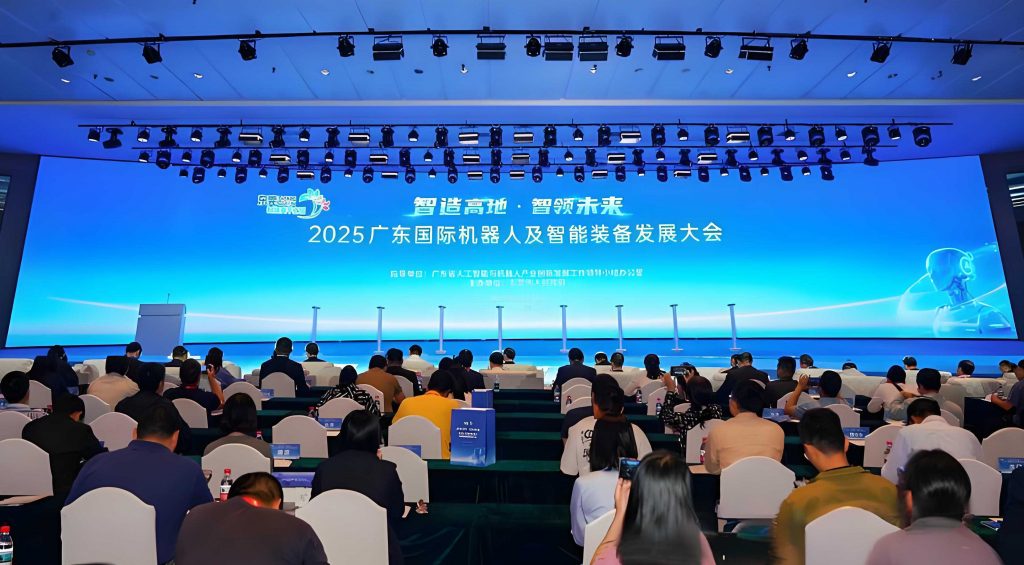
Reflecting on the unique attributes of agricultural robots, I note that they differ markedly from industrial robots due to the complexity of their operational environment and objects. Firstly, the作业对象 (operational objects) are delicate and varied—crops are susceptible to damage, exhibit diverse species and shapes, and grow unevenly in three-dimensional space with significant individual differences. This demands that a China robot possess high recognition capabilities and the ability to execute appropriate, gentle actions based on real-time assessments. Secondly, the作业环境 (operational environment) is open and dynamic, constantly changing with time, space, and natural conditions like terrain, season, light, and atmosphere. A China robot must adapt to these fluctuations, requiring advanced intelligence in vision, judgment, and reasoning. Thirdly, the操作要求 (operational requirements) are special, as users are typically farmers without expertise in mechanics or electronics. Thus, a China robot must prioritize reliability, ease of use, and maintainability to ensure broad adaptability in practical applications. These features underscore the sophisticated design needed for effective China robot deployment.
To understand the underlying mechanics, let me outline the basic architecture of an agricultural robot. Fundamentally, it is a semi-automatic or flexible automated device with information perception and reprogrammable functions, mimicking human limb actions for agricultural purposes. It integrates cutting-edge sciences such as AI, image recognition, communication, sensor technology, and system integration. The core components include:
- End-Effector (Machine Hand): This performs the physical interaction, categorized by principle into gripping claws, magnetic chucks, vacuum suction cups, multi-joint multi-finger hands, and compliant hands. Based on displacement control, it can be cylindrical, Cartesian, or polar coordinate manipulators. Power sources include electric actuators (e.g., stepper, DC, AC servo motors), hydraulic actuators (e.g., axial piston cylinders, double-rod cylinders, hydraulic motors), and pneumatic actuators (e.g., cylinders, pneumatic motors, oscillating motors).
- Sensor and Machine Vision System: This encompasses sensors for measuring distance, force, position, velocity, acceleration, and angle, along with machine vision for capturing images and positional data.
- Traveling Devices: These facilitate movement and can be leg-type, crawler-type, gantry-type, rail-guided, or wheeled systems.
- Control Devices: Typically implemented using microcontrollers, DSP chips, or computers.
A mathematical representation of robot motion can be expressed using kinematic equations. For instance, the position of an end-effector in a Cartesian coordinate system might be modeled as:
$$ \vec{P} = f(\theta_1, \theta_2, \dots, \theta_n) $$
where $\vec{P}$ is the position vector and $\theta_i$ are joint angles. For a China robot navigating uneven terrain, the control law might incorporate feedback from sensors, such as:
$$ u(t) = K_p e(t) + K_i \int e(t) dt + K_d \frac{de(t)}{dt} $$
where $u(t)$ is the control signal, $e(t)$ is the error, and $K_p$, $K_i$, $K_d$ are PID gains. This ensures precise operation in variable environments.
Classifying agricultural robots helps in understanding their diverse applications. Based on the domain of work, I categorize them into three major types, each with subdivisions as summarized in the table below. This classification highlights the breadth of China robot potential across sectors.
| Category | Subcategory | Examples of Tasks |
|---|---|---|
| Facility Agricultural Robots | Fruit Grafting Robots | Automated grafting of vegetable seedlings |
| Flower Cutting Robots | Robotic扦插 for花卉 propagation | |
| Vegetable Harvesting Robots | Harvesting tomatoes, cucumbers, eggplants | |
| Field Production Robots | Fruit Harvesting Robots | Picking strawberries, apples, citrus |
| Whole-Process Plant Robots | Seedling, transplanting, harvesting | |
| Field Operation Robots | Sowing, rice transplanting, weeding, spraying | |
| Agricultural Product Processing Robots | Meat Processing Robots | Automated cutting and handling in slaughterhouses |
| Livestock Management Robots | Milking robots, sheep shearing robots |
This taxonomy illustrates how a China robot can be tailored for specific agricultural needs, from controlled environments to open fields and post-harvest processing. Each subtype addresses distinct challenges, contributing to the overall efficiency of the agricultural chain.
Turning to the development landscape, I observe that developed countries like those in Europe, Japan, and South Korea have made significant strides in agricultural robotics, with robots already commercialized for harvesting strawberries, grapes, citrus, tomatoes, and cucumbers. These systems boast high efficiency and stable quality, setting a benchmark for global adoption. In contrast, China’s journey in agricultural robotics began later, with a thinner foundation, smaller investments, and slower progress. Currently, it remains largely in the theoretical research phase, facing considerable gaps compared to advanced nations. However, through persistent efforts by domestic research institutions, China has achieved notable milestones. For instance, China Agricultural University developed an automatic grafting robot that has undergone production trials, solving the mechanized grafting challenge for fragile vegetable seedlings. Northeast Forestry University created a robot for forest cone picking, enhancing efficiency and safety in seed collection. Other institutions, such as Nanjing Agricultural University, Shanghai Jiao Tong University, Northwest A&F University, and Shaanxi University of Science and Technology, have researched robots for harvesting strawberries, cucumbers, eggplants, and tomatoes, as well as weeding robots. Surveys indicate that China has accumulated research foundations in耕作 (tillage),施肥 (fertilization),喷药 (spraying), and partial crop harvesting, yielding a number of研究成果 (research outcomes). Yet, most prototypes are not market-ready, and the China robot technology lags in reliability, accuracy, and efficiency, with studies often focused on spherical fruits like tomatoes using image analysis and mechanical control.
To quantify the progress, let me present a comparative analysis of research focus areas. The following table summarizes key domains where China robot development is active, alongside corresponding technological maturity levels.
| Research Domain | Typical Applications in China | Maturity Level (Scale: 1-5) | Key Challenges |
|---|---|---|---|
| Machine Vision and Recognition | Fruit detection for harvesting | 3 | Handling occlusions and variable lighting |
| Autonomous Navigation | Field robots for spraying | 2 | Adapting to uneven terrain |
| Flexible Manipulation | Grafting and delicate picking | 3 | Preventing crop damage |
| Sensor Integration | Soil and environmental monitoring | 4 | Cost-effective multi-sensor fusion |
| AI and Decision-Making | Weed identification and removal | 2 | Real-time processing in complex scenes |
Here, maturity level is approximated based on current literature, with 1 being basic research and 5 being commercial deployment. The formula for overall technological advancement might be modeled as a weighted sum:
$$ A = \sum_{i=1}^{n} w_i \cdot M_i $$
where $A$ is the advancement score, $w_i$ is the weight of domain $i$, and $M_i$ is its maturity level. For a China robot to achieve parity with global leaders, $A$ must increase through targeted innovations.
Despite promising advances, several critical issues hinder the practical application of agricultural robots in China. From my analysis, three main problems stand out. First, the intelligence and flexibility of robots are often insufficient for complex, open environments. While research has shifted toward machine vision, automatic navigation, and positioning—with some mature solutions—the general智能水平 (intelligence level) of China robot remains low, limiting its ability to fully replace human labor. Second, reliability and stability fall short of agricultural demands. The多变的生产环境 (variable production environment), diverse作业对象 (operational objects), and stringent quality requirements necessitate high robustness. System failures or intelligence gaps can lead to significant agricultural losses, making reliability a paramount concern for China robot adoption. Third, high costs render robots economically unfeasible for many markets. Currently, agricultural robots are in their infancy, with components and systems not yet standardized, modularized, or mass-produced, leading to elevated prices for整机 (whole machines) and operational maintenance. Moreover, most China robot designs are task-specific, such as for sowing or harvesting, and cannot cover the entire crop cycle from planting to harvest. Coupled with the seasonal nature of farming, this results in low utilization rates, indirectly increasing costs further. A cost-benefit analysis can be expressed as:
$$ C_{total} = C_{robot} + C_{operation} + C_{maintenance} $$
$$ B = Y \cdot P – L $$
where $C_{total}$ is total cost, $B$ is benefit, $Y$ is yield, $P$ is price, and $L$ is labor savings. For a China robot to be viable, $B > C_{total}$ over its lifecycle, which currently is challenging due to high upfront $C_{robot}$.
Looking ahead, I am optimistic about the future of agricultural robotics in China, especially given rapid technological and economic growth, increased state support for agricultural mechanization, and the ongoing adjustment of agricultural structures toward intensification. As a foundational industry, agriculture’s development directly impacts economic growth and social stability. By aligning with international trends and advancing China robot technology, China can enhance resource utilization and labor productivity, transitioning from a large agricultural country to a powerful one. In my view, innovation in China robot research should focus on three avenues. First, shift away from merely mimicking human actions; instead, design robot-friendly motions based on crop physical characteristics and stable technologies to achieve intelligence. For example, a picking motion might be optimized using kinematic models:
$$ \min \int ( \tau(t)^2 ) dt \quad \text{subject to} \quad \vec{P}(t) = \text{desired trajectory} $$
where $\tau(t)$ is torque, minimizing energy while ensuring precision. Second, employ bioengineering and facility agriculture to homogenize crops, reducing the technical demands on China robot. This could involve breeding uniform varieties or controlled environments that simplify recognition and manipulation. Third, develop integrated end-effectors and software to expand robot functionalities, enabling multi-purpose use and improving efficiency to lower overall costs. A modular design approach can be represented as:
$$ R_{modular} = \bigcup_{i=1}^{k} M_i $$
where $R_{modular}$ is the robot system and $M_i$ are interchangeable modules for tasks like spraying, weeding, or harvesting. This versatility would make the China robot more cost-effective and widely adoptable.
In conclusion, the integration of agricultural robots represents a pivotal step toward modernizing China’s farming sector. While challenges persist in intelligence, reliability, and cost, the potential benefits—from mitigating labor shortages to enhancing sustainability—are immense. By fostering innovation in AI, sensor fusion, and modular design, China can accelerate the development and deployment of robust China robot solutions. As I reflect on this journey, it is clear that collaborative efforts among researchers, industry, and policymakers will be crucial to realizing the vision of smart agriculture. The path forward involves continuous refinement of technologies, as encapsulated in the evolution equation:
$$ \frac{dT}{dt} = \alpha I – \beta C $$
where $T$ is technological progress, $I$ is innovation input, $C$ is cost barriers, and $\alpha, \beta$ are positive constants. With sustained investment and ingenuity, the China robot ecosystem will undoubtedly flourish, transforming traditional practices and securing food security for future generations.