
As a researcher deeply immersed in the field of robotics and standardization, I observe that the global technological race is increasingly defined by advancements in humanoid robots. These machines, embodying a convergence of artificial intelligence, advanced mechanics, and material science, promise to reshape industries from manufacturing to personal care. The development of a humanoid robot is not merely an engineering challenge; it is a complex ecosystem problem where interoperability, safety, and performance are paramount. In this context, standardization ceases to be a mere administrative task and becomes the foundational bedrock for high-quality, scalable, and trustworthy innovation. This article delves into the current landscape, proposes a structured standard system framework, and discusses pathways for its effective implementation, all through the lens of ensuring the sustainable advancement of the humanoid robot industry.
The essence of a humanoid robot lies in its anthropomorphic design—possessing a torso, head, and limbs—and its aspiration to replicate human-like perception, cognition, and action. This ambition introduces unparalleled complexity. Unlike traditional industrial robots confined to cages and repetitive tasks, a humanoid robot must navigate unstructured environments, interpret nuanced social cues, and perform dexterous manipulations. This requires seamless integration of what is often termed the “brain” (AI for perception and decision-making), the “cerebellum” (real-time motion control and coordination), and the “limbs” (high-performance actuators and mechanisms). The absence of common technical languages, interface protocols, and safety benchmarks for these subsystems creates significant barriers to progress, stifling collaboration, increasing costs, and posing potential risks.
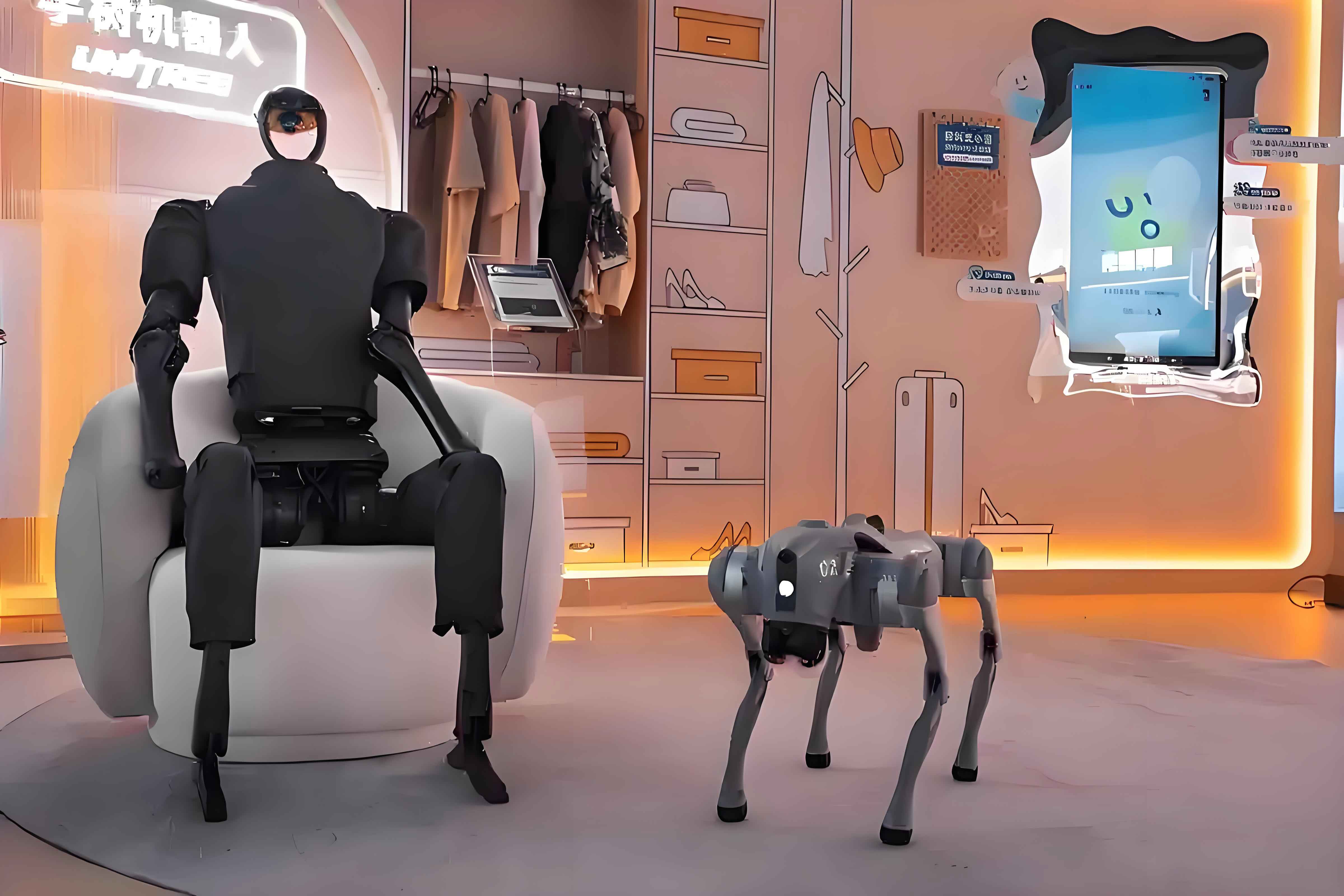
The global standardization landscape for humanoid robots is currently fragmented but rapidly evolving. Various international and national bodies are initiating work to address this technological frontier.
| Organization | Focus Area | Key Activities/Standards |
|---|---|---|
| ISO/TC 299 (Robotics) | Safety, Vocabulary, Performance | ISO 10218 (Industrial Robot Safety), ISO/TR 23482-1 (Service Robot Safety), ISO 8373 (Vocabulary). Work on specific humanoid robot standards is anticipated. |
| IEEE Robotics & Automation Society | Ethics, Ontologies, System Frameworks | IEEE P7007 (Ontological Standard for Ethics), IEEE P1872.2 (Standard for Autonomous Robot Ontology). Facilitates conceptual alignment for humanoid robot development. |
| IEC/SC 59F (Servo and Motion Control) | Precision Drives, Motor Standards | IEC 61800 series (Adjustable speed electrical power drive systems). Critical for standardizing core actuation components in humanoid robot joints. |
| National Initiatives (e.g., Germany’s DKE, China’s SAC/TC 591) | National/Regional Standards, Application-Specific Guides | Developing foundational and application-specific standards to foster domestic humanoid robot ecosystems and industrial competitiveness. |
The policy environment, particularly in nations aiming for leadership, is a strong catalyst. Strategic documents outline visions where the humanoid robot is a key pillar of future manufacturing, healthcare, and service economies. These policies explicitly task standardization bodies with creating the necessary framework to ensure orderly and rapid development. The standardization work for humanoid robots is thus characterized by a top-down policy push and a bottom-up technological necessity.
An analysis of existing and developing standards reveals a focus on foundational and component-level specifications. The current standard development can be categorized as follows:
| Standard Type / Level | Exemplary Standards/Projects | Primary Scope |
|---|---|---|
| National/Industry Standards (Under Development) | Technical Requirements for Humanoid Robots (Series: Perception, Decision-Making, Motion Control, Operation) Simulation Test Platform Specification |
Defining core technical performance metrics and validation environments for the humanoid robot as an integrated system. |
| Group Standards (Recently Published) | Technical Specification for Voice Interaction General Specifications for Human-Machine Interaction Technical Requirements for Hollow Cup Motors, Flexible Tactile Sensors, Planetary Roller Screw Pairs Classification and Grading Application Guide |
Rapidly addressing specific market needs: component specifications, interaction modalities, and application maturity models for the humanoid robot. | Foundational Robotics Standards (Established) | GB/T 12643 (Robot Vocabulary) ISO 8373 (Robot Vocabulary) Safety Standards (e.g., ISO 10218, ISO/TS 15066) |
Providing the basic terminology and safety principles upon which humanoid robot-specific standards must build. |
While this activity is positive, it presents a patchwork. Standards are emerging from different organizations with varying scopes, potentially leading to overlap or contradiction. A holistic, unified, and hierarchical standard system is urgently needed to guide coherent development. The core challenge is to construct a system that is both comprehensive enough to cover the entire humanoid robot technological stack and flexible enough to accommodate rapid innovation.
Constructing a robust standard system for humanoid robots requires adherence to key principles. It must be systematic and comprehensive, covering all interdependent elements from ethics to screws. It must be forward-looking and focused, anticipating key technological bottlenecks like AI governance and real-time control. It must be coherent and hierarchical, ensuring lower-level component standards feed seamlessly into higher-level system and application standards. Finally, it must be open and dynamic, allowing for periodic review and updates as the technology for the humanoid robot evolves.
Based on these principles and analyzing the integrated nature of the technology, I propose a six-layer standard system architecture for the humanoid robot ecosystem. This architecture is designed to provide clarity and direction for all stakeholders.
1. Foundational Common Standards (Layer A): This is the bedrock layer, defining the universal language and rules. It includes:
- A.A Terminology & Definitions: Unambiguous definitions for terms like “humanoid robot,” “embodied AI,” “dynamic stability.”
- A.B Classification & Grading: Standards for classifying humanoid robots by size, capability (e.g., manipulation force, walking speed), intelligence level, or application maturity (e.g., structured vs. dynamic environments). A grading formula could be:
$$ \text{HR\_Grade} = f(\text{Autonomy\_Index}(A), \text{Mobility\_Index}(M), \text{Manipulation\_Index}(P), \text{Env\_Complexity}(E)) $$
where each index is a weighted measure of specific capabilities. - A.C Safety & Ethics: Crucial standards covering physical safety (collision avoidance, fail-safe mechanisms), functional safety (ISO 13849, IEC 61508 adaptations), data security, and ethical guidelines (transparency, fairness, accountability in AI decision-making for the humanoid robot).
- A.D Technical Support: Standards for reference architectures, system modeling languages, and data formats for training and operation.
2. Testing & Evaluation Methods Standards (Layer B): This layer provides the tools to verify and validate standards from all other layers. It includes:
- B.A Function & Performance Testing: Standardized test beds and methodologies for measuring locomotion (e.g., walking on uneven terrain), manipulation (peg-in-hole, force control), and perception (object recognition accuracy in clutter).
- B.B Electromagnetic Compatibility (EMC): Test methods to ensure the dense electronics of a humanoid robot do not interfere with each other or external devices.
- B.C Environmental Testing: Standards for vibration, shock, temperature, humidity, and dust resistance testing.
- B.D Reliability & Durability: Methods for accelerated life testing, mean time between failure (MTBF) calculation for critical joints, and fatigue analysis.
A reliability metric for a joint could be modeled as:
$$ \lambda_{joint}(t) = \lambda_0 \cdot \exp\left(\beta_1 S + \beta_2 T + \beta_3 C\right) $$
where $\lambda_{joint}(t)$ is the failure rate, $\lambda_0$ is the baseline rate, and $\beta$ coefficients represent the stress factors from load (S), temperature (T), and cycle count (C).
3. Core Technology Standards (Layer C): This is the heart of the system, addressing the key technological pillars that make a machine a humanoid robot.
- C.A “Brain” Standards: For perception, decision-making, and human-robot interaction (HRI).
Sub-area Standardization Focus C.A.A Perception Sensor fusion algorithms, 3D scene understanding metrics, standardized datasets for training and benchmarking. C.A.B Decision & Planning Task planning interfaces, behavior tree representations, uncertainty management protocols. C.A.C HRI Multimodal interaction (voice, gesture, gaze) protocols, emotional expression coding, natural language command sets. - C.B “Cerebellum” Standards: For real-time coordination and control.
Sub-area Standardization Focus C.B.A System Simulation Standardized simulation environments (digital twins) for validating control algorithms before deployment on physical humanoid robot hardware. C.B.B Control Methods Interfaces for whole-body control (WBC) algorithms, balance control strategies (e.g., Zero Moment Point – ZMP, Model Predictive Control – MPC). A standard ZMP calculation reference would be essential:
$$ x_{zmp} = \frac{\sum_{i} m_i (\ddot{z}_i + g) x_i – \sum_{i} m_i \ddot{x}_i z_i – \sum_{i} I_{iy} \dot{\omega}_{iy}}{\sum_{i} m_i (\ddot{z}_i + g)} $$
(Simplified form, where $m_i$ is link mass, $(\ddot{x}_i, \ddot{z}_i)$ are accelerations, $g$ is gravity, $I_{iy}$ is moment of inertia).C.B.C Motion Control Hardware Communication protocols (e.g., real-time Ethernet variants) and APIs for joint-level controllers. - C.C “Limb” Standards: For the physical apparatus.
Sub-area Standardization Focus C.C.A Arm & Manipulator Kinematic and dynamic performance metrics (reach, payload, repeatability), end-effector interface standards. C.C.B Dexterous Hand Grasp taxonomy, tactile sensor data format, finger actuation force and speed benchmarks. C.C.C Leg & Locomotion Gait parameter definitions, energy consumption metrics per distance traveled, impact force specifications. C.C.D Body/Torso Structural stiffness requirements, mass distribution guidelines, thermal management interfaces.
4. Component Standards (Layer D): These standards ensure the quality and interchangeability of the building blocks.
- D.A High-Precision Reducers: Performance grades, backlash, efficiency, and lifetime specifications for harmonic drives and strain wave gears.
- D.B Servo Motors & Drives: Standardized power-density, torque-speed curves, communication interfaces (e.g., CiA 402 profile extensions for high-dynamic joints).
- D.C Controllers: Real-time operating system (RTOS) APIs, safety-rated communication protocols.
- D.D Sensors: Performance specifications for IMUs, force/torque sensors, vision sensors, and tactile arrays, including data output formats.
- D.E Batteries & Power Systems: Safety standards for high-density batteries, modular power pack interfaces, wireless charging compatibility.
- D.F Cables & Connectors: Flexible cable durability standards, high-speed data connector specifications for dynamic cabling in a humanoid robot.
5. Integrated System & Application Standards (Layer E): This layer addresses the complete humanoid robot and its role in specific settings.
- E.A Industrial Humanoid Robot: Standards for collaboration with humans on factory floors (adapting ISO/TS 15066), task-specific performance (e.g., assembly, inspection), and integration with Industrial IoT systems.
- E.B Personal/Home Humanoid Robot: Usability standards, privacy-by-design requirements, child-safe interaction protocols, and domestic task completion metrics.
- E.C Public Service Humanoid Robot: Guidelines for operation in airports, malls, or hospitals, including public safety, crowd navigation, and information delivery protocols.
- E.D Specialized Humanoid Robot: Standards for extreme environments (nuclear decommissioning, space) or specialized tasks (search and rescue), focusing on environmental hardening and mission-specific capabilities.
6. System Integration & Interoperability Standards (Layer F): This final layer ensures different subsystems and robots can work together.
- F.A Hardware Interfaces: Mechanical and electrical docking standards for tool changing or modular limb replacement on a humanoid robot.
- F.B Communication Protocols: Middleware standards (e.g., ROS 2 interface definitions) for seamless software integration between perception, planning, and control modules from different vendors.
- F.C Data & Model Exchange: Formats for sharing trained AI models, simulation scenes, and operational log data to accelerate ecosystem learning.
- F.D Multi-Robot & Human-Robot Collaboration: Protocols for task allocation, formation control, and intent signaling between multiple humanoid robots and human teams.
The proposed architecture creates a clear mapping from fundamental concepts to real-world application, ensuring every aspect of the humanoid robot lifecycle is guided by appropriate standards.
For the standard system to be effective, strategic implementation is vital. First, strengthen top-level design and coordinated planning is essential. A dedicated, authoritative standardization committee for humanoid robots should be established or empowered to oversee the entire architecture. This body must foster deep collaboration between government, academia, research institutes, and industry (“government-industry-university-research-application”) to align roadmaps and resources.
Second, a mechanism for continuous evaluation and iterative improvement must be institutionalized. The standard system is a living document. Regular reviews should assess the relevance of existing standards, identify gaps created by new technologies (e.g., quantum sensing for navigation, new AI architectures), and update the framework accordingly. A “fast-track” process is needed for urgently required standards in rapidly evolving areas.
Third, accelerate the development and deployment of priority standards. Resources should be focused on:
- Foundational Common Standards (Layer A), especially safety and ethics, to immediately establish a baseline of trust.
- Critical gaps in Core Technology Standards (Layer C), such as real-time AI system benchmarking and whole-body control interfaces.
- Key Component Standards (Layer D) for actuators and sensors to improve supply chain reliability and reduce costs for the humanoid robot industry.
Fourth, promote international alignment and cooperation. While national standards can drive domestic industry, global interoperability is the ultimate goal for a humanoid robot ecosystem. Active participation and contribution to ISO, IEC, and IEEE working groups are necessary to influence international standards and avoid future market fragmentation.
Fifth, establish comprehensive testing and certification platforms. Standards are meaningless without conformance assessment. National or regional test centers should be developed, equipped with standardized test environments (e.g., mock-up households, uneven terrain tracks) to verify a humanoid robot‘s performance against published standards, building market confidence.
The journey towards sophisticated, reliable, and ubiquitous humanoid robots is a marathon, not a sprint. The complexity is staggering, involving not just hardware and software, but profound questions of human-machine coexistence. The proposed standard system architecture provides a strategic map to navigate this complexity. By establishing a clear, hierarchical, and dynamic framework—from foundational ethics and terminology to specific component specifications and application protocols—we can mitigate risks, reduce duplication of effort, foster healthy competition, and accelerate innovation.
Standardization is the unsung hero of technological revolutions. It transforms brilliant but isolated prototypes into the reliable, interoperable, and scalable products that define an industry. For the humanoid robot, a technology poised to touch every aspect of our future, building this standards foundation is not just an technical exercise; it is a necessary step to ensure its development is safe, efficient, beneficial, and aligned with human values. The work must be collaborative, inclusive, and agile. The time to build this framework is now, as the first generations of truly capable humanoid robots leave the lab and step into our world.