
In the first half of 2025, major internet companies moved aggressively and publicly into embodied intelligence. ByteDance, by contrast, stayed unusually quiet. That quietness, however, does not signal absence. The company is advancing a broad and deliberate strategy in embodied intelligence, moving through investments, model development, robotics hardware, manufacturing capacity, and ecosystem partnerships. Its approach suggests that embodied intelligence is not a side experiment but part of a longer contest over future intelligent hardware and service entry points.
The center of that contest is the idea that artificial intelligence must not remain only in software. For large models to move into factories, warehouses, stores, homes, hospitals, and other real environments, they need a “brain” and a “body.” ByteDance is now working on both sides of that equation. Its efforts in embodied intelligence combine the Seed team’s vision-language-action models with robots such as ByteMini, while its investment arm and affiliated funds build a wider network of robotic partners.
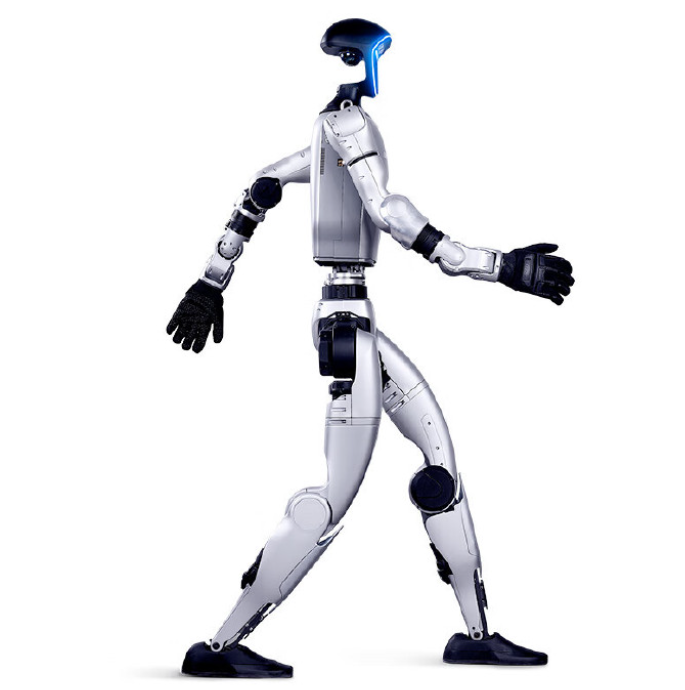
-
ByteDance’s Low-Profile Entry Becomes a Full-Stack Embodied Intelligence Push
In September 2025, Stardust Intelligence (Shenzhen) Co., Ltd. announced a strategic cooperation with Xiangong Intelligent. The two partners plan to deploy more than one thousand AI robots in stages over the next two years, targeting industrial manufacturing, warehouse logistics, and related scenarios. The scale of that plan is notable in the embodied intelligence sector. As of September 2025, only a small number of players in the field had signed orders at the thousand-unit level, including Unitree Robotics, AgiBot, and Songyan Dynamics.
The investment register behind Stardust Intelligence adds another layer to the story. Its backers include Ant Group, Yunqi Capital, Daotong Capital, and Jinqiu Fund, a fund with deep ties to ByteDance. ByteDance is one of the many limited partners in Jinqiu Fund. Jinqiu Fund was founded by Yang Jie, formerly the head of ByteDance’s financial investment department. Its name comes from Jinqiu Jiayuan, ByteDance’s first office location. Its core team also includes people from ByteDance’s investment department as well as other first-tier investment institutions and industrial companies.
ByteDance’s involvement in embodied intelligence is not limited to fund relationships. In July 2025, the ByteDance Seed team introduced a new vision-language-action model, Seed GR-3. The model is designed to understand abstract instructions, manipulate flexible objects, and generalize across tasks. These capabilities are central to embodied intelligence because real-world robots must operate in messy, changing environments rather than in controlled demonstrations.
From April to August 2025, according to data from IT Juzi, Jinqiu Fund invested in five embodied intelligence companies: Stardust Intelligence, Yinkesi, Lexiang Technology, Unitree Robotics, and Pangbote. The investments show how ByteDance’s wider network is touching multiple parts of the embodied intelligence value chain, from robot bodies and motion systems to commercial deployment and model integration.
At the same time, ByteDance’s self-developed robot program has moved into production, according to a report. The report said that since 2023, the robotics team under ByteDance AI Lab has been pushing robot mass production. ByteDance-developed robots have now been mass-produced at a cumulative volume of more than one thousand units. The robot form is a wheeled logistics robot. It does not have a sorting robotic arm. Its primary use is transporting parcels and parts in warehouses and on production lines, mainly serving Douyin e-commerce warehouses and other ByteDance businesses. ByteDance was asked to confirm the report, but it had not responded by the time of publication.
Those two tracks, investment and self-development, are reinforcing each other. The self-developed logistics robots give ByteDance practical hardware experience and internal deployment scenarios. The investments in embodied intelligence companies give it exposure to external teams, technical talent, and specialized components. Together, they place ByteDance in a position to connect large models, data, robotics hardware, and real commercial scenarios.
The strategy also reflects a broader shift in how internet companies view embodied intelligence. The sector is no longer viewed only as a robotics niche. It is increasingly seen as a convergence point for artificial intelligence, advanced manufacturing, logistics, retail, and consumer services. For ByteDance, that convergence is both a technical challenge and a strategic opportunity in embodied intelligence.
-
Jinqiu Fund and the Investment Web Behind ByteDance’s Embodied Intelligence Ambitions
Jinqiu Fund occupies a distinctive position in ByteDance’s broader embodied intelligence map. Although ByteDance is not the only limited partner, its historical and human connections to the fund are strong. The fund was founded by Yang Jie, who previously led ByteDance’s financial investment department. Its name and core team both trace back to ByteDance’s early history and investment operations. That makes Jinqiu Fund an important channel through which ByteDance can participate in embodied intelligence without necessarily leading every investment directly.
Between April and August 2025, Jinqiu Fund invested in five embodied intelligence companies. Each investment represents a different angle on the sector. Stardust Intelligence is linked to large-scale deployment plans in industrial manufacturing and warehouse logistics. Unitree Robotics is one of the better-known players in the embodied intelligence race and has also attracted investment from other major technology and internet groups. Yinkesi, Lexiang Technology, and Pangbote add further coverage across the emerging supply chain and application landscape.
This pattern is important because embodied intelligence is not a single product category. It includes robot brains, motion control systems, sensors, actuators, reducers, motors, dexterous hands, mobile platforms, and software stacks for perception, planning, and action. A fund connected to ByteDance can help the company monitor and access these layers. It can also create opportunities for collaboration between portfolio companies and ByteDance’s own business units.
Selected ByteDance-Related Moves in Embodied Intelligence Area Move Time Frame Key Details Investment network Jinqiu Fund invests in five embodied intelligence companies April to August 2025 Stardust Intelligence, Yinkesi, Lexiang Technology, Unitree Robotics, and Pangbote Large model Seed team launches Seed GR-3 vision-language-action model July 2025 Understands abstract instructions, manipulates flexible objects, generalizes across tasks, and requires only small human demonstration data for fine-tuning Robotics hardware ByteMini general-purpose dual-arm mobile robot 2025 22 degrees of freedom, wrist ball-angle design, bimanual coordination, precise grasping, and narrow-space movement Self-developed robots Wheeled logistics robots enter mass production Since 2023, reported in 2025 Cumulative production of more than one thousand units, used for transporting parcels and parts in warehouses and production lines, mainly serving Douyin e-commerce warehouses and other ByteDance businesses Ecosystem Third-party robot partners appear at Volcano Engine event June 2025 Gizwits, Quectel, Songyan Dynamics and other partners showcased intelligent robot devices The table above shows that ByteDance’s embodied intelligence activity is not concentrated in one department or one investment. It spans capital, models, hardware, internal logistics, and external partnerships. That breadth matters because embodied intelligence deployments often fail when one layer is missing. A strong model without reliable hardware cannot act. A capable robot without useful scenarios cannot scale. An investment portfolio without internal integration cannot create strategic advantage.
For ByteDance, the investment web also offers a way to learn from external teams. Embodied intelligence requires expertise in mechanical design, control systems, real-time perception, simulation, and safety. Internet companies are strong in software, data, and large-scale computing, but they do not always have deep experience in actuators, joints, limbs, and low-level motion control. By investing through Jinqiu Fund and other channels, ByteDance can access those capabilities while retaining focus on its own strengths.
-
Seed GR-3 and ByteMini: Building the Brain and Body for Embodied Intelligence
The most visible technical expression of ByteDance’s embodied intelligence strategy is the combination of Seed GR-3 and ByteMini. In July 2025, the ByteDance Seed team introduced Seed GR-3 as a new vision-language-action model. The model is designed to connect visual perception, language understanding, and physical action. That connection is the core of embodied intelligence: a system must not only describe the world but also act in it.
According to the Seed team, Seed GR-3 can understand abstract instructions, manipulate flexible objects, and demonstrate strong generalization. These abilities are significant for embodied intelligence because many real-world tasks are not rigid or perfectly structured. A warehouse robot may need to handle packages of different shapes. A service robot may need to respond to spoken instructions that are incomplete or ambiguous. A manufacturing robot may need to adapt to changes in materials or layout.
Unlike earlier VLA models that rely heavily on large amounts of robot trajectory training, Seed GR-3 needs only a small amount of human demonstration data to fine-tune for new tasks. That reduces deployment costs. Lower deployment costs are essential for embodied intelligence to move from demonstrations to commercial scale. If every new task requires enormous amounts of robot data, deployment becomes slow and expensive. If a model can adapt with limited human demonstration, it becomes more practical for factories, warehouses, and service environments.
The Seed team also said that improvements in model structure allow Seed GR-3 to handle long-horizon tasks and high-dexterity operations. These include bimanual coordination, flexible object manipulation, and whole-body operations that integrate chassis movement. Such capabilities point toward robots that can do more than repeat a single motion. They can combine perception, planning, and control over extended sequences of action in embodied intelligence environments.
To make use of those capabilities, ByteDance developed ByteMini, a general-purpose dual-arm mobile robot. ByteMini has 22 degrees of freedom and a distinctive wrist ball-angle design. It can perform bimanual coordination, precise grasping, and movement in narrow spaces. In the architecture described by ByteDance, ByteMini serves as the “body” while Seed GR-3 serves as the “brain.” Together they form a complete body-and-intelligence integrated solution.
This brain-and-body pairing is a clear statement about ByteDance’s approach to embodied intelligence. The company is not treating models and robots as separate projects. It is working to connect them into a single system. That connection may eventually support internal logistics, content-related hardware, or third-party robot platforms. It also positions ByteDance to compete in a field where software-only and hardware-only strategies are increasingly seen as insufficient.
The technical challenge remains substantial. Embodied intelligence requires robust perception under changing light and clutter, reliable manipulation of deformable and fragile objects, safe movement around people, and low-latency control. It also requires data from real deployments. A model like Seed GR-3 can improve only if it is exposed to real tasks and receives useful feedback. ByteMini can generate that feedback if it is deployed at scale. The combination of a generalizable model and a flexible robot body is therefore both a technical platform and a data engine for embodied intelligence.
-
Manufacturing, Logistics, and Ecosystem Partnerships Strengthen the Hardware Side of Embodied Intelligence
ByteDance’s hardware preparations extend beyond its own robots. In June 2025, at the Volcano Engine Original Power Conference, intelligent robot devices from third-party partners such as Gizwits, Quectel, and Songyan Dynamics appeared in the exhibition area. Their presence showed that ByteDance’s cloud and AI ecosystem is already touching the embodied intelligence hardware layer.
This ecosystem approach is important because embodied intelligence cannot scale through a single company. It requires chip and module suppliers, sensor makers, communication providers, robot manufacturers, software platforms, and deployment partners. Volcano Engine can serve as a computing and AI platform for those partners. ByteDance’s investment network can identify and support promising companies. Its own logistics operations can act as an early testing ground for wheeled robots and warehouse automation.
The reported mass production of ByteDance’s wheeled logistics robots is especially relevant. These robots do not have sorting robotic arms and are used mainly to transport parcels and parts in warehouses and production lines. They serve Douyin e-commerce warehouses and other ByteDance businesses. This is a focused, practical use case for embodied intelligence. It does not require a humanoid form or advanced dexterous manipulation. It does require reliable navigation, routing, scheduling, and integration with warehouse systems.
That kind of deployment can generate operational data and engineering experience. It can also create demand for better perception and planning models. In that sense, ByteDance’s logistics robots are not just internal tools. They are part of a larger embodied intelligence learning process. The company can test hardware reliability, fleet management, and human-robot interaction in real environments before expanding to more complex tasks.
Industry consensus is increasingly moving toward software-hardware integration. ByteDance has been positioning itself across technology, investment, manufacturing, and ecosystem development. Its investments provide access to external innovation. Its models provide intelligence. Its robots provide physical form. Its internal warehouses provide scenarios. Its ecosystem partnerships provide scale. This multi-layer approach reflects the reality that embodied intelligence is a systems competition, not just a model competition.
Still, the hardware side of embodied intelligence is difficult. Actuators, reducers, motors, dexterous hands, and control systems require deep engineering know-how. Reliability, maintenance, safety, and cost are all critical. A robot that works in a lab may fail in a busy warehouse. A model that performs well in simulation may struggle with real-world variability. ByteDance’s partnership and investment strategy appears designed to address these gaps by combining internal capabilities with external specialization.
-
Analysts See Traffic Entry as ByteDance’s Biggest Embodied Intelligence Opportunity
Pan Helin, a well-known economist and a member of the Information and Communication Economic Expert Committee of the Ministry of Industry and Information Technology, said in an interview that a “self-development plus investment” approach is the correct strategy for ByteDance in embodied intelligence. In his view, self-development allows ByteDance to build AI-plus capabilities that can later empower its content platforms. Investment can fill gaps by absorbing external team technology and gaining access to algorithms, computing power, reducers, motors, and other components. The core goal serves both current business needs and the capture of future entry points.
Pan also pointed out that ByteDance’s greatest opportunity in embodied intelligence is its direct traffic entry. That advantage could give it better commercial prospects. Traffic entry matters because embodied intelligence is not only about robots performing tasks. It is also about how users interact with services. If robots become new interfaces for commerce, content, local services, or household assistance, companies with existing user relationships and traffic ecosystems may have an advantage in embodied intelligence deployment.
At the same time, Pan identified important challenges. ByteDance lacks accumulated technical experience in execution control. Internet companies may be strong in building robot brains, but they are often weak in joints, limbs, and the cerebellum-like systems that coordinate movement. Those areas require external technology and deep hardware expertise. Another challenge is the limited number of application scenarios for embodied intelligence today. Even the best model and robot cannot create a mass market if there are few useful, repeatable, and economically viable tasks.
These two challenges, execution control and scenario scarcity, define the competitive landscape. Companies that can solve them will be able to move from demonstrations to deployments. Companies that cannot will remain in pilot projects. ByteDance’s investments in robot companies and component makers may help address execution control. Its internal logistics operations and content ecosystem may help address scenario scarcity. But neither challenge is easy, and both require long-term commitment.
For ByteDance, the opportunity in embodied intelligence is closely tied to its existing strengths. It has large-scale computing, data, recommendation systems, cloud services, and consumer reach. It also has internal operations that can serve as early customers. If it can combine those strengths with reliable robotics hardware and capable partners, it may be able to create a differentiated position in embodied intelligence. If it cannot, it may still benefit financially through investments, but it may not control the most valuable entry points.
-
China’s Embodied Intelligence Investment Wave Accelerates Across the Robot Economy
ByteDance’s moves are taking place within a rapidly expanding Chinese embodied intelligence market. Data released at the opening ceremony of the 2025 World Robot Conference showed that in the first half of 2025, China’s robot industry revenue grew by 27.8 percent year on year. Industrial robot output increased by 35.6 percent, while service robot output increased by 25.5 percent. China has been the world’s largest industrial robot application market for twelve consecutive years. The country’s embodied intelligence industry is in a phase of high-speed development.
Investment activity reflects that momentum. According to an incomplete count, by June 23, 2025, there had been 91 investment events in China’s embodied intelligence industry during the year, an increase of 47 events in just over two months. IT Juzi data shows that there were 28 embodied intelligence investment events in 2023. In 2024, the number more than doubled to 77. As of September 5, 2025, there had been 148 domestic embodied intelligence investment events during the year, with total investment reaching RMB 18.418 billion.
China’s Embodied Intelligence Investment Activity Period Investment Events Total Investment Value Notes 2023 28 Not provided Early-stage activity in embodied intelligence 2024 77 Not provided More than double the 2023 level By June 23, 2025 91 Not provided Increase of 47 events in just over two months As of September 5, 2025 148 RMB 18.418 billion Full-year figure to date for domestic embodied intelligence investment events The table illustrates how quickly capital has moved into embodied intelligence. The growth is not only a reflection of enthusiasm. It also reflects the breadth of the opportunity. Embodied intelligence spans industrial robots, service robots, humanoid robots, mobile platforms, dexterous hands, sensors, actuators, and AI models. Investors are placing bets across the stack because no single company or technology has yet locked in the market.
China’s robot industry data also shows why embodied intelligence has become a national-level commercial priority. Industrial robots are already deployed at scale in manufacturing. Service robots are expanding into logistics, retail, hospitality, and public services. The next stage is to make these robots more intelligent, more flexible, and more autonomous. That is where embodied intelligence comes in. It promises to connect perception, language, and action so that robots can handle a wider range of tasks without extensive reprogramming.
The investment wave also creates risks. High capital inflows can lead to overcapacity, duplicated projects, and unrealistic expectations. Companies may announce ambitious deployment targets before the technology is ready. The gap between demonstration and commercial reliability remains significant. For embodied intelligence to deliver on its promise, companies must prove that robots can work safely, consistently, and economically in real environments. Investment alone cannot solve those challenges.
Even so, the direction is clear. China’s embodied intelligence sector is moving from research and early pilots toward commercialization. Companies that can combine AI models, hardware engineering, supply chain strength, and real deployment scenarios are likely to lead. ByteDance’s multi-layer approach is designed to place it among those contenders.
-
Internet Giants Intensify the Race in Embodied Intelligence
ByteDance is not alone. In 2025, embodied intelligence became a new battleground for major internet companies. JD.com, Alibaba, and Meituan have all accelerated their efforts. JD.com has been especially aggressive. From May to July, JD.com made six consecutive investments in the embodied intelligence sector, backing AgiBot, Qianxun Intelligence, LimX Dynamics, EngineAI, RoboScience, and Paxini. The investments cover multiple key technical nodes, from humanoid robots to motion control.
JD.com also launched JoyInside, a brand described as attached intelligence that gives intelligent capabilities to hardware devices. JoyInside embeds AI dialogue abilities into robots, robot dogs, and other hardware, strengthening product intelligence and scenario collaboration. The move shows how e-commerce and logistics platforms view embodied intelligence as an extension of their existing businesses. Robots can serve as mobile interfaces for services, data collection, and customer interaction.
Alibaba and Ant Group have also been active. In June 2025, Alibaba and Ant Group co-led Unitree Robotics’ C round of financing. Ant Group also invested in Tihu Robotics, Stardust Intelligence, Galaxea, and Lingxin Qiaoshou, a dexterous hand developer. Over the past year, Alibaba invested in LimX Dynamics, Robot Era, Yuanluo Technology, and Unitree Robotics. These investments span humanoid robots, motion control, dexterous hands, and related technologies in embodied intelligence.
Meituan has focused more on deployment. Through Galbot, it has moved into unmanned pharmacies and smart retail. It has also invested in Unitree Robotics, Zibianliang Robotics, Galaxea, and other embodied intelligence companies. Meituan’s approach reflects its strengths in local services, retail, and on-demand delivery. If embodied intelligence can reduce labor costs and improve service availability, Meituan’s businesses could become important deployment scenarios.
Selected Internet Company Activity in Embodied Intelligence Company Selected Moves Focus Areas ByteDance Jinqiu Fund investments; Seed GR-3; ByteMini; self-developed wheeled logistics robots; Volcano Engine ecosystem partners Models, hardware, logistics, investment, ecosystem JD.com Six consecutive investments from May to July 2025; JoyInside brand Humanoid robots, motion control, AI dialogue in hardware, logistics and retail scenarios Alibaba and Ant Group Co-led Unitree Robotics C round; investments in Tihu Robotics, Stardust Intelligence, Galaxea, Lingxin Qiaoshou, LimX Dynamics, Robot Era, Yuanluo Technology Humanoid robots, dexterous hands, motion control, embodied intelligence platforms Meituan Galbot for unmanned pharmacies and smart retail; investments in Unitree Robotics, Zibianliang Robotics, Galaxea Commercial deployment, retail, local services, robotics The table shows that each major company is approaching embodied intelligence from a different angle. ByteDance emphasizes models, internal logistics, and investment. JD.com emphasizes investment breadth and AI-enabled hardware. Alibaba and Ant Group emphasize robotics platforms and components. Meituan emphasizes deployment in retail and local services. Together, their moves show that embodied intelligence is becoming a strategic priority across the internet sector.
Industrial capital is also accelerating the application of embodied intelligence through collaborative research and scenario enablement. When large internet companies invest in robotics startups, they bring more than money. They bring computing resources, data, user interfaces, supply chain relationships, and deployment opportunities. Those resources can help robotics companies move faster from prototypes to products. They can also help internet companies learn about hardware cycles, safety requirements, and operational constraints.
The competition is not only about who can build the most advanced robot. It is about who can create the most effective ecosystem for embodied intelligence. That ecosystem includes model developers, robot makers, component suppliers, cloud platforms, application developers, and end users. Companies that can coordinate these players may be able to set standards and capture value across the chain.
-
From Warehouses to Convenience Stores: Embodied Intelligence Approaches Commercial Tipping Point
At the 2025 World Robot Conference, robots were more integrated into real-life scenarios than in previous years. Visitors queued at coffee and pancake robot booths waiting for food to be prepared. In a convenience store staffed by a robot, buying a bottle of water took less than one minute. These examples may seem simple, but they point to a larger trend. The robot industry is approaching a critical point for commercial explosion.
For embodied intelligence, commercial validation is essential. A robot that can make coffee or perform a store task demonstrates several capabilities at once: perception, planning, manipulation, human interaction, and reliable operation over repeated tasks. These capabilities are the building blocks of broader embodied intelligence applications. If they can be delivered at acceptable cost and reliability, they can spread across retail, food service, logistics, healthcare, and hospitality.
Warehouses and factories are often the first large-scale markets because tasks are structured and economic value is measurable. ByteDance’s wheeled logistics robots fit this pattern. They transport parcels and parts in controlled environments. They do not need to navigate crowded homes or manipulate fragile household objects. Their value comes from reducing labor, improving throughput, and operating continuously.
The next wave may come from semi-structured environments such as convenience stores, pharmacies, restaurants, and hospitals. These settings require more interaction with people and more flexibility in handling objects. They also offer larger potential markets. Companies such as Meituan are already exploring unmanned pharmacies and smart retail through Galbot. JD.com’s JoyInside aims to embed AI dialogue into robots and other hardware, making them more useful in service settings.
For ByteDance, the transition from warehouse robots to broader embodied intelligence applications may follow a similar path. Internal logistics can validate hardware and fleet software. Seed GR-3 and ByteMini can validate more advanced manipulation and interaction. Ecosystem partners can supply components and specialized robots. If these elements mature together, ByteDance could extend its embodied intelligence capabilities into new commercial scenarios.
However, the commercial tipping point is not guaranteed. Costs must fall. Reliability must improve. Safety must be proven. Regulations must adapt. Customers must see clear return on investment. The gap between a compelling demonstration and a scalable business remains wide. The companies that succeed in embodied intelligence will be those that can close that gap systematically.
-
The Next Hardware Entry Point: Why the Embodied Intelligence Contest Matters
Internet giants are not only competing for current logistics and manufacturing scenarios. They are competing for future entry points in home services, healthcare, human-robot interaction, and other large markets. Embodied intelligence could become a new interface between digital services and the physical world. If that happens, the companies that control the hardware, models, and user relationships could gain significant strategic advantage.
This is why ByteDance’s quiet moves matter. Its investments in embodied intelligence companies, its Seed GR-3 model, its ByteMini robot, its self-developed logistics robots, and its ecosystem partnerships all point in the same direction. ByteDance is preparing for a world in which AI is not confined to screens but acts through machines. That world will require large models, real-time control, hardware reliability, and deep integration with services.
The race in embodied intelligence is also a race in data. Robots generate data about physical environments, object properties, human instructions, and task outcomes. That data can improve models and create feedback loops. Companies with more deployment scenarios can collect more data. Companies with better models can deploy more effectively. This creates a compounding advantage for players that can combine scale, software, and hardware in embodied intelligence.
ByteDance’s existing platforms provide a strong starting point. Its content, e-commerce, cloud, and recommendation businesses generate enormous amounts of digital data and user interaction. Its logistics operations provide physical scenarios. Its investment network provides access to robotics expertise. Its model teams provide AI capability. The missing pieces are execution control, hardware reliability, and a broader set of commercially viable scenarios. Those are precisely the areas it is addressing through self-development, investment, and partnerships.
The competition will not be decided in a single year. Embodied intelligence requires long research cycles, hardware iterations, safety validation, and market development. The companies that appear quiet today may be building the foundations for tomorrow. ByteDance’s low-profile approach does not mean it is absent. It means it is working across multiple layers, from capital to code to physical machines, in one of the most important technology races of the coming decade.
As internet giants jostle for position in embodied intelligence, the strategic question is not only who has the best robot or the best model. It is who can integrate models, hardware, data, scenarios, and ecosystems into a coherent system. ByteDance’s two-front campaign in large models and hardware suggests it intends to be a serious contender. The outcome will depend on execution, partnerships, and the pace at which embodied intelligence moves from promise to everyday commercial reality.
-
Key Challenges and the Road Ahead for Embodied Intelligence
Despite rapid progress, embodied intelligence faces a set of persistent challenges. One is the gap between structured and unstructured environments. Warehouses and production lines can be designed for robots. Homes, hospitals, streets, and retail stores are far less predictable. Robots must recognize objects, understand intent, avoid collisions, and recover from errors. Each of these tasks is difficult on its own; combining them in real time is even harder.
Another challenge is data. Large language models benefit from vast text corpora. Embodied intelligence needs physical interaction data, which is more expensive to collect. Every robot hour, every grasp, every navigation failure, and every human correction can provide useful information, but collecting and labeling that data at scale is costly. Models such as Seed GR-3 aim to reduce the data burden by learning from limited human demonstrations, but real-world deployment still requires continuous learning and validation.
Hardware reliability is a third challenge. A robot in a laboratory may operate for hours. A robot in a commercial setting may need to operate for thousands of hours with minimal downtime. Motors, reducers, sensors, batteries, and end effectors must be durable. Maintenance and repair must be manageable. The cost of ownership must be lower than the value created. These are engineering and supply chain problems as much as AI problems.
Safety and regulation are also critical. As robots enter public and private spaces, they must interact safely with people. They must respect privacy, avoid physical harm, and operate within legal frameworks. Standards for embodied intelligence are still developing. Companies that invest early in safety and compliance may gain trust and accelerate deployment, while those that treat safety as an afterthought may face delays and reputational risks.
Finally, the market must mature. Many embodied intelligence applications are still searching for product-market fit. A robot may be technically impressive but economically uncompetitive with human labor or existing automation. The winning applications will be those where robots provide clear advantages in cost, quality, speed, safety, or availability. Warehouses, manufacturing, retail, and healthcare are likely early markets, but each has different requirements and payback periods.
For ByteDance, these challenges reinforce the logic of a multi-layer strategy. Self-development builds internal capability. Investment provides access to specialized hardware and talent. Ecosystem partnerships broaden deployment options. Internal logistics provides a controlled early market. If these elements are coordinated well, ByteDance can learn faster and reduce risk in embodied intelligence. If they are not, the company may find that owning pieces of the value chain is not enough without integration.
-
What to Watch Next in Embodied Intelligence
Several developments will indicate how quickly embodied intelligence is moving from strategy to scale. The first is deployment volume. Announcements of thousand-unit orders are meaningful, but actual installation, utilization, and uptime will matter more. The market will watch whether large-scale deployments in industrial manufacturing and warehouse logistics meet their targets and deliver measurable returns.
The second is model generalization. Seed GR-3’s ability to learn from small human demonstration data is a promising direction. The key question is how well it performs across new tasks, objects, and environments outside controlled tests. If a single model can be fine-tuned quickly for many robot bodies and tasks, the economics of embodied intelligence will improve significantly.
The third is hardware cost and reliability. ByteMini’s 22 degrees of freedom and wrist ball-angle design show ambition in dexterous manipulation. But commercial success will depend on whether such robots can be produced at reasonable cost and maintained in real operations. The same applies to wheeled logistics robots, dexterous hands, and mobile platforms across the embodied intelligence supply chain.
The fourth is ecosystem coordination. ByteDance’s partnerships with third-party robot companies, cloud customers, and investment portfolio companies could create a network effect. If partners can build on ByteDance’s models and cloud services while contributing hardware and domain expertise, the ecosystem may accelerate embodied intelligence adoption. If integration remains difficult, each player may remain isolated.
The fifth is user and customer adoption. Internet companies are competing for future entry points, but customers will adopt embodied intelligence only if it solves real problems. In warehouses, the problem is labor shortage and throughput. In retail, it is availability and cost. In healthcare, it is support for staff and patient care. In homes, it is convenience and assistance. The companies that identify the most compelling use cases will lead the next phase of embodied intelligence.
In the end, ByteDance’s efforts show that embodied intelligence is moving from a niche research field to a broad industrial contest. The company is building brain and body, investing in external innovation, testing internal logistics, and preparing for future service interfaces. The path is uncertain, but the direction is clear. Embodied intelligence is becoming a central arena for technology companies that want to shape how artificial intelligence acts in the physical world.