
As the Twelfth Global Hunan Entrepreneurs Convention approaches, Xu Zhendong, chairman of Hunan Aibote Robot Technology Co., Ltd., has placed his company’s nearly 20-year journey in Changsha at the center of a broader story about embodied intelligence, heavy-load robotics, and the industrial advantages of Hunan. In his view, Hunan is not merely a sentimental home for entrepreneurs from the region; it is a practical, industrial, and innovation-ready base for companies seeking to turn embodied intelligence from laboratory concepts into real machines, real deployments, and real commercial value.
Xu said that meeting fellow Hunan entrepreneurs, returning home, and building the hometown are powerful motivations, but the decision to build Aibote in Changsha has also been driven by industrial logic. The company was founded in Changsha in 2007 and has grown into a national-level specialized and new “little giant” enterprise and a national high-tech enterprise focused on intelligent mobile robot platforms and systems. From leading the creation of the country’s first solar cell unmanned smart factory to becoming a leader in embodied intelligence in Hunan, Aibote has built a hardware product matrix centered on an AI large model as its “brain” and on embodied intelligence heavy-load quadruped robot dogs and autonomous mobile robots, or AMRs, as its core hardware. The company currently owns more than 40 independent intellectual property patents.
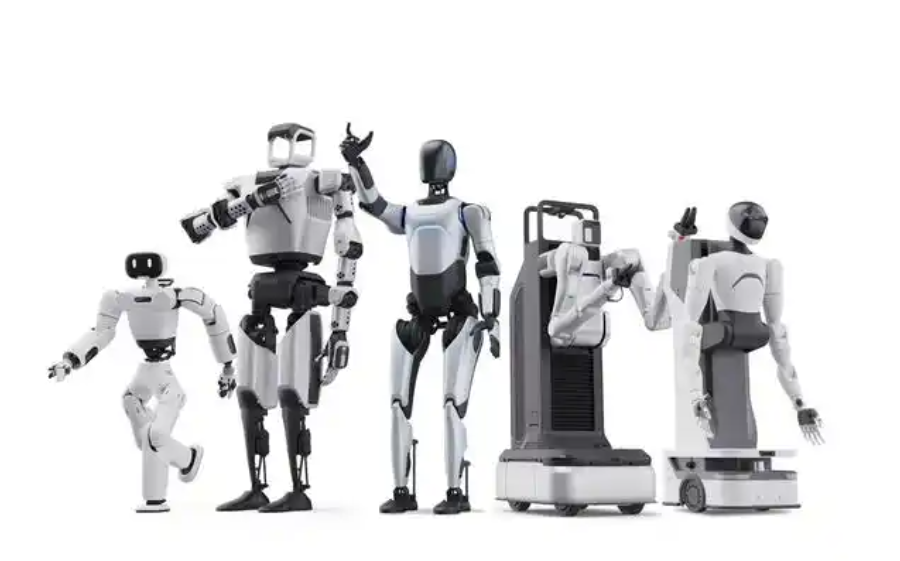
Aibote is also preparing what is described as Hunan’s first quadruped robot dog production line with an annual capacity of 10,000 units. That production line is being developed as part of a wider industrial push into embodied intelligence, advanced manufacturing, and heavy-load robotic systems. For Xu, the combination of Hunan’s manufacturing ecosystem, Changsha’s business environment, and the company’s own long-term focus on intelligent mobile robots has created a rare platform for embodied intelligence to move from prototypes to scaled applications.
1. Why Changsha Became the Optimal Base for Embodied Intelligence
Xu described himself as a native of Hunan, and he said the choice to start a business in Changsha was shaped by both hometown feeling and the inevitable logic of industrial clustering. Hunan is home to globally leading construction machinery and rail transit equipment industrial clusters. Those clusters are not simply large factories; they represent dense networks of suppliers, component makers, engineering talent, industrial workers, testing capabilities, logistics systems, and customers. For a company working on heavy engineering machinery and intelligent equipment, this ecosystem is a decisive advantage. In Xu’s words, the customers and the industrial ecosystem are here, and rooting in Changsha is the optimal solution.
That logic matters even more for embodied intelligence than for conventional robotics. Embodied intelligence requires more than algorithms and software. It requires mechanical structures that can survive real environments, joint motors that can deliver force and precision, motion control systems that can adapt to uneven terrain, sensors that can capture the state of the physical world, and manufacturing processes that can produce reliable hardware at scale. In other words, embodied intelligence is a full-stack challenge. It depends on the tight integration of artificial intelligence, robotics, control engineering, advanced manufacturing, and field deployment. Hunan’s industrial base gives Aibote an environment where those elements can be connected.
For a technology startup, Aibote also experienced the warmth and speed of Changsha’s business environment in a concrete way. Xu recalled that in 2023, the company’s orders entered a period of explosive growth. Within a short time, it received more than 300 million yuan in orders. However, its existing plant of only 2,200 square meters was not enough to support production and delivery. The company faced the risk of default. Relevant departments learned of the situation and intervened quickly. Within days, they helped coordinate a transitional plant. Rent subsidies were implemented, and related departments actively coordinated loans. With that support, the company was able to complete the delivery of all orders.
That experience is not only a story about business-friendly governance. It is also directly relevant to embodied intelligence. The transition from embodied intelligence research to commercial deployment often depends on the ability to respond quickly to demand, scale production, manage supply chains, and deliver physical systems on time. A company working on embodied intelligence cannot remain only in the laboratory. It must manufacture, test, iterate, and deploy. Changsha’s response in a moment of pressure helped Aibote continue that journey.
2. Research in First-Tier Cities, Transformation in Hunan
Xu has a clear view of what embodied intelligence demands: talent, scenarios, and supply chain. He said that to overcome the difficult challenge of attracting high-end talent, Aibote actively extended its research and development reach to first-tier cities. The company established research and development centers in Shenzhen and Hangzhou to focus on frontier technologies such as large models. At the same time, its Changsha headquarters relies on the region’s rich university resources to advance technology transfer and product manufacturing.
This model, described as “research outside, transformation in Hunan,” allows Aibote to draw on top talent and cutting-edge ideas from across the country while keeping hardcore production capacity firmly rooted in Changsha. For embodied intelligence, this is a practical division of labor. Large models, perception algorithms, and advanced artificial intelligence research often benefit from concentrated talent pools in major innovation centers. Manufacturing, testing, supply chain integration, and productization often benefit from strong industrial bases and cost advantages. By connecting the two, Aibote is trying to build an embodied intelligence pipeline that is both innovative and manufacturable.
The model also reflects the reality that embodied intelligence is not a single technology. It is an integration of many technologies. An embodied intelligence system must perceive, plan, move, manipulate, communicate, and adapt. It must work in environments that are messy, unpredictable, and sometimes dangerous. That requires continuous interaction between software and hardware. Research centers can push the boundaries of AI models, but the transformation base must turn those models into reliable physical products. Changsha, with its industrial workers, manufacturing culture, and supply chain depth, serves as that transformation base.
3. Heavy-Load Robotics as a Deliberate Breakthrough for Embodied Intelligence
In Aibote’s exhibition workshop, the difference is visible. Unlike the light entertainment robot dogs commonly seen in consumer markets, the company’s quadruped robots appear solid, heavy, and robust. Xu explained that Aibote’s traditional DNA is in industrial mobile robots. When the company entered embodied intelligence, it firmly chose heavy load as its breakthrough direction.
This was not an easy path. Heavy-load robot dogs place stricter demands on mechanical structure, joint motors, and motion control algorithms. A light robot dog may perform well in demonstrations, but a heavy-load robot dog must carry significant weight while maintaining stability, endurance, and control. It must handle real-world terrain and real-world missions. For embodied intelligence, this is a more difficult test because the system must coordinate perception, decision-making, balance, force output, and safety in demanding conditions.
Aibote’s heavy-load robot dogs have reached payload levels of 30 kilograms and 50 kilograms. The maximum payload can be expanded to 100 kilograms. They can handle complex terrain, including slopes, steps, mountainous areas, and muddy ground. These capabilities are not abstract specifications. They define the kinds of embodied intelligence applications that become possible. A robot dog that can carry 30 kilograms, 50 kilograms, or up to 100 kilograms can transport sensors, tools, supplies, or emergency equipment into places where humans may face serious risk.
Xu said that heavy-load robot dogs can prioritize solving pain points in extreme scenarios that endanger personal safety. That statement captures the core value of embodied intelligence in the physical world. The purpose is not simply to replace human labor in ordinary tasks. It is to replace humans in dangerous, dirty, repetitive, or inaccessible tasks. Embodied intelligence becomes meaningful when it allows a machine to enter a hazardous environment, gather information, take action, and return safely, while human operators remain out of harm’s way.
4. From Fire Rescue to Public Security: Embodied Intelligence in Real Scenarios
The real value of heavy-load robot dogs is demonstrated when they leave the laboratory. Xu described fire rescue as one of the most compelling scenarios. In a fire rescue operation, the greatest fear after an initial explosion is a secondary incident. At that moment, a robot dog can serve as the best pathfinder. It can carry heavy reconnaissance instruments and firefighting materials deep into fire ruins. It can transmit real-time signs of life and gas data from dangerous areas back to responders. This is embodied intelligence operating under extreme conditions, where information, mobility, and payload capacity can directly support life-saving decisions.
In daily public safety governance, Aibote has also worked with the Hunan public security system to jointly develop a patrol cluster. This system deeply integrates robot dogs, police vehicles, and drones. Together, they form a special task force that can conduct routine patrols in parks, commercial districts, and important locations, helping to safeguard urban safety in real time. This is another expression of embodied intelligence: not a single robot acting alone, but a coordinated system in which ground robots, vehicles, and aerial platforms share tasks and extend human capabilities.
The patrol cluster illustrates how embodied intelligence can move beyond a single product and become part of an operational network. A robot dog can move through complex ground environments. A police vehicle can provide transport, power, and communications. A drone can provide aerial perspective and rapid coverage. When these platforms are connected, the resulting system can support situational awareness, rapid response, and routine security operations. For embodied intelligence, this kind of integration is a significant step because it requires interoperability, data sharing, robust communications, and human-machine coordination.
In both fire rescue and public security, embodied intelligence is not measured only by how advanced the underlying AI model is. It is measured by whether the system can be deployed, whether it can operate reliably, whether it can carry the necessary payload, whether it can communicate under stress, and whether it can help human teams make better decisions. Aibote’s focus on heavy-load quadruped robots reflects that practical orientation.
5. Hardcore Intelligent Manufacturing and Overseas Expansion
While deepening its roots in Changsha, Aibote has also steadily moved its intelligent manufacturing footprint overseas. From Malaysia, Thailand, and Vietnam in Southeast Asia to Egypt and other Middle East markets, the company’s intelligent equipment and digital factory solutions are gaining recognition from a growing number of overseas customers. This international expansion is not separate from its embodied intelligence work. It is part of the same capability stack: intelligent mobile platforms, digital factory systems, automation, and advanced robotic equipment.
Xu noted that the province has not only organized specialized training on laws, regulations, local customs, and practices for enterprises, but also responded quickly on foreign exchange settlement and export tax rebates. These support measures give companies more confidence when going global. For a company developing embodied intelligence, overseas expansion requires more than product performance. It requires understanding different regulatory environments, adapting to local customer needs, managing international payments, and ensuring after-sales support. Practical government services can reduce friction and allow the company to focus on technology and delivery.
The overseas markets mentioned by Xu show that Aibote’s intelligent equipment and digital factory solutions are not limited to one region. Southeast Asia and the Middle East both present diverse industrial and public safety needs. In Southeast Asia, manufacturing growth and urban development can create demand for automation, digital factories, and intelligent equipment. In the Middle East, large-scale infrastructure, energy, and urban projects can create demand for advanced robotics and intelligent systems. For embodied intelligence, these markets offer scenarios where heavy-load robot dogs, AMRs, and digital factory solutions can be tested, adapted, and improved.
6. Industrial Park and the Annual 10,000-Unit Quadruped Robot Dog Line
Alongside market expansion, Aibote’s industrialization is moving forward at full speed. At the end of 2025, the company began construction of an independent industrial park covering 50 mu of land. The main structure is about to be capped, and initial trial production is expected to begin in December this year. Within this park, Hunan’s first quadruped robot dog production line with an annual capacity of 10,000 units is being nurtured.
This production line is a major milestone for embodied intelligence in Hunan. Annual capacity of 10,000 units signals a shift from small-batch prototyping toward larger-scale manufacturing. For embodied intelligence, scale matters because it affects cost, quality, reliability, supply chain maturity, and deployment speed. A production line of this kind can support the growing demand for heavy-load quadruped robots in fire rescue, public security, industrial inspection, and other complex environments. It can also strengthen the local supply chain for joint motors, sensors, controllers, structural components, and software integration.
The industrial park is not only a manufacturing facility. It represents an ecosystem play. By combining research and development, technology transfer, manufacturing, testing, and production, Aibote is building a base where embodied intelligence can be repeatedly improved. In the long run, the ability to manufacture embodied intelligence systems at scale may become as important as the ability to design them. The park is intended to support that shift.
7. A Call to Hunan Entrepreneurs as Embodied Intelligence Enters a New Window
Ahead of the Twelfth Global Hunan Entrepreneurs Convention, Xu described embodied intelligence as a key variable in technological and industrial change over the coming decades. In his view, Hunan has sufficient application scenarios, a solid industrial foundation, and a favorable business ecosystem. The development prospects are broad. He expressed hope that through the convention, more Hunan entrepreneurs working outside the province will gain a deeper understanding of the hometown’s new changes and new industries.
He sincerely called on Hunan entrepreneurs at home and abroad to return to Hunan to invest and start businesses, to rely on the region’s good ecosystem, and to jointly open new opportunities in the era of artificial intelligence and advanced intelligent manufacturing. This call is closely connected to embodied intelligence. The next phase of embodied intelligence will require collaboration across robotics, AI, manufacturing, public safety, fire rescue, industrial automation, and international markets. No single company can build the entire ecosystem alone. Returning entrepreneurs, local manufacturers, universities, research institutes, and government services can all play roles in turning embodied intelligence into a durable industrial advantage.
For Aibote, the convention is also an opportunity to show how a company rooted in Changsha for nearly 20 years has used local industrial strengths to compete in a frontier field. Embodied intelligence is often discussed in global technology hubs, but its future will be shaped by places that can combine AI talent with manufacturing depth. Hunan’s construction machinery and rail transit equipment clusters, its mature industrial workers, its comprehensive manufacturing cost advantages, and its application scenarios give it a distinctive position. Aibote’s heavy-load quadruped robots, AMRs, digital factory solutions, and planned production line are concrete examples of how that position can be translated into products.
8. Key Facts About Aibote and Its Embodied Intelligence Platform
| Category | Details |
|---|---|
| Founding and base | Founded in Changsha in 2007; nearly 20 years rooted in Changsha |
| Enterprise profile | National-level specialized and new “little giant” enterprise; national high-tech enterprise |
| Core focus | Intelligent mobile robot platforms and systems; embodied intelligence |
| Brain and hardware | AI large model as the “brain”; embodied intelligence heavy-load quadruped robot dogs and autonomous mobile robots, or AMRs, as core hardware |
| Intellectual property | More than 40 independent intellectual property patents |
| Early landmark project | Led the creation of the country’s first solar cell unmanned smart factory |
| Heavy-load quadruped payload | 30 kilograms and 50 kilograms levels; maximum expandable to 100 kilograms |
| Terrain capability | Slopes, steps, mountainous areas, and muddy terrain |
| Safety scenarios | Fire rescue, secondary danger after an initial explosion, and public security patrols |
| Joint patrol system | Robot dogs, police vehicles, and drones integrated with the Hunan public security system |
| Overseas markets | Malaysia, Thailand, Vietnam, other Southeast Asian countries, and Egypt in the Middle East |
| Industrial park | Independent industrial park on 50 mu of land; construction started at the end of 2025; main structure about to be capped; initial trial production expected in December this year |
| Production line | Hunan’s first quadruped robot dog line with an annual capacity of 10,000 units |
| Convention outlook | Ahead of the Twelfth Global Hunan Entrepreneurs Convention, a call for Hunan entrepreneurs to return and invest |
9. Why the Heavy-Load Quadruped Robot Matters for Embodied Intelligence
The heavy-load quadruped robot is a particularly demanding form of embodied intelligence. It must maintain balance while carrying weight. It must move across uneven terrain. It must coordinate multiple joints and motors in real time. It must interpret sensor data and adjust its motion continuously. It must operate in environments where failure can have serious consequences. This makes it a strong test case for embodied intelligence because it combines physical intelligence, control intelligence, and operational intelligence in one platform.
Aibote’s decision to focus on heavy load also reflects a market reality. Many early quadruped robots have been used for entertainment, inspection, or light tasks. Heavy-load applications address different needs. They can carry tools and supplies. They can support rescue teams. They can transport sensors into dangerous areas. They can work alongside police vehicles and drones. They can operate in industrial settings where payload and reliability are essential. By targeting 30 kilograms, 50 kilograms, and up to 100 kilograms, Aibote is positioning its embodied intelligence platform for tasks that require real work, not just demonstration.
The terrain capabilities mentioned by Xu are equally important. Slopes, steps, mountainous areas, and muddy ground are common in emergency response and industrial environments. A robot that can only walk on flat indoor floors has limited value in these settings. A robot that can handle complex terrain can reach places that vehicles cannot reach and that humans may not safely enter. This expands the range of embodied intelligence applications and makes the technology more useful in real operations.
10. From Local Roots to Global Ambitions
Aibote’s trajectory shows how a company rooted in Changsha can pursue global ambitions. Its early work in intelligent mobile robot platforms and systems, its role in building the country’s first solar cell unmanned smart factory, and its later push into embodied intelligence all reflect a long-term commitment to intelligent manufacturing. Its research centers in Shenzhen and Hangzhou connect it to frontier AI talent. Its Changsha headquarters connects it to universities, technology transfer, and manufacturing. Its overseas markets in Southeast Asia and the Middle East connect it to international demand. Its planned industrial park and annual 10,000-unit quadruped robot dog line connect it to future scale.
For Xu, the next phase of embodied intelligence will be defined by the ability to combine innovation with industrialization. Hunan offers application scenarios, an industrial foundation, and a business ecosystem. Aibote offers a hardware matrix, patent portfolio, research model, manufacturing plan, and deployment experience. The Twelfth Global Hunan Entrepreneurs Convention offers a moment to connect those strengths with entrepreneurs who may be considering a return to Hunan. The message is clear: embodied intelligence is not only a global technology race; it is also a regional industrial opportunity. Changsha and Hunan are positioning themselves to play a role in that opportunity through companies like Aibote.
As the company prepares for trial production at its new industrial park and continues to develop heavy-load quadruped robots for fire rescue, public security, and other demanding environments, its work will be watched as a test of how far embodied intelligence can travel from a Changsha base. The answer will depend on manufacturing, talent, supply chains, application scenarios, and the willingness of partners and investors to join the journey. Aibote’s own journey suggests that those elements can come together in Hunan, and that embodied intelligence may become one of the region’s most important contributions to the next era of advanced manufacturing and intelligent robotics.