
The global technological landscape is undergoing a profound transformation, driven by the convergence of digitalization and intelligent systems. Within this paradigm, a new frontier is emerging: Embodied Artificial Intelligence, or Embodied AI. Unlike traditional software-based AI confined to virtual environments, embodied AI refers to intelligent systems that possess a physical form and can perceive, reason,,
and act autonomously within complex real-world environments. The core agent of this technology is the embodied AI robot, a physical entity that integrates advanced sensors, adaptive control algorithms, and cognitive models to interact with and learn from its surroundings. The recent inclusion of “embodied intelligence” in China’s government work report signifies its strategic national importance, highlighting a shift towards creating AI that is not only intelligent in calculation but also competent in physical interaction and environmental adaptation.
For Yunnan Province, a region characterized by its rich biodiversity, unique geographical position as a gateway to Southeast Asia, and ongoing economic transformation, the rise of embodied AI presents a pivotal opportunity. It offers a powerful engine for modernizing traditional industries, enhancing ecological conservation, boosting tourism, and ultimately achieving high-quality, innovation-driven development. This article analyzes the existing foundations, explores the technical frameworks, identifies strategic opportunities and challenges, and proposes a comprehensive development path for fostering a robust embodied AI robot industry in Yunnan.
1. Foundations and Enabling Conditions for Embodied AI in Yunnan
Yunnan’s journey towards becoming a significant player in embodied AI is built upon a growing, albeit nascent, ecosystem of policy support, unique application demands, and academic resources.
1.1 Policy Support and Government Guidance
The provincial government has initiated several policy frameworks to nurture high-tech industries. These include dedicated innovation funds, R&D subsidies, and tax incentives aimed at reducing the financial burden on startups and enterprises focusing on robotics and intelligent systems. Furthermore, specific rewards for companies participating in setting international, national, or industry standards provide a direct incentive for technological leadership and quality assurance. This policy environment creates a foundational layer of support for companies venturing into the development and application of embodied AI robot solutions.
1.2 Resource Advantages and Diversity of Application Scenarios
Yunnan’s unique socioeconomic and natural landscape offers a rich testbed for embodied AI applications, moving beyond theoretical research into practical, value-generating implementations.
- Precision Agriculture: The challenging terrain and diverse agricultural sectors can benefit immensely from embodied AI robots. Autonomous drones for crop monitoring and spraying, robotic harvesters for specific high-value crops, and intelligent irrigation systems that physically adjust water flow based on real-time soil sensor data are prime examples.
- Ecological Monitoring and Conservation: Protecting Yunnan’s vast forests and complex ecosystems requires constant, large-scale monitoring. Embodied AI systems, such as autonomous ground vehicles or specialized drones equipped with multi-spectral sensors, can patrol remote areas, collect environmental data, track wildlife, and even perform tasks like seed dispersal or early fire detection.
- Smart Tourism and Cultural Heritage: The tourism industry can be revolutionized through interactive embodied AI robots serving as multi-lingual guides, interactive information kiosks, or performers in cultural shows. Additionally, maintenance robots for historical sites or autonomous systems for managing tourist flow in large scenic areas present tangible use cases.
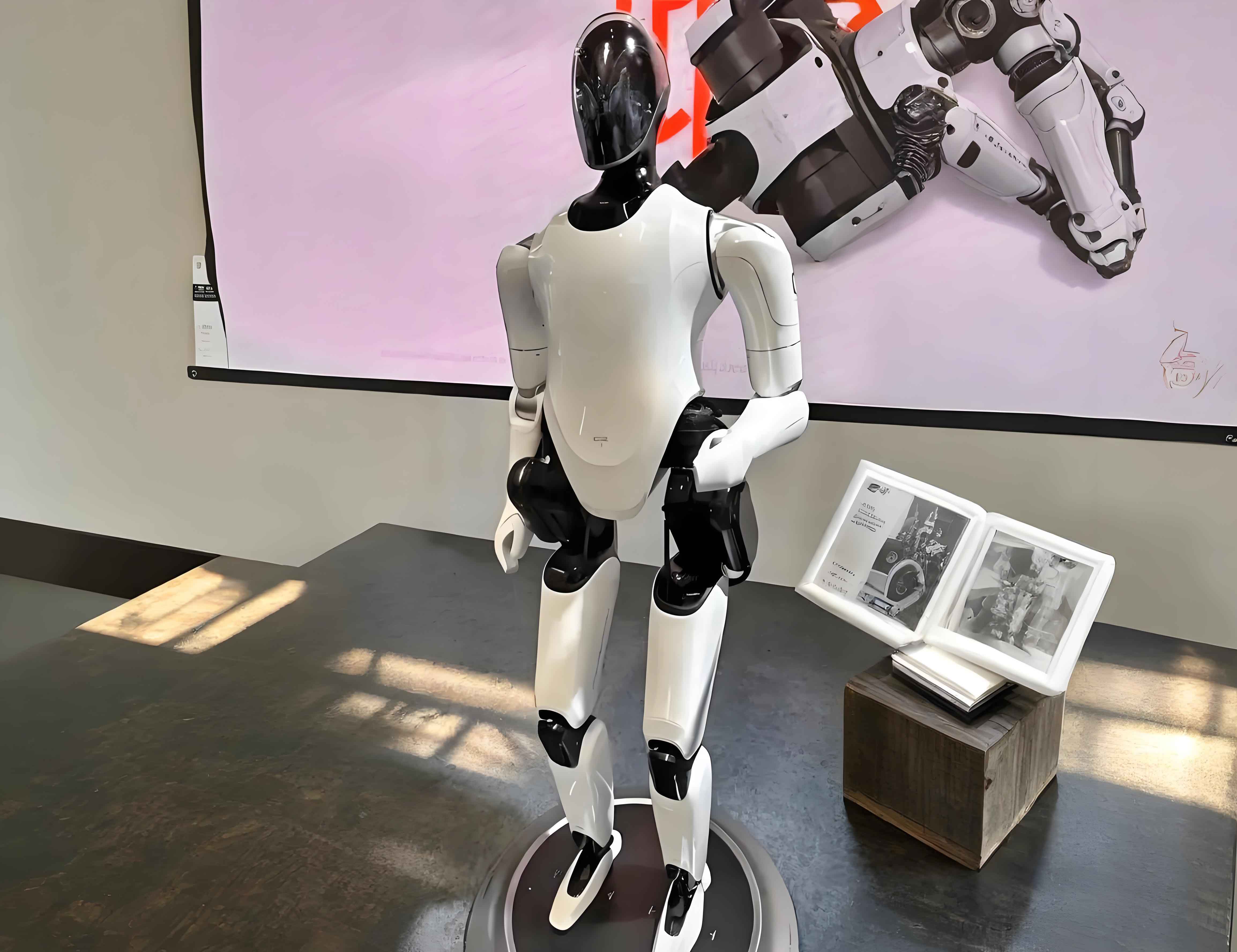
1.3 Research, Education, and Incubation Infrastructure
Key universities like Yunnan University and Kunming University of Science and Technology have established programs in automation, computer science, and mechanical engineering, forming the primary talent pipeline. Provincial-level key laboratories focusing on intelligent systems and artificial intelligence provide platforms for fundamental research. Furthermore, technology transfer centers and high-tech industrial parks, such as the Kunming National Hi-Tech Industrial Development Zone, offer crucial incubation and commercialization platforms for transforming academic research into market-ready embodied AI robot products.
2. The Technical Framework of Embodied AI Robots
Understanding the development path requires a grasp of the core technical stack that constitutes an embodied AI robot. It is a synergistic integration of perception, cognition, and action, often described by a cyclic paradigm: Sense -> Plan -> Act -> Learn.
2.1 The Perception Module: Sensing the World
An embodied AI robot interacts with the physical world through a suite of sensors. The raw data from these sensors is fused and processed to create a coherent representation of the environment. This can be modeled as a perception function $P$ that maps sensor inputs $S_t$ at time $t$ to an internal state representation $\mathbf{o}_t$.
$$ \mathbf{o}_t = P(S_t), \quad \text{where } S_t = \{s^1_t, s^2_t, …, s^n_t\} $$
Here, $s^i_t$ represents data from the i-th sensor (e.g., LiDAR point cloud, camera image, IMU data, tactile sensor reading).
2.2 The Cognition and Planning Module: The “Brain”
This module processes the perceived state $\mathbf{o}_t$ and often a goal $G$ to generate a plan or a direct action policy. With the advent of large language models (LLMs) and vision-language models (VLMs), the cognitive layer is undergoing a revolution. An LLM/VLM can act as a high-level task planner, converting natural language instructions into a sequence of actionable sub-goals. The planning can be hierarchical:
- Task Planning: “Go to the warehouse and pick up package A.” -> [Navigate to Warehouse, Locate Package A, Grasp Package A].
- Motion Planning: For “Navigate to Warehouse,” a path planner computes a collision-free trajectory $\tau$ from the robot’s current pose $\mathbf{x}_t$ to the target pose $\mathbf{x}_{goal}$.
A fundamental cognitive challenge is learning robust control policies. Reinforcement Learning (RL) is a key paradigm where the embodied AI robot learns through trial and error. The goal is to learn a policy $\pi(\mathbf{a}_t | \mathbf{o}_t)$ that maximizes the expected cumulative reward $R$:
$$ \pi^* = \arg\max_{\pi} \mathbb{E}_{\pi}\left[ \sum_{t=0}^{T} \gamma^t r(\mathbf{o}_t, \mathbf{a}_t) \right] $$
where $r(\mathbf{o}_t, \mathbf{a}_t)$ is the reward received for taking action $\mathbf{a}_t$ in state $\mathbf{o}_t$, and $\gamma$ is a discount factor.
2.3 The Action Module: Physical Interaction
The final component is the actuation system that executes planned actions. This involves low-level control laws to ensure precise and stable movement. For a robotic manipulator, this might involve calculating the joint torques $\boldsymbol{\tau}$ using a control law like computed-torque control:
$$ \boldsymbol{\tau} = \mathbf{M}(\mathbf{q})\ddot{\mathbf{q}}_d + \mathbf{C}(\mathbf{q}, \dot{\mathbf{q}})\dot{\mathbf{q}} + \mathbf{g}(\mathbf{q}) + \mathbf{K}_p(\mathbf{q}_d – \mathbf{q}) + \mathbf{K}_d(\dot{\mathbf{q}}_d – \dot{\mathbf{q}}) $$
where $\mathbf{q}$ is the joint position, $\mathbf{M}$ is the inertia matrix, $\mathbf{C}$ accounts for Coriolis and centrifugal forces, $\mathbf{g}$ is gravity, and $\mathbf{K}_p$, $\mathbf{K}_d$ are gain matrices tracking the desired trajectory $(\mathbf{q}_d, \dot{\mathbf{q}}_d, \ddot{\mathbf{q}}_d)$.
The following table summarizes the core modules and their key technologies in an embodied AI robot:
| Module | Primary Function | Key Technologies & Components |
|---|---|---|
| Perception | Sense and understand the environment | Cameras (RGB, Depth), LiDAR, Radar, IMU, Tactile Sensors, Sensor Fusion Algorithms, SLAM (Simultaneous Localization and Mapping) |
| Cognition & Planning | Reason, make decisions, and generate plans | Large Language Models (LLMs), Vision-Language Models (VLMs), Task & Motion Planning (TAMP) Algorithms, Reinforcement Learning, Knowledge Representation |
| Action & Control | Execute physical actions safely and precisely | Actuators (Motors, Hydraulics), Robotic Manipulators, Legged/Wheeled Platforms, Control Theory (PID, MPC), Dynamics Simulation |
| Learning Core | Adapt and improve from interaction | Embodied AI-specific ML Frameworks (e.g., Isaac Sim), Simulation-to-Real (Sim2Real) Transfer, Continual/Lifelong Learning |
3. Strategic Opportunities and Multifaceted Challenges
3.1 Opportunities for Yunnan’s Embodied AI Industry
The alignment of provincial, national, and technological trends creates a unique window of opportunity.
- Strong Policy Tailwinds: National emphasis on “new nationwide system” for tech breakthroughs and provincial digital economy strategies provide a cohesive directive and potential resource allocation for focused embodied AI robot development.
- First-Mover Advantage in Niche Applications: Rather than competing in generic industrial robotics, Yunnan can pioneer specialized embodied AI robots for its unique sectors: agro-robotics for terrace farming, forestry monitoring drones, or eco-tourism companions. This specialization can become a competitive export.
- Gateway for International Collaboration: Yunnan’s position as a bridge to Southeast Asia allows it to become a testbed and export hub for embodied AI robot solutions tailored to the developing needs of neighboring markets, such as smart agriculture and logistics.
- Cross-Domain Technology Fusion: The development of embodied AI will naturally drive and benefit from advancements in local IoT networks, 5G/6G connectivity, and edge computing, creating a synergistic tech ecosystem.
3.2 Critical Challenges to Address
The path forward is also strewn with significant hurdles that require strategic mitigation.
| Challenge Category | Specific Manifestations in Yunnan’s Context |
|---|---|
| Fragmented Industrial Layout | Lack of a concentrated industrial cluster for robotics. Supply chain for key components (e.g., high-precision actuators, specialized sensors) is underdeveloped or non-local, leading to high costs and long lead times for prototyping and manufacturing embodied AI robots. |
| Limits in Interdisciplinary Synergy | Deep technical silos between university departments (CS, Mechanical Eng, Electronics) and between academia and industry. A true embodied AI robot project requires seamless collaboration from day one, which existing institutional structures and evaluation metrics often discourage. |
| Suboptimal Innovation Resource Allocation | R&D funding, high-end computational resources (GPU clusters for training), and specialist talent are scattered. Without a coordinated “innovation consortium,” efforts are duplicated, and critical mass for breakthrough projects is hard to achieve. |
| Absence of Standards and Evaluation Benchmarks | No clear regional or application-specific standards for safety, performance, or interoperability of embodied AI robots (e.g., for agricultural robots operating near humans). Lack of standardized testing fields or evaluation protocols makes it difficult to objectively compare solutions and assure quality for end-users. |
| Talent Drain and Specialization Gap | Difficulty in attracting and retaining top-tier researchers and engineers in robotics, AI, and mechatronics. Existing educational programs may not offer the deeply integrated curriculum required for embodied AI robot development. |
4. Proposed Development Path and Strategic Countermeasures
To harness the opportunities and navigate the challenges, Yunnan must adopt a systematic, multi-pronged strategy focused on creating a distinctive and sustainable ecosystem for embodied AI.
4.1 Precise and Focused Industrial Positioning
Yunnan should not attempt to replicate the general-purpose robotics hubs of coastal regions. Instead, it must strategically position itself as a leader in application-specific embodied intelligence.
- Develop a Master Strategic Plan: Formulate a 10-year “Yunnan Embodied AI Initiative” with clear technological roadmaps, milestone targets, and designated lead agencies. This plan should identify 2-3 “champion domains” (e.g., Precision Agro-Robotics, Ecological Guardian Systems, Smart Hospitality Assistants).
- Establish a Flagship “Living Lab” Campus: Create a large-scale, integrated R&D and demonstration zone—a “Yunnan Embodied AI Valley.” This campus should co-locate research labs from universities, R&D centers of partnering companies, shared manufacturing workshops for prototyping, and, crucially, real-world testing fields (e.g., a model farm, a forest plot, a mock hotel). This physically consolidates the fragmented ecosystem.
- Invest in Niche Core Technologies: While leveraging global advances in AI software, focus provincial R&D grants on hardware and integration challenges pertinent to Yunnan’s champion domains. Examples include developing robust locomotion systems for uneven terrains, low-power sensory systems for long-duration environmental monitoring, or novel grippers for handling delicate agricultural produce.
4.2 Deepening Interdisciplinary Collaboration through Institutional Innovation
Breaking down silos is paramount.
- Create Mandatory Cross-Disciplinary Project Units: Universities should establish dedicated “Embodied AI” degree programs and research centers where faculty and students from computer science, mechanical engineering, electrical engineering, and even design are jointly appointed and evaluated based on collaborative output.
- Implement “Industry-On-Campus” Models: Attract companies to embed their R&D teams within university labs. Conversely, create faculty and student “sabbatical” programs within local companies working on embodied AI robot applications. Shared IP agreements and clear commercialization pathways are essential to incentivize this.
- Launch Grand Challenge Competitions: The provincial government should fund annual, well-prized challenges with clear, difficult objectives (e.g., “Autonomous Tea Leaf Picking Robot Challenge,” “Cross-Terrain Forest Fire Scout Robot Challenge”). These competitions force teams to form across disciplines and drive focused innovation.
4.3 Optimizing and Pooling Innovation Resources
Efficiency and scale in resource utilization must be forced.
- Form an Embodied AI Innovation Consortium: Establish a legal entity comprising key universities, leading provincial tech companies, and representatives from target industry sectors (agriculture, tourism, forestry). This consortium should centrally manage access to:
- A shared high-performance computing cluster for training large AI/robotics models.
- A library of standardized, re-usable hardware modules (e.g., robot chassis, arm designs).
- A pooled fund for high-risk, high-reward foundational research.
- Build Strategic External Linkages: The consortium should formally partner with top-tier national robotics institutes and global tech leaders. The goal is not just knowledge transfer but co-development of solutions for Yunnan’s unique scenarios, bringing external resources and credibility into the local ecosystem.
- Create a Specialized Talent Program: Beyond general talent policies, launch a “Yunnan Embodied AI Fellows” program offering premium packages to attract world-class principal investigators (PIs) and their teams. Coupled with a “homegrown” scholarship program for top students to pursue integrated PhDs in the field, this builds a sustainable talent pipeline.
4.4 Establishing Standards, Benchmarks, and Trust
To build market confidence and ensure safe integration, standardization is key.
- Co-Develop Application-Specific Standards: The Innovation Consortium should work with national standards bodies to draft and promote standards for embodied AI robots in Yunnan’s priority domains. For instance, a “Standard for Safety and Performance of Autonomous Agricultural Robots in Mountainous Terrains.”
- Implement a Provincial Certification and Testing Regime: Establish an accredited testing center within the “Living Lab” campus. This center would:
- Develop rigorous benchmark tests (e.g., navigation through a standardized rocky path, object manipulation under variable lighting).
- Offer certification for robots that meet safety, performance, and interoperability standards, providing a trusted seal of approval for buyers and regulators.
- Promote Ethical and Transparent AI Guidelines: Proactively develop and publish guidelines for the ethical deployment of embodied AI robots, addressing data privacy, human-robot interaction safety, and algorithmic fairness. This builds public trust and positions Yunnan as a responsible innovator.
The following matrix synthesizes the key challenges with the proposed strategic countermeasures:
| Key Challenge | Proposed Strategic Countermeasure | Expected Outcome |
|---|---|---|
| Fragmented Industrial Layout | Creation of a centralized “Yunnan Embodied AI Valley” Living Lab Campus. | Physical clustering of talent, resources, and testing; accelerated prototyping and collaboration. |
| Interdisciplinary Silos | Mandatory cross-disciplinary academic units and Industry-On-Campus models. | Holistic education; faster translation of research into functional embodied AI robot prototypes. |
| Dispersed Innovation Resources | Formation of a governing Innovation Consortium to pool HPC, funding, and modular designs. | Efficient use of capital, avoidance of duplication, enabling of larger-scale projects. |
| Lack of Standards & Benchmarks | Development of application-specific standards and an accredited testing/certification center. | Increased market confidence, product reliability, and smoother regulatory integration. |
| Talent Gap | “Yunnan Embodied AI Fellows” program and integrated PhD scholarships. | Influx of top-tier researchers and development of a sustainable local talent base. |
5. Conclusion: Towards a Distinctive and Sustainable Ecosystem
The development of an embodied AI robot industry in Yunnan is not merely about adopting a new technology; it is a strategic imperative for shaping the province’s future economic structure and competitive edge. The convergence of supportive policies, unique and demanding application scenarios, and a foundational academic base provides a solid launching pad. However, the inherent complexities of embodied AI—requiring deep integration of hardware, software, and environmental intelligence—mean that success cannot be achieved through fragmented, incremental efforts.
The proposed path emphasizes strategic focus over broad imitation, forced collaboration over voluntary silos, and systemic ecosystem building over isolated project funding. By positioning itself as a global leader in niche, real-world applications like intelligent agricultural systems and ecological monitoring, Yunnan can carve out a distinctive and valuable position in the global embodied AI landscape. This requires bold institutional innovation, such as the creation of integrated living labs and governing consortia, and a commitment to building the trust infrastructure of standards and certifications.
Ultimately, the goal is to transition Yunnan from being a consumer of generic robotic technologies to a co-creator and exporter of specialized embodied AI robot solutions that are born from and tailored to its unique environmental and economic fabric. This journey will fuel not just technological advancement but also drive sustainable economic growth, enhance environmental stewardship, and improve the quality of life, positioning Yunnan as a model of innovation-driven, high-quality development at the frontier of physical AI.