
A powerful synergy between cutting-edge academic research and dynamic national competitions is propelling China to the forefront of global robotics and artificial intelligence (AI) development. Recent achievements in prestigious tournaments and continuous innovation in core image-processing algorithms underscore a robust ecosystem dedicated to advancing the capabilities of China robot technologies. This dual-track progress, blending theoretical breakthroughs with practical, competitive application, highlights a strategic national commitment to leadership in intelligent automation and industrial innovation.
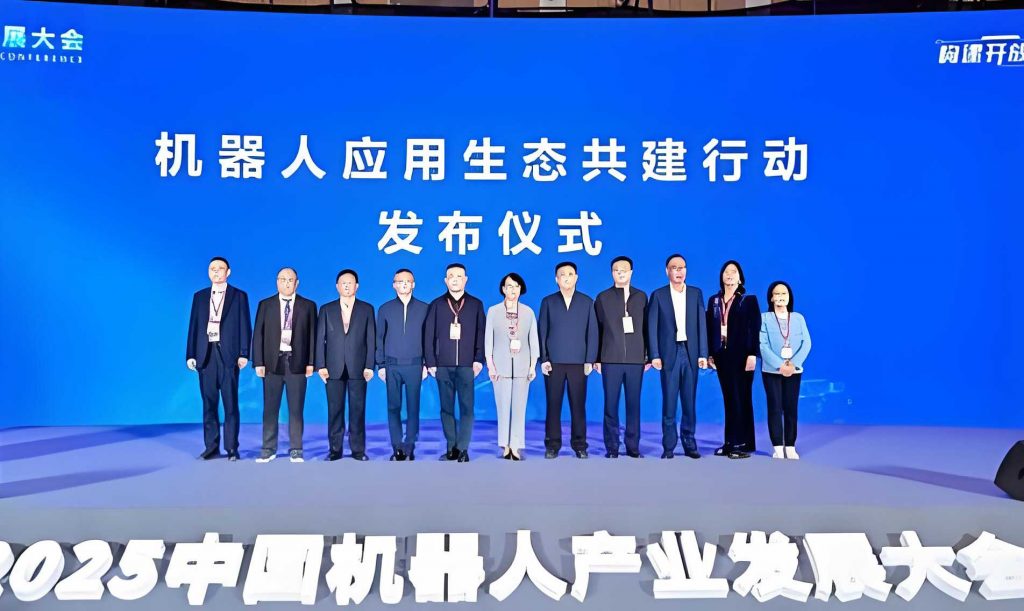
The image of diverse, advanced robotic systems in development perfectly encapsulates the vibrant activity within the China robot sector. These platforms serve as the ultimate testbed for the algorithms and intelligent systems being refined in university laboratories and proven in national arenas. The progress witnessed today is not accidental; it is the result of systematic investment in research infrastructure and talent cultivation, creating a pipeline that transforms academic concepts into world-class robotic competencies.
At the heart of this progress are the national platforms that challenge and showcase emerging talent. Competitions like the China Robot and Artificial Intelligence Competition have become critical crucibles for innovation, driving students and researchers to solve complex, real-world problems. The success of teams from institutions across China in these events provides tangible evidence of the country’s growing technical prowess. Simultaneously, in research laboratories, scientists are tackling fundamental challenges that limit robotic perception and functionality, such as enhancing machine vision in difficult industrial environments. The interplay between solving practical competition challenges and advancing core algorithmic research creates a virtuous cycle, accelerating the overall development of the China robot industry.
1. Demonstrating Excellence: China Robot Competitions as a National Benchmark
National robotics competitions in China have evolved into significant barometers of technical skill and innovative thinking. These events gather the brightest young minds from technical universities across the country, tasking them with designing, building, and programming robots to perform specific, often complex, tasks. The environment is intensely competitive, mirroring the fast-paced challenges of real-world technological development. Success in these forums requires more than textbook knowledge; it demands creativity, teamwork, and the ability to implement robust solutions under pressure. The consistent high-level performance from Chinese teams indicates a deep and widening pool of engineering talent dedicated to the future of robotics.
The scale and prestige of these competitions continue to grow, attracting thousands of participants and covering a broad spectrum of robotics sub-fields, from autonomous vehicles and humanoid robots to AI-driven decision-making algorithms. This diversity ensures that the China robot ecosystem is developing holistically, not just in niche areas. The competitions are closely watched by industry leaders and academic institutions, often serving as recruitment grounds for top talent. Furthermore, the challenges posed are increasingly aligned with national strategic priorities, such as advanced manufacturing, logistics automation, and smart city infrastructure, ensuring that student work has direct relevance to the broader goals of the China robot initiative.
2. Core Research Driving China Robot Capabilities Forward
While competitions showcase applied skill, foundational research provides the essential tools that make advanced China robot applications possible. A critical area of this research is machine vision, particularly for robots deployed in unpredictable industrial settings. For instance, a significant challenge in manufacturing is the automated inspection of component surfaces. These images are often plagued by low contrast, blurry details, and significant noise from the production environment, making defect detection difficult for both human inspectors and automated systems.
Recent academic work addresses this directly. Researchers have proposed novel hybrid methods to enhance the quality of such inspection images. The process typically involves multiple stages: First, combined median filtering and wavelet threshold techniques are employed to remove mixed noise—a common issue in factory settings. Next, advanced deblurring networks, such as DeBlurGAN V2, are used to clarify image details obscured by motion or focus issues. Finally, to make defects stand out for reliable automated detection, researchers construct enhanced contrast algorithms. These often merge optimized versions of established techniques like Unsharp Masking (USM) and Adaptive Contrast Enhancement (ACE) into a unified adaptive framework, referred to in some studies as UACE.
The results of applying such algorithms are measurable and significant. Key image quality metrics, including Peak Signal-to-Noise Ratio (PSNR), contrast, and information entropy, show marked improvement. This proves the algorithms can effectively suppress noise while simultaneously enhancing the visual salience of defects. For a China robot tasked with quality control on a fast-moving production line, this improvement in visual perception is crucial. It translates directly to higher accuracy, fewer false rejects, and increased overall efficiency in automated inspection systems, strengthening the case for robot deployment in precision manufacturing.
3. A Case Study in Success: Hebei University of Water Resources and Electric Engineering
The tangible outcomes of China’s focus on robotics are vividly illustrated by the achievements of its students. A prime example is the recent performance by a team from Hebei University of Water Resources and Electric Engineering at a major national finals event. Competing against top talent from across the country, the team demonstrated exceptional skill and preparation, earning a suite of awards that highlights their comprehensive capabilities.
The competition, known for its challenging and diverse categories, tests every aspect of a team’s robotic and AI knowledge. The students from Hebei excelled, securing a first-place national award, a second-place award, and a third-place award. This impressive haul across multiple categories underscores not just a single point of strength, but a broad and deep understanding of China robot design and programming principles. Their success is a direct testament to the quality of practical engineering education and hands-on project experience available at Chinese technical universities.
Behind every successful student team is dedicated faculty guidance. The team was coached by a group of professors from the university’s Department of Mechanical Engineering, who provided the necessary technical direction, resources, and mentorship. The team was led by the department’s vice director, indicating the institutional priority placed on such competitive, skill-building endeavors. This model—combining student enthusiasm and ingenuity with expert academic supervision—is a replicable and powerful formula for developing the next generation of China robot innovators.
4. The Symbiotic Relationship: How Research and Competition Fuel Each Other
The advancement of China robot technology is not a linear path but a reinforcing cycle. Academic research, such as the work on advanced image denoising and enhancement, provides the new tools and algorithms that student competitors can integrate into their designs. A robot with superior vision algorithms, inspired by the latest research, will have a distinct advantage in a competition requiring object identification, navigation in cluttered spaces, or precise manipulation.
Conversely, the pressures and unique challenges of national competitions feed directly back into the academic research agenda. When students encounter a persistent problem—such as a vision system failing under specific lighting conditions or a control algorithm that is not robust enough—it identifies a real-world gap in current technology. These practical, hands-on problems become the catalyst for new research questions in laboratories. Professors and graduate students are inspired to develop more adaptive noise filters, more efficient path-planning algorithms, or more resilient robotic actuators based on the obstacles faced in competitive arenas.
This symbiotic relationship accelerates progress. Theoretical breakthroughs are stress-tested in the demanding environment of a competition, proving their real-world viability. Simultaneously, the frontiers of competition are constantly pushed forward by the integration of ever-more sophisticated research. This dynamic ensures that the China robot field remains both fundamentally sound and fiercely practical, avoiding the trap of purely theoretical exploration or incremental engineering alone.
5. Future Trajectories and National Impact
The consistent success in competitions and the steady flow of research publications indicate a bright and ambitious future for China robot development. The focus is likely to intensify on areas where AI and robotics intersect most profoundly: autonomous learning, human-robot collaboration, and operation in fully unstructured environments. The next generation of competitions will undoubtedly feature challenges centered on these themes, pushing students to implement state-of-the-art machine learning models on robotic platforms.
The national impact of this focused development is multifold. Economically, a leading position in robotics translates to increased automation, higher productivity in key industries like electronics and automotive manufacturing, and the creation of a high-tech export sector centered on intelligent machines. From a educational and talent perspective, the “competition culture” creates a motivated and highly skilled workforce, ready to contribute to domestic companies and research institutes. This talent pipeline is perhaps the most critical long-term asset for sustaining leadership in the global China robot landscape.
Furthermore, the technologies refined for industrial and competitive robots have extensive spillover effects. The same computer vision algorithms that inspect commutator surfaces can be adapted for medical imaging analysis or satellite photo interpretation. The robust control systems that guide a competition robot through an obstacle course can inform the development of autonomous agricultural equipment or disaster-response robots. Thus, investment in the core fields of China robot and AI research yields dividends across a wide spectrum of scientific and commercial endeavors.
In conclusion, the narrative of China robot advancement is being written simultaneously in academic journals and on competition floors. The recent accolades won by students from Hebei University of Water Resources and Electric Engineering are not an isolated incident but a visible highlight of a much broader, deeply rooted national endeavor. Coupled with persistent research into fundamental enabling technologies like intelligent machine vision, these achievements paint a picture of a country systematically building its competencies. The synergy between solving immediate, practical challenges in competitions and pursuing longer-term, foundational research breakthroughs creates a powerful engine for innovation. As this cycle continues, the world can expect the scope, sophistication, and global influence of China robot technologies to expand significantly in the years ahead.