
In a pivotal discussion at the 2017 China International Robot Industry Development Summit Forum held in Shanghai on July 5, industry pioneers dissected the explosive growth and common misunderstandings surrounding the China robot sector. The forum, organized by the China Machinery Industry Federation and the China Robot Industry Alliance, featured a dedicated dialogue session with top executives and researchers, including Qu Daokui, Chairman of the China Robot Industry Alliance and President of Shenyang Siasun Robot & Automation Co., Ltd.; Xu Lijin, Chairman and General Manager of Effort Intelligent Equipment Co., Ltd.; and Song Jiqiang, Dean of Intel China Research Institute. Their insights revealed critical nuances often overlooked in the booming narrative of the China robot market.
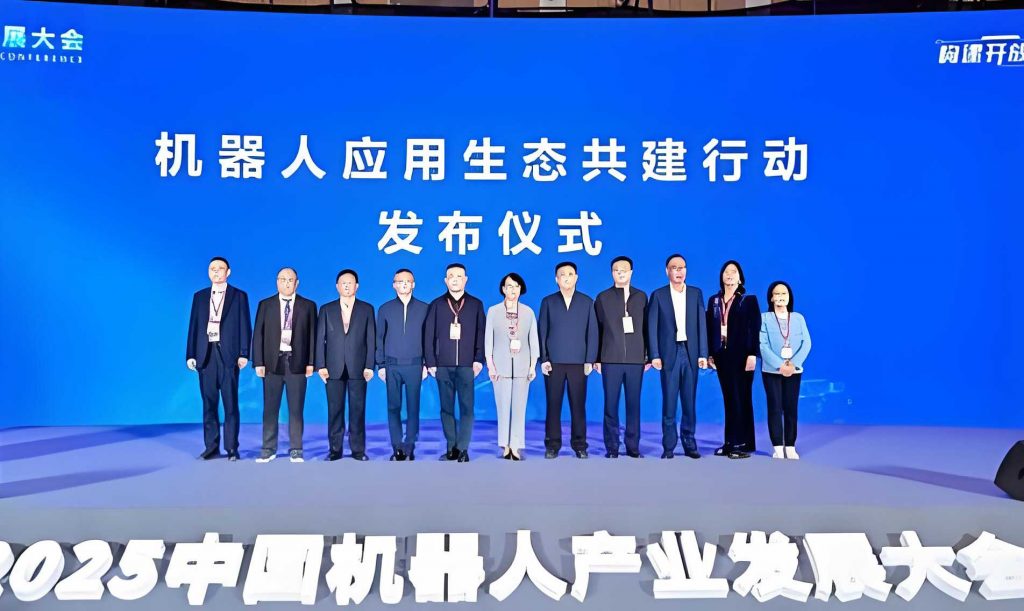
The China robot industry has been experiencing a remarkable surge, attracting global attention. According to the latest statistical data, in 2016, the total consumption of industrial robots in the China robot market reached 88,992 units, a significant increase of 26.6% compared to 2015. Within this, domestic China robot manufacturers sold 29,144 units, reflecting a robust growth of 30.9%. This rapid expansion has led to a flood of entrants into the field, with reports indicating that the number of companies associated with robotics in China grew by nearly 3,000 over just five years. However, Qu Daokui cautioned that such figures can be misleading, pointing out two fundamental misconceptions about the China robot industry.
1. Misconception One: Clarifying the Definition of Robots Versus Automation Equipment
Qu Daokui emphasized that there is widespread confusion in defining what constitutes a robot. Under traditional concepts, a robot is often considered a reprogrammable, multi-degree-of-freedom device. However, he noted that the latest definitions have evolved. Automation equipment, according to Qu, is characterized by operating in structured environments, following pre-set programs to ensure stable and efficient performance. The primary focus for automation is on metrics like efficiency, reliability, and scalable production capacity. Any device falling into this category should be classified as automation equipment.
In contrast, a true robot, as per contemporary definitions, operates in semi-structured or variable-structured environments. It possesses a certain level of perception systems and can demonstrate autonomous or semi-autonomous adaptation to both the environment and tasks. This distinction is crucial for understanding the technological sophistication of the China robot industry. Qu argued that many devices currently labeled as robots in the market actually belong to the automation category when assessed against these updated criteria. This misclassification inflates the perceived advancement of the China robot sector and skews strategic planning and policy support.
The evolution of robot definitions reflects broader global trends in robotics and artificial intelligence. For the China robot market, accurate classification is essential to foster genuine innovation rather than mere automation upgrades. As the China robot industry matures, stakeholders must adopt precise terminology to guide investment, research, and development efforts. This clarity will help in benchmarking the China robot ecosystem against international standards and identifying areas where true robotic intelligence is being developed.
2. Misconception Two: The Actual Number of Genuine China Robot Enterprises
The second misconception highlighted by Qu Daokui pertains to the inflated count of China robot enterprises. Media reports often cite around 3,000 companies in the China robot sphere, but Qu clarified that this number predominantly includes firms involved in the broader robot supply chain rather than dedicated robot manufacturers. He analogized this to the automotive industry: only companies that produce complete vehicles are termed automobile manufacturers; tire makers or component suppliers are not considered car companies. Similarly, in the China robot context, many entities are engaged in robot applications, integration, or零部件 production.
“In reality, among these 3,000-plus enterprises, about 80% are involved in robot applications, and a significant portion focuses on robot components—all are part of the robot industry chain. However, this conflation in content misleads relevant authorities into believing that the China robot sector is exceptionally hot, with thousands of companies emerging overnight,” Qu explained. He stressed the need for clearer categorization: distinguishing between robot enterprises and robot-related application firms. True China robot enterprises are those with autonomous technology, independent design and R&D capabilities, substantial output scale, market share, and brand influence. According to Qu, such companies in China likely number only around a dozen. Therefore, the core of the China robot industry is much smaller than commonly perceived, with most players being供应链 partners rather than primary robot developers.
This distinction has significant implications for policy-making and market analysis. By recognizing the true scale of dedicated China robot manufacturers, stakeholders can better allocate resources to support innovation and competitiveness. The China robot industry’s growth should be measured not just by the proliferation of associated businesses but by the depth of technological prowess within a select group of leading firms. This perspective encourages a more nuanced understanding of the China robot landscape, focusing on quality over quantity.
The following table summarizes key data from the China robot market in 2016, illustrating the growth dynamics:
| Category | 2016 Volume (Units) | Growth Rate vs. 2015 |
|---|---|---|
| Total Industrial Robot Consumption in China Robot Market | 88,992 | 26.6% |
| Domestic China Robot Sales | 29,144 | 30.9% |
This data underscores the rapid expansion of the China robot market, driven by both domestic and international demand. However, as Qu Daokui’s insights reveal, the underlying structure of the China robot industry requires careful examination to avoid misinterpretation.
3. Analogies and Strategies: Insights from Industry Practitioners
Adding to the discourse, Xu Lijin of Effort Intelligent Equipment drew a compelling parallel between the current state of the China robot industry and the automotive sector in 2001. He noted that similar to how the automotive industry experienced a sudden boom in 2001, the China robot market is now witnessing an explosive growth phase. While the robot industry has been growing steadily in previous years, 2017 marked a significant acceleration, signaling a爆发 period for the China robot ecosystem.
In such a dynamic environment, Xu outlined three critical elements for companies to seize market opportunities and drive sales in the China robot sector:
- Economic Viability: Many enterprises adopt robots to reduce production costs. Therefore, China robot providers must ensure their products deliver tangible economic benefits, creating real value for customers through cost savings and efficiency gains.
- Technical Superiority: Products in the China robot industry should exhibit high technical performance, meeting diverse customer needs and adapting to specific industrial processes. Usability and reliability are key to making robots “easy to use” in various applications.
- Human Talent: The availability of skilled personnel for robot manufacturing, operation, and maintenance is crucial. Investing in talent development can accelerate the adoption and effectiveness of China robot solutions.
These factors collectively influence how quickly the China robot market can evolve and expand. Xu emphasized that addressing these areas is essential for sustaining the growth momentum of the China robot industry.
4. Effort’s Approach: Application-Driven Growth in the China Robot Market
Sharing his company’s experience, Xu Lijin detailed how Effort has built its core competitiveness within the China robot landscape. The strategy revolves around leveraging application demands to boost robot sales, which in turn drives the development of key components and suppliers. Initially focused on the automotive sector, Effort faced intense competition from foreign brands, making market penetration challenging. Consequently, the company shifted its attention to China’s vast general manufacturing industries, where opportunities for the China robot industry are abundant.
Xu highlighted that sectors such as textiles (clothing), food and beverage, furniture, home appliances, ceramics, automotive, and consumer electronics like smartphones are all experiencing rising demand for robotics. “In these areas, the China robot market is vast, and compared to international players, we are on similar starting points or even ahead in some applications,” he said. By targeting industry-specific applications, Effort tailors solutions to meet client requirements, then replicates successful models across other sectors to scale up sales. This approach not only increases the adoption of China robot technologies but also stimulates the entire supply chain, from components to integration services.
This application-driven model is particularly relevant for the China robot industry, as it aligns with the diverse needs of local manufacturers. By focusing on practical use cases, China robot companies can demonstrate immediate value, fostering trust and expanding their market footprint. Xu’s insights underscore the importance of adaptability and customer-centric innovation in the competitive China robot arena.
5. Broader Context and Future Outlook for the China Robot Industry
The discussions at the forum reflect a maturation phase in the China robot industry, where stakeholders are moving beyond hype to address foundational issues. The misconceptions identified by Qu Daokui highlight the need for clearer standards and definitions to guide the China robot sector. As global robotics trends advance, with increasing integration of AI, IoT, and感知 technologies, the China robot market must prioritize genuine innovation over mere automation replication.
Government policies in China have been supportive of the robot industry, with initiatives like “Made in China 2025” emphasizing智能制造 and robotics. However, as the experts noted, effective implementation requires an accurate understanding of the China robot ecosystem. By distinguishing true robot enterprises from supply chain players, policymakers can design targeted incentives to bolster R&D and core technology development in the China robot field.
Looking ahead, the China robot industry is poised for continued growth, but challenges remain. These include enhancing the technical capabilities of domestic China robot manufacturers, reducing reliance on imported关键 components, and cultivating a skilled workforce. The analogy to the automotive industry suggests that the China robot market may undergo consolidation, with stronger players emerging as leaders. Collaboration between industry, academia, and government will be vital to overcoming these hurdles and ensuring the sustainable development of the China robot sector.
In conclusion, the 2017 forum served as a platform for candid reflections on the state of the China robot industry. By debunking myths and sharing strategic insights, leaders like Qu Daokui and Xu Lijin provided a clearer picture of the opportunities and realities in the China robot landscape. As the China robot market evolves, stakeholders must embrace precision in definitions, focus on core technological advancements, and leverage application-driven strategies to harness the full potential of robotics in China’s industrial transformation. The journey of the China robot industry is just beginning, and with informed approaches, it can achieve global competitiveness and innovation leadership.
The ongoing evolution of the China robot industry will likely see increased integration with emerging technologies such as artificial intelligence and big data analytics, further blurring the lines between traditional automation and intelligent robotics. This convergence presents both opportunities and challenges for the China robot market, necessitating continuous dialogue and adaptation among all participants. As the world watches the rise of the China robot sector, the insights from this forum underscore the importance of clarity, strategy, and collaboration in shaping a future where China robot solutions drive global industrial progress.