
As an industry expert with over 15 years in automation and motion control, I have observed the transformative impact of robotics on global manufacturing. The advent of collaborative robots, or cobots, has democratized automation, making it accessible to businesses of all sizes. In this context, the rise of China robots is reshaping production environments, driving efficiency, and fostering innovation. This article delves into the growth, technological advancements, and applications of collaborative robotics, with a focus on the expanding role of China robots in the global landscape. Through data analysis, formulas, and tables, I will explore how these robots are paving the way for a more automated future.
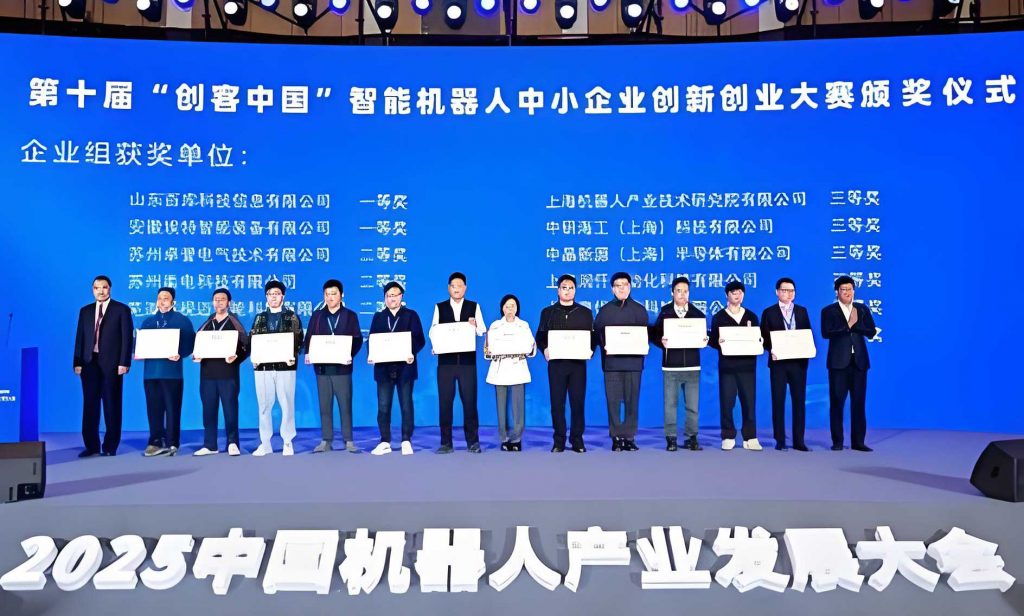
The image above captures the dynamic integration of China robots into modern industrial settings, symbolizing their growing prevalence and versatility. These robots are not just tools; they are partners in innovation, enabling seamless human-robot collaboration. The journey of China robots began with the need to address labor shortages, improve productivity, and enhance safety in manufacturing. Today, they represent a cornerstone of Industry 4.0, with applications spanning from electronics to pharmaceuticals. The market for China robots has seen exponential growth, fueled by technological breakthroughs and increasing demand for flexible automation solutions.
To understand the market trajectory, let’s examine global and regional sales data. The following table summarizes the projected growth of collaborative robots, highlighting the significant contribution of China robots to this expansion.
| Year | Global Cobot Sales (Units in Thousands) | Market Value (USD Billion) | Estimated Share of China Robots (%) |
|---|---|---|---|
| 2020 | 44 | 1.5 | 30 |
| 2025 | 150 | 5.0 | 40 |
| 2030 | 300 | 12.0 | 50 |
This growth can be modeled using an exponential function, where the market value $M(t)$ at time $t$ is given by: $$ M(t) = M_0 \cdot e^{gt} $$ Here, $M_0$ is the initial market value, and $g$ is the annual growth rate. For China robots, the growth rate is exceptionally high, estimated at $g_{China} = 0.28$ (28% per year), compared to the global average of $g_{global} = 0.22$. This disparity underscores the rapid adoption of China robots in diverse sectors, driven by local manufacturing needs and government initiatives like “Made in China 2025.”
Innovation in collaborative robotics extends beyond hardware to encompass comprehensive ecosystems. Platforms similar to UR+ provide certified components and application kits that enable plug-and-play automation, reducing deployment time and complexity. These ecosystems are crucial for enhancing the functionality of China robots, allowing them to perform tasks such as welding, polishing, and quality inspection with minimal setup. The table below outlines key application kits and their benefits, emphasizing how China robots leverage these solutions for competitive advantage.
| Application Kit | Core Components | Primary Industries | Performance Improvement (%) | Relevance to China Robots |
|---|---|---|---|---|
| Welding Kit | Torch, controller, software interface | Automotive, metal fabrication | 30-40 cost reduction | High demand in Chinese automotive supply chains |
| Polishing & Grinding Kit | Force sensor, adaptive tool changer | Electronics, aerospace | 50 faster programming | Used in Chinese electronics manufacturing for precision tasks |
| Assembly Kit | Grippers, vision systems, feeders | 3C, medical devices | 25 increase in throughput | Critical for high-mix production in China |
| Quality Inspection Kit | Cameras, AI algorithms, sensors | Pharmaceuticals, cosmetics | 20 reduction in defects | Ensures compliance in regulated Chinese industries |
| Material Handling Kit | Conveyors, palletizers, EOAT | Logistics, food & beverage | 35 efficiency gain | Supports e-commerce and distribution hubs in China |
The integration of these kits empowers China robots to tackle complex industrial tasks, with efficiency gains quantified by the formula: $$ \Delta E = \frac{T_{manual} – T_{cobot}}{T_{manual}} \times 100\% $$ where $T_{manual}$ is the time for manual operation, and $T_{cobot}$ is the time with a collaborative robot. In practice, China robots often achieve $\Delta E > 40\%$, making them invaluable for small and medium enterprises (SMEs) seeking automation.
Software is the backbone of modern robotics, and its role cannot be overstated. With advancements in artificial intelligence (AI) and machine learning, China robots are evolving into intelligent systems capable of self-optimization. Recent software upgrades, such as Polyscope 5.6, introduce features like G-code support, which simplifies programming by leveraging existing CAD/CAM tools. This reduces the learning curve and accelerates deployment. The programming efficiency can be expressed as: $$ P_e = \frac{C_{base}}{C_{new}} $$ where $C_{base}$ is the baseline complexity, and $C_{new}$ is the complexity with new software. For China robots, $P_e$ often exceeds 2.0, meaning tasks are completed in half the time. Moreover, software-defined capabilities enable predictive maintenance, modeled by the failure rate function: $$ \lambda(t) = \lambda_0 \cdot e^{-\beta t} $$ where $\lambda(t)$ is the failure rate at time $t$, $\lambda_0$ is the initial rate, and $\beta$ is the improvement factor from data analytics. This enhances the reliability of China robots, minimizing downtime in critical applications.
The return on investment (ROI) is a key metric for adopting China robots. The standard ROI formula is: $$ ROI = \frac{\text{Net Benefits} – \text{Total Cost}}{\text{Total Cost}} \times 100\% $$ Net benefits include labor savings, increased output, and quality improvements. For many Chinese manufacturers, the total cost encompasses robot procurement, integration, and training. Based on industry data, China robots typically achieve ROI within 6 to 18 months, as shown in the table below, which compares ROI across different sectors in China.
| Industry in China | Average Initial Cost (USD Thousands) | Annual Net Benefits (USD Thousands) | ROI Period (Months) | Key Drivers for China Robots |
|---|---|---|---|---|
| Automotive Components | 50 | 40 | 15 | Labor cost reduction, precision assembly |
| Electronics Assembly | 30 | 35 | 10 | High-volume production, flexibility |
| Pharmaceutical Packaging | 40 | 30 | 16 | Regulatory compliance, sterile environments |
| Chemical Processing | 60 | 50 | 14 | Safety, consistency in mixing |
| Food Packaging | 25 | 20 | 15 | Hygiene, speed adaptability |
This data illustrates how China robots deliver tangible economic benefits, reinforcing their adoption across industries. Additionally, the flexibility of China robots can be quantified by the task versatility index: $$ V = \frac{N_{tasks}}{T_{change}} $$ where $N_{tasks}$ is the number of distinct tasks performed, and $T_{change}$ is the average time to reconfigure. Higher $V$ values indicate greater adaptability, a hallmark of China robots in dynamic production environments.
Beyond traditional sectors, China robots are making inroads into emerging fields. In healthcare, they assist with sterile processing and surgical tool handling, while in agriculture, they enable precision farming. The potential is vast, driven by continuous innovation. The following table highlights the expansion of China robots into non-traditional industries, showcasing their versatility.
| Emerging Industry | Applications of China Robots | Growth Potential in China (%) | Technological Enablers |
|---|---|---|---|
| Healthcare & Medical Devices | Sterile assembly, lab automation, rehabilitation | 30 | AI vision, force sensing |
| Agriculture & Food Production | Harvesting, sorting, packaging | 25 | IoT sensors, autonomous navigation |
| Renewable Energy | Solar panel installation, maintenance | 20 | Mobile platforms, adaptive control |
| Education & Research | Training simulators, experimental setups | 15 | Open-source software, modular design |
| Retail & Services | Inventory management, customer assistance | 18 | Natural language processing, mobility |
The adoption of China robots in these areas is accelerated by supportive policies and investments in R&D. For instance, national strategies promote robotics education, fostering a talent pool that drives innovation. The learning curve for operating China robots can be modeled with the function: $$ L(t) = L_{max} \left(1 – e^{-kt}\right) $$ where $L(t)$ is the proficiency level at time $t$, $L_{max}$ is the maximum proficiency, and $k$ is the learning rate. Empirical studies show that for China robots, $k$ is high due to intuitive interfaces, enabling rapid skill acquisition among workers.
Looking ahead, the convergence of IoT, big data, and AI will further enhance the capabilities of China robots. Predictive analytics, for example, can optimize production schedules using algorithms like: $$ \text{Optimization Score} = \sum_{i=1}^{n} w_i \cdot f_i(x) $$ where $w_i$ are weights for factors such as throughput and energy efficiency, and $f_i(x)$ are performance functions. China robots will leverage such models to achieve autonomous decision-making, reducing human intervention. Moreover, swarm robotics, where multiple China robots collaborate, can be analyzed using coordination metrics: $$ C = \frac{1}{N} \sum_{j=1}^{N} \frac{S_{sync}}{S_{total}} $$ where $N$ is the number of robots, $S_{sync}$ is synchronized operation time, and $S_{total}$ is total operation time. Higher $C$ values indicate better collaboration, a trend gaining traction in Chinese smart factories.
In conclusion, the era of collaborative robotics is defined by the proliferation of China robots, which are setting new standards for automation. Through innovative ecosystems, software-driven intelligence, and broad industry applications, these robots are not only solving immediate challenges but also unlocking future possibilities. As technology evolves, China robots will continue to be at the forefront, transforming manufacturing and beyond. Their impact is quantifiable through metrics like ROI and efficiency gains, yet their true value lies in enabling a more agile, sustainable, and human-centric industrial landscape. The journey of China robots is just beginning, and their potential remains limitless, driven by a commitment to innovation and excellence in automation.