
The global manufacturing landscape is undergoing a profound transformation driven by automation, and at the forefront of this shift is the rapid ascent of the China robot industry. With rising labor costs and a strategic push towards advanced manufacturing, Chinese enterprises are increasingly investing in robotic automation, propelling the nation to become the world’s largest market for industrial robots. This report delves into the current state of industrial robot development in China, examining the policy ecosystem, profiling leading domestic enterprises, and conducting a detailed analysis of their patent portfolios to reveal the technological strengths and strategic directions shaping the future of the China robot sphere.
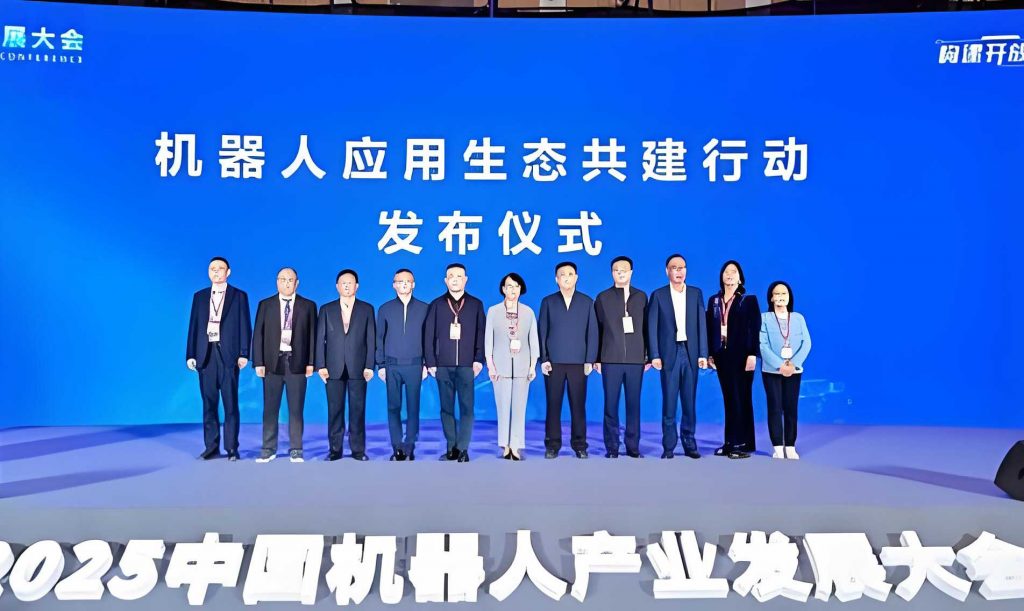
The growth trajectory of the China robot market has been nothing short of spectacular. Since 2009, the market has consistently expanded at an average annual rate exceeding 40%, with China now accounting for approximately one-fifth of the global industrial robot market share. Domestic capabilities have matured significantly; core technologies in robot design, manufacturing, control systems, and trajectory planning are now largely mastered. China has successfully developed and deployed robots for painting, arc welding, spot welding, assembly, and material handling, with over 130 painting robot units operating across more than 30 automated production lines. This evolution underscores the dynamic progress within the China robot ecosystem, transitioning from initial research and development phases to widespread practical application and now entering a critical phase of industrial upgrading and global competitiveness.
1. Policy Framework: Catalyzing the China Robot Industry Ascent
The development of the China robot industry has been meticulously guided and accelerated by a series of national and regional policy initiatives. Government support has been a cornerstone, providing both strategic direction and financial impetus for research, development, and industrialization. The journey of the China robot sector can be segmented into distinct decades: the initial scientific攻关 stage (1985-1995), a period of slower development (1995-2005), an explosive growth phase (2005-2015), and the current era of industrial leapfrogging (2015-2025). The following table encapsulates key national policies that have been instrumental in shaping the China robot landscape, fostering innovation, and building a robust domestic supply chain.
| Timeframe | Policy/Initiative | Core Content | Issuing Authority |
|---|---|---|---|
| 2012 | 12th Five-Year Plan for S&T Development in Intelligent Manufacturing | Aimed to攻克 common technologies for industrial robot本体, precision reducers, servo drives & motors, controllers, and other core components. Focused on independent R&D and industrialization of engineering-grade products. | Ministry of Science and Technology |
| 2012 | 12th Five-Year Plan for National Strategic Emerging Industries | Prioritized support for key technology development, industrialization, and application demonstrations of industrial robots. Targeted a domestic market share of 50% for intelligent manufacturing equipment. | State Council |
| 2012 | List of 2012 Intelligent Manufacturing Equipment Projects for Financial Support | Provided fiscal support for 64 projects, including 22 related to industrial robots or flexible automation workshops. | Ministry of Finance |
| 2013 | Guidance on Promoting the Development of the Industrial Robot Industry | Set goals for 2020: forming a relatively complete industrial system, cultivating 3-5 internationally competitive leaders and 8-10 supporting industrial clusters. Targeted a robot density of over 100. | Ministry of Industry and Information Technology (MIIT) |
| 2015 | Made in China 2025 | Emphasized R&D of new products for industrial and service robots across various sectors. Highlighted the need to break bottlenecks in core components like reducers, servo motors, controllers, and system integration. | State Council |
| 2015 | 13th Five-Year Plan for China’s Robot Industry | Outlined key development directions: strengthening basic research,提升产业化能力 for own-brand robots and key parts, promoting application demonstrations, and establishing testing/standardization systems. | MIIT |
| 2016 | Robot Industry Development Plan (2016-2020) | Set concrete targets: annual output of 100,000 own-brand industrial robots, including 50,000 six-axis and above models; core component localization rate of 50%; robot density of at least 150. | MIIT |
This coherent policy framework has been vital for the China robot industry, providing clear targets, reducing investment uncertainty, and directing resources towards critical technological frontiers. The focus on core component localization is particularly significant for the long-term health and independence of the China robot supply chain.
2. Landscape of Leading Enterprises in the China Robot Arena
The China robot market is characterized by a vibrant and competitive landscape of domestic enterprises, each carving its niche through independent R&D, strategic collaborations, and mergers and acquisitions. Currently, there are over 200 entities engaged in robot R&D and application engineering in China, with about 75 focusing specifically on industrial robots. These players have collectively developed and produced over 3,000 industrial robot units, more than 90% of which are deployed in production. The following table provides an overview of some of the most prominent leaders in the China robot field, detailing their supply chain strategies and competitive advantages.
| Enterprise Name | Supply Chain & Collaboration Profile | Competitive Advantages |
|---|---|---|
| Siasun (新松) | Develops controllers independently; strategic partnership with Siemens China for digital factories; cooperation with Shuanghuan Transmission. | Affiliated with Chinese Academy of Sciences; comprehensive product line; regarded as a domestic龙头. |
| Estun (埃斯顿) | Almost entirely localized production except for purchased RV reducers (from Japan’s Nabtesco). | Pioneer in自主技术和核心零部件; key domestic player. |
| Huazhong CNC (华中数控) | Possesses core technologies for drives, motors, controllers; cooperates with Qinchuan Machine Tool for reducers; acquired Jiangsu Jinming for system integration. | Strong in自主研发核心零部件; expanded into integration via acquisition. |
| EFORT (埃夫特) | Procures RV reducers from Nantong Zhenkang and Japanese suppliers; 30% of controllers from joint venture with Googol; introduced international manufacturing/assembly工艺. | Strength in large-scale产业化应用; moving towards advanced R&D and manufacturing. |
| Guangzhou CNC (广州数控) | One of the few domestic firms mastering全套工业机器人本体制造技术. | Expertise in自主研发核心零部件 for robot bodies. |
| STEP (新时达) | Technical cooperation with B&R acquired Triowin. | Strong in自主研发核心零部件; provides flexible robot production lines for automotive sector. |
| Inovance (汇川) | Invested in Teda Robot; cooperates with Shandong Orian Electric on inverters and other technologies. | Core competency in伺服系统, control systems, industrial vision systems. |
| Googol (固高) | Independent R&D in PC-based open/embedded/networked motion controllers and programmable automation controllers. | Technologically领先 in domestic servo and control systems. |
The strategic approaches of these China robot leaders vary. Companies like Estun, Huazhong CNC, and STEP demonstrate strong overall R&D capabilities across robot本体, components, and integration. Siasun and EFORT concentrate more on robot本体 and system integration. Guangzhou CNC focuses on本体 and components, while Inovance and Googol specialize primarily in critical components like control and drive systems. Collaboration is a hallmark: STEP maintains自主知识产权 but acquired Triowin and cooperates with B&R Siasun has close technical ties with the Chinese Academy of Sciences; Estun collaborates with Southeast University; Huazhong CNC works with various universities and holds multiple subsidiaries; Inovance partners with Hangzhou Huikun and Suzhou Molicontrol; Googol collaborates with EFORT on controller technology. This interconnected ecosystem is driving innovation across the entire China robot value chain.
3. Patent Landscape Analysis: Measuring Innovation in the China Robot Domain
Patent activity serves as a crucial indicator of technological innovation and strategic positioning. An analysis of the patent portfolios of the eight leading China robot enterprises, covering domains such as the overall robot system, mechanical本体, control systems, and drive systems, reveals insightful trends regarding their R&D focus, growth trajectories, and global ambitions.
3.1. Patent Application Volume: Siasun and Estun Lead the Pack
The distribution of patent applications highlights the varying levels of technological accumulation among these China robot firms. The data clearly shows that Siasun and Estun possess significant patent portfolios within China, with Siasun holding a particularly commanding lead. Notably, only a few of these China robot companies have begun to secure intellectual property rights overseas, indicating the early stage of their global patent strategies.
| Patentee (China Robot Enterprise) | Domestic Applications (Count) | Overseas Applications (Count) |
|---|---|---|
| Siasun | 290 | 7 |
| Estun | 141 | 6 |
| Huazhong CNC | 73 | 0 |
| EFORT | 51 | 0 |
| Guangzhou CNC | 48 | 0 |
| STEP | 36 | 0 |
| Inovance | 34 | 0 |
| Googol | 20 | 0 |
This table underscores the current concentration of patent assets within the domestic market for the China robot industry. The overseas applications from Siasun and Estun are primarily targeted at the United States, while EFORT’s international filings extend to jurisdictions like Japan, the United States, and India.
3.2. Application Trends: A Surge Post-2012
The timeline of patent filings by these leading China robot entities reveals a distinct growth pattern. Significant patenting activity began around 2003 but remained at a relatively modest level until 2011. A dramatic surge occurred in 2012, with annual applications peaking at around 130 filings. This spike aligns closely with the introduction of major national policies like the “12th Five-Year Plan” initiatives, highlighting the direct impact of government support on innovation output in the China robot sector. While application volumes have fluctuated since then, they have remained at elevated levels compared to the pre-2012 era. The apparent drop for 2017 is attributable to the latency in patent publication and does not reflect the actual filing activity for that year.
Examining individual trends, Siasun commenced its China robot related patenting as early as 2003, maintaining consistent yearly filings and reaching a peak of 77 applications in 2012. Estun also started early (2004) and has sustained a steady stream of patents since 2008. Other players like Huazhong CNC, EFORT, Guangzhou CNC, STEP, Inovance, and Googol entered the China robot R&D arena and began patenting somewhat later, with their significant activity clusters in the post-2010 period, demonstrating the broadening base of innovation within the China robot ecosystem.
3.3. Technological Focus Areas: Control Systems and Mechanical Design Dominate
An analysis of the technological categories covered by these patents provides a window into the core R&D priorities of the China robot industry. The bulk of patent布局 is concentrated in a few critical areas:
- Control Systems: This represents the largest share, encompassing innovations in controllers, drivers, safety systems, communication interfaces, and teaching pendants.
- Mechanical本体: A significant focus area, primarily involving patents for mechanical arms, end-effectors, and manipulator structures.
- Drive Systems & Actuators: Key technologies for robot movement and precision.
- Design Patents: Covering the external appearance and form factors of robots.
Among the enterprises, Siasun and Estun stand out for having the most comprehensive technological coverage, with substantial patent portfolios in both control systems and mechanical本体. Estun and Huazhong CNC show strong focus on drive and control systems. EFORT and Guangzhou CNC concentrate their efforts on control systems and integration technologies. STEP, Inovance, and Googol primarily channel their innovation into control system technologies. This distribution indicates that while the China robot industry is making strides across the board, control technology remains the central battleground for innovation, with only a few players achieving breadth across multiple technical domains.
4. Conclusions and Strategic Imperatives for the China Robot Industry
The China robot industry has unequivocally entered its industrial leapfrog stage, marked by explosive growth in patent filings since 2012 and the maturation of a diverse set of domestic players. Even later entrants have accumulated substantial technological knowledge and are actively building their patent portfolios. The coordinated policy support, vibrant enterprise ecosystem, and rising innovation output paint a picture of a dynamic and rapidly advancing sector. However, despite these achievements, the China robot industry continues to face significant challenges that must be addressed to bridge the gap with international leaders and ensure sustainable, high-quality growth.
The primary challenges confronting the China robot sector are threefold. First, the product portfolio of domestic China robot manufacturers is still skewed towards the lower end of the market, with a heavy emphasis on material handling and loading/unloading robots. There is a pronounced lack of high-end, sophisticated robotic solutions, leading to continued heavy reliance on imports for advanced applications and limiting market penetration for domestic brands. Second, while the number of industrial robot manufacturers in China is large, and many have bolstered their IP through collaborations with academia or acquisitions, the patent储备 in fundamental and bottleneck technologies—specifically high-precision reducers, high-performance servo motors, and advanced controllers—remains relatively weak. This core technology gap undermines the competitiveness and profitability of the China robot industry. Third, despite being domestic leaders with sizable patent portfolios, companies like Siasun and Estun have minimal overseas patent布局. This deficiency poses a significant risk for global expansion, as it leaves them vulnerable to intellectual property disputes and limits their ability to compete freely in international markets.
To overcome these hurdles and solidify its position, the China robot industry must adopt a multi-pronged strategic approach. Continuous monitoring of global technological advancements in robotics is essential. Enterprises should deepen and actively seek collaborative R&D ventures with universities and research institutions to accelerate breakthrough innovations. Regarding intellectual property strategy, a nuanced approach is required: for areas where foreign competitors have dense patent coverage, Chinese firms should develop and patent外围 technologies to create design-around opportunities; for emerging or空白点 technologies, they should intensify R&D efforts to achieve first-mover advantage through rapid and strategic patent filing. Ultimately, enhancing indigenous innovation capability across the entire value chain, from core components to integrated systems, is the paramount imperative for the sustainable development and global success of the China robot industry. The journey from a volume leader to a technology and quality leader is the next critical phase for robots made in China.