
A launch conference for the Hefei Embodied Intelligence and 5G-A Large Uplink Fusion Demonstration Site and the Anhui Telecom Embodied Intelligence Dedicated Product Launch Conference was held in Hefei Yaohai District at China Net Valley. The event brought together Leju Robotics, Anhui Telecom, and Huawei to release “Embodied Wing Link,” described as China’s first 5G-A dedicated package for embodied intelligence. The same event marked the landing of the industry’s first 5G-A embodied humanoid robot park group inspection application demonstration. Together, the moves were designed to connect a complete chain: network capability, terminal intelligence, and scenario deployment.
- A Dedicated 5G-A Package for Embodied Intelligence Operations
The release centers on a dedicated 5G-A package and SIM card solution for embodied intelligence robots. The product, “Embodied Wing Link,” is positioned to meet the specific demands of embodied intelligence systems, including a high uplink ratio, low latency, and multi-robot concurrency. According to the release, the package provides a peak uplink of 500 Mbps, keeps latency below 20 milliseconds for 95 percent of the time, and offers priority scheduling guarantees for services. In practical terms, this creates a dedicated VIP guaranteed channel for robots. For embodied intelligence, such a channel is not simply a connectivity upgrade; it is a foundation for real-time perception, decision-making, and action.
Embodied intelligence requires more than computation inside a robot. It requires continuous exchange between the robot, the network, and the cloud or edge platform. A humanoid robot must send video, sensor, and telemetry data upward while receiving control commands, model updates, and coordination instructions downward. When many robots operate in the same environment, the network must handle concurrent traffic without allowing one robot’s data flow to disrupt another’s. The Embodied Wing Link package addresses this need by combining large uplink capacity, low latency, and service prioritization. These features are directly relevant to embodied intelligence because they support the fast loop between seeing, transmitting, processing, and acting.
The release of this package also signals that a domestic operator has formally entered the embodied intelligence new infrastructure space. That entry matters because embodied intelligence is moving from laboratory demonstrations toward scaled real-world application. For years, humanoid robots and other embodied intelligence platforms have been tested in controlled settings. The next phase requires reliable, high-performance, and manageable connectivity that can support fleets rather than single units. The 5G-A package is therefore not only a product announcement; it is an infrastructure signal. It indicates that embodied intelligence is being treated as a category that needs dedicated network design, dedicated service guarantees, and dedicated operational support.
| Item | Specification | Embodied Intelligence Relevance |
|---|---|---|
| Product | Embodied Wing Link | Dedicated 5G-A package and SIM card solution for embodied intelligence robots |
| Peak uplink | 500 Mbps | Supports high-volume embodied intelligence data such as video and sensor streams |
| Latency | 95 percent below 20 milliseconds | Enables responsive control and timely coordination for embodied intelligence systems |
| Scheduling | Priority service scheduling | Protects embodied intelligence traffic during multi-robot concurrent operations |
| Partners | Leju Robotics, Anhui Telecom, Huawei | Joint effort to connect network capability, terminal intelligence, and scenario deployment |
- The Event Positioned Embodied Intelligence as a New Infrastructure Priority
The conference placed embodied intelligence at the center of a broader convergence between 5G-A and artificial intelligence. The release stated that embodied intelligence and humanoid robots, as representatives of new quality productive forces, are accelerating. At the same time, 5G-A and other next-generation communication technologies are empowering artificial intelligence, and artificial intelligence is in turn reshaping communication demand. This two-way relationship is especially visible in embodied intelligence, where the robot must perceive, reason, and act in physical space. Unlike purely digital artificial intelligence, embodied intelligence depends on the quality of the connection between the digital and physical worlds.
Urban governance, park operations and maintenance, and digital industries are three areas named in the release as being reshaped by this convergence. In urban governance, embodied intelligence could support inspection, monitoring, and response tasks that require mobility and real-time data. In park operations and maintenance, embodied intelligence could help manage facilities, detect anomalies, and coordinate routine checks. In digital industries, embodied intelligence could become part of a larger automation and data ecosystem. These scenarios share a common requirement: the network must support reliable, low-latency, high-uplink communication so that embodied intelligence systems can operate continuously and safely.
The phrase “new infrastructure” is important for embodied intelligence. Infrastructure is not limited to roads, power, and buildings. In an intelligent economy, infrastructure includes the connectivity, computing, and data systems that allow machines to function at scale. Embodied intelligence cannot become a scaled industry if every robot operates as an isolated device. It needs shared network resources, service-level guarantees, and standardized data pathways. The launch in Hefei therefore represents a step toward treating embodied intelligence as a foundational layer of future infrastructure rather than a collection of standalone machines.
- Group Inspection Demonstration Puts Embodied Intelligence to Work
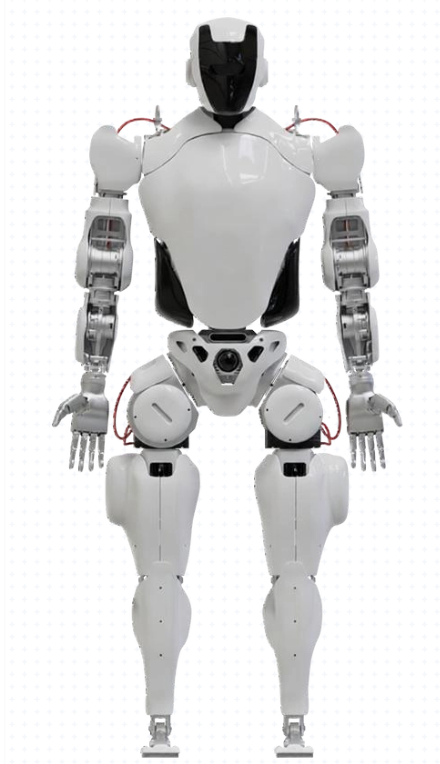
The same event featured the first 5G-A embodied humanoid robot park group inspection application demonstration. In the demonstration zone, multiple Kuafu robots conducted parallel inspection across 8 main routes. This was not a single-robot exercise. It was a group operation in which embodied intelligence systems worked simultaneously in a shared environment. The release stated that even in complex environments, the robots could see clearly, transmit quickly, and move accurately. Those three capabilities are tightly linked to the 5G-A large uplink, low latency, and high reliability described in the package.
For embodied intelligence, group inspection is a meaningful test because it combines mobility, perception, communication, and coordination. A robot must understand its route, avoid obstacles, identify relevant objects or conditions, and send data back to the platform. When multiple robots operate at once, the network must handle many streams of data without severe congestion. The demonstration showed that 5G-A can provide the connectivity base for this kind of embodied intelligence operation. The use of 8 main routes also suggests a structured deployment rather than an ad hoc trial. It points toward repeatable, route-based inspection tasks that can be monitored and managed at the fleet level.
The participation of humanoid robots adds another layer of complexity. Humanoid platforms are often designed to move in environments built for people. They may need to climb stairs, pass through narrow spaces, and interact with objects or panels. These actions require timely perception and control. If the network is slow or unstable, the robot may hesitate or fail. The demonstration’s focus on complex environments is therefore significant for embodied intelligence. It indicates that the communication system is being tested under conditions closer to real operations, not only in simplified laboratory settings.
- Data Return and Model Iteration Strengthen the Embodied Intelligence Loop
The release describes a complete closed loop: inspection operations, real-scene data acquisition, and data return training. High-value data generated by robot operations is transmitted in real time to the Leju data acquisition platform. After cleaning and annotation, that data feeds back into model iteration. This loop is central to the development of embodied intelligence. A robot that only performs a task without returning data remains a tool. A robot that returns data, improves its models, and then applies those improved models to future tasks becomes part of an evolving embodied intelligence system.
Data quality is especially important for embodied intelligence. Real-world inspection data includes visual scenes, motion patterns, environmental variations, and rare events. These are difficult to reproduce fully in simulation. When embodied intelligence systems encounter real scenes, they generate valuable examples that can improve perception, planning, and control. The release’s mention of cleaning and annotation shows that the process is not simply raw data collection. It is a structured pipeline designed to turn operational data into training value. That pipeline supports model iteration and makes each inspection cycle part of a larger learning process.
The closed loop also has implications for scalability. If every robot deployment can contribute to a shared data platform, then the rate of improvement can increase as more embodied intelligence units enter service. This is one reason why network capability matters. High uplink speeds and low latency allow data to move quickly from the robot to the platform. Priority scheduling helps ensure that this data flow is not delayed by other traffic. In this way, the 5G-A package supports not only real-time robot control but also the longer-term improvement of embodied intelligence models.
- From Single-Robot Intelligence to Fleet-Scale Embodied Intelligence
The shift from single-unit intelligence to group operations is a key theme in the release. A single robot can demonstrate embodied intelligence in a controlled setting. A fleet of robots must coordinate, share resources, and operate under a common network and management framework. The demonstration of multiple Kuafu robots on 8 main routes illustrates this shift. It suggests that embodied intelligence is moving toward fleet-scale deployment, where multiple machines perform tasks in parallel and report data to a central platform.
Fleet-scale embodied intelligence places new demands on communication. The network must support multi-machine concurrency, which means many robots may need to send and receive data at the same time. Without sufficient uplink capacity, video or sensor data may be delayed or dropped. Without low latency, control commands may arrive too late. Without priority scheduling, critical embodied intelligence traffic may compete with less urgent data. The Embodied Wing Link package is designed around these needs. It treats embodied intelligence traffic as a class that requires guaranteed performance rather than best-effort connectivity.
This fleet model also changes the economics and operation of embodied intelligence. Instead of managing individual robots as isolated assets, operators can manage a group as a system. Inspection routes can be assigned, data can be aggregated, and model updates can be distributed. The robot becomes part of a networked embodied intelligence platform. The network is no longer a background utility; it is an active component of the system. That is why the launch of a dedicated 5G-A package and SIM card for embodied intelligence is significant. It provides a standardized connectivity layer for fleet operations.
- Network Capability Becomes a Foundation for Embodied Intelligence Deployment
5G-A, also known as 5G-Advanced, is positioned in the release as a key support for embodied intelligence advancement. The package’s peak uplink of 500 Mbps is designed for high uplink占比 scenarios, though the practical meaning is that robots can send large amounts of data upward. For embodied intelligence, uplink is often as important as downlink because robots collect rich sensory information. Cameras, lidar, and other sensors can generate substantial data. If that data cannot move quickly to a processing platform, the value of embodied intelligence is reduced.
Low latency is equally critical. The release states that 95 percent of latency is below 20 milliseconds. For embodied intelligence, this matters because action and perception are closely coupled. A robot that sees an obstacle must process that information and respond within a suitable time window. If the network introduces delay, the response may be too late. The combination of high uplink and low latency creates a more responsive embodied intelligence loop. It supports tasks that require timely awareness and action, including inspection, navigation, and coordination.
High reliability and priority scheduling complete the picture. In a park inspection scenario, multiple robots may operate near people, vehicles, or equipment. The network must be dependable. Priority scheduling helps ensure that embodied intelligence traffic receives the resources it needs, even when other services are active. This is especially important for multi-robot concurrency. The release describes this as a VIP guaranteed channel, which is a useful way to understand the service level. For embodied intelligence, such a channel is a practical requirement for real-world deployment.
- Implications for Urban Governance, Park Operations, and Digital Industries
The release names urban governance, park operations and maintenance, and digital industries as areas being reshaped by embodied intelligence and 5G-A. In urban governance, embodied intelligence could support routine inspection and data collection across public spaces. Robots can move through environments and observe conditions that fixed sensors might miss. With 5G-A connectivity, the data can be returned in real time, allowing managers to respond more quickly. This does not replace human decision-making, but it can extend the reach and frequency of monitoring.
In park operations, embodied intelligence can support inspection of facilities, pathways, and equipment. A park or industrial zone may have many assets distributed across a large area. Human inspection can be time-consuming and may not cover every route frequently. A fleet of embodied intelligence robots can follow planned routes, capture data, and report anomalies. The demonstration on 8 main routes is an example of this approach. It shows how embodied intelligence can be integrated into routine operations rather than limited to special events.
In digital industries, embodied intelligence may become part of a broader data-driven production and service environment. Robots can collect operational data, interact with digital systems, and support automation. The closed data loop described in the release is particularly relevant here. Data from embodied intelligence operations can be cleaned, annotated, and used to improve models. Those improved models can then be deployed back to robots, creating a cycle of continuous enhancement. This cycle depends on strong connectivity, reliable data platforms, and clear operational scenarios. The Hefei release brings these elements together in a single demonstration.
- Key Facts About the Embodied Intelligence Release
| Category | Detail |
|---|---|
| Event | Hefei Embodied Intelligence and 5G-A Large Uplink Fusion Demonstration Site and Anhui Telecom Embodied Intelligence Dedicated Product Launch Conference |
| Date | September 10 |
| Location | Hefei Yaohai District, China Net Valley |
| Partners | Leju Robotics, Anhui Telecom, Huawei |
| Product | Embodied Wing Link, described as China’s first 5G-A dedicated package for embodied intelligence |
| Network features | Peak uplink 500 Mbps, 95 percent latency below 20 milliseconds, priority service scheduling |
| Application demonstration | Industry’s first 5G-A embodied humanoid robot park group inspection application demonstration |
| Robots and routes | Multiple Kuafu robots conducting parallel inspection on 8 main routes in the demonstration zone |
| Data loop | Inspection operations, real-scene data acquisition, data return training; data sent to Leju data acquisition platform for cleaning, annotation, and model iteration |
| Strategic meaning | Domestic operator formally enters embodied intelligence new infrastructure; humanoid robots move toward scaled real-world application |
- What the Embodied Intelligence Demonstration Means for Humanoid Robotics
For humanoid robotics, the Hefei demonstration is important because it links the robot platform to a dedicated network service. Humanoid robots are often judged by their mechanical capabilities, such as walking, balancing, and manipulating objects. However, in real operations, the network can determine whether those capabilities are usable at scale. An embodied intelligence robot that can walk but cannot transmit data reliably is limited in value. An embodied intelligence robot that can walk, see, transmit, and receive updates as part of a managed fleet is far more useful in industrial and public scenarios.
The release’s emphasis on group inspection also shows that humanoid robotics is being tested in team-based tasks. A single humanoid robot can be a demonstration. Multiple humanoid robots working in parallel represent an operational system. They require route planning, task allocation, data management, and network coordination. The 5G-A package is part of that system. It provides the communication foundation that allows the robots to act as a group rather than as independent machines. This is a meaningful step for embodied intelligence because it moves the discussion from individual capability to system capability.
The data loop further strengthens the connection between humanoid robotics and embodied intelligence. Each inspection operation can produce data that improves future performance. The robot is not only executing a task; it is also contributing to the training and refinement of embodied intelligence models. Over time, this can lead to better perception, more robust navigation, and more accurate inspection. The network ensures that the data can return quickly enough to be useful. In this sense, the demonstration is not only about connectivity. It is about creating a cycle of operation, learning, and improvement for embodied intelligence.
- Looking Ahead: Scaling Embodied Intelligence Beyond the Demonstration
The release describes the demonstration as a step toward scaled real-world application. Scaling embodied intelligence will require more than a single package or a single demonstration. It will require repeatable deployment models, clear service guarantees, and data pipelines that can handle many robots across many sites. The Hefei event provides an early example of how these elements can be combined. It brings together a robot company, a telecom operator, and a technology provider. It connects network capability, terminal intelligence, and scenario deployment. It also shows how embodied intelligence can be applied to a concrete task: park group inspection.
For operators, embodied intelligence represents a new class of customer and a new type of network demand. Robots are not smartphones. Their traffic patterns, latency needs, and mobility requirements are different. They may need high uplink for video and sensor data, low latency for control, and priority scheduling for safety-related tasks. The Embodied Wing Link package is designed around these differences. It suggests that future networks may need to offer specialized services for embodied intelligence, just as they offer different services for consumers, enterprises, and industrial systems.
For robot developers, the availability of dedicated connectivity can simplify system design. If the network can provide reliable uplink, low latency, and priority scheduling, developers can focus more on embodied intelligence algorithms, perception, and control. They can rely on the network to handle a larger share of the data transport challenge. This division of labor can accelerate innovation. It can also make it easier to deploy embodied intelligence across different environments because the connectivity layer is more predictable.
For cities and parks, embodied intelligence offers a way to expand inspection and monitoring without building every capability into fixed infrastructure. Robots can move to where data is needed. They can cover routes, observe conditions, and report back. The 5G-A network supports this mobility by maintaining connectivity as robots move. The use of 8 main routes in the demonstration suggests a structured approach that can be replicated or adapted. If the model proves effective, it could be extended to other routes, other parks, and other tasks. That is how embodied intelligence moves from a demonstration to an operational layer.
- Conclusion: Embodied Intelligence Moves Toward Real-World Scale
The release of China’s first dedicated SIM card and 5G-A package for embodied intelligence robots in Hefei marks a notable moment for the field. The Embodied Wing Link package provides peak uplink of 500 Mbps, keeps latency below 20 milliseconds for 95 percent of the time, and offers priority scheduling guarantees. These features are directly aligned with the needs of embodied intelligence: high uplink, low latency, and multi-robot concurrency. The simultaneous demonstration of multiple Kuafu robots conducting parallel inspection on 8 main routes shows how these capabilities can be applied in a real park environment.
The event also highlights the importance of the complete chain from network capability to terminal intelligence to scenario deployment. Embodied intelligence cannot scale on robot hardware alone. It needs connectivity, data infrastructure, and operational scenarios that generate value. The closed loop of inspection operations, real-scene data acquisition, and data return training connects the field to the model. It allows embodied intelligence systems to learn from real operations and improve over time. This loop is a key part of the transition from single-robot intelligence to fleet-scale embodied intelligence.
As embodied intelligence continues to develop, dedicated network services are likely to become more common. The Hefei launch provides an early example of how telecom operators, robot companies, and technology providers can work together. It shows that embodied intelligence is being treated as a serious infrastructure category. It also shows that humanoid robots are moving from isolated demonstrations toward coordinated, real-world applications. The combination of 5G-A large uplink, low latency, and priority scheduling gives embodied intelligence a stronger foundation for scale. The release therefore represents more than a product launch. It represents a step toward a future in which embodied intelligence operates as part of everyday industrial and urban systems.