
The trajectory of China’s industrial robotics sector serves as a critical barometer for its advanced manufacturing capabilities. After navigating a period of adjustment, the China robot market demonstrated remarkable resilience in 2020, transforming global disruptions into a catalyst for accelerated adoption and production. This analysis examines the key drivers behind this resurgence, delves into the structural challenges constraining the long-term competitiveness of domestic China robot brands, and proposes strategic pathways for sustainable development during the “14th Five-Year Plan” period and beyond.
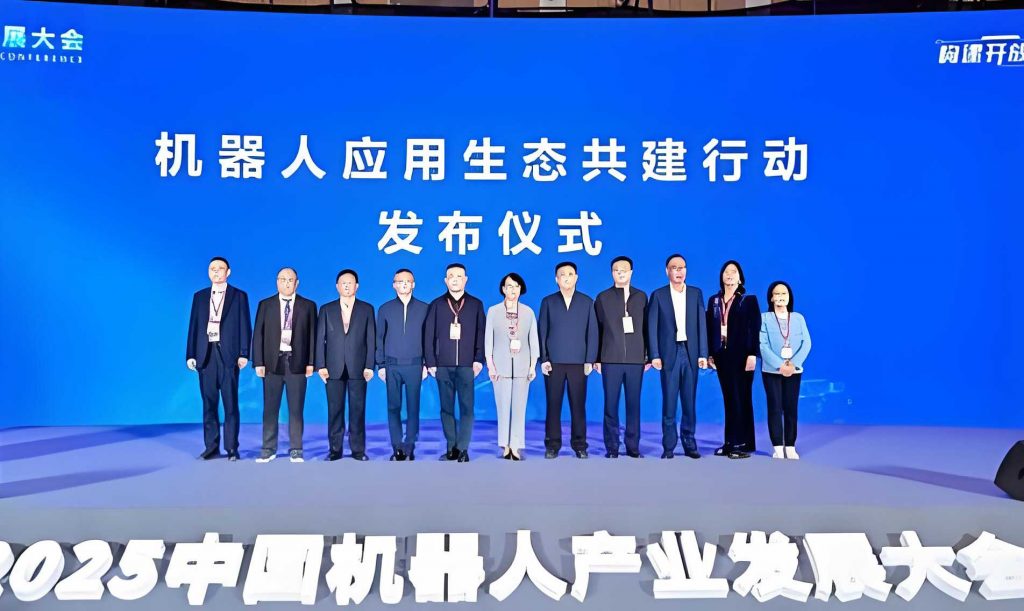
The year 2020 marked a definitive turning point for the China robot industry. Following a slowdown in 2019 often described as an “industry winter,” a robust recovery commenced in April 2020, propelling the sector into a phase of accelerated growth. The cumulative growth rate of industrial robot production turned positive and climbed steadily throughout the year. This rebound can be modeled as a recovery from an exogenous shock. If we denote the production output at time t as $P(t)$, and the shock in 2019 as a negative impulse $-\delta$, the 2020 recovery suggests a strong underlying growth trend $\alpha$ coupled with a recovery multiplier $\beta$ from pent-up demand and new market forces:
$$ P(2020) = \alpha \cdot P(2019) + \beta \cdot (-\delta) + \epsilon_{new\_demand} $$
Where $\alpha > 1$, $\beta > 1$, and $\epsilon_{new\_demand}$ represents significant new demand drivers. This powerful reversal underscores the fundamental strength and adaptive capacity of the China robot manufacturing ecosystem.
Triple Engines of the 2020 China Robot Market Rebound
The resurgence was not accidental but was fueled by three interconnected factors: explosive production growth, proactive policy support, and a unique shift in global manufacturing orders.
1. Turning Crisis into Opportunity: Soaring Production Output
Chinese industrial robotics enterprises adeptly converted the challenges of the pandemic into commercial opportunities. While global supply chains faltered, domestic production of China robots surged, achieving逆势上扬 (counter-trend growth). The monthly cumulative growth rate vividly illustrates this sharp V-shaped recovery, transitioning from deep negative figures in early 2020 to strong positive growth by mid-year. The underlying driver was the urgent need for automation to ensure business continuity amid labor disruptions and to meet surging demand. This period validated the strategic importance of robotics for manufacturing resilience.
2. Policy Catalysts: National and Local Support Frameworks
Industrial robots are recognized as a cornerstone for intelligent manufacturing and a pivotal force in China’s transition from a manufacturing giant to a manufacturing powerhouse. To accelerate this development, a multi-layered policy framework was introduced in 2020. These policies aimed to stimulate R&D investment, encourage adoption, and strengthen the entire industrial chain for the China robot sector.
| Issue Date | Issuing Authority | Policy Document / Focus | Key Relevance to China Robot Industry |
|---|---|---|---|
| March 2020 | Ministry of Science and Technology (MOST) | National Key R&D Program Guides (e.g., “Intelligent Robots”) | Direct funding and project guidance for core technologies in intelligent robotics. |
| September 2020 | NDRC, MIIT, MOST, MOF | Guidelines on Expanding Strategic Emerging Industry Investment | Identified industrial robots as a key strategic area for investment and growth cultivation. |
| October 2020 | NDRC and Five Other Ministries | Implementation Opinions on Supporting Private Enterprises | Promoted the adoption of intelligent equipment and “machine substitution” in private manufacturing firms. |
The synergistic effect of these policies provided a clear strategic direction, reduced innovation risk, and lowered the adoption barrier for end-users, creating a highly favorable environment for the China robot ecosystem.
3. Demand Shock: Influx of Overseas Manufacturing Orders
The global pandemic caused unprecedented disruptions worldwide. China’s effective pandemic control and its unparalleled comprehensive industrial supply chain positioned it as the most reliable manufacturing hub in 2020-2021. A significant回流 (return flow) of overseas orders occurred across multiple sectors. This sudden surge in demand exposed the limitations of traditional, labor-intensive production models. To rapidly scale up capacity and fulfill contracts, manufacturers turned to industrial automation solutions. The demand for China robot applications was dramatically ignited across these busy export-oriented industries. The growth in exports for key sectors can be summarized as an exogenous demand injection $D_{ex}$ into the China robot demand function $Q_d$:
$$ Q_d(2020) = f(\text{Internal Upgrading}) + D_{ex}(\text{Overseas Orders}) $$
Where $D_{ex}$ was significant for sectors like:
$$ \text{Medical Devices: } +48.2\%,\quad \text{Laptops: } +17.6\%,\quad \text{Home Appliances: } +17.3\% $$
This demand shock provided a powerful, immediate validation for robotics investments.
Three Formidable Barriers Constraining the China Robot Industry
Despite the impressive market rebound, the domestic China robot industry faces deep-seated structural challenges that threaten its long-term competitiveness and value capture.
1. The Talent Chasm: Acute Shortage of Application-Oriented Skills
As China consolidates its position as the world’s largest application market for industrial robots, a critical shortage of skilled talent has emerged. The operation, integration, programming, and maintenance of China robots require a multi-tiered talent pool. The current education and training system is struggling to keep pace. Vocational programs are nascent, and graduates often require extensive additional training, creating a bottleneck for the entire industry. The talent demand profile for a mature China robot application ecosystem is layered and extensive.
| Tier | Role | Core Competency | Estimated Demand Share |
|---|---|---|---|
| 1. Strategic & Planning | Project Manager / Solution Architect | Designing automated solutions based on production processes and industrial engineering principles. | ~7% |
| 2. System Development | System Integration & Development Engineer | Upgrading and transforming production lines; integrating robots with peripherals and control systems. | ~18% |
| 3. Technical Support | Pre-sales & Post-sales Support Engineer | Providing technical consultancy, troubleshooting, and ongoing customer support. | ~25% |
| 4. Core Implementation | Installation, Commissioning & Maintenance Engineer | On-site robot installation, programming, debugging, and routine maintenance. This is the largest gap. | ~50% |
The scarcity is most acute at the implementation level. It is estimated that each industrial robot deployed requires 3 to 5 skilled personnel for debugging, maintenance, and integration to realize its full productivity potential. The talent gap $G_{talent}$ can be expressed as a function of the installed base $B$ and the output of the education system $E$:
$$ G_{talent} = \gamma \cdot B – E(t) $$
where $\gamma$ is the personnel-to-robot ratio (3-5), and $E(t)$ lags significantly behind the growth of $B$.
2. The Competitive Disadvantage: Domestic Brands and the “Three Mountains”
The landscape of domestic China robot brands is fragmented and faces steep challenges in competing with established international giants. The hurdles can be summarized as three oppressive “mountains”: scale, market share, and value-chain positioning.
Mountain 1: Scale and Capitalization. While China is home to over a thousand robotics-related enterprises, fewer than 50 are publicly listed. The vast majority are small and medium-sized enterprises (SMEs) with annual revenues below RMB 100 million. Even the leading domestic champions have revenues orders of magnitude smaller than global leaders like Fanuc or ABB, limiting R&D investment capacity.
Mountain 2: Low Market Share in Core Components. The heart of a robot’s performance and cost lies in its three core components: precision reducers, servo motors, and controllers. Domestic suppliers of these critical parts for China robots hold painfully low shares of the domestic market, creating a strategic dependency.
| Core Component | Domestic China Robot Brand Share | International Brand Share |
|---|---|---|
| Precision Reducer | ~15% | ~85% |
| Servo Motor | ~10% | ~90% |
| Controller | ~20% | ~80% |
This dependency not only affects cost structures but also impedes customization and iterative innovation for domestic robot OEMs.
Mountain 3: Congestion in Low-Value-Added Segments. The industrial robotics value chain can be segmented into high- and low-margin activities:
$$ \text{High Margin: } \text{R&D} \rightarrow \text{Core Components} \rightarrow \text{Controller Software} $$
$$ \text{Lower Margin: } \text{Body Manufacturing} \rightarrow \text{System Integration} \rightarrow \text{Industry-Specific Deployment} $$
Over 80% of Chinese robotics companies are clustered in the system integration and application deployment segments, which are highly competitive, project-based, and offer thinner margins. This positioning limits profitability and strategic control for the domestic China robot industry.
3. Concentrated Downstream Applications: A Vulnerability to Market Cycles
The application of China robots, while expanding, remains heavily concentrated in a few key industries. This concentration creates systemic risk, tethering the industry’s fortunes to the cyclical performance of these sectors.
The automotive industry and the 3C (computer, communication, consumer electronics) manufacturing sector have historically been the primary drivers. However, the slowdown in the Chinese automotive market—from a 33% production growth in 2015 to a -8.3% contraction in 2019—directly translated into a severe deceleration in industrial robot market growth. The sensitivity can be modeled through an industry concentration index $H$ and its correlation with market growth $G_{market}$:
$$ H = \sum_{i=1}^{n} s_i^2 $$
where $s_i$ is the market share of application industry $i$. A high $H$ index (indicating concentration in 1-2 industries like automotive) leads to:
$$ G_{market} \approx \rho \cdot G_{dominant\_industry} $$
where $\rho$ is a high positive correlation coefficient. The recent downturn clearly demonstrated that the growth of the China robot market is disproportionately exposed to single-sector volatility, hindering stable, long-term industry planning and investment.
Strategic Recommendations for the “14th Five-Year Plan” and Beyond
To transition from a large application market to a global powerhouse in robotics innovation and manufacturing, China must address these core constraints through targeted, synergistic strategies.
1. Strategy Focus: Enhance Innovation Capacity to Break Technological Barriers
The paramount objective must be to climb the technology ladder, particularly in core components and advanced software. This requires a multi-pronged approach to talent and innovation.
Government Role: Design and implement robust incentive mechanisms for S&T professionals in the China robot field. Support should focus on advanced-degree programs, standardized vocational training systems, and international talent exchanges. Policies should actively encourage overseas experts to contribute to the domestic China robot innovation ecosystem.
Enterprise Role: Companies must aggressively pursue knowledge acquisition. This includes strategic partnerships and joint ventures with foreign leaders for technology transfer, targeted recruitment of global talent, and deep, practical collaboration with universities to co-develop curricula that meet real-world industry needs for the China robot sector.
Academic Role: Universities and research institutes must dynamically align their programs with market and national strategic needs. This involves launching specialized robotics engineering departments, balancing theoretical and practical skill development, and establishing fluid channels for researcher and student interaction with industry, ensuring that academic work directly feeds into the innovation pipeline for China robots.
2. Strategy Focus: Drive Industry Consolidation to Reshape Competitive Dynamics
Fragmentation is a key weakness. Strategic consolidation is necessary to build scale, pool resources, and create champions capable of competing globally in the China robot arena.
Horizontal Integration in Upstream Segments: Encourage leading core component manufacturers to consolidate through mergers, equity swaps, or strategic alliances. This pooling of resources can accelerate breakthroughs in reducer precision, servo performance, and control algorithms. The goal is to create 2-3 nationally competitive champions in each core component category. The consolidation effect on R&D capability $R$ can be modeled as:
$$ R_{merged} = \sum R_i + \Delta R_{synergy} – C_{integration} $$
where $\Delta R_{synergy}$ is the positive synergistic effect from combined talent and resources, which must outweigh the integration cost $C_{integration}$.
Vertical Integration for Holistic Competence: Once a strong upstream foundation is built, companies should pursue vertical integration to control the full “R&D-Production-Sales-Service” value chain. Downstream integrators with strong market positions should also consider backward integration into本体 (body) manufacturing and even core components to capture more value and ensure supply chain security for their China robot solutions.
Key Consideration: All integration activities must be strategically justified, focusing on companies with complementary technologies, aligned strategic visions, and manageable cultural differences. Post-merger integration management is critical to realizing the intended synergies.
3. Strategy Focus: Pursue “Quantity and Quality” to Cultivate New Growth Engines
The industry must simultaneously expand its application horizons and elevate its quality and reliability standards to build a sustainable, respected global brand for China robots.
Diversifying Application Frontiers: Proactively develop and demonstrate China robot solutions for new, demanding industries. These include energy (power, coal, petroleum), hazardous environments (nuclear, chemical), and high-precision sectors (aerospace, advanced shipbuilding). Successful pilot projects in these fields will open vast new markets and drive the development of more sophisticated, reliable robots. This diversification reduces the market concentration risk $H$.
Establishing Quality and Standards Leadership: Accelerate the formulation and revision of national, industry, and group standards covering the entire China robot lifecycle—from design and testing to safety and interoperability. Leverage下一代信息技术 (next-gen IT) like IoT and big data to build dynamic product quality evaluation and traceability systems. The overarching goal is to shift the global perception of China robots from “cost-effective” to “highly reliable and innovative,” which can be expressed as a brand value function $V$:
$$ V_{brand} = \int ( \text{Innovation}(t) + \text{Quality}(t) + \text{Service}(t) ) dt $$
where consistent high performance in all three dimensions over time $t$ builds enduring value.
In conclusion, the China robot industry stands at a pivotal juncture. Its demonstrated resilience and the vast domestic market provide a formidable foundation. However, overcoming the deep-seated challenges of talent scarcity, technological dependency, and market concentration requires a concerted, strategic effort focused on innovation, smart consolidation, and quality-driven diversification. By executing on these pathways, China can transform its industrial robotics sector from a volume-driven application giant into a globally competitive innovation and manufacturing powerhouse, solidifying its leadership in the era of intelligent manufacturing.