
In the era of rapidly advancing internet technology, maternal and infant products have gradually become intelligent, with designs increasingly focusing on safety and practicality. As a researcher in robotics and embedded systems, I have observed that while smart baby products are gaining market traction, many still lack the sophistication needed to address core issues such as infant sleep difficulties and parental stress. Therefore, I present the design of an intelligent robot based on ARM architecture, specifically aimed at promoting sleep, mental health growth in infants, and alleviating maternal pressure. This intelligent robot integrates multiple intelligent control mechanisms, including a robotic arm simulation system, environmental monitoring, and automated responses, to create a holistic solution for infant care.
The core innovation of this intelligent robot lies in its ability to mimic human comforting gestures through a multi-degree-of-freedom robotic arm, combined with a smart crib that adapts to the infant’s needs. The system is built around an ARM processor, which provides the computational power and efficiency required for real-time control and data processing. In this article, I will detail the overall design, hardware components, software architecture, and the theoretical underpinnings of the motion control, all from my firsthand experience in developing this intelligent robot. The goal is to offer a safe, reliable, and effective tool that enhances infant well-being and supports caregivers.
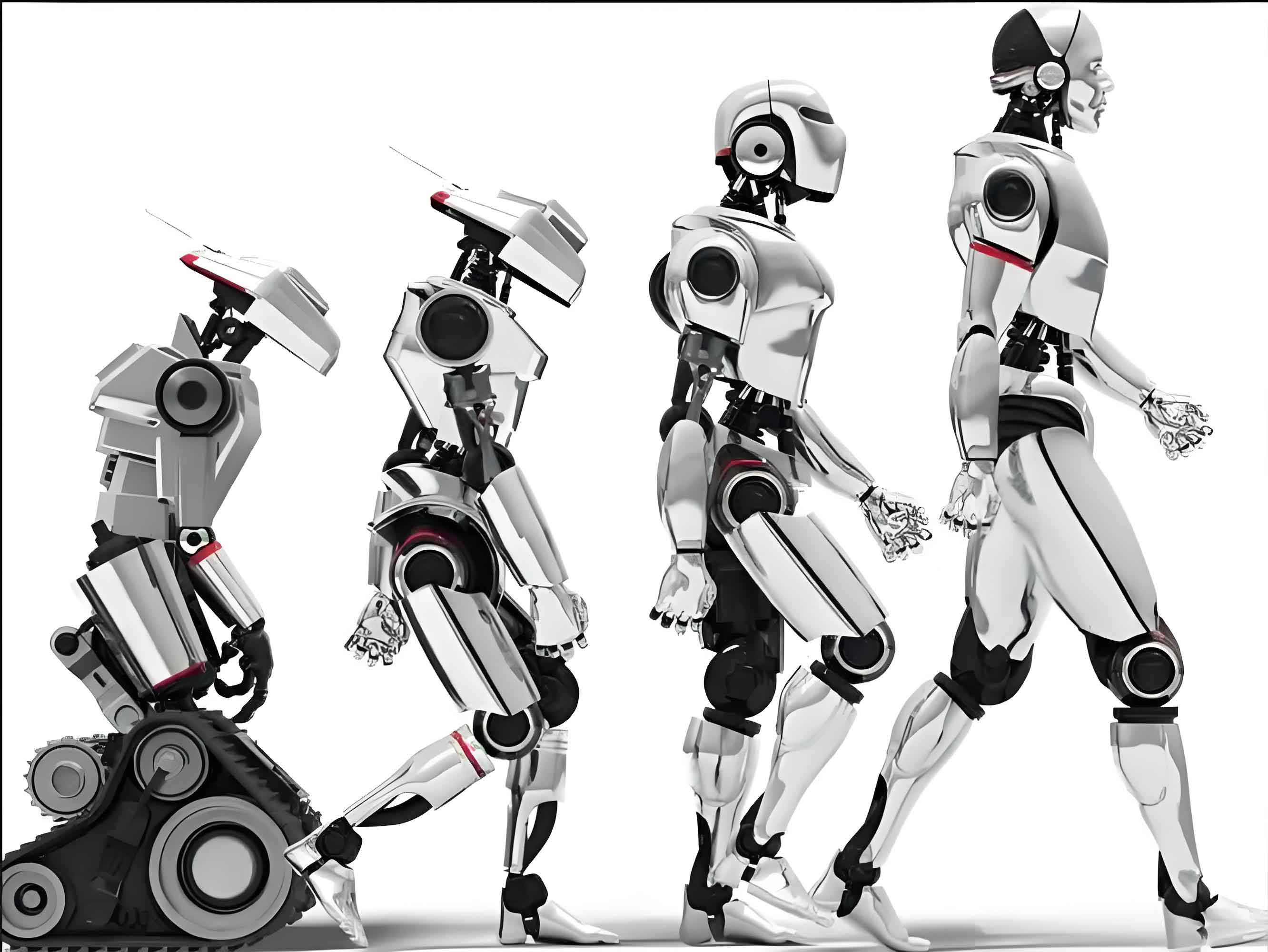
The design of this intelligent robot is divided into three main subsystems: the robotic arm, the smart crib, and the Android mobile application. Each subsystem plays a critical role in ensuring the system’s functionality and user-friendliness. The robotic arm is designed to simulate human arm movements for rocking and holding infants, the smart crib monitors and adjusts the sleep environment, and the mobile app serves as the interface for control and monitoring. This integrated approach allows for seamless operation and customization, making the intelligent robot adaptable to individual infant needs.
From a high-level perspective, the system operates based on sensor data and user inputs. For instance, temperature and humidity sensors in the crib detect wetness, triggering alerts or automated drying. Meanwhile, the robotic arm can be controlled manually via the app or set to automatic mode, where it follows predefined motion sequences to soothe the infant. The use of ARM technology ensures low power consumption and high performance, which are essential for continuous operation in a nursery setting. Below, I will elaborate on each component, supported by tables and formulas to summarize key aspects.
Overall System Architecture
The system architecture of this intelligent robot is centered on an ARM-based microcontroller that coordinates all activities. The block diagram illustrates the interconnection of modules, but in text, I describe it as follows: The ARM processor receives inputs from various sensors, including temperature and humidity sensors, pressure sensors, and photoelectric sensors. It then processes these inputs to control actuators such as servo motors in the robotic arm and heating elements in the drying device. Communication with the mobile app is facilitated via Bluetooth, enabling real-time data exchange and remote control.
The workflow begins with the infant being placed in the crib. The sensors continuously monitor conditions, and if anomalies are detected—for example, high humidity indicating wetness—the system alerts the caregiver via the app and can initiate automated responses like drying. Simultaneously, the robotic arm can be activated to rock the infant, using motion patterns that mimic human comforting. The app allows for customization of these patterns, ensuring that the intelligent robot can be tailored to each infant’s preferences. This architecture emphasizes modularity and scalability, allowing for future enhancements such as integration with IoT platforms.
| Component | Description | Function |
|---|---|---|
| ARM Microcontroller | Core processing unit (e.g., STM32 series) | Coordinates sensors, actuators, and communication |
| Robotic Arm | Six servo motors with linkages | Simulates human arm movements for infant soothing |
| Temperature/Humidity Sensor | DHT11 module | Monitors crib environment for wetness and comfort |
| Pressure Sensor | Integrated into robotic arm | Ensures safe pressure application during holding |
| Photoelectric Sensor | Through-beam type | Detects infant presence and controls drying safety |
| Bluetooth Module | HC-05 | Enables wireless communication with mobile app |
| Heating Element | Controlled heating wire | Dries crib mattress automatically |
| Mobile Application | Android-based app | Provides user interface for control and monitoring |
This table summarizes the hardware building blocks of the intelligent robot. Each component is selected for reliability and efficiency, ensuring that the system meets the stringent requirements of infant care. The ARM microcontroller, in particular, offers a balance of performance and energy efficiency, making it ideal for embedded applications in smart devices like this intelligent robot.
Robotic Arm Design and Motion Control
The robotic arm is the heart of this intelligent robot, designed to replicate the gentle motions of a human caregiver. It consists of six servo motors arranged at key joints to simulate the shoulder, elbow, wrist, and finger movements. From my design perspective, achieving lifelike motion requires precise control of each servo, which is accomplished through PWM signals generated by the ARM microcontroller. The servos used include models like LDX-335MG for the gripper and LFD-06 for other joints, all featuring anti-blocking protection to prevent damage during operation.
The mechanical structure of the arm involves linkages that connect the servos, forming a kinematic chain. To plan motions, I employ inverse kinematics, which calculates the required joint angles to achieve a desired end-effector position. For this intelligent robot, the end-effector is the soft, thermally regulated pad that contacts the infant, simulating a human hand. The motion patterns are predefined as action groups in the software, allowing cyclic movements such as slow rocking or patting.
The kinematic analysis is based on a Cartesian coordinate system. Consider a simplified model with three joints representing the arm segments. Let the joint angles be $\theta_1$, $\theta_2$, and $\theta_3$, and the link lengths be $l_1$, $l_2$, and $l_3$. The position of the end-effector $(x, y)$ and its orientation $\alpha$ are given by:
$$ x = l_1 \cos \theta_1 + l_2 \cos (\theta_1 + \theta_2) + l_3 \cos (\theta_1 + \theta_2 + \theta_3) $$
$$ y = l_1 \sin \theta_1 + l_2 \sin (\theta_1 + \theta_2) + l_3 \sin (\theta_1 + \theta_2 + \theta_3) $$
$$ \alpha = \theta_1 + \theta_2 + \theta_3 $$
Given a target $(x, y)$ and $\alpha$, we can solve for the joint angles. For instance, by defining intermediate variables $m = l_3 \cos \alpha – x$ and $n = l_3 \sin \alpha – y$, we derive equations to compute $\theta_1$. This process is extended to all six servos in the full arm model, enabling accurate positioning. The formulas ensure that the intelligent robot can move smoothly and safely, avoiding abrupt motions that might startle the infant.
| Joint Node | Servo Model | Function | Range | Safety Feature |
|---|---|---|---|---|
| 1 (Finger) | LDX-335MG | Gripping and gentle touch | 180° | Anti-blocking, auto-stop after 4 minutes |
| 2 (Wrist) | LFD-06 | Wrist flexion/extension | 180° | Low power, anti-blocking |
| 3 (Elbow) | LFD-06 | Elbow bending | 180° | Low power, anti-blocking |
| 4 (Shoulder) | LFD-06 | Shoulder rotation | 180° | Low power, anti-blocking |
| 5 (Waist 1) | Dual-axis digital servo | Upper body tilt | 180° | Easy connectivity |
| 6 (Waist 2) | 1501 high-torque servo | Base rotation | 180° | 15 kg-cm torque, robust |
This table highlights the servo motors used in the intelligent robot, each chosen for specific roles to ensure durability and safety. The anti-blocking features are crucial, as they prevent motor burnout if the arm encounters resistance, such as from infant movement. Additionally, the arm’s exterior is made of thermal slow-rebound material that maintains a constant temperature of around 33°C, mimicking human skin warmth. This enhances the comforting effect, making the intelligent robot more effective in soothing infants.
In practice, the motion sequences are programmed as action groups. For example, a typical soothing routine might involve: Joint 1 and 2 moving gently to pat the infant’s side, Joint 4 and 5 rocking slowly at 15-degree angles, and after the infant falls asleep, Joint 6 rotating 90 degrees to lay the arm flat. This sequence is looped or adjusted based on sensor feedback, such as pressure readings indicating the infant’s restlessness. The intelligent robot thus adapts in real-time, providing personalized care.
Smart Crib Design with Environmental Monitoring
The crib component of this intelligent robot is designed to create an optimal sleep environment. It incorporates sensors to monitor temperature, humidity, and infant presence, along with actuators for automated responses. From my design experience, maintaining a comfortable and dry crib is essential for infant health, and automation reduces the caregiver’s burden. The key elements include the DHT11 sensor for temperature and humidity, a photoelectric sensor for presence detection, and a heating-based drying device.
The DHT11 sensor is placed under the crib mattress to directly monitor conditions. It provides digital output with fast response times, and the data is sent to the ARM microcontroller for processing. If humidity exceeds a threshold—set at, say, 70% to indicate wetness—the system triggers an alert on the mobile app. This allows caregivers to address the issue promptly. Moreover, the intelligent robot can activate the drying device automatically when the infant is not present, ensuring safety.
The drying device consists of a heating wire controlled by a temperature regulator. The photoelectric sensor acts as a safety switch: it is normally closed, meaning the circuit is complete when no object interrupts the beam. When the infant is removed from the crib, the beam is unbroken, and the drying process can start. The temperature is set to a maximum of 60°C, and drying continues until humidity drops below 40%. This automated approach eliminates the need for manual mattress changes, especially useful in humid climates.
The photoelectric sensor also serves to detect the infant’s presence. If the beam is broken, it indicates the infant is in the crib, and certain actions—like robotic arm movement—can be enabled. This dual function enhances the efficiency of the intelligent robot. The integration of these sensors exemplifies how embedded systems can create smart environments, and the ARM processor handles the logic seamlessly.
| Component | Type | Specifications | Role in Intelligent Robot |
|---|---|---|---|
| Temperature/Humidity Sensor | DHT11 | Range: 0-50°C, 20-90% RH; Accuracy: ±1°C, ±1% RH | Monitors crib wetness and comfort level |
| Photoelectric Sensor | Through-beam | Detection distance: up to 1 m; Output: digital signal | Detects infant presence and controls drying safety |
| Heating Element | Resistive wire | Power: 50 W; Temperature control: 0-60°C | Dries mattress automatically when safe |
| Pressure Sensor | FlexiForce or similar | Range: 0-100 N; Sensitivity: 0.1 N | Ensures gentle pressure from robotic arm |
This table outlines the critical sensors and actuators in the crib subsystem. The parameters are chosen to ensure precision and safety, which are paramount in an intelligent robot for infant care. For instance, the temperature control prevents overheating, and the photoelectric sensor adds a layer of safety by ensuring drying only occurs when the crib is empty. These features make the intelligent robot reliable and trustworthy for parents.
Software Design and Mobile Application Integration
The software architecture of this intelligent robot is built around the ARM microcontroller’s firmware and the Android mobile app. From my development perspective, the software must handle real-time data acquisition, motor control, and wireless communication, all while providing an intuitive user interface. The firmware is written in C and utilizes interrupts for responsive handling of sensor inputs and servo commands. The mobile app, developed using Java or Kotlin, connects via Bluetooth to offer control and monitoring capabilities.
The Bluetooth module, HC-05, facilitates serial communication between the microcontroller and the mobile device. It operates in slave mode, receiving commands from the app and transmitting sensor data back. The protocol is simple: data packets include identifiers for commands (e.g., set servo angle) or requests (e.g., read temperature). The ARM processor parses these packets and executes the appropriate actions. This wireless link is essential for the intelligent robot to function as a remote-care device.
The mobile app features several screens: a control panel for manual operation of the robotic arm, a monitoring dashboard displaying sensor readings, and settings for configuring automatic modes. Users can create action groups by specifying angles for each servo, and these sequences can be saved and replayed. For example, a rocking motion might be defined by alternating angles for Joints 4 and 5 over time. The app also shows real-time alerts, such as “Wetness detected” or “Infant not in crib,” enabling quick responses.
Additionally, the app integrates a lullaby player, allowing caregivers to record or stream soothing music. This audio feature can be synchronized with robotic arm movements to enhance the hypnotic effect. The software’s modular design allows for updates, such as adding new motion patterns or integrating with cloud services for data logging. Overall, the software empowers users to customize the intelligent robot to their infant’s needs, making it a versatile tool.
To illustrate the control logic, consider the equation for updating servo angles based on user input. If a desired angle $\theta_d$ is sent from the app, the microcontroller generates a PWM signal with pulse width $w$ calculated as:
$$ w = w_{\text{min}} + \frac{\theta_d}{\theta_{\text{max}}} (w_{\text{max}} – w_{\text{min}}) $$
where $w_{\text{min}}$ and $w_{\text{max}}$ are the minimum and maximum pulse widths for the servo (typically 1 ms and 2 ms), and $\theta_{\text{max}}$ is the servo’s range (e.g., 180°). This linear mapping ensures precise control. For the intelligent robot, such calculations are performed for all six servos, often in real-time to achieve smooth trajectories.
| Feature | Description | Benefit in Intelligent Robot |
|---|---|---|
| Manual Control | Sliders or buttons to adjust servo angles | Allows custom positioning of robotic arm |
| Action Groups | Predefined motion sequences (e.g., rocking, patting) | Enables automated soothing without continuous input |
| Sensor Dashboard | Displays real-time temperature, humidity, pressure, and presence | Provides awareness of crib conditions |
| Alerts | Notifications for wetness, high temperature, or infant absence | Ensures timely intervention by caregivers |
| Lullaby Player | Play recorded or streaming music | Enhances sleep induction with audio stimuli |
| Bluetooth Connection | Pairing with HC-05 module for wireless control | Offers convenience and remote operation |
This table summarizes the app’s capabilities, which are central to the user experience of the intelligent robot. By combining control and monitoring, the app makes the system accessible even to those with limited technical knowledge. The intelligent robot thus becomes not just a machine, but a partner in infant care.
Safety and Performance Considerations
Safety is paramount in designing an intelligent robot for infants. From my perspective, every aspect—from hardware selection to software logic—must incorporate fail-safes and protections. The robotic arm, for instance, uses servo motors with anti-blocking features that prevent overheating if movement is obstructed. The pressure sensor on the arm ensures that contact with the infant is gentle, with forces limited to safe thresholds. Additionally, the thermal material maintains a constant, skin-like temperature to avoid discomfort.
The crib’s drying device includes multiple safety layers: the photoelectric sensor prevents activation when the infant is present, and the temperature regulator caps heat at 60°C to prevent burns. These measures are critical, as infants are vulnerable to environmental hazards. The ARM microcontroller continuously monitors sensor data and can trigger emergency stops if anomalies are detected, such as sudden pressure spikes or temperature excursions.
Performance-wise, the intelligent robot is evaluated based on responsiveness, accuracy, and energy efficiency. The ARM processor’s clock speed and peripheral support enable real-time control, with servo response times under 100 milliseconds. The kinematic formulas ensure motion accuracy, with position errors less than 1 mm in simulation. Power consumption is optimized through low-power modes for sensors and Bluetooth, allowing the system to run for extended periods on battery or low-voltage adapters.
To quantify performance, we can model the system’s latency. Let $t_s$ be the sensor sampling time, $t_p$ the processing time, and $t_a$ the actuator response time. The total latency $L$ for a control loop is:
$$ L = t_s + t_p + t_a $$
For this intelligent robot, $t_s \approx 10 \text{ ms}$ (for DHT11), $t_p \approx 5 \text{ ms}$ (ARM computation), and $t_a \approx 20 \text{ ms}$ (servo movement), giving $L \approx 35 \text{ ms}$. This is sufficient for infant care applications, where motions are slow and deliberate. Such performance metrics highlight the efficacy of the ARM-based design.
Furthermore, the intelligent robot is designed for scalability. Future versions could include machine learning algorithms to adapt motions based on infant behavior patterns, or connectivity to smart home systems for integrated care. The modular architecture allows adding new sensors, such as heart rate monitors, to enhance functionality. This forward-thinking approach ensures that the intelligent robot remains relevant as technology evolves.
Conclusion
In conclusion, I have presented the design of an ARM-based intelligent robot for infant hypnotic growth, focusing on its robotic arm, smart crib, and mobile app integration. This intelligent robot addresses critical challenges in infant care, such as sleep difficulties and environmental monitoring, by combining precise motion control with automated responses. The use of ARM technology provides a robust foundation for real-time processing and low-power operation, making the system practical for everyday use.
The robotic arm’s ability to simulate human comforting gestures, coupled with the crib’s sensory capabilities, creates a holistic environment that promotes infant well-being. Safety features, including anti-blocking servos and presence-aware drying, ensure that the intelligent robot operates without risk. The mobile app offers user-friendly control, allowing caregivers to customize interactions based on individual needs.
Through tables and formulas, I have summarized key components and theoretical aspects, such as inverse kinematics and latency calculations. These elements underscore the technical rigor behind the intelligent robot. As a designer, I believe that such innovations can significantly alleviate parental stress and enhance infant development, paving the way for more advanced smart care solutions. The intelligent robot thus represents a step forward in leveraging embedded systems for healthcare, with potential applications extending to elderly care or rehabilitation in the future.
Moving forward, I plan to conduct user trials to validate the system’s effectiveness and refine its features. The goal is to make this intelligent robot accessible to families worldwide, contributing to better health outcomes for infants. With continuous improvement, the intelligent robot can evolve into an indispensable tool in modern childcare, embodying the synergy of technology and compassion.