
In the global arena of technological advancement and industrial modernization, the rise of robotics stands as a defining trend of the 21st century. Within this transformative wave, China’s position is particularly pivotal. As the nation strides toward becoming the world’s largest market for robotic solutions, its journey is marked by a complex interplay of immense potential and significant hurdles. The widespread deployment of industrial robots on manufacturing floors and the impending emergence of service robots across various sectors signal a profound shift. This “robot revolution,” while offering a pathway to enhanced productivity and innovation, simultaneously presents critical tests for China’s economic structure, labor market, and technological capabilities. The evolution of the China robot sector is not merely an industrial narrative; it is a microcosm of the country’s broader transition toward a more advanced, intelligent, and sustainable economic model.
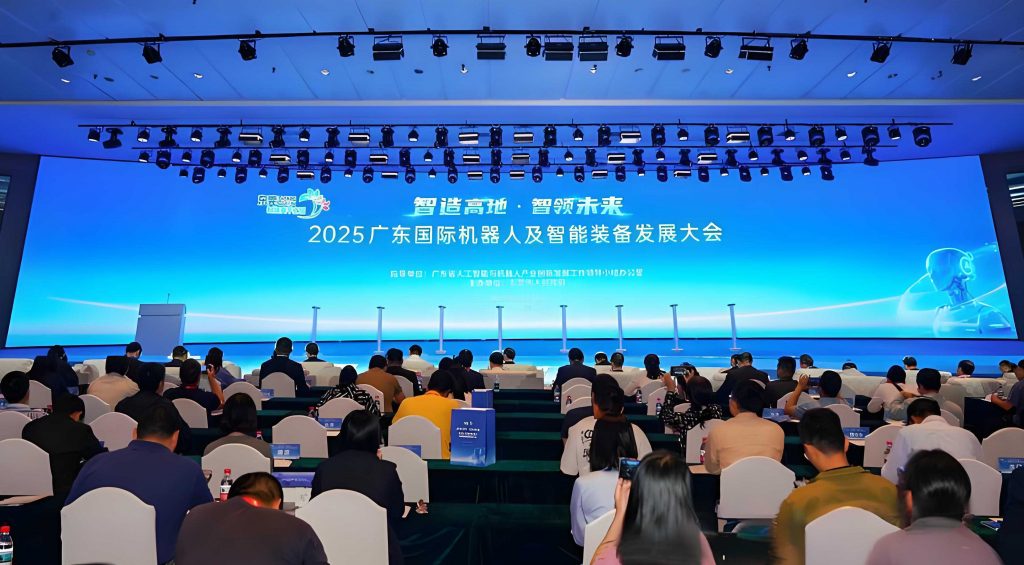
The trajectory of the China robot industry mirrors the nation’s manufacturing story on a global scale—currently concentrated in mid-to-low-end segments yet standing on the cusp of a transformative leap. The convergence of next-generation information and communication technologies like cloud computing, the Internet of Things (IoT), big data, and artificial intelligence with manufacturing processes is reshaping paradigms worldwide. For China, this era of smart manufacturing, where robotics serves as a cornerstone, brings both disruptive pressures and unprecedented avenues for growth. The choices made today in policy, investment, and innovation will determine whether the China robot ecosystem can ascend the value chain and compete on a global stage defined by intelligence and connectivity.
- Formidable Challenges Confronting the China Robot Ecosystem
The rapid integration of robotics into China’s economic fabric is not a seamless process. It exposes structural vulnerabilities and necessitates difficult adaptations. The first and perhaps most profound challenge is its role as a catalyst for forced economic transformation. For over a decade, China’s remarkable growth was fueled by an export-oriented and labor-intensive development model. This model capitalized on a vast, cost-effective workforce to dominate global manufacturing in numerous sectors. However, the advent of advanced manufacturing strategies in nations like the United States and Germany, which emphasize digital, networked, and intelligent production—often encapsulated in concepts like Industrie 4.0—poses a substantial threat. These paradigms promote green, collaborative, personalized, servitized, and flexible manufacturing. The new industrial revolution centered on smart manufacturing and advanced robotics in the West challenges the very foundation of China’s low-cost manufacturing advantage. Consequently, the rise of automation is actively compelling a structural shift in China’s economic model. The China robot adoption surge, therefore, is not just an upgrade but a necessity to remain competitive, forcing a move away from low-value assembly toward higher-value, knowledge-intensive production.
A second, and more immediate, challenge lies in the potential disruption to the labor market. China’s industrial landscape is heterogeneous, described as being in a “comprehensive phase of making up for Industry 2.0, popularizing Industry 3.0, and demonstrating Industry 4.0.” This means that while some advanced sectors explore automation frontiers, a significant portion of manufacturing enterprises remains entrenched in the labor-intensive practices of Industry 2.0. In such a context, the arrival of the robot era presents a dual-edged sword. On one hand, robots enhance efficiency and quality; on the other, they risk displacing workers in roles characterized by repetitive, manual tasks. The transition for this workforce is a monumental social and economic challenge. The China robot expansion must be managed alongside strategies for workforce reskilling and social safety nets to mitigate unemployment risks and ensure that the benefits of automation are broadly shared. The impact on the labor market is a critical variable that will influence the social acceptance and pace of robotics integration across the China robot industrial base.
The third major hurdle is the technological leap required from traditional robotics to intelligent robotics. The essence of “Industry 4.0” or smart manufacturing is the move from automation to cognitive, connected systems. In the German framework, it is seen as the fourth industrial revolution following mechanization, electrification, and automation—this revolution is defined by cyber-physical systems and intelligence. The robots envisioned for this future are not isolated units performing pre-programmed, repetitive tasks in isolation. Instead, they are interconnected via the IoT and the internet, capable of “collaborative cooperation” with other machines, systems, and humans. These smart robots can undertake complex, adaptable, and advanced operations, learning from data and responding to dynamic environments. For the China robot industry, a significant portion of the existing massive installed base consists of traditional robotic arms. The challenge is twofold: how to upgrade these existing assets with sensors, connectivity, and AI capabilities, and when to make this costly transition. This upgrade path is a substantial technological and financial challenge that will test the innovation capacity and strategic planning of China robot manufacturers and integrators.
- Unprecedented Opportunities for the China Robot Industry
Despite these challenges, the dawn of the smart manufacturing era unlocks a horizon of immense opportunity for the China robot sector. The very pressures that pose challenges also create the demand and conditions for growth. As industrial upgrading accelerates and the traditional demographic dividend diminishes, the imperative for automation strengthens, providing a robust, endogenous driver for the China robot market. The pursuit of higher quality, customization, and efficiency in manufacturing will fuel the adoption of robotic solutions. This large-scale application within manufacturing is not an end in itself; it serves as a crucial testing ground and driver for technological advancement. As robots are deployed in vast numbers across Chinese factories, engineers and developers will gain invaluable experience, iterating and improving upon designs, control systems, and integration protocols. This cycle of application and refinement will mature China robot technologies, reduce costs, and enhance reliability, laying the groundwork for broader expansion.
The true exponential growth for the China robot industry, however, may lie beyond the factory walls. The scalability and technological maturation achieved in industrial settings will pave the way for robots to penetrate the service sector and consumer households. This is where the potential volume becomes truly transformative. While industrial robots are counted in hundreds of thousands, service and personal robots could reach scales of millions or even tens of millions. Products such as medical and elderly care robots, educational assistants, logistics and delivery robots, hospitality aides, and domestic service robots for cleaning, security, and companionship represent frontier markets. The China robot industry’s foray into these areas could unlock a societal-level impact. With a population of 1.4 billion, including a rapidly aging demographic, the demand for caregiving and domestic support solutions is immense. Similarly, the growth of e-commerce and urban logistics within China creates a perfect environment for deployment of delivery and warehouse robots. If innovation in these consumer and service-oriented robotics domains achieves a breakthrough in cost, functionality, and user-friendliness, the China robot market could experience a period of explosive growth—a “big bang” moment that transitions robotics from an industrial tool to a ubiquitous feature of daily life.
This potential underscores a fundamental opportunity: the chance to move beyond being a volume market to becoming a leader in innovation for specific robotic applications. The unique domestic needs of China, such as those in elderly care, high-density logistics, and specific manufacturing niches, can serve as incubators for world-leading robot solutions. By focusing R&D on these areas, the China robot industry could develop competitive advantages that translate into global export opportunities. Furthermore, national strategies like “Made in China 2025” explicitly prioritize advanced robotics and smart manufacturing, providing policy support, funding avenues, and a strategic framework for development. This top-down endorsement creates a favorable ecosystem for China robot companies to experiment, scale, and collaborate with research institutions.
The interconnected nature of modern technology also provides an opportunity for the China robot sector to leapfrog certain developmental stages. By integrating advancements in 5G connectivity, edge computing, and AI—areas where Chinese companies are actively competing—robots can be deployed as part of smarter, more responsive networks from the outset. This allows for the development of cloud robotics platforms and swarm robotics applications that might be more challenging to retrofit in older industrial ecosystems. The opportunity for the China robot industry is to build a new generation of inherently connected and intelligent machines, rather than merely automating existing processes.
In conclusion, the path forward for the China robot industry is one of navigating a delicate balance. The challenges of economic restructuring, labor market adaptation, and technological upgrading are real and substantial. They demand thoughtful policy, sustained investment in human capital, and a commitment to high-quality innovation. Yet, the opportunities presented by the global shift toward智能制造, the vast scale of domestic application, and the untapped potential of the service and consumer sectors are equally compelling. The success of the China robot endeavor will depend on its ability to transform challenges into catalysts for development. By fostering an environment that encourages technological upgrading, supports workforce transition, and innovates for both industrial and societal needs, China can not only harness the power of robotics for its own economic advancement but also emerge as a significant and influential player in shaping the global future of automation. The journey of the China robot industry is, in essence, a reflection of the nation’s broader ambition to redefine its role in the world economy—from a workshop of the world to a laboratory for the intelligent, automated future.