
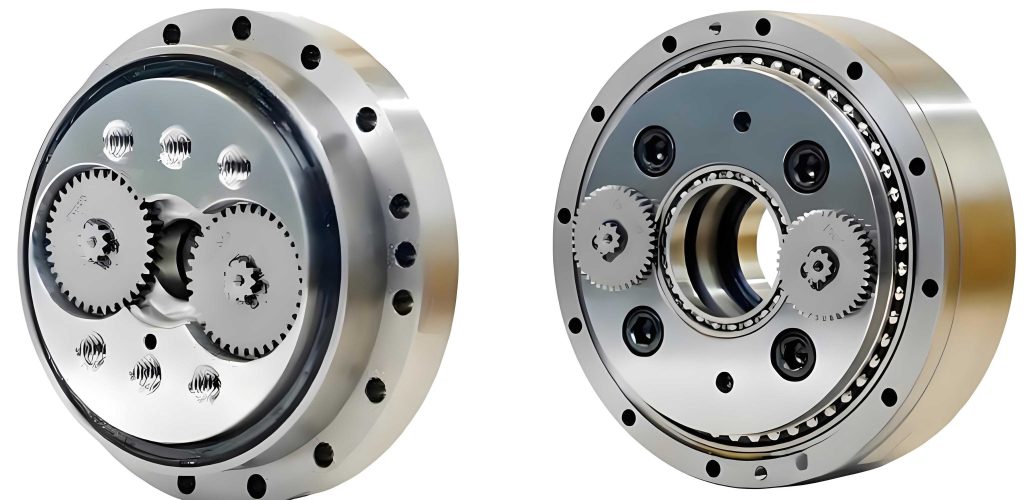
As a patent analyst specializing in robotics and precision machinery, I have undertaken a detailed study of the patent landscape surrounding a critical component in modern automation: the rotary vector reducer. The rotary vector reducer, commonly known as the RV reducer, is the high-precision reduction gear at the heart of industrial robot joints. Its performance directly dictates the robot’s positional accuracy, load capacity, and operational smoothness. Given its strategic importance and the historical market dominance by a few key players, a thorough analysis of its patent development is not merely an academic exercise but a crucial tool for strategic planning, technology forecasting, and risk mitigation for enterprises globally, especially for those seeking to enter or innovate within this field.
My analysis is based on data extracted from major patent databases including CNABS, CNTXT, SIPOABS, and DWPI, covering patent filings from 2003 to the present. The focus is on inventions directly related to the structure, manufacture, and application of rotary vector reducers within industrial robots. After rigorous cleaning, deduplication, and manual classification, this curated dataset forms the basis for the following insights into global trends, regional dynamics, key players, and the intricate evolution of specific technical branches within rotary vector reducer technology.
1. Global Patent Landscape for the Rotary Vector Reducer
Understanding the global distribution and historical trends of patent filings provides a macroscopic view of the technological and commercial activity surrounding the rotary vector reducer.
1.1 Trend Analysis of Global Patent Applications
The annual filing trend for rotary vector reducer patents reveals distinct phases of development, closely tied to the evolution of the industrial robotics market.
| Period | Trend | Key Market & Technological Drivers |
|---|---|---|
| 2005-2009 | Stagnant Growth | High market concentration; performance requirements increasing but limited competitive pressure on incumbents. |
| 2010-2019 | Rapid Growth | Explosion in industrial robot adoption globally, especially in China; entry of new players; heightened focus on IP strategy and portfolio building. |
| 2020-Present | High-Volume Volatility | Market maturation; technology diversification; intense R&D focused on performance optimization, cost reduction, and novel designs. |
The surge in patent activity post-2010 underscores the rotary vector reducer’s pivotal role in the robotics boom. As robots found new applications in electronics assembly, semiconductors, and logistics, the demand for more compact, precise, and reliable reducers drove innovation and, consequently, patent filings. The current high-volume plateau indicates a fiercely competitive and technologically dynamic field.
1.2 Geographical Distribution: Source and Target Countries
The geography of innovation and the strategic priorities for market protection are highlighted by analyzing priority (source) and application (target) countries.
Innovation Sources: Japan remains the undisputed leader, accounting for approximately 47% of global priority filings. This reflects decades of deep-rooted expertise and continuous R&D from companies like Nabtesco and Sumitomo Heavy Industries. China has emerged as a formidable second, representing over 40% of filings, a testament to its massive national push towards technological self-sufficiency in core robotics components. South Korea, the US, and Germany follow at a distance.
Market Targets (Five-Office Flow): The filing strategy reveals where companies see value and competition. Japanese entities file extensively in their home country, China, the United States, and Europe, indicating a strategy of global protection for their core rotary vector reducer technology. Chinese applicants, while dominant in domestic filings, show significantly less activity in foreign patent offices. This suggests a focus on securing the home market first, though international portfolio expansion is a likely future step.
1.3 Key Global Applicants and Their Focus
The concentration of innovation is evident in the profile of top patent assignees. Nabtesco Corporation holds a commanding position, with the broadest and deepest portfolio covering every conceivable aspect of rotary vector reducer design. Sumitomo Heavy Industries is a strong second. Their patents are heavily focused on the mechanical architecture—both overall configuration and specific components like bearings and crankshafts. Other notable applicants include specialized Chinese firms like Nantong Zhenkang and Suzhou Huazhen, which focus on assembly techniques and cycloid disc design, respectively, as well as research institutions like Chongqing University.
A breakdown of the top two players’ portfolio distribution by technical branch clearly shows their strategic emphasis:
| Technical Branch | Nabtesco Focus | Sumitomo Focus |
|---|---|---|
| Component Structures | Highest volume: Crankshafts | Highest volume: Bearings |
| Overall Configuration | Very High | Very High |
| Manufacturing & Processing | Significant | Significant |
| Lubrication | Moderate | Moderate |
| Detection & Analysis | Moderate | Some |
2. Patent Landscape within China for the Rotary Vector Reducer
The Chinese market and innovation ecosystem for the rotary vector reducer warrant separate, detailed examination due to its scale and rapid evolution.
2.1 Domestic Filing Trends
Chinese patent activity mirrors the country’s industrial policy and market growth. Before 2010, filings were sparse, reflecting limited domestic capability and market demand. From 2015 onward, propelled by national initiatives like “Made in China 2025,” filings skyrocketed. This period represents a concerted “catch-up” phase, with massive R&D investment aimed at localizing production and breaking foreign monopolies on high-end rotary vector reducers. The current sustained high volume indicates this field remains a top priority for Chinese innovators.
2.2 Technical-Efficacy Matrix for Chinese Patents
Analyzing the technical solutions (branches) against the problems they solve (efficacies) in Chinese patents reveals national R&D priorities and potential gaps.
| Primary Technical Efficacy Goal | Associated Technical Branches (Focus of Chinese Patents) | Strategic Implication |
|---|---|---|
| Cost Reduction | Assembly & Configuration, Component Simplification | Overcoming high import costs and complex manufacturing is a primary driver. |
| High Load Capacity | Component Structures (Cycloid Disc, Crankshaft, Bearing), Materials | Core performance requirement for robotic applications. |
| High Precision | Component Structures, Assembly Precision | Essential for robotic accuracy; a key challenge for domestic manufacturers. |
| Miniaturization & Lightweighting | Overall Configuration, Compact Assembly | Driven by demand for smaller, more agile robots. |
| Vibration & Noise Reduction | Gear Meshing Design, Damping Structures | Important for operational smoothness and longevity. |
This matrix shows a strong focus on applied mechanical design to achieve core performance metrics. Notably, patents related to advanced manufacturing processes and material science—areas critical for achieving and sustaining high precision and longevity—appear less frequently. This indicates a potential vulnerability and an area of opportunity for Chinese firms: innovation in precision machining, heat treatment, and advanced material application for critical components like the cycloid disc and gears.
3. Deep Dive: Technical Branch Analysis and Evolution
The rotary vector reducer is a complex system. To understand technological progress, it is essential to dissect its patent evolution across fundamental branches. The overall distribution of patents is as follows: Component Structures (43%), Overall Configuration (34%), Manufacturing & Processing (7%), Lubrication (7%), Materials (5%), and Detection & Analysis (4%).
3.1 Component Structures: The Mechanical Heart
This branch encompasses the design of core physical parts. Patent activity here is the highest, as incremental improvements in component geometry and interaction yield significant performance gains.
Cycloid Disc (19% of component patents): The central element of the second reduction stage. Patents focus on tooth profile modification to optimize load distribution, reduce backlash, and minimize vibration. A standard cycloid profile is generated by a point on a circle rolling inside another circle. The parametric equations are:
$$x = R_b(\cos\theta + \frac{K}{Z_b}\cos(Z_b\theta))$$
$$y = R_b(\sin\theta – \frac{K}{Z_b}\sin(Z_b\theta))$$
where $R_b$ is the needle radius, $Z_b$ is the number of needle pins, $\theta$ is the generating angle, and $K$ is the eccentricity. Modification (or “修形”) involves deliberately deviating from this theoretical profile to compensate for elastic deformation under load and manufacturing imperfections. Common modifications include offset ($\Delta R_b$), equidistance ($\Delta R_r$), and rotation angle modification ($\Delta \theta$). The optimal modification amount $\Delta$ is often a function of load $F$ and material properties:
$$\Delta = f(F, E, \mu)$$
where $E$ is Young’s modulus and $\mu$ is Poisson’s ratio.
Crankshaft (20%): Transmits motion from the planetary stage to the cycloid discs. Key patent themes include phase adjustment mechanisms between the two eccentrics to optimize force balance, stiffness enhancement through structural design, and integrated bearing surfaces. Torsional stiffness $k_t$ is a critical parameter:
$$k_t = \frac{G J}{L}$$
where $G$ is the shear modulus, $J$ is the polar moment of inertia, and $L$ is the effective length. Patents often aim to maximize $J$ through geometry while minimizing $L$.
Bearings (18%): Critical for supporting loads and ensuring smooth motion. Innovations focus on the configuration of the main bearing (supporting the output flange) and the roller bearings on the crankshaft. Pre-loading techniques, cage designs, and integrated sealing-lubrication systems are common subjects. Bearing life calculation according to ISO 281 is often a baseline:
$$L_{10} = \frac{10^6}{60n} \left(\frac{C}{P}\right)^p$$
where $L_{10}$ is the rated life in hours, $n$ is speed, $C$ is the dynamic load rating, $P$ is the equivalent dynamic load, and $p$ is the life exponent (3 for ball bearings, 10/3 for roller bearings).
Planetary Gear Stage (20%): The first reduction stage. Patents address profile optimization for the sun and planet gears, planet carrier rigidity, and achieving a compact form factor. The transmission ratio $i_1$ for this stage is:
$$i_1 = 1 + \frac{Z_{ring}}{Z_{sun}}$$
where $Z_{ring}$ and $Z_{sun}$ are the tooth numbers of the ring and sun gear, respectively.
Meshing Components (13%): This includes the needle pins and their housing. Designs aim to improve contact stress distribution, often using crowned or specially profiled pins. The Hertzian contact stress $\sigma_H$ between a cylinder (pin) and a surface (cycloid tooth) is a key consideration:
$$\sigma_H = \sqrt{\frac{F E^*}{\pi \rho L}}$$
where $F$ is the normal load, $E^*$ is the equivalent elastic modulus, $\rho$ is the equivalent radius of curvature, and $L$ is the contact length.
3.2 Overall Configuration
This branch deals with the integration of components into a functional unit. The primary sub-branches are:
Assembly & Integration (85% of configuration patents): The vast majority of patents here aim to simplify assembly, improve accuracy, and enhance rigidity. Topics include bolt patterns for the main housing, alignment methods for the crankshaft and bearings, and pre-load adjustment mechanisms for the entire gear train. A common goal is to maximize the system’s overall torsional stiffness $K_{sys}$, which is a series combination of component stiffnesses:
$$\frac{1}{K_{sys}} = \frac{1}{k_{t1}} + \frac{1}{k_{t2}} + … + \frac{1}{k_{tn}}$$
where $k_{t1}, k_{t2}, … k_{tn}$ are the torsional stiffness of individual components and interfaces.
Hollow Shaft Design (15%): Patents in this area focus on creating a through-hole inside the rotary vector reducer’s output shaft to allow for the passage of cables, hoses, or other utilities, a crucial feature for cleaner robot arm design.
3.3 Supporting Technology Branches
Manufacturing & Processing: This is arguably the most critical area for achieving high performance and consistency. Patents cover specialized machining processes for cycloid discs (grinding, honing), heat treatment protocols, and advanced inspection techniques. The relationship between machining tolerance $\delta$ and resulting transmission error $TE$ is central:
$$TE = g(\delta_1, \delta_2, …)$$
where $\delta_i$ represents tolerances on various components like eccentricity, tooth profile, and bearing runout.
Lubrication: Essential for wear prevention, heat dissipation, and corrosion protection. Innovations include grease formulations with solid lubricants (e.g., MoS2, graphite), optimized filling quantities, and novel distribution channels within the reducer assembly. The minimum lubricant film thickness $h_{min}$ in elastohydrodynamic (EHD) contacts can be estimated by formulas like Dowson-Higginson:
$$\frac{h_{min}}{R_x} = 2.65 \frac{U^{0.7} G^{0.54}}{W^{0.13}}$$
where $U$ is the speed parameter, $G$ is the material parameter, and $W$ is the load parameter.
Materials: Focuses on selecting and treating materials for specific components—high-strength alloy steels for gears, case-hardened steels for shafts, and specialty coatings for wear surfaces.
Detection & Analysis: Includes patents for built-in sensors to monitor temperature, vibration, or torque, as well as methods for health prediction and failure diagnosis based on digital twin models or signal processing.
3.4 Chronological Evolution of Key Technologies
The following timeline table summarizes the milestone innovations across the main technical branches of the rotary vector reducer, illustrating the path from foundational designs to today’s sophisticated optimizations.
| Time Period | Overall Configuration | Materials & Lubrication | Manufacturing & Detection | Component Structures |
|---|---|---|---|---|
| Pre-2000 | Foundational designs for noise reduction and basic waterproofing. | Early use of rubber sleeves for damping; basic grease lubrication systems. | Initial methods for output position detection. | Basic designs for planetary and cycloid stages; early connection structures. |
| 2000-2010 | Push for miniaturization and integrated sealing for robotics. | Differentiated materials for cost/performance; solid lubricant integration; advanced grease formulations. | Improved rotational detection precision; early damage notification concepts. | Optimization of eccentric motion to prevent tooth interference; diameter reduction for compactness. |
| 2011-2019 | Integration of brakes; ultra-compact motor-reducer units. | Advanced coatings (e.g., ceramic); material selection based on elastic modulus and thermal expansion. | Development of precision grinding and profile modification methods; digital twin concepts emerge. | Double-contact pin designs for better load sharing; short-force-path actuators; optimized bearing configurations. |
| 2020-Present | Continued integration and modular design. | Exploration of ultra-hard surfaces (e.g., PCD) and high-thermal-conductivity materials. | AI and data-driven life prediction models; in-situ condition monitoring. | Topology-optimized lightweight components; active damping and backlash compensation systems. |
4. Conclusions and Strategic Recommendations
My analysis of the rotary vector reducer patent landscape leads to several conclusive observations and strategic recommendations for innovators, particularly those outside the traditional leader sphere.
First, the field is globally competitive and technologically mature, yet still dynamic. Japan’s historical lead, embodied by Nabtesco’s comprehensive portfolio, remains significant. However, China’s explosive growth in patent filings demonstrates a successful, state-backed catch-up strategy focused on mastering the core mechanical design and assembly of the rotary vector reducer.
Second, a strategic gap and opportunity exist in the depth of supporting technologies. While Chinese patents heavily target mechanical design (components and configuration) to solve cost, load, and precision challenges, there is relative underrepresentation in high-end manufacturing processes, advanced material science applications, and sophisticated condition monitoring. For any company aiming to achieve world-leading reliability and precision, these are critical areas for R&D investment and subsequent patent protection. Developing proprietary grinding, hardening, or coating processes could create durable competitive advantages.
Third, the international IP posture needs evolution. Japanese firms protect their rotary vector reducer technology globally. In contrast, Chinese innovation remains largely domestically protected. As Chinese reducer manufacturers mature and look to export or compete globally, building robust international patent portfolios through the PCT system and direct national filings in key markets (EU, US, Japan, South Korea) will be essential to mitigate litigation risk and secure market access.
In summary, the future of rotary vector reducer innovation lies not only in incremental mechanical refinement but increasingly at the intersection of precision manufacturing, advanced materials, and digital integration. Strategic patenting in these converging areas will define the next generation of leaders in this foundational technology for industrial robotics.