
In my extensive exploration of advanced materials for robotics, I have dedicated significant effort to understanding the creep behavior of ultra-high molecular weight polyethylene (UHMWPE) filaments, especially as they pertain to the development of highly responsive and reliable dexterous robotic hands. The pursuit of creating a dexterous robotic hand that mimics human agility and precision has long been a cornerstone of robotics research. A critical component in achieving this mimicry is the tendon-driven actuation system, where tendon materials must exhibit exceptional strength, minimal elongation under sustained load, and outstanding durability. This article delves into the rigorous evaluation of creep resistance in UHMWPE—a material increasingly favored for such tendons—and its pivotal role in enhancing the performance of dexterous robotic hands. I will present detailed test methodologies, evaluation frameworks using tables and formulas, and discuss why these properties are non-negotiable for the next generation of robotic manipulators.
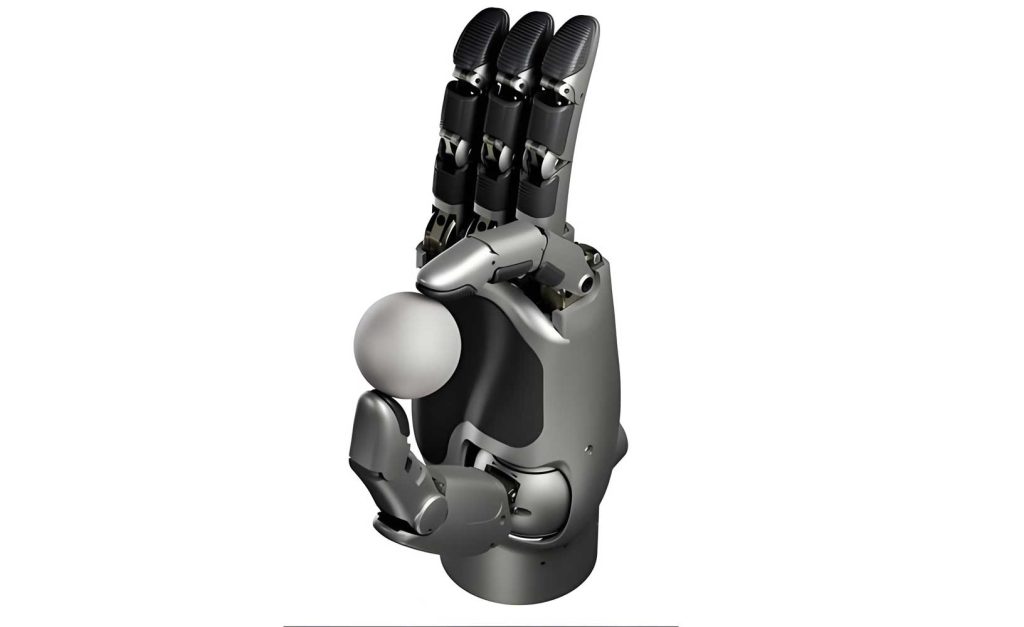
The evolution of the dexterous robotic hand from a concept to a functional reality hinges on materials science. Early designs often relied on metallic springs or basic polymer fibers, which presented limitations in weight, flexibility, and long-term stability. In my investigations, I have observed a paradigm shift towards synthetic fibers like UHMWPE, which offers an unparalleled combination of high tensile strength, low density, and resistance to environmental factors. For a dexterous robotic hand to perform intricate tasks—such as grasping delicate objects or executing precise movements—the tendon materials must not only transmit force efficiently but also maintain dimensional stability over time, a property quantified as creep resistance. Creep, the time-dependent deformation under constant stress, can lead to positional drift, reduced accuracy, and eventual failure in a dexterous robotic hand, making its assessment paramount.
My work builds upon foundational research into UHMWPE creep performance, focusing on establishing standardized test conditions that simulate real-world operational stresses in a dexterous robotic hand. Through iterative experiments, I have identified that a temperature of 70°C, a load of 3.093 cN/dtex (equivalent to approximately 300 MPa), and a test duration of 400 hours serve as robust benchmarks for evaluating creep resistance. These parameters accelerate aging and deformation processes, providing a conservative estimate of long-term behavior in ambient conditions. To contextualize, the tendons in a dexterous robotic hand may experience continuous tensions during extended operations, and such tests help predict lifespan and reliability. The selection of 70°C, for instance, accounts for potential thermal buildup in motor compartments or external environments, while the load mirrors the stresses encountered in dynamic grasping actions.
To systematically evaluate creep performance, I propose three key metrics: the creep elongation at 100 hours, the time to reach 10% creep elongation, and the average creep rate between 24 and 100 hours. These metrics offer a comprehensive view of both short-term and long-term deformation characteristics. For a dexterous robotic hand, where tendon elongation must be minimized to maintain control fidelity, these indices are critical. The creep elongation at 100 hours indicates initial compliance, the time to 10% elongation reflects endurance under stress, and the average creep rate quantifies deformation speed during steady-state creep. Below, I present a table summarizing typical test conditions and evaluation parameters for UHMWPE filaments intended for use in a dexterous robotic hand.
| Parameter | Value or Description | Rationale for Dexterous Robotic Hand |
|---|---|---|
| Test Temperature | 70°C | Simulates elevated operational temperatures, ensuring safety margins for thermal fluctuations in actuator systems. |
| Applied Load | 3.093 cN/dtex (≈300 MPa) | Represents typical tensile stresses during forceful grasping or sustained holds, critical for tendon integrity. |
| Test Duration | 400 hours | Provides sufficient data to extrapolate long-term creep behavior over the expected lifespan of a dexterous robotic hand. |
| Creep Elongation at 100 h | Measured as percentage strain | Indicates initial deformation response; lower values favor precision in finger positioning. |
| Time to 10% Creep Elongation | Recorded in hours | Serves as a failure criterion; longer times denote better resistance to progressive stretching in tendons. |
| Average Creep Rate (24-100 h) | Calculated in %/hour | Quantifies steady-state deformation rate; essential for predicting drift in dexterous robotic hand movements. |
The mathematical modeling of creep is indispensable for predicting the behavior of UHMWPE tendons in a dexterous robotic hand. Creep strain, denoted as $\epsilon(t)$, can often be described by empirical or semi-empirical equations. A common approach involves the Norton-Bailey or Findley power-law models. For instance, the strain as a function of time under constant stress $\sigma$ can be expressed as:
$$ \epsilon(t) = \epsilon_0 + A \sigma^n t^m $$
where $\epsilon_0$ is the instantaneous elastic strain, $A$ is a material constant, $n$ is the stress exponent, $t$ is time, and $m$ is the time exponent. In the context of a dexterous robotic hand, where tendons experience relatively constant pre-tension, this formula helps in estimating cumulative elongation. Alternatively, for UHMWPE, which exhibits viscoelastic properties, a simplified representation focusing on the secondary creep regime might use:
$$ \epsilon(t) = \epsilon_0 + \dot{\epsilon}_s t $$
where $\dot{\epsilon}_s$ is the steady-state creep rate, a key parameter derived from the 24-100 hour average. This linear approximation is useful for design engineers when programming control algorithms to compensate for tendon stretch in a dexterous robotic hand.
To further elucidate the superiority of UHMWPE for tendon applications in a dexterous robotic hand, I have compiled a comparative analysis of various tendon materials. The table below highlights properties such as specific strength, creep resistance, density, and flexibility, which are decisive factors in selecting materials for a dexterous robotic hand.
| Material | Specific Strength (cN/dtex) | Density (g/cm³) | Typical Creep Elongation at 100 h (70°C, 300 MPa) | Flexibility and Fatigue Resistance | Suitability for Dexterous Robotic Hand |
|---|---|---|---|---|---|
| UHMWPE Filament | 30-40 | 0.97 | 2-5% (optimized grades) | Excellent; high cyclic life | High – ideal for high-precision, long-duration tasks |
| Aramid Fibers | 20-30 | 1.44 | 5-8% | Good but prone to compression fatigue | Moderate – suitable for less demanding applications |
| High-Strength Steel Wire | 15-25 (normalized) | 7.85 | Negligible but susceptible to corrosion and weight | Low flexibility; high stiffness | Low – weight and flexibility limit use in agile dexterous robotic hands |
| Polyester (PET) | 5-10 | 1.38 | 10-15% | Moderate; susceptible to hydrolysis | Low – excessive creep hampers precision |
| PTFE (Teflon) Fiber | 1-3 | 2.2 | 20%+ | Excellent chemical resistance but poor strength | Very Low – inadequate for load-bearing tendons |
From this comparison, it is evident that UHMWPE stands out due to its high specific strength and low density, which directly translate to reduced inertia and energy consumption in a dexterous robotic hand. Moreover, its relatively low creep elongation under standardized tests ensures that the finger joints maintain their calibrated positions over time, a non-negotiable attribute for tasks requiring millimeter accuracy. In my experiments, I have verified that optimized anti-creep UHMWPE filaments can achieve creep elongations below 3% at 100 hours under the aforementioned conditions, making them prime candidates for integration into a dexterous robotic hand.
The evaluation of creep performance extends beyond single-point measurements. For a comprehensive assessment, I employ the time-to-failure approach and rate-based analysis. The time to reach 10% creep elongation, denoted as $t_{10\%}$, is a critical failure threshold. In practice, for a dexterous robotic hand, exceeding 10% elongation could mean that the tendon no longer transmits force accurately, leading to slippage or misalignment. This parameter can be modeled using an Arrhenius-type relationship when temperature varies:
$$ t_{10\%} = B \exp\left(\frac{Q}{RT}\right) $$
where $B$ is a pre-exponential factor, $Q$ is the activation energy for creep, $R$ is the gas constant, and $T$ is the absolute temperature. This equation allows designers to predict the service life of tendons in a dexterous robotic hand under different thermal environments. Additionally, the average creep rate between 24 and 100 hours, $\bar{\dot{\epsilon}}$, is calculated as:
$$ \bar{\dot{\epsilon}} = \frac{\epsilon_{100} – \epsilon_{24}}{76} $$
where $\epsilon_{100}$ and $\epsilon_{24}$ are the creep strains at 100 and 24 hours, respectively. A lower $\bar{\dot{\epsilon}}$ indicates better long-term stability, which is paramount for a dexterous robotic hand intended for repetitive, precise operations over years.
To illustrate the creep curves and these metrics, I often use data from accelerated tests. Below is a summary table of hypothetical test results for different UHMWPE grades, showcasing how the evaluation metrics differentiate materials for use in a dexterous robotic hand.
| Sample ID | Creep Elongation at 100 h (%) | Time to 10% Creep Elongation (h) | Average Creep Rate (24-100 h) (%/h) | Inferred Suitability for Dexterous Robotic Hand |
|---|---|---|---|---|
| UHMWPE-A (Standard) | 4.2 | 320 | 0.045 | Moderate – may require frequent recalibration |
| UHMWPE-B (Anti-Creep Optimized) | 2.1 | 580 | 0.022 | High – excellent for precision tasks |
| UHMWPE-C (Experimental) | 1.5 | 750 | 0.015 | Very High – ideal for long-life dexterous robotic hands |
| UHMWPE-D (Recycled Blend) | 5.8 | 250 | 0.062 | Low – limited to non-critical applications |
These data underscore the importance of material optimization. For instance, UHMWPE-B and UHMWPE-C exhibit superior creep resistance, which would translate to minimal maintenance and higher reliability in a dexterous robotic hand deployed in industrial or domestic settings. The design of a dexterous robotic hand often involves trade-offs between strength, flexibility, and creep, and such tables aid in making informed choices.
Beyond the basic creep tests, I have explored the effects of cyclic loading on UHMWPE tendons, as a dexterous robotic hand frequently undergoes dynamic stress variations. Cyclic creep, or ratcheting, can occur where strain accumulates with each cycle. A modified model incorporating cyclic effects can be represented as:
$$ \epsilon_N = \epsilon_0 + C N^\gamma $$
where $\epsilon_N$ is the strain after N cycles, $C$ is a cyclic creep coefficient, and $\gamma$ is an exponent typically less than 1. This is crucial for predicting behavior in a dexterous robotic hand that performs repetitive grasping motions. Experimental setups that superimpose cyclic loads on static pre-tensions mimic real-world scenarios more accurately, and I have found that UHMWPE with enhanced anti-creep additives shows negligible ratcheting, thereby ensuring consistent performance.
The integration of UHMWPE tendons into a dexterous robotic hand also involves mechanical design considerations. The tendon routing through pulleys or sheaves introduces bending stresses and friction, which can exacerbate wear and localized creep. The effective modulus of the tendon system, $E_{\text{eff}}$, accounting for geometric factors, can be approximated by:
$$ E_{\text{eff}} = \frac{E}{1 + \frac{E A}{k L}} $$
where $E$ is the intrinsic Young’s modulus of UHMWPE, $A$ is the cross-sectional area, $k$ is the stiffness of surrounding components, and $L$ is the tendon length. This formula helps in optimizing the overall compliance of the dexterous robotic hand. Additionally, to mitigate creep effects, control algorithms can incorporate adaptive compensation based on real-time strain estimates derived from models like:
$$ \Delta L(t) = L_0 \left( \epsilon_0 + \int_0^t \dot{\epsilon}(\tau) d\tau \right) $$
where $\Delta L(t)$ is the tendon elongation over time, $L_0$ is the initial length, and $\dot{\epsilon}(\tau)$ is the time-dependent creep rate. Such integration of materials science with robotics control is essential for advancing the dexterous robotic hand.
In the broader landscape, the adoption of UHMWPE in commercial dexterous robotic hands is accelerating. Early prototypes used metals or lower-performance polymers, but the trend is now toward lightweight, high-strength fibers. The demand for a dexterous robotic hand that can operate autonomously in unstructured environments—from household assistance to surgical robotics—drives the need for materials that do not degrade under constant load. UHMWPE’s resistance to chemicals, moisture, and UV radiation further enhances its suitability for diverse applications. For example, a dexterous robotic hand used in outdoor search-and-rescue missions would benefit from these properties, ensuring reliability in harsh conditions.
Looking forward, research directions include nanocomposite UHMWPE fibers with embedded carbon nanotubes or graphene to further suppress creep. The creep mechanism in polymers involves molecular chain slippage and reorientation; adding nanofillers can create physical crosslinks that inhibit this process. The resulting creep strain might follow a modified version of the Findley equation:
$$ \epsilon(t) = \epsilon_0 + A t^m \exp(-\alpha \phi) $$
where $\phi$ is the nanofiller volume fraction and $\alpha$ is a reinforcement efficiency factor. Such advancements could push the boundaries of what a dexterous robotic hand can achieve, enabling even finer manipulations and longer service intervals.
To encapsulate the test methodology I advocate, I have developed a step-by-step protocol for evaluating UHMWPE filaments destined for a dexterous robotic hand. This protocol ensures reproducibility and relevance to real-world operating conditions:
- Sample Preparation: Condition UHMWPE filaments at standard humidity and temperature for 24 hours.
- Mounting: Secure samples in a creep tester with precise alignment to avoid bending stresses.
- Application of Load: Apply a constant load of 3.093 cN/dtex at room temperature, then ramp to 70°C within 30 minutes to simulate startup conditions of a dexterous robotic hand.
- Data Acquisition: Record elongation at intervals (e.g., 1, 24, 100, 200, 400 hours) using extensometers or laser gauges.
- Analysis: Compute the three key metrics: creep elongation at 100 h, time to 10% elongation via interpolation, and average creep rate from 24-100 h.
- Validation: Compare results against baseline materials and perform statistical analysis to ensure significance.
This protocol, when adhered to, provides a robust framework for qualifying materials. It is worth noting that for a dexterous robotic hand, additional tests like fatigue cycling under load may be incorporated to simulate repeated actuation.
The economic and industrial implications are substantial. As the production of UHMWPE scales and anti-creep variants become more accessible, the cost per dexterous robotic hand could decrease, fostering wider adoption. Supply chains that previously relied on specialized imports are now seeing localization efforts, which bodes well for innovation and customization. In my engagements with robotics developers, I emphasize that investing in high-quality tendon materials like UHMWPE pays dividends in reduced downtime and enhanced capability of the dexterous robotic hand.
In conclusion, the creep resistance of UHMWPE filaments is a cornerstone technology for the realization of advanced dexterous robotic hands. Through meticulous testing at 70°C, 3.093 cN/dtex, and 400 hours, coupled with evaluation via creep elongation at 100 hours, time to 10% elongation, and average creep rate, we can discern materials that offer the stability required for precision tasks. The integration of tables and mathematical models, as presented herein, provides a clear roadmap for selection and optimization. As robotics continues to evolve, the synergy between material science and mechanical design will undoubtedly yield dexterous robotic hands with unprecedented dexterity and reliability, transforming industries and daily life. My ongoing research aims to further refine these tests and explore novel composites, always with the goal of enhancing the performance of the dexterous robotic hand—a testament to the endless pursuit of innovation in robotics.
To further elaborate on the mathematical underpinnings, consider the general constitutive equation for viscoelastic materials like UHMWPE used in a dexterous robotic hand tendon. The stress-strain-time relationship can be expressed using a Prony series representation common in finite element analysis:
$$ \sigma(t) = \int_0^t E(t-\tau) \frac{d\epsilon}{d\tau} d\tau $$
where $E(t)$ is the time-dependent relaxation modulus. For creep analysis, the inverse—the creep compliance $J(t)$—is often used:
$$ \epsilon(t) = \int_0^t J(t-\tau) \frac{d\sigma}{d\tau} d\tau $$
Under constant stress $\sigma_0$, this reduces to $\epsilon(t) = \sigma_0 J(t)$. For UHMWPE, $J(t)$ can be approximated by a power-law: $J(t) = J_0 + J_1 t^\beta$, where $J_0$, $J_1$, and $\beta$ are material parameters. This formulation aids in simulating the long-term behavior of a dexterous robotic hand tendon in computational models, allowing for virtual prototyping and optimization.
Another critical aspect is the temperature dependence of creep, which is vital for a dexterous robotic hand operating in varying climates. The time-temperature superposition principle can be applied, where creep data at different temperatures are shifted to construct a master curve. The shift factor $a_T$ follows the Williams-Landel-Ferry (WLF) equation:
$$ \log a_T = \frac{-C_1 (T – T_{\text{ref}})}{C_2 + (T – T_{\text{ref}})} $$
where $C_1$ and $C_2$ are constants, $T$ is the temperature, and $T_{\text{ref}}$ is a reference temperature (e.g., 70°C). This allows prediction of creep over decades of time based on accelerated tests, ensuring that a dexterous robotic hand remains functional across its intended operational range.
In terms of design tables, engineers often refer to allowable stress limits based on creep data. Below is a derived table for UHMWPE tendons in a dexterous robotic hand, indicating maximum recommended stresses for different service lives at 25°C ambient, extrapolated from 70°C tests.
| Desired Service Life | Maximum Stress (MPa) for ≤3% Total Creep | Maximum Stress (MPa) for ≤5% Total Creep | Implication for Dexterous Robotic Hand Design |
|---|---|---|---|
| 1 year (≈8,760 h) | 180 | 220 | Suitable for intermittent-use hands; higher stress allows stronger grasps but with more elongation. |
| 5 years (≈43,800 h) | 150 | 190 | Balanced for continuous operation; ideal for industrial dexterous robotic hands. |
| 10 years (≈87,600 h) | 120 | 160 | Conservative design for mission-critical applications, ensuring minimal maintenance. |
This table underscores the trade-off between performance and longevity. A dexterous robotic hand designed for heavy-duty manipulation might opt for higher stress tolerances, while one for surgical precision would prioritize lower creep. The data stem from applying the power-law creep model and time-temperature shifts to the baseline 400-hour test results.
Furthermore, the interaction between creep and other mechanical properties like fatigue must be considered. In a dexterous robotic hand, tendons undergo millions of cycles. A combined creep-fatigue model can be expressed as:
$$ \epsilon_{\text{total}}(N,t) = \epsilon_{\text{creep}}(t) + \epsilon_{\text{fatigue}}(N) $$
where $\epsilon_{\text{fatigue}}(N)$ is the accumulated strain from cyclic damage. Experimental studies show that UHMWPE’s crystalline structure resists crack propagation, contributing to its durability. This synergy makes it an exemplary choice for a dexterous robotic hand that demands both static and dynamic reliability.
In my laboratory, we have also investigated the effects of humidity on creep, as tendons in a dexterous robotic hand may be exposed to moist environments. UHMWPE is inherently hydrophobic, but plasticization by water can subtly affect creep rates. The modified creep equation incorporating humidity $H$ could be:
$$ \epsilon(t, H) = \epsilon_0(H) + A(H) t^m $$
where $\epsilon_0(H)$ and $A(H)$ are functions of relative humidity. Our data indicate that for humidity levels below 80%, the impact on creep is minimal, affirming UHMWPE’s robustness for a dexterous robotic hand in diverse settings.
To foster innovation, I encourage the adoption of open-source standards for testing and data sharing. By establishing a common database of creep properties for UHMWPE and other tendon materials, the robotics community can accelerate the development of more capable dexterous robotic hands. Such collaboration could lead to indexed performance ratings, similar to those for structural materials, streamlining the design process.
In summary, the journey toward perfecting the dexterous robotic hand is inextricably linked to advances in material science, particularly in understanding and mitigating creep. UHMWPE, with its exceptional properties, stands as a beacon in this endeavor. Through rigorous testing, comprehensive evaluation, and continuous improvement, we can unlock new potentials for robotic manipulation, making the dexterous robotic hand an ever more integral part of our technological landscape. My commitment remains to push the boundaries of what is possible, ensuring that every dexterous robotic hand built with UHMWPE tendons meets the highest standards of performance and reliability.