
The development of flexible automation is fundamentally tied to the capabilities of the robot end effector. As the critical interface between a robotic arm and its environment, the performance, adaptability, and reliability of the end effector directly determine the range of tasks a robotic system can perform. In manufacturing, logistics, and service applications, there is a growing demand for universal grippers that can handle a diverse set of objects without extensive tool-changing routines. Traditional dedicated end effectors, while efficient for repetitive tasks on identical parts, lack the flexibility needed for dynamic, low-volume, high-mix production. This limitation creates bottlenecks and increases system complexity. Therefore, the design of a versatile, mechanically adaptable end effector presents a significant engineering challenge with high practical value.
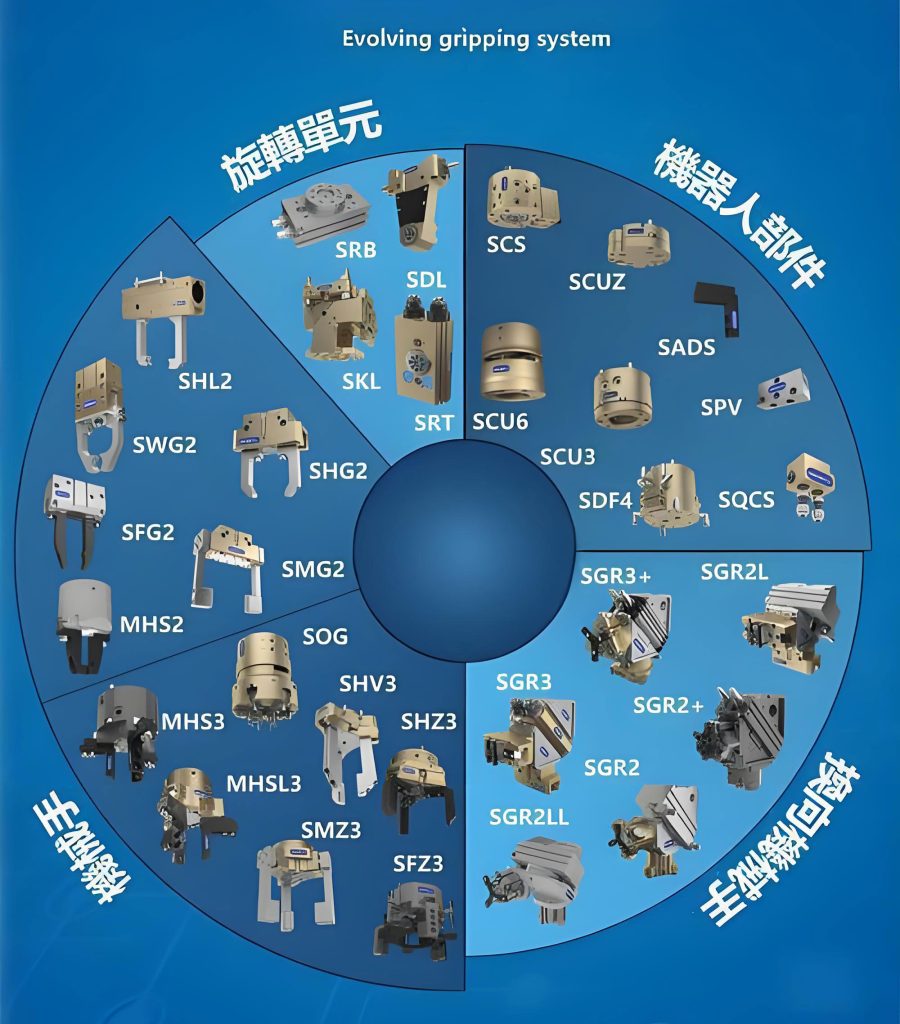
The core objective of this work is to conceptualize, design, and virtually validate a novel robotic end effector capable of adjusting its gripping posture to accommodate objects of varying shapes and sizes. The primary design philosophy centers on mechanical reconfigurability rather than complex sensing and control, aiming for robustness and cost-effectiveness. Utilizing advanced Computer-Aided Design (CAD) and Computer-Aided Engineering (CAE) tools is essential for this process. This approach allows for rapid iteration, precise virtual assembly, and comprehensive motion analysis long before physical prototyping, dramatically reducing development time and cost. In this article, I will detail the complete design journey of this adaptable end effector, from requirement analysis and component design to virtual assembly and kinematic simulation, showcasing the power of integrated digital design methodologies.
1. Design Requirements and Methodological Framework
The functional requirements for the adaptable end effector were established through an analysis of common material handling scenarios. The end effector must securely grasp objects ranging from simple geometric primitives (spheres, cylinders, blocks) to more complex or irregular shapes. The grip must be stable enough for translation and light manipulation but should not induce damaging contact stresses on fragile items. A key requirement is the ability to reconfigure the gripper’s kinematic chain to switch between different grasping modes, such as a parallel two-finger grip for flat objects and an encompassing multi-finger grip for cylindrical items.
To translate these requirements into engineering specifications, a set of design parameters was defined. These parameters guided the sizing and selection of all components. The methodology follows a structured digital product development cycle, heavily reliant on Siemens NX software for its integrated modeling, assembly, and simulation environment. The workflow is linear yet iterative: 1) 3D Parametric Part Modeling, 2) Top-Down Assembly with Constraints, 3) Engineering Drawing Generation, and 4) Motion Simulation and Analysis. This digital thread ensures consistency and enables quick validation of design changes. The core technical specifications for the end effector are summarized in the table below.
| Design Parameter | Specification / Target | Rationale |
|---|---|---|
| Number of Base Fingers | 4 | Provides inherent stability for cylindrical objects; can be reconfigured to act as 2 fingers. |
| Gripping Force Range | 10N – 80N (adjustable) | Sufficient for handling small to medium parts without damage. |
| Actuation Method | Pneumatic Cylinder (Primary Grip) + Stepper Motor (Reconfiguration) | Pneumatics for simple, powerful gripping; stepper motor for precise positional control of reconfiguration. |
| Maximum Finger Stroke | 60 mm | Determines the range of object sizes that can be grasped. |
| Reconfiguration Modes | 4-finger (90° spacing), 2-finger (180° spacing) | Enables switching between gripping modes for different object geometries. |
| Interface Standard | ISO 9409-1-50-4-M6 (or equivalent) | Ensures compatibility with standard industrial robot flanges. |
2. Detailed Component Design of the End Effector
The end effector is decomposed into three major subsystems: the mounting frame, the reconfigurable finger assembly, and the position adjustment mechanism. Each subsystem was modeled parametrically in NX, allowing dimensions to be driven by formulas linked to master parameters like desired stroke and actuator sizes.
2.1 Mounting Frame Design
The mounting frame serves as the structural backbone and integration point for the entire end effector. Its primary functions are to provide a standardized interface to the robot flange, offer rigid mounting surfaces for all actuators and mechanisms, and house the necessary routing for pneumatic lines and electrical cables. The design employs a modular plate construction for ease of manufacturing and assembly. Key components include:
- Top Plate: Features a precisely machined interface pattern (e.g., ISO 9409) with threaded holes for bolting directly to the robot’s wrist flange.
- Vertical Support Plates: Provide the primary structural connection between the top plate and the lower assembly, designed with stiffening ribs to minimize deflection under load.
- Actuator Mounting Brackets: Custom plates designed to locate and secure the pneumatic cylinder and the stepper motor. Their positions are parametrically defined based on the actuator dimensions and the required stroke.
- Corner Gussets: Used to join plates at right angles, significantly increasing the frame’s torsional stiffness.
The entire frame assembly is modeled as individual parts and then constrained together in the assembly module. Mass properties, such as the total weight and center of gravity, are calculated automatically by the software, which is crucial for robot payload calculations. The mounting frame’s design ensures that all subsequent components have a stable and accurately located foundation.
2.2 Reconfigurable Finger (Claw) Design
The finger is the end-effector component that makes direct contact with the object. For adaptability, a two-phalanx linkage design was adopted. This design offers a more natural, enveloping grip compared to a simple parallel jaw. Each finger consists of a proximal phalanx, a distal phalanx, and connecting pins. The proximal phalanx is attached to the position adjustment mechanism, while the distal phalanx is lined with a replaceable soft polymeric pad to increase friction and prevent damage to the workpiece.
The kinematics of a single finger can be analyzed as a planar four-bar linkage. The force transmission from the pneumatic cylinder piston to the fingertip is a critical metric. The mechanical advantage (MA) of the linkage, which varies throughout the grip stroke, determines the relationship between the input actuator force and the resulting gripping force at the contact point. For a simplified model, the gripping force $F_g$ can be related to the piston force $F_p$ through the instantaneous geometry of the linkages:
$$ F_g = MA(\theta) \cdot F_p \cdot \eta $$
$$ MA(\theta) \approx \frac{L_1 \sin(\phi)}{L_2 \sin(\theta)} $$
Where:
$L_1$ and $L_2$ are linkage lengths,
$\theta$ and $\phi$ are the instantaneous joint angles,
$\eta$ is the efficiency factor accounting for joint friction.
This analysis, performed during the design phase, ensures that the end effector can generate sufficient force across its entire operating range.
2.3 Position Adjustment Mechanism
This mechanism is the core innovation enabling the end effector’s reconfigurability. Its purpose is to change the angular spacing between opposing pairs of fingers. The design uses a combination of fixed and sliding mounts attached to two concentric ring components: an inner ring and an outer ring.
- Inner and Outer Rings: These rings have precisely machined radial guide slots. The inner ring is connected to the output of the stepper motor via a gear or direct coupling, allowing it to rotate relative to the outer ring, which is fixed to the main frame.
- Fixed Mounts: Two mounts are attached to the outer ring’s slots. The fingers attached to these mounts have a fixed angular position.
- Sliding Mounts: The other two mounts are attached to the inner ring’s slots. These mounts can slide radially along the slots when the inner ring rotates.
The transformation between the two primary gripping modes is governed by the relative rotation $\alpha$ of the inner ring. The resulting angular position $\beta_i$ of a finger on a sliding mount is a function of both its radial slide position $r_i$ and the ring rotation $\alpha$. For a simplified case with concentric circular slots of radius $R$, the relationship for a sliding mount’s new angular coordinate is approximately linear for small adjustments:
$$ \beta_i(\alpha) \approx \beta_{i,0} + k \cdot \alpha $$
where $k$ is a kinematic coefficient determined by the slot geometry and linkage design.
When the sliding mounts are driven to positions adjacent to the fixed mounts, the two pairs of fingers coalesce, effectively transforming the end effector from a 4-finger to a 2-finger gripper. This mechanical adjustment massively expands the functional envelope of the single end effector unit.
3. Virtual Assembly and Tolerancing Analysis
With all components modeled, the next phase is virtual assembly. In NX, a master assembly file (.prt) is created, and all part files are imported as components. The assembly is not merely a visual grouping; it is a fully constrained digital mock-up. Mating constraints are applied to define the kinematic relationships between parts:
- Touch Align / Center: Used to coaxially align pins with holes and to bring mounting faces into contact.
- Distance Constraint: Applied to set specific gaps, such as the clearance between a sliding mount and its guide slot walls.
- Parallel and Perpendicular: Used to ensure proper alignment of components like the actuator relative to the frame.
A critical step performed within the assembly environment is a 3D tolerance stack-up analysis. By assigning geometric dimensioning and tolerancing (GD&T) to critical features in the part models, the software can propagate these tolerances through the assembly constraints to predict the worst-case variation in key clearances and fits. For instance, the clearance between the sliding block and its guide slot is analyzed to ensure it never becomes negative (causing binding) or excessively large (causing slop) under all possible tolerance combinations. This virtual analysis prevents costly manufacturing errors and ensures the end effector’s reconfiguration mechanism will function smoothly in the physical world.
4. Comprehensive Motion Simulation and Analysis
The motion simulation module is used to create a dynamic digital prototype. This process validates the kinematic design and provides performance data that would be difficult to obtain otherwise.
The simulation setup involves:
1. Defining Links: Each rigid body component (or group of components) is defined as a link. The mounting frame is typically designated as the fixed base link.
2. Applying Joints: Kinematic joints replace the assembly constraints to define permissible motions. Revolute joints are applied to pin connections, sliding joints for prismatic motions (piston, sliding mounts), and a cylindrical joint for the inner ring’s rotation.
3. Assigning Drivers: Motion drivers are applied to the primary actuators. A constant velocity or a step function driver is applied to the stepper motor joint to simulate reconfiguration. A translational driver with a sinusoidal or trapezoidal displacement profile is applied to the pneumatic cylinder joint to simulate gripping cycles.
4. Solving and Animating: The solver calculates the position, velocity, and acceleration of all links over the specified time. The resulting animation visually confirms the intended operation.
Beyond animation, the simulation yields valuable quantitative data. Charts can be generated for:
– The displacement, velocity, and acceleration of the fingertips during a grip cycle.
– The angular displacement of the sliding mounts during the reconfiguration sequence.
– The transmission ratio (mechanical advantage) throughout the motion.
– Interference checks between components throughout their range of motion, ensuring no collisions occur.
The motion simulation conclusively demonstrated that the end effector design met its functional goals: smooth and synchronized finger motion for gripping, and controlled, collision-free transition between the 4-finger and 2-finger configurations. Any minor interferences detected were rectified by adjusting component geometry in the 3D model before proceeding.
5. Comparative Analysis and Design Optimization
To contextualize the design choices made, it is useful to compare the presented adaptable end effector with other common paradigms. The following table highlights key trade-offs.
| End Effector Type | Key Advantages | Key Disadvantages | Ideal Use Case |
|---|---|---|---|
| Dedicated Gripper (e.g., 2-Jaw) | High speed, high force, simple control, low cost. | Zero flexibility, requires tool changers for multiple parts. | High-volume production of identical parts. |
| Anthropomorphic Hand | Extreme dexterity, human-like manipulation. | Extremely complex, expensive, control-intensive, lower payload. | Research, service robots in human environments. |
| Universal Gripper (e.g., jamming) | Can grip highly irregular and fragile objects. | Slower cycle time, may require consumables (e.g., vacuum), limited grip force. | Bin picking of diverse, delicate items. |
| This Adaptable Mechanical End Effector | Good balance of flexibility and mechanical simplicity, robust, cost-effective, deterministic grip. | Limited to discrete set of configurations, less dexterous than a robotic hand. | Flexible automation for a known but varied part family (e.g., multiple cylinder diameters and box sizes). |
The simulation data also serves as input for design optimization. For example, the force transmission analysis might reveal a weak point in the grip cycle. Using NX’s optimization tools, one could define an objective function, such as maximizing the minimum mechanical advantage over the stroke, and set the lengths of the finger linkages as design variables. The software can then run iterations to find the optimal link dimensions that improve performance while respecting constraints like maximum package size.
6. Conclusion and Future Development
This project has successfully detailed the digital design and validation of a novel, mechanically adaptable robotic end effector. The design process, leveraging the integrated capabilities of Siemens NX software, demonstrated a highly efficient pathway from concept to a validated virtual prototype. The resulting end effector, with its reconfigurable finger positioning system, offers a compelling solution for applications requiring flexibility across a defined set of part geometries without resorting to complex, sensor-heavy, or expensive universal gripping technologies.
The motion simulation provided critical proof-of-concept, confirming the feasibility of the kinematic design for both grasping and reconfiguration motions. This virtual validation step is indispensable in modern mechanical design, effectively de-risking the project before any metal is cut. The adaptability of this end effector stems from its elegant mechanical design, allowing a single tool to perform tasks that would otherwise require multiple dedicated tools or a much more sophisticated system.
Future work will focus on several advanced areas. First, the virtual model will be used to generate detailed Finite Element Analysis (FEA) studies to optimize the structure for weight and stiffness, ensuring minimal deflection under maximum load. Second, the control logic for sequencing the stepper motor (reconfiguration) and pneumatic valve (gripping) will be developed and tested in a mechatronics simulation environment. Finally, the digital model will serve as the direct source for generating Computer-Aided Manufacturing (CAM) toolpaths, creating a seamless digital thread from design (CAD) to engineering analysis (CAE) to production (CAM). This project underscores that a well-designed, mechanically intelligent end effector remains a cornerstone of practical and effective robotic automation.