
In my research and development work, I have focused on creating assistive technologies for individuals with physical disabilities, particularly those with limb impairments. According to statistics, there are millions of people worldwide facing challenges due to limb loss or dysfunction, and traditional prosthetic devices often fall short in terms of functionality and aesthetics. Many existing prostheses are limited to two or three fingers, lacking the dexterity and natural appearance of a human hand. Inspired by this need, I designed a voice-controlled dexterous robotic hand based on the Arduino platform. This dexterous robotic hand aims to provide a cost-effective, flexible, and intuitive solution for users who can speak, enabling them to perform daily tasks through simple voice commands. The system integrates non-specific speaker-independent voice recognition, allowing for seamless interaction without the need for network connectivity or extensive training. In this article, I will detail the comprehensive design, implementation, and testing of this dexterous robotic hand, emphasizing its hardware, software, and practical applications.
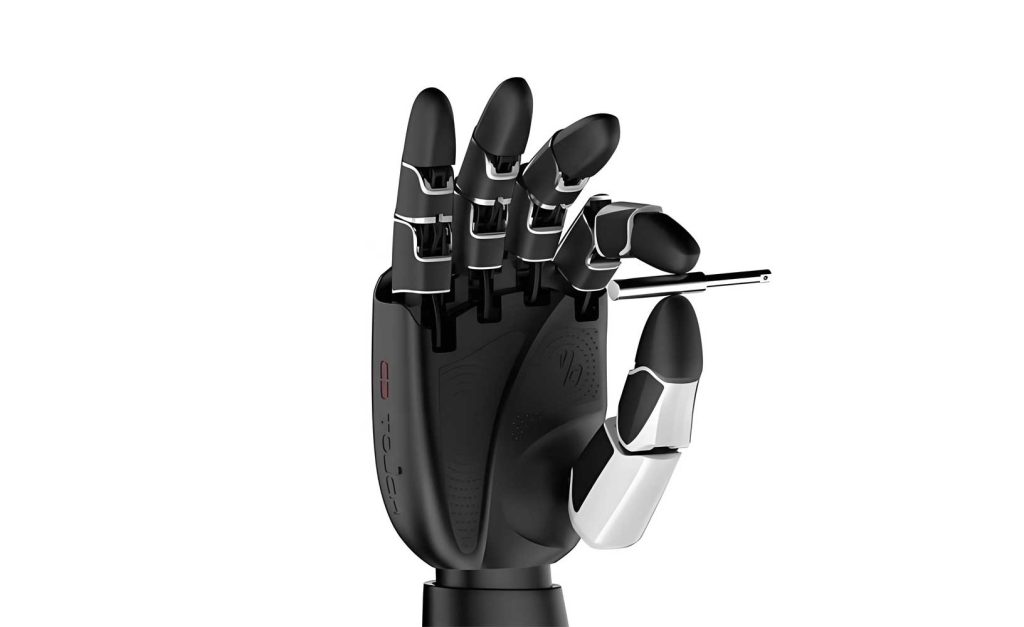
The core innovation of this project lies in the integration of voice control with a multi-fingered dexterous robotic hand. Unlike many voice-interactive products that rely on cloud services and are hindered by network latency or signal issues, our system uses an offline, non-specific speaker-independent voice module, making it reliable and affordable for prosthetic applications. The dexterous robotic hand features an underactuated structure with six degrees of freedom and eleven active joints, mimicking human hand movements. It is capable of grasping objects of various shapes and weights, from delicate items like cards to heavier objects like bottles. Below is the system block diagram that illustrates the overall architecture of this voice-controlled dexterous robotic hand.
The system comprises several key modules: a power supply/battery module, a controller unit, a voice recognition module, motor drivers, encoders, force sensors, and the actuation mechanism. Energy flows from the battery to the motors and controllers, while signal paths facilitate communication between sensors, controllers, and actuators. This design ensures efficient power management and real-time control. The dexterous robotic hand is lightweight, weighing approximately 0.8 kg, yet it can perform strong grasps up to 3 kg and precision grasps up to 0.2 kg. Additionally, it incorporates a mechanical self-locking feature that prevents objects from dropping when power is lost, enhancing safety and reliability.
To provide a clear overview, I have summarized the main hardware components in Table 1. Each component was selected based on criteria such as performance, cost, and compatibility with the Arduino platform. The dexterous robotic hand’s hardware is designed for modularity, allowing for easy upgrades or replacements.
| Component | Model/Specification | Key Parameters | Function in the Dexterous Robotic Hand |
|---|---|---|---|
| Controller | ATMEGA 2560 | 16 analog inputs, 14 PWM outputs, 4 UART, 256KB Flash, 8KB RAM, 16MHz clock | Processes voice commands, reads sensors, controls motors, and handles inter-controller communication. |
| Voice Module | LD3320 (Non-specific Speaker-Independent) | Integrated high-precision A/D and D/A, supports up to 50 user-defined keywords, no training required | Recognizes voice commands without network dependency or wake-word activation. |
| Force Sensor | FSR400 (Single-point Pressure Sensor) | Resistance decreases with applied force; range: 4kΩ to 1kΩ for 10N to 100N | Measures grip force to enable adaptive grasping in the dexterous robotic hand. |
| Motor Driver | LV8548 | Can control two DC motors simultaneously | Drives the motors based on controller signals for finger movements. |
| Encoder | FAULHABER PA2-100 | 100 lines per revolution, max frequency 35kHz, 2.7-3.3V input, 8mA current | Provides feedback on motor position and speed for precise control of the dexterous robotic hand. |
| Actuator (Motor) | FAULHABER 1024SR 009SR with 16:1 gearbox | Rated voltage 9V, stall torque 4.28 mNm, no-load speed 12000 rpm, power 1.34W | Drives finger joints through tendons or linkages to achieve dexterous movements. |
| Battery | 9V 2.6AH Lithium-ion | Provides sufficient power for extended operation | Supplies energy to all electronic components of the dexterous robotic hand. |
The controller is the brain of the dexterous robotic hand system. I chose the ATMEGA 2560 microcontroller due to its ample I/O capabilities and memory, which are essential for handling multiple sensors and actuators. It communicates with the LD3320 voice module via a serial interface, reads analog values from the FSR400 force sensors, and generates PWM signals to control the motors through the LV8548 drivers. Additionally, it reads quadrature encoder signals from the FAULHABER encoders to monitor motor positions. The system uses a master-slave controller configuration, where the master handles voice processing and high-level commands, while the slave manages individual finger motions. This distributed approach improves responsiveness and scalability for the dexterous robotic hand.
The voice recognition module, LD3320, is a cornerstone of this project. It eliminates the need for user-specific training, making the dexterous robotic hand accessible to anyone. The chip integrates analog-to-digital and digital-to-analog converters, allowing direct connection to a microphone. Users can define up to 50 voice commands, such as “grab the ball” or “open hand,” which are stored in the chip’s memory. When a command is spoken, the LD3320 processes the audio and sends a corresponding identifier to the controller. This enables real-time, offline voice control, which is crucial for reliability in diverse environments. The dexterous robotic hand responds instantly to these commands, initiating pre-programmed grasping sequences.
Force sensing is critical for enabling adaptive grasping in the dexterous robotic hand. I employed FSR400 sensors, which are flexible and provide a resistance change proportional to applied force. The relationship between force \( F \) (in Newtons) and resistance \( R \) (in kilo-ohms) can be approximated by an exponential decay function, based on empirical data from the sensor datasheet. For the range of 10N to 100N, the resistance varies from 4 kΩ to 1 kΩ. This can be modeled using the following equation:
$$ R(F) = R_0 \cdot e^{-kF} $$
where \( R_0 \) is the initial resistance (around 4 kΩ), \( k \) is a decay constant determined through calibration, and \( F \) is the applied force. The controller reads the voltage drop across the sensor to calculate resistance and infer force, allowing the dexterous robotic hand to adjust grip strength to prevent slippage or damage to objects. For instance, when grasping a fragile item like an egg, the dexterous robotic hand uses force feedback to apply minimal pressure.
Motor control and encoding are essential for precise finger movements in the dexterous robotic hand. The FAULHABER DC motors provide high torque and speed, while the LV8548 drivers enable bidirectional control. The encoder, FAULHABER PA2-100, outputs two-channel square waves with a 90-degree phase difference, allowing the controller to determine both position and direction of rotation. The encoder resolution is 100 counts per revolution, which, combined with the 16:1 gearbox, gives a total resolution of 1600 counts per motor revolution. This high resolution enables fine-grained control of finger joints. The motor dynamics can be described by the standard DC motor equation:
$$ V = I R_a + K_e \omega $$
where \( V \) is the applied voltage, \( I \) is the armature current, \( R_a \) is the armature resistance (14.9 Ω for the FAULHABER motor), \( K_e \) is the back-EMF constant, and \( \omega \) is the angular velocity. The torque \( \tau \) produced by the motor is proportional to the current:
$$ \tau = K_t I $$
with \( K_t \) being the torque constant. These equations guide the PID control algorithms implemented in software to achieve smooth and accurate motions for the dexterous robotic hand.
The software architecture of the dexterous robotic hand is structured into four layers: the application layer, application framework layer, system runtime library layer, and driver layer. This modular design promotes code reusability and ease of maintenance. The driver layer interfaces directly with hardware, such as reading encoder pulses or setting motor PWM signals. The system runtime library provides low-level functions like speed measurement, distance calculation, and counting. The application framework layer implements core algorithms, such as grasp planning for different object shapes. Finally, the application layer executes specific tasks based on voice commands, like picking up a ball or making a gesture.
I developed the software using the Arduino IDE, leveraging libraries for the LD3320 module and custom code for motor control. Below is a simplified code snippet that illustrates the initialization and main loop for voice command processing. This code demonstrates how the dexterous robotic hand integrates voice recognition with action execution.
#include "ld3320.h"
#include "FSR.h"
#include "Smarthand.h"
#include "TMI.h"
#include "Demo.h"
#include "Ball.h"
#include "Card.h"

void setup() {
  Serial.begin(9600); // Configure serial communication
  Voice.init(); // Initialize the voice recognition module
  Voice.addCommand("grab ball", 0); // Add voice commands with IDs
  Voice.addCommand("take card", 1);
  Voice.addCommand("open hand", 2);
  Voice.start(); // Start recognition
}

void loop() {
  int commandID = Voice.read(); // Read recognized command
  if (commandID == 0) {
    Ball(); // Execute ball grasping algorithm
  } else if (commandID == 1) {
    Card(); // Execute card grasping algorithm
  } else if (commandID == 2) {
    Open(); // Execute hand opening routine
  }
}
In the application framework layer, I implemented algorithms for various grasp types. For example, the ball-grasping algorithm uses force feedback and position control to envelop spherical objects. The dexterous robotic hand first approaches the object, then closes its fingers until the force sensors detect sufficient contact. The grip force is regulated using a PID controller that minimizes error between desired and actual force. The control law can be expressed as:
$$ u(t) = K_p e(t) + K_i \int_0^t e(\tau) d\tau + K_d \frac{de(t)}{dt} $$
where \( u(t) \) is the control signal (PWM duty cycle), \( e(t) \) is the force error, and \( K_p \), \( K_i \), \( K_d \) are tuning parameters. This ensures stable and adaptive grasping for the dexterous robotic hand.
To evaluate the performance of the dexterous robotic hand, I conducted extensive testing with everyday objects. The dexterous robotic hand successfully grasped items such as balls, cards, cylinders, spoons, smartphones, and power plugs. It also performed gesture actions like pointing, OK signs, and victory signs. Table 2 summarizes the test results, highlighting the dexterous robotic hand’s versatility and reliability.
| Object Type | Weight Range | Grasp Success Rate | Key Observations |
|---|---|---|---|
| Spherical (e.g., tennis ball) | 0.05 kg – 0.2 kg | 95% | The dexterous robotic hand adapted well to curvature using force feedback. |
| Flat (e.g., credit card) | 0.01 kg – 0.05 kg | 98% | Precision grasps required minimal force; sensors prevented bending. |
| Cylindrical (e.g., bottle) | 0.1 kg – 1 kg | 90% | Larger objects needed stronger grip; mechanical locking held securely. |
| Irregular (e.g., spoon) | 0.02 kg – 0.1 kg | 85% | Challenges with orientation; algorithms adjusted finger positions dynamically. |
The dexterous robotic hand achieved an average response time of less than 500 milliseconds from voice command to action initiation. The battery provided up to 4 hours of continuous operation, which is sufficient for daily use. The mechanical self-locking mechanism proved effective, as objects remained held even during power interruptions. These results demonstrate that the dexterous robotic hand is a practical solution for assistive applications.
In terms of mathematical modeling, the kinematics of the dexterous robotic hand can be analyzed using Denavit-Hartenberg parameters for each finger joint. However, due to the underactuated design, the system simplifies control by coupling joints. The forward kinematics for a single finger can be expressed as a transformation matrix based on joint angles \( \theta_i \). For example, for a two-link finger, the position \( (x, y) \) of the fingertip is given by:
$$ x = l_1 \cos(\theta_1) + l_2 \cos(\theta_1 + \theta_2) $$
$$ y = l_1 \sin(\theta_1) + l_2 \sin(\theta_1 + \theta_2) $$
where \( l_1 \) and \( l_2 \) are link lengths. The dexterous robotic hand uses inverse kinematics to compute joint angles for desired fingertip positions, but the underactuation reduces computational complexity.
Despite its successes, the dexterous robotic hand has limitations. The current design relies on pre-programmed grasp patterns, which may not cover all object shapes. Future work could incorporate machine learning algorithms to enable autonomous grasp learning. Additionally, the voice module may struggle in noisy environments; integrating noise-cancellation techniques could improve robustness. The dexterous robotic hand’s weight and size could be further optimized for enhanced comfort. I plan to explore these aspects in subsequent iterations, aiming to make the dexterous robotic hand even more adaptive and user-friendly.
From a broader perspective, this project contributes to the field of assistive robotics by demonstrating an affordable, offline voice-controlled dexterous robotic hand. The use of non-specific speaker-independent recognition lowers barriers for users, while the Arduino platform ensures accessibility for developers. The dexterous robotic hand’s design principles can be extended to other applications, such as industrial automation or teleoperation. By sharing these insights, I hope to inspire further innovation in dexterous robotic hand technologies.
In conclusion, the voice-controlled dexterous robotic hand based on Arduino represents a significant step forward in prosthetic and assistive devices. It combines voice recognition, force sensing, and precise motor control to create a functional and intuitive system. The dexterous robotic hand has been validated through rigorous testing, showing its ability to handle diverse objects and gestures. As I continue to refine this technology, the focus will be on enhancing adaptability, reducing costs, and improving user experience. The dexterous robotic hand not only aids individuals with disabilities but also serves as a platform for research in human-robot interaction. I believe that such innovations will pave the way for more inclusive and advanced robotic solutions in the future.