
In industrial automation, particularly for plastic assembly applications, there is a critical need for robotic manipulation systems that are both cost-effective and capable of delicate, precise operations. Traditional robotic grippers and hands often suffer from high manufacturing costs, structural complexity, and insufficient flexibility, limiting their widespread adoption. To overcome these challenges, this work presents the development of a novel dexterous robotic hand. This dexterous robotic hand employs a multi-joint, tendon-driven architecture with remotely concentrated actuators, aiming to significantly reduce cost and weight while enhancing flexibility, control accuracy, and real-time performance. The design philosophy centers on mimicking key aspects of the human hand to achieve intuitive and stable grasping for fragile plastic components.
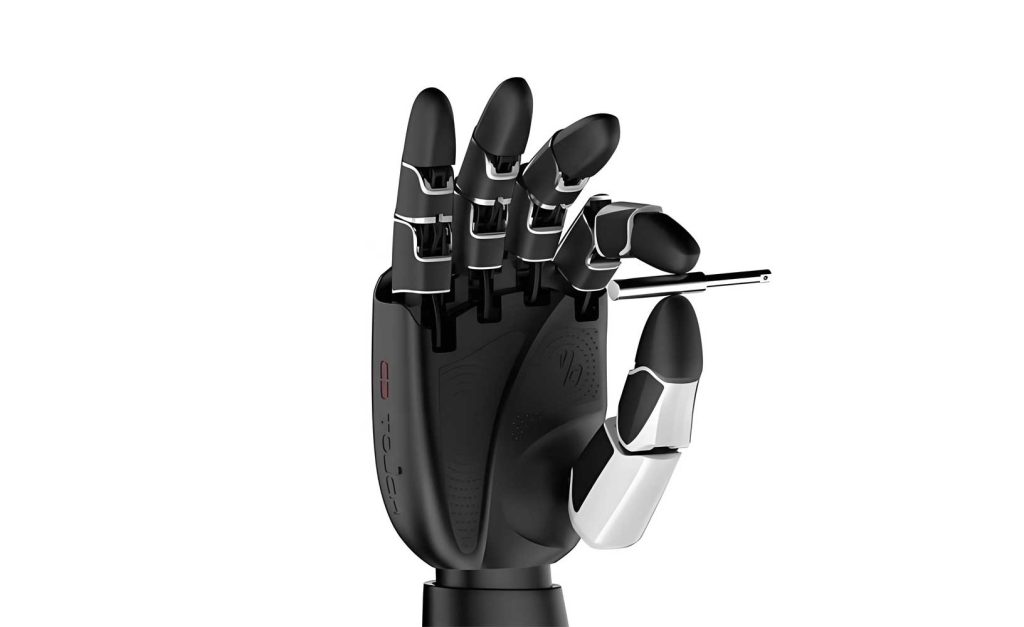
The overall architecture of the dexterous robotic hand features a four-finger configuration, approximating the human hand’s morphology for versatile manipulation. Each finger, except the thumb, incorporates two active degrees of freedom: the proximal interphalangeal (PIP) joint and the distal interphalangeal (DIP) joint. Motion at these joints is achieved through a four-bar linkage mechanism, driven independently by stepper motors via spatial tendon-sheath transmission. This approach decouples the heavy actuators from the moving hand structure, placing them in a remote base. Consequently, this dexterous robotic hand gains improved payload-to-weight ratio, greater flexibility, and more adaptable system layout compared to directly driven designs.
The mechanical design is segmented into several core subsystems: the thumb assembly, the three-finger group (index, middle, ring), the palm, and the fixed base. The thumb is designed with a basal abduction joint providing lateral movement, significantly expanding the dexterous robotic hand’s workspace. For simplicity and to reduce control complexity, the thumb’s distal joint is locked in a slightly flexed posture, enabling effective opposition with the other fingers. The remaining fingers share an identical design, each utilizing a four-bar linkage to couple the motion of the two joints from a single actuator input per joint. Key dimensional parameters for the fingers are summarized in Table 1.
| Finger Designation | Total Length (mm) | Active Joints | Actuation Method |
|---|---|---|---|
| Thumb | Approx. 100 | Basal Abduction, Proximal | Tendon-driven (2 tendons) |
| Index Finger | 98 | Proximal (PIP), Distal (DIP) | Tendon-driven (2 tendons) |
| Middle Finger | 107 | Proximal (PIP), Distal (DIP) | Tendon-driven (2 tendons) |
| Ring Finger | 98 | Proximal (PIP), Distal (DIP) | Tendon-driven (2 tendons) |
The kinematics of the four-bar linkage in each finger can be described mathematically. Let links \(a\), \(b\), \(c\), and \(d\) form the linkage, with links \(a\) and \(c\) being the input links connected to the fixed base (representing the driving point for the PIP and DIP joints, respectively). The output angle \(\phi\) of the distal link \(d\) (simulating finger flexion) is a function of the input angle \(\theta\). Using the law of cosines for the triangle formed during motion:
$$d^2 = a^2 + b^2 – 2ab\cos(\theta)$$
Furthermore, the relationship between the input angular displacement \(\Delta\theta\) and the resulting tendon linear displacement \(\Delta L\) is linear for small sheave radii:
$$\Delta L = r \cdot \Delta\theta$$
where \(r\) is the effective radius of the drive pulley. This linear relationship simplifies the control model for the dexterous robotic hand.
The palm structure is designed with a curved, anthropomorphic profile to increase the internal grasping volume and enhance stability during object enclosure. It is constructed from two primary shells that house the tendon routing paths and pre-tensioning mechanisms. The base unit serves as the centralized repository for all eight stepper motors. This remote concentration of mass drastically reduces the inertia of the moving hand, a key advantage for dynamic manipulation. The selected stepper motor model, BS42HB47-01, provides adequate torque for tendon actuation while being cost-effective. Its specifications are detailed in Table 2.
| Parameter | Value | Unit |
|---|---|---|
| Model | BS42HB47-01 | – |
| Step Angle | 1.8 | ° |
| Motor Length | 47 | mm |
| Holding Torque | 0.317 | N·m |
| Rated Current | 1.2 | A |
| Phase Resistance | 3.3 | Ω |
| Phase Inductance | 2.8 | mH |
| Weight | 0.35 | kg |
The tendon-sheath transmission system is fundamental to the performance of this dexterous robotic hand. It allows the transmission of force and motion over distance with minimal backlash and high flexibility. Each joint is actuated by a pair of tendons in an antagonistic configuration, enabling both flexion and extension. The tension \(T\) in the tendon required to produce a desired torque \(\tau\) at a joint with pulley radius \(r\) is given by:
$$T = \frac{\tau}{r}$$
In practice, friction within the sheath reduces the transmission efficiency. The relationship between input tension \(T_{in}\) and output tension \(T_{out}\) for a tendon wrapped around a curve with a total bend angle \(\beta\) is modeled by the capstan equation:
$$T_{out} = T_{in} e^{-\mu \beta}$$
where \(\mu\) is the coefficient of friction between the tendon and sheath. This efficiency loss must be compensated for during motor torque selection and control algorithm design. The system includes adjustable pre-tensioning devices to maintain tendon tautness and eliminate slack, which is crucial for precise positional control of the dexterous robotic hand.
To evaluate the dynamic performance and validate the mechanical design, comprehensive simulations were conducted using ADAMS multi-body dynamics software. The simulated motion of the middle finger’s proximal joint was analyzed, yielding time-domain data for displacement, velocity, and acceleration. The results, summarized in Table 3, demonstrate smooth and stable trajectory tracking without significant vibrations or abrupt jerks, confirming the structural soundness of the design.
| Simulation Time (s) | Displacement (mm) | Velocity (mm/s) | Acceleration (mm/s²) |
|---|---|---|---|
| 0.0 | 30.0 | 0.0 | 0.0 |
| 5.0 | 41.2 | 12.5 | 2.1 |
| 10.0 | 55.0 | 15.0 | 0.5 |
| 15.0 | 48.8 | -5.0 | -2.0 |
| 20.0 | 40.0 | -10.5 | -1.1 |
| 25.0 | 35.0 | -5.0 | 1.0 |
| 30.0 | 38.8 | 3.8 | 1.8 |
| 35.0 | 45.0 | 6.3 | 0.5 |
| 40.0 | 50.0 | 5.0 | -0.3 |
The control system architecture for this dexterous robotic hand is based on distributed microcontrollers that command the individual stepper motors. Given the tendon-driven transmission, implementing a form of closed-loop control is beneficial to account for nonlinearities like friction and elasticity. While the stepper motors can be operated in open-loop for position control, integrating joint angle sensors (e.g., potentiometers or encoders at the joints) would provide direct feedback, enhancing the accuracy and reliability of the dexterous robotic hand. The basic control law for each joint can be a proportional-derivative (PD) controller:
$$u(t) = K_p e(t) + K_d \frac{de(t)}{dt}$$
where \(u(t)\) is the control signal (e.g., motor step rate), \(e(t)\) is the error between desired and measured joint angle, and \(K_p\), \(K_d\) are proportional and derivative gains, respectively.
An essential performance metric for any dexterous robotic hand is its grasping capability. The maximum grasping force \(F_g\) exerted by a fingertip is a function of the tendon tension \(T\) and the effective mechanical advantage of the linkage. For a simple pinching grasp between the thumb and a finger, the normal force \(F_n\) can be approximated from the static equilibrium of the finger mechanism. A more general formula for the total grasping force in an enveloping grasp considers the sum of contributions from all contact points:
$$F_{total} = \sum_{i=1}^{N_f} (\mu_i \cdot F_{n,i})$$
where \(N_f\) is the number of fingers in contact (typically 4 for this dexterous robotic hand), \(\mu_i\) is the coefficient of friction at the \(i\)-th contact, and \(F_{n,i}\) is the corresponding normal force. The normal force is itself related to the actuator torque and the hand’s kinematic configuration. Material selection plays a vital role in achieving the desired friction and compliance. Table 4 outlines the primary materials used in key components of the dexterous robotic hand.
| Component | Primary Material | Key Properties | Design Rationale |
|---|---|---|---|
| Finger Links & Joints | Aluminum Alloy (e.g., 6061) | Low density, good machinability, moderate strength | Minimize moving mass, ease of fabrication |
| Tendons | Stainless Steel Wire Rope | High tensile strength, flexibility, corrosion resistance | Reliable force transmission, durability |
| Sheaths | PTFE-lined Coiled Steel | Low friction, high bend tolerance | Minimize transmission losses, allow complex routing |
| Palm & Cover Shells | ABS Plastic (3D printed) | Lightweight, impact resistant, easily shaped | Rapid prototyping, complex geometry, electrical insulation |
| Drive Pulleys & Bearings | Acetal (POM) / Steel | Low wear, smooth surface | Reduce friction, ensure precise tendon guidance |
The advantages of the presented dexterous robotic hand design become evident when compared to alternative approaches. A key innovation is the synergistic use of remote motor concentration and tendon-sheath transmission. This combination directly addresses the common drawbacks of integrated motor designs, such as high inertia, limited workspace due to bulky fingers, and elevated cost. The flexibility of tendon routing allows the dexterous robotic hand to adopt a more anthropomorphic form factor without the constraints of housing motors within the palm or fingers. Furthermore, the inherent compliance of the tendon system provides passive safety, which is paramount when handling delicate plastic parts. This compliance can be modeled as a series elasticity in the actuation path. The effective stiffness \(k_{eff}\) experienced at the joint is a combination of the tendon elasticity \(k_t\) and the joint structure’s stiffness \(k_j\), approximated for small deflections by:
$$\frac{1}{k_{eff}} \approx \frac{1}{k_t} + \frac{1}{k_j}$$
This series elasticity can help absorb impact forces and distribute contact loads more evenly across the grasped object.
From a system integration perspective, the dexterous robotic hand is designed to be modular. Each finger module, complete with its linkages, pulleys, and tendon termination points, can be assembled and tested independently before integration into the palm. Similarly, the motor base is a self-contained unit. This modularity facilitates maintenance, repair, and potential design iterations. For instance, exploring different finger lengths or linkage ratios for specialized tasks becomes straightforward. The power and signal connections to the hand are consolidated through the base, requiring only a multi-conductor cable bundle to connect to the main control cabinet, simplifying the integration of the dexterous robotic hand into an existing robotic arm or assembly station.
Experimental validation of the dexterous robotic hand prototype involved basic functionality tests, including individual finger actuation, coordinated pinching, and enveloping grasps of typical plastic assembly components like small housings, gears, and connectors. The hand demonstrated the ability to securely hold objects weighing up to 0.5 kg without slippage and to perform gentle placement operations. The independent rotation axis for each finger, enabled by the separated tendon drives, proved crucial for adapting to irregular object shapes—a core requirement for dexterous manipulation. The step resolution of the chosen motors, combined with the transmission ratio, provided sufficiently fine angular control for the intended tasks.
Looking forward, there are several avenues to enhance the capabilities of this dexterous robotic hand. The integration of tactile and force sensors at the fingertips would provide rich feedback for implementing advanced grip force control and slip detection algorithms, moving towards more autonomous and adaptive manipulation. Exploring underactuated differential mechanisms within the fingers could further reduce the number of actuators while maintaining adaptive grasp shapes. Additionally, refining the tendon routing to minimize friction and implementing real-time tension sensing could improve the fidelity of force control. The ultimate goal is to develop a dexterous robotic hand that is not only low-cost and simple but also intelligent and highly responsive, bridging the gap between robust industrial grippers and fully anthropomorphic research hands.
In summary, this work details the design and analysis of a practical dexterous robotic hand tailored for plastic assembly line applications. By strategically employing spatial tendon-sheath transmission and remote actuator concentration, the design achieves a favorable balance between performance, cost, and complexity. The four-finger, multi-joint configuration provides a versatile grasping workspace, while the mechanical design centered on four-bar linkages ensures reliable and controllable motion. Simulation and preliminary testing confirm the design’s viability. This dexterous robotic hand represents a step towards more accessible and flexible automation solutions for industries handling delicate, non-standard components.