
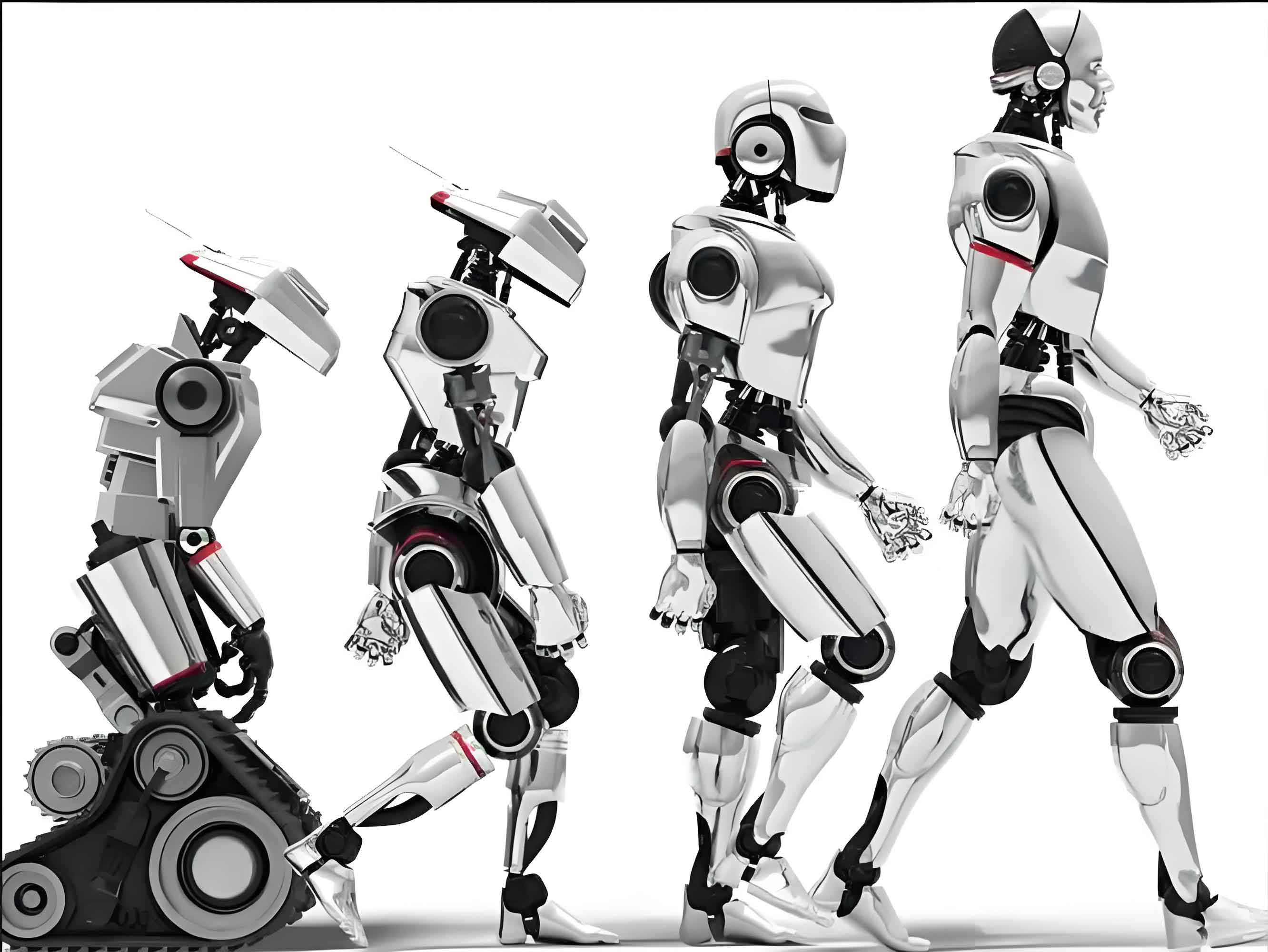
The advancement of intelligent mine construction in China, coupled with the deep integration of digital and intelligent technologies into the mining sector, has propelled the field of mining robotics into a period of rapid development. The widespread deployment of intelligent robots in mines demonstrates significant potential for enhancing production efficiency, reducing labor intensity, and mitigating safety risks associated with hazardous operations.
1. Developmental Background and Policy Evolution
The trajectory of intelligent mining robots in China has been significantly shaped by national policy directives aimed at fostering high-quality development within the coal industry. A pivotal moment arrived in 2019 with the release of the inaugural Key R&D Catalog for Coal Mine Robots. This document strategically outlined 38 types of robots across five major categories, providing the first comprehensive roadmap for robotic applications in underground coal mines and setting a clear direction towards unmanned and minimally manned operations.
Subsequent years witnessed a series of supportive policies. Notably, the Guiding Opinions on Accelerating the Intelligent Development of Coal Mines (2020) established phased goals for intelligent transformation. The “14th Five-Year” Robot Industry Development Plan (2021) emphasized breaking through common technological bottlenecks and developing robotic solutions tailored for mining scenarios. Further impetus came from the “Robot+” Application Action Implementation Plan (2023), which specifically called for promoting intelligent robots in areas such as intelligent mining, disaster prevention, inspection, and rescue.
This policy framework culminated in a significant expansion and refinement of the original catalog. In 2025, the Key R&D Catalog for Intelligent Mining Robots was officially released. It expanded the scope from coal mines to the broader mining industry, increased the number of robot types, and explicitly incorporated “intelligent” requirements. The evolution from the original to the new catalog is summarized below:
| Aspect | Original Catalog (2019) | New Catalog (2025) |
|---|---|---|
| Scope | Coal Mines | Mining Industry (Broad) |
| Categories | 5 | 7 |
| Robot Types | 38 | 56 |
| New Emphases | Basic robotic functions | “Intelligent” capabilities; Added Mineral Processing and Auxiliary Operation categories. |
This progression underscores a strategic shift from defining basic robotic applications to demanding higher-level autonomy, intelligence, and coverage of a wider range of mining processes, including surface operations and mineral processing.
2. Research Landscape and Current Status
Driven by policy and industry demand, research and development in mining robotics have accelerated markedly. Analysis of academic publications, patent filings, and talent cultivation reveals distinct trends and characteristics within the field.
2.1 Literature and Patent Trends
The volume of scholarly literature and patents related to “mine robots” or “coal mine robots” has seen exponential growth since 2019. This surge aligns directly with the release of the initial key R&D catalog, indicating a successful translation of policy guidance into active research and development efforts.
Topic analysis within these publications, however, reveals a skewed distribution. Research efforts are heavily concentrated on specific types of intelligent robots. Inspection robots and rescue robots dominate the literature and patent landscape. This concentration can be attributed to the relative maturity of certain underlying technologies. The core modules required for these robots—perception, planning, and control—share significant common ground with the rapidly advancing field of autonomous vehicles. Technologies like Simultaneous Localization and Mapping (SLAM), path planning algorithms, and sensor fusion, which are now widely deployed in commercial autonomous driving, provide a strong foundation for developing mobile inspection and rescue platforms.
For instance, path planning for an inspection robot in a tunnel can leverage algorithms similar to those used for lane-keeping and obstacle avoidance in autonomous cars. The core decision-making logic involves processing sensor data (LiDAR, camera) to build an environmental model and then calculating an optimal or safe trajectory. A simplified representation of a common path planning cost function used in such contexts might be:
$$ J(\tau) = w_{s} \cdot J_{smooth}(\tau) + w_{o} \cdot J_{obstacle}(\tau) + w_{g} \cdot J_{goal}(\tau) $$
where $\tau$ is the trajectory, and the cost $J$ is a weighted sum of smoothness, obstacle avoidance, and progress toward the goal.
In contrast, other categories of intelligent robots, such as intelligent tunneling machine clusters or intelligent mineral processing robots, face more complex, domain-specific challenges involving heavy-duty mechanical interaction, complex process control, and harsh environmental adaptation. These challenges have resulted in a slower pace of research dissemination and a less balanced development across different robot types.
2.2 Analysis of Research Focus and Talent Development
A closer look at the research within popular categories like inspection robots reveals another layer of imbalance. Studies predominantly focus on the “patrolling” aspect—navigation, positioning, and mobility—while the “inspection” aspect—automated fault diagnosis, defect identification, and data analytics using computer vision or acoustic analysis—receives comparatively less attention. This indicates that while the platforms are becoming more autonomous in movement, their core value-adding analytical intelligence is still an area for growth.
Concurrently, China has established a robust ecosystem for cultivating expertise in this field. Leading universities and research institutes have founded specialized laboratories and schools focused on intelligent mining and robotics. This structured approach to talent development is essential for providing the sustained innovation required to overcome existing technological bottlenecks.
The table below summarizes the key characteristics of the current research and development landscape for mining intelligent robots:
| Area | Status & Trends | Implied Challenge/Opportunity |
|---|---|---|
| Research Volume | Rapid growth post-2019; high concentration on Inspection/Rescue robots. | Need for broader, balanced R&D across all catalog categories. |
| Technological Foundation | Mobile robots benefit from spillover from autonomous vehicle tech (perception, planning, control). | Heavy-interaction, process-specific robots lack such transferable foundations. |
| Research Depth | Focus on robot “mobility” over “analytical intelligence” (e.g., fault diagnosis). | Urgent need to integrate advanced AI for condition monitoring and predictive maintenance. |
| Talent & Infrastructure | Establishment of national key labs and specialized university programs. | Creating a pipeline for advanced research and system-level innovation. |
3. Typical Application Scenarios of Intelligent Mining Robots
The concerted push for R&D has yielded tangible results, with numerous intelligent robots transitioning from laboratories to operational mining environments. The following sections detail typical application scenarios aligned with the seven major categories of the new catalog, highlighting implemented technologies and benefits.
3.1 Intelligent Tunneling Robots
Intelligent tunneling represents a critical frontier for improving safety and efficiency in underground development. Traditional drilling and blasting methods are being replaced by integrated intelligent tunneling machine clusters. These systems combine roadheaders, bolting machines, and conveyors into a coordinated unit. Key technologies enabling this include:
- Autonomous Guidance: Using laser guidance, inertial measurement units (IMUs), and visual sensing to maintain precise heading and grade.
- Adaptive Cutting: Employing sensors to detect rock hardness and adjust cutting parameters in real-time, optimizing performance and reducing tool wear.
- Remote Operation: Allowing operators to control the machine cluster from a safe, remote location.
Another standout application is the intelligent shotcreting robot. This intelligent robot automates the process of spraying concrete for ground support. It typically uses a robotic arm mounted on a mobile platform. Through trajectory planning and real-time feedback control, it achieves more consistent spray thickness, reduces rebound (material waste), and most importantly, removes workers from a dusty and hazardous environment. The automation of this process is a direct example of an intelligent robot taking over a dangerous, repetitive manual task.
3.2 Intelligent Mining Robots
On the coal extraction front, the concept of an intelligent longwall mining robot cluster is becoming a reality. This involves the synergistic automation of the shearer, hydraulic roof supports (shields), and armored face conveyor (AFC). The system’s intelligence is demonstrated through:
- Coal-Rock Interface Recognition: Using gamma-ray, infrared, or visual sensors to guide the shearer’s cutting horizon automatically.
- Sequential Automated Support Advancement: Hydraulic shields follow the shearer and advance automatically based on a predefined sequence, maintaining constant support close to the face.
- Three-Machine Coordination: The shearer, AFC, and supports communicate to optimize their movements, preventing bottlenecks and overloads.
Furthermore, intelligent advanced support robots are deployed in the gate roads ahead of the face. These mobile, self-advancing support units replace traditional manual timbering or static supports, enhancing safety in these critical roadways by providing continuous, automated roof support as the face progresses.
3.3 Intelligent Transportation Robots
Transportation is one of the most mature areas for intelligent robot application, particularly in open-pit mining.
- Open-pit Mine Haulage: Unmanned haul trucks (UHTs) are now deployed at scale in several major Chinese surface mines. These intelligent robots operate using high-precision GNSS, LiDAR, and radar for perception and navigation. A central fleet management system dispatches tasks, coordinates traffic, and monitors the health of the entire fleet. The benefits include eliminating driver risk in hazardous areas, enabling 24/7 operation, and optimizing haulage cycles for fuel efficiency.
- Underground Trackless Transport: In underground mines, the challenge is greater due to confined spaces, poor lighting, and complex layouts. Nonetheless, progress is being made with unmanned LHDs (Load-Haul-Dump vehicles) and rubber-tyred personnel carriers. These intelligent robots rely heavily on robust SLAM algorithms, 5G communication for low-latency remote control or supervision, and advanced obstacle detection to navigate the dynamic underground environment safely.
The control logic for an unmanned haul truck navigating a mine haul road can be framed as a model predictive control (MPC) problem:
$$ \begin{aligned} \min_{u} & \quad \sum_{k=0}^{N-1} \left( \| x(k) – x_{ref}(k) \|_Q^2 + \| u(k) \|_R^2 \right) \\ \text{s.t.} & \quad x(k+1) = f(x(k), u(k)) \\ & \quad u_{min} \leq u(k) \leq u_{max} \\ & \quad \text{Collision-free constraints} \end{aligned} $$
where $x$ is the vehicle state (position, speed), $u$ is the control input (throttle, brake, steering), and the controller optimizes a sequence of inputs to follow a reference path $x_{ref}$ while minimizing control effort and respecting physical and safety limits.
3.4 Intelligent Mineral Processing Robots
This newly added category focuses on automating tasks within processing plants. A prime example is the intelligent coal-gangue sorting robot. Installed over conveyor belts carrying raw coal, these intelligent robots use dual-energy X-ray transmission, visual recognition, or laser profiling to identify waste rock (gangue) from coal in real-time. Upon detection, a high-speed robotic arm or a bank of precisely timed air jets physically ejects the gangue from the stream. This intelligent robot dramatically improves sorting efficiency and consistency compared to manual picking, increases the quality of the final product, and reduces the volume of material sent to waste dumps.
3.5 Auxiliary Operation Intelligent Robots
This is the largest category, targeting the numerous repetitive, strenuous, or dangerous support tasks in a mine.
- Pipeline Installation Robot: This intelligent robot is designed to handle the heavy and awkward task of installing ventilation or water pipes underground. It typically features a mobile base, a lifting mechanism, and manipulators to grab, position, and hold pipes in place while workers secure connections. It significantly reduces the physical strain and pinch-point hazards associated with manual pipe handling.
- Cleaning Robots: Various cleaning intelligent robots are deployed, such as sump cleaning robots for removing slurry from drainage pits and roadway scaling robots for removing loose rock from walls and roofs. These intelligent robots perform tasks in confined, dirty, or unstable environments, protecting workers from exposure to hazardous atmospheres and potential rockfalls.
3.6 Safety and Control Intelligent Robots
This category is dominated by inspection robots, which are among the most widely deployed intelligent robots in mines.
- Fixed-Rail Inspection Robots: These intelligent robots run on pre-installed tracks in substations, conveyor galleries, or along shafts. They carry cameras (visual and infrared), acoustic sensors, and gas detectors. They autonomously patrol predefined routes, collecting data on equipment temperature, vibration, noise, and the presence of hazardous gases. Their key advantage is consistent, high-frequency data collection without human fatigue.
- Tracked/Wheeled Mobile Inspection Robots: For areas without rails, these versatile intelligent robots navigate using LiDAR and cameras. They can inspect wider areas, such as entire underground districts or open-pit dump sites, and can be tasked dynamically.
- Borehole Drilling Robots: For safety-critical tasks like gas drainage, exploration drilling, or rockburst prevention drilling, intelligent robotic drilling rigs are used. They can be remotely operated or execute automated drilling sequences, keeping personnel away from the drill face where high-pressure outbursts or roof collapses could occur.
3.7 Rescue Intelligent Robots
While research is active, the deployment of fully operational rescue intelligent robots is less common due to the extreme and unpredictable nature of post-accident environments. However, significant R&D efforts focus on developing robots capable of entering areas inaccessible or too dangerous for human responders. These intelligent robots are designed for tasks such as:
- Reconnaissance: Deploying quickly to map the disaster area, assess structural integrity, and locate hazards using gas sensors and cameras.
- Search: Using thermal imaging and audio sensors to locate trapped survivors.
- Initial Support: Carrying and delivering oxygen bottles, communication devices, or medical supplies to survivors.
These robots often feature highly robust designs, multimodal locomotion (e.g., track-wheel hybrids), and advanced communication systems to maintain links through compromised infrastructure.
4. Common Challenges and Future Development Trends
Despite remarkable progress, the widespread adoption and full realization of autonomous potential for intelligent mining robots face several persistent challenges. The path forward involves addressing these systemic limitations.
| Key Challenge Area | Current Limitation | Future Trend & Requirement |
|---|---|---|
| System Integration & Collaboration | Many robots operate as isolated units. Coordination between different types of intelligent robots (e.g., between an LHD and a drilling robot) is minimal. | Evolution towards Multi-Robot Systems (MRS) and Robot Clusters. Development of unified communication protocols and swarm intelligence for collaborative task execution (e.g., integrated face advancement). |
| Intelligent Fault Diagnosis & Prognostics | Focus is on basic operation and navigation. Limited embedded intelligence for self-health monitoring, predictive maintenance, and adaptive recovery from minor faults. | Integration of Edge AI and Digital Twin technology. Robots will continuously analyze their own sensor and performance data to predict failures (e.g., motor bearing wear) and either adjust operation or request maintenance preemptively. |
| Simulation & Adaptive Intelligence | Lack of high-fidelity, physics-based simulation environments for testing and training robots in complex, dynamic mine scenarios before deployment. | Development of high-precision mining simulation platforms. These will be crucial for training robot control algorithms via reinforcement learning, testing swarm behaviors, and validating performance in countless virtual “what-if” scenarios, improving robustness and adaptability before real-world deployment. |
| General-Purpose vs. Specialized Design | Many current robots are highly specialized for a single task, increasing development and maintenance costs. | Research into more modular and adaptable robot platforms. A common mobile base with interchangeable tool modules (e.g., manipulator, drill, sensor suite) could perform multiple auxiliary tasks, increasing versatility and cost-effectiveness. |
In conclusion, China’s mining sector is undergoing a profound transformation driven by the integration of intelligent robots. From policy-led initiation to widespread R&D and growing field deployment, the journey has established a solid foundation. The intelligent robot is no longer a conceptual future but an active participant in mining operations, demonstrably improving safety and efficiency. However, the transition from task-specific automation to fully integrated, self-optimizing, and collaborative robotic systems represents the next and more complex frontier. Addressing the challenges of system integration, embedded intelligence, and advanced simulation will be critical in moving from the present stage of valuable assistance to a future of truly intelligent, autonomous mine operation.