
In the field of rotor system applications, accurately measuring multi-dimensional forces and moments under rotating conditions is crucial for understanding dynamic performance and optimizing designs. Traditional methods often rely on conductive slip rings for data transmission, which can introduce noise and reliability issues. To address this, we have developed a wireless six-axis force sensor that integrates data acquisition and transmission capabilities within a compact design. This six-axis force sensor is specifically tailored for mounting on rotating shafts, enabling real-time monitoring of forces and moments without physical connections. The design focuses on high sensitivity, robustness, and wireless functionality, making it suitable for applications like helicopter rotor testing. In this article, we detail the development process, including elastic body design, finite element analysis, strain gauge arrangement, signal conditioning circuits, and PCB integration, all centered around the core concept of a six-axis force sensor.
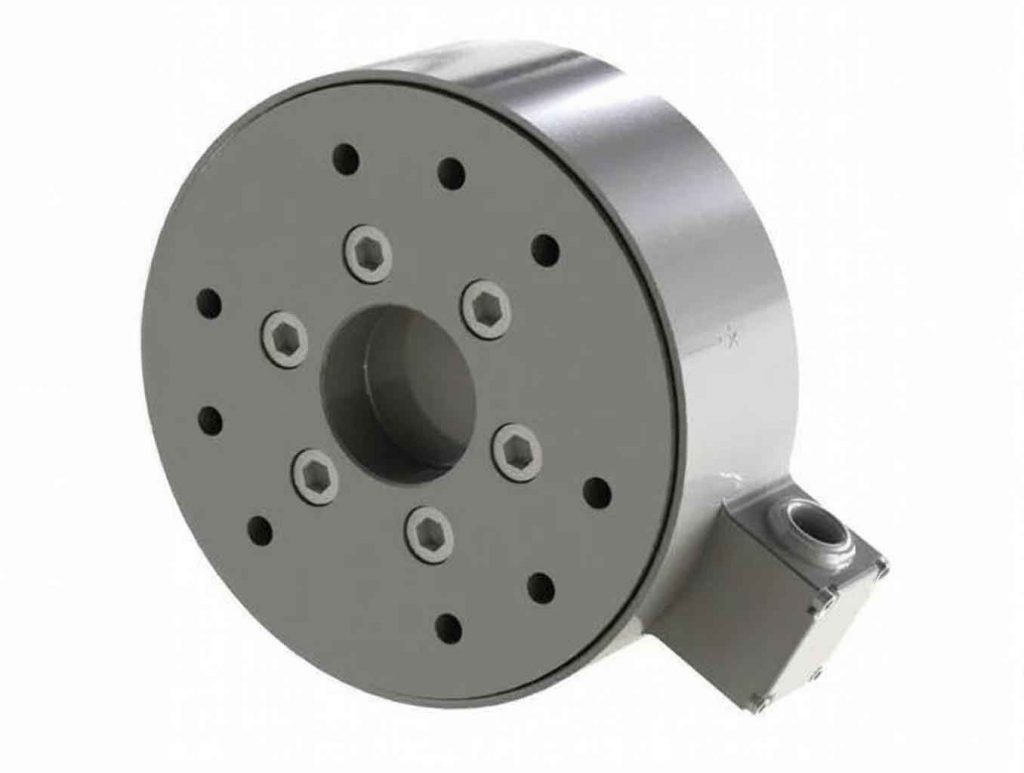
The overall structure of the wireless six-axis force sensor was designed to facilitate easy integration with rotor systems. As illustrated in the accompanying figure, the sensor assembly comprises multiple layers: a top plate, base, elastic body, circuit board, battery, and bottom plate. The top plate is connected to the central protrusion of the elastic body via bolts and nuts, while the outer rim of the elastic body is fixed to the base using countersunk screws. The circuit board, which houses the entire signal processing and wireless communication system, is secured to the bottom plate with hexagonal copper bolts. A battery is attached to the bottom plate using double-sided tape, ensuring a self-contained power source. This compact arrangement allows the six-axis force sensor to rotate with the rotor shaft while maintaining structural integrity. The design prioritizes minimal weight and size to avoid affecting the rotor’s dynamics, and the wireless capability eliminates the need for cumbersome wiring. Key components were selected based on their mechanical and electrical properties to ensure reliable performance under rotational stresses.
The elastic body serves as the core sensing element of the six-axis force sensor, where strain gauges are attached to detect deformations caused by applied forces and moments. We designed the elastic body from a single piece of circular disk material, featuring four elastic beams connected to a central protrusion and four floating beams to enhance strain output and sensitivity. The geometric dimensions were optimized through iterative modeling: each elastic beam has a width of 4 mm, height of 6 mm, and length of 20 mm, while the floating beams measure 1 mm in width, 6 mm in height, and 24 mm in length. The central protrusion is 24 mm in side length and 8 mm in height, and the outer rim has an outer diameter of 80 mm, inner diameter of 56 mm, and height of 6 mm. The material selected for the elastic body is 7075 aluminum alloy, chosen for its high strength-to-weight ratio and excellent mechanical properties. The material parameters are summarized in Table 1, which includes the elastic modulus, Poisson’s ratio, and yield strength. These parameters are critical for ensuring that the elastic body operates within safe stress limits under maximum load conditions.
| Material | Elastic Modulus E (MPa) | Poisson’s Ratio μ | Yield Strength σ_s (MPa) |
|---|---|---|---|
| AL7075 | 72,000 | 0.3 | 505 |
Finite element analysis (FEA) was conducted using Abaqus software to evaluate the strain distribution and stress levels in the elastic body under various loading conditions. The elastic body was modeled with fixed boundary conditions at the eight mounting holes on the rim, simulating real-world constraints. A reference point was established at the center of the elastic body and coupled to the inner surface of the central protrusion to apply loads. We analyzed the response to individual force and moment components along the x and z axes, as the structure is symmetric. For instance, a force of F_x = 300 N was applied as a concentrated load, while moments such as M_x = 20 Nm were applied as force couples. The strain distribution clouds revealed that the maximum von Mises stress under full-scale loads did not exceed the material’s yield strength, ensuring structural integrity. To quantify strain variations, we extracted strain values along defined paths on the elastic beams. The strain ε at any point can be related to stress σ via Hooke’s law for isotropic materials: $$ \sigma = E \epsilon $$ where E is the elastic modulus. The strain path curves, plotted from the beam’s top (junction with central protrusion) to end (junction with floating beam), showed a decreasing trend with distance, with significant strain concentrations at the junctions due to stress risers. These concentrations can be mitigated by adding fillets, but in our design, they were leveraged to enhance sensitivity. The results confirmed that the six-axis force sensor’s elastic body provides sufficient strain output for accurate force and moment detection without plastic deformation.
Strain gauge placement and bridge circuit design are pivotal for the accuracy and decoupling of the six-axis force sensor. A total of 24 strain gauges were attached to the elastic body, organized into six full-bridge circuits—one for each degree of freedom (three forces and three moments). Based on the FEA strain path analysis, we positioned the strain gauges for measuring tangential forces F_x and F_y at 5 mm from the central protrusion boundary on the elastic beam surfaces, while those for the axial force F_z were placed at the same location. For moments M_x, M_y, and M_z, the strain gauges were positioned 12 mm from the boundary. This arrangement maximizes signal output while minimizing cross-talk between channels. Each full-bridge circuit consists of four strain gauges configured to cancel out temperature effects and amplify the strain signal. For example, strain gauges 1–4 form a bridge for F_x, 5–8 for F_y, 9–12 for F_z, 13–16 for M_y, 17–20 for M_z, and 21–24 for the torque M_z (note: M_z is listed twice in the context, but we assume one is for torque). The output voltage V_out of a full-bridge circuit under strain ε can be expressed as: $$ V_{\text{out}} = V_{\text{in}} \cdot G \cdot \epsilon $$ where V_in is the excitation voltage, and G is the gauge factor. By carefully selecting the gauge positions and bridge configurations, we ensured that each channel responds primarily to its intended force or moment, enhancing the six-axis force sensor’s decoupling performance.
The hardware circuit of the six-axis force sensor was designed to process the strain gauge signals and enable wireless data transmission. The system comprises several modules: signal conditioning, microcontroller processing, and wireless communication. The signal conditioning module includes a pre-amplification stage using the instrumentation amplifier AD623, followed by a voltage lifting and filtering stage with the dual operational amplifier LM358. The AD623 amplifies the small voltage signals from the strain gauge bridges, with the gain set by an external resistor R_G according to the equation: $$ G = 1 + \frac{100 \text{k}\Omega}{R_G} $$ where G is the gain. Based on the estimated strain from FEA, we calculated the required gains for each channel to ensure the amplified voltage falls within -1.65 V to +1.65 V. For instance, for F_x with a maximum strain of 1151.6 με, the bridge output is approximately 11.5 mV, requiring a gain of 143. Similarly, for F_z (1926.7 με, 19.2 mV output), a gain of 86 is needed. These values are summarized in Table 2, which provides a comprehensive overview of the amplification requirements for each force and moment component.
| Force/Moment | Full-Scale Strain ε (10⁻⁶) | Bridge Output Voltage (mV) | Amplification Factor |
|---|---|---|---|
| F_x = 300 N | 1151.6 | 11.5 | 143 |
| F_z = 900 N | 1926.7 | 19.2 | 86 |
| M_x = 20 Nm | 1387.7 | 13.8 | 120 |
| M_z = 20 Nm | 1054.5 | 10.5 | 157 |
After amplification, the voltage signals are conditioned to fit the 0 V to +3.3 V input range of the STM32 microcontroller’s analog-to-digital converter (ADC). The LM358 circuit inverts and shifts the voltage using an inverting summing amplifier configuration. The output voltage V_out after this stage can be described by: $$ V_{\text{out}} = – \left( \frac{R_f}{R_{\text{in}}} V_{\text{in}} + V_{\text{offset}} \right) $$ where R_f and R_in are feedback and input resistors, respectively, and V_offset is the offset voltage. Additionally, a first-order active low-pass filter with a cutoff frequency of 100 Hz is implemented to remove high-frequency noise. The STM32 microcontroller processes the digitized signals and packages them for transmission via the NRF24L01 wireless module. The wireless communication circuit connects to the microcontroller through SPI2 pins, with specific GPIO pins handling chip selection, clock, data lines, and interrupt signals. This integration allows the six-axis force sensor to transmit real-time data to a base station without physical connections, enhancing its applicability in rotating environments.
For the physical implementation, we designed a circular PCB with a diameter of 96 mm to house the entire electronic system. The PCB uses a double-sided copper-clad board, with signal traces on the top layer and power lines on the bottom layer. Trace widths are set to 0.254 mm for signals and 0.508 mm for power and ground, with vias connecting the layers to ensure proper grounding and signal integrity. The components, including the AD623, LM358, STM32, and NRF24L01, are soldered onto the PCB, and the assembly is encapsulated within the sensor housing to protect it from environmental factors. The completed six-axis force sensor prototype demonstrates a compact, self-contained unit that can be mounted on rotor shafts for dynamic force and moment measurements. The wireless capability, combined with robust signal processing, makes this six-axis force sensor a valuable tool for advanced rotor system analysis and other applications requiring multi-axis force sensing.
In conclusion, the development of this wireless six-axis force sensor addresses the challenges of measuring forces and moments in rotating systems. Through careful elastic body design, finite element analysis, and optimized strain gauge placement, we achieved a sensitive and decoupled sensing system. The hardware circuits, including amplification and wireless transmission, ensure reliable data acquisition and communication. The integration of all components into a compact PCB results in a functional prototype that can be used in various industrial and research settings. Future work may focus on calibration procedures, temperature compensation, and field testing to further validate the performance of the six-axis force sensor. This project underscores the potential of wireless six-axis force sensors in advancing the state of the art in dynamic force measurement.