
In the context of the “14th Five-Year Plan for Intelligent Manufacturing,” I have observed a significant trend where numerous manufacturing enterprises are integrating advanced technologies to initiate a new wave of high-end intelligent manufacturing research. As an essential carrier in smart industrial production, the domestic industry for intelligent robots has experienced robust growth in recent years. Consequently, many intelligent robot manufacturing companies are confronting the challenge of intelligently upgrading their flexible production lines. Maintenance, being a core aspect of this intelligent upgrade, highlights the drawbacks of traditional manual methods in terms of fault handling and efficiency. Therefore, there is an urgent need to develop a remote maintenance system tailored for production lines of intelligent robots in flexible production environments. This system aims to enhance the level and efficiency of production maintenance for intelligent robots, thereby boosting the competitive edge of enterprises.
From my perspective, the composition of a flexible production line for intelligent robots typically includes several key components. These production lines utilize equipment such as industrial robots, logistics AGVs, CNC devices, and conveyance systems. They are designed to simultaneously assemble multiple models of intelligent robots within a single production cycle, featuring intelligent transportation and task scheduling capabilities. For instance, logistics AGVs can replenish materials in real-time based on production conditions, while the intelligent replacement of end-effector fixtures on assembly structures enables precise grasping of components for different intelligent robot models. Furthermore, after undergoing intelligent and digital transformation, these lines can construct fault diagnosis models to accurately diagnose common faults, with external diagnostic辅助 robots enhancing remote maintenance capabilities.
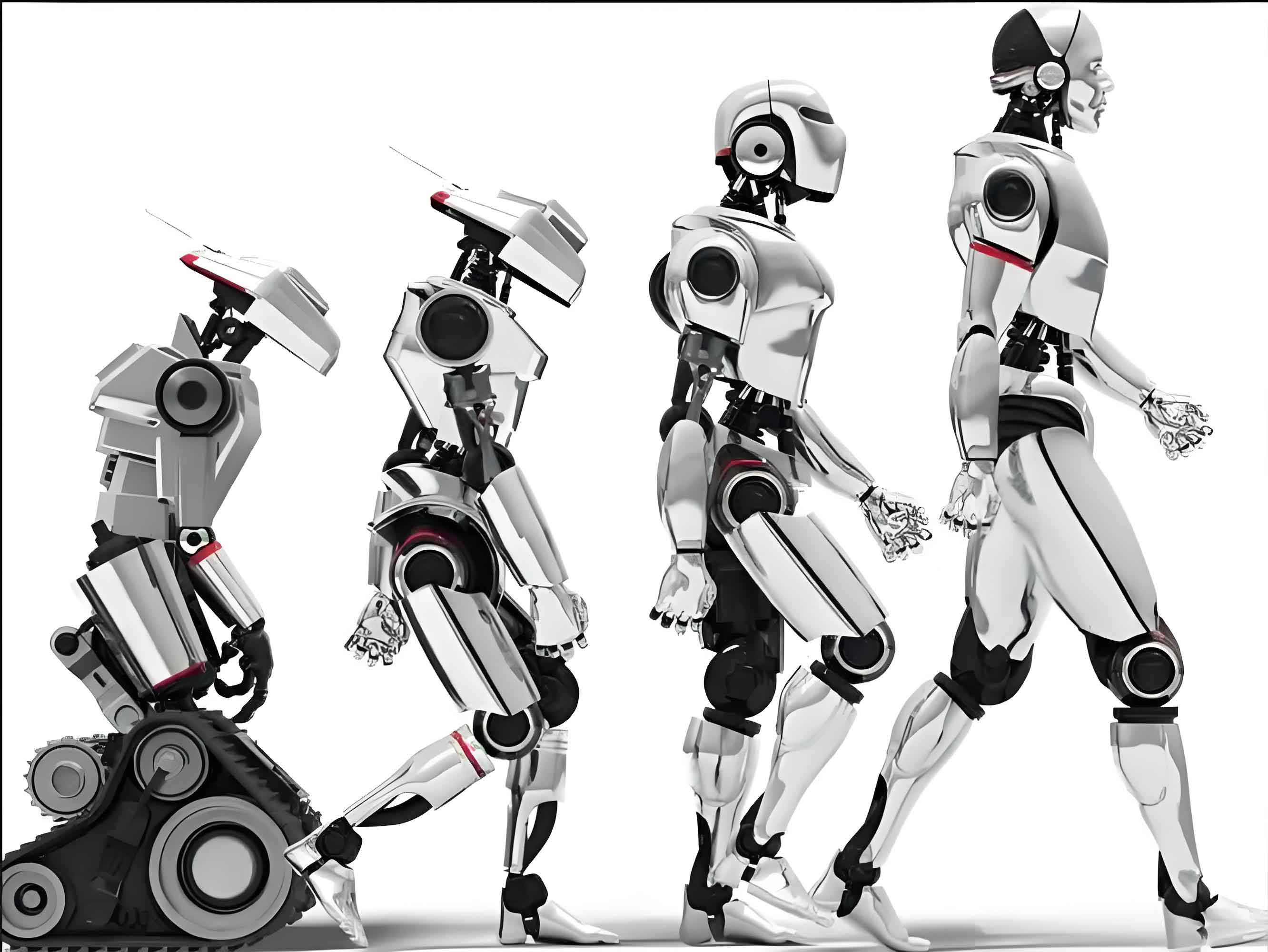
To address these needs, I propose a remote maintenance system specifically for flexible production lines of intelligent robots. This system is intended to effectively maintain production lines, reduce costs and risks, and improve production efficiency. It incorporates fault diagnosis functionality to expedite fault identification and maintenance, leveraging remote video modules for online monitoring of faulty equipment and timely upload of fault data, ultimately enabling remote fault diagnosis.
During the development process, considering the characteristics of industrial internet, the overall architecture of the system is designed to leverage cloud platforms and edge computing to meet functional requirements. The architecture comprises multiple layers: a user layer, cloud center, edge server nodes, and the manufacturing factory. The cloud center includes databases, real-time data servers, and edge servers, which communicate with edge nodes via network transmission. Edge server nodes connect to the manufacturing factory through 5G small base stations, facilitating data communication. The manufacturing factory employs both wired and wireless communication modes for production line equipment, with data converging at switches and passing through firewalls to 5G base stations.
| Component | Description |
|---|---|
| Industrial Robots | Used for assembly, handling, and processing tasks. |
| Logistics AGVs | Automatic guided vehicles for material transportation. |
| CNC Devices | Numerical control equipment for precision machining. |
| Conveyance Systems | Transport belts and automated warehouses. |
| Assistive Robots | For detection and maintenance support. |
In the communication network design, I emphasize both architecture and security. The network is deployed across four layers: user terminals, cloud center, edge server nodes, and manufacturing factory. For devices with lower latency requirements, 4G communication chips are used to optimize costs. Bandwidth configurations are adjusted based on video monitoring needs, such as setting 2 Mbps for 720P cameras. To ensure security, the system implements secondary protection strategies and adds longitudinal encryption devices. The secondary protection follows principles like security zoning and network isolation, while encryption devices integrate embedded microprocessors with dedicated password cards for data encryption and authentication.
The functional design of the remote maintenance system encompasses several key modules. First, the equipment maintenance management module utilizes historical and real-time data to predict faults and devise maintenance plans. By analyzing data patterns, it identifies degradation trends in intelligent robot production line equipment, enabling proactive maintenance to extend equipment lifespan and ensure efficiency. The algorithms employed here can be summarized as follows: let \( D(t) \) represent the operational data of an intelligent robot at time \( t \), and the fault prediction model \( F \) can be expressed as:
$$ F(D(t)) = \sum_{i=1}^{n} w_i \cdot f_i(D(t)) $$
where \( w_i \) are weights and \( f_i \) are feature functions derived from data analysis.
| Module | Key Features |
|---|---|
| Equipment Maintenance Management | Fault prediction, data analysis, proactive maintenance. |
| Remote Control | Two-layer password verification, video通话, emergency control. |
| Fault Diagnosis | Fault tree analysis, real-time预警, quantitative assessment. |
| Real-time Monitoring | Data visualization, performance evaluation, energy analysis. |
| Database Module | Data storage, retrieval, import using CodeFirst and Entity Framework. |
The remote control module serves as a foundational component, allowing users to adjust production activities and manage faulty equipment remotely. It incorporates two-layer password verification to secure control instructions and includes video通话 functionality for collaboration with maintenance experts when on-site issues arise. This is crucial for maintaining the efficiency of intelligent robot production lines.
Fault diagnosis is the core functionality of the system. It operates in two phases: fault预警 and fault analysis. In the预警 phase, the module monitors operational parameters of intelligent robot equipment and sends alerts to administrators if thresholds are exceeded. The fault analysis phase employs fault tree analysis (FTA) to identify root causes and propose maintenance solutions. The process of building a fault tree involves:
- System Analysis: Comprehensively analyze the production流程, structure, and equipment of the intelligent robot production line.
- Fault Data Collection: Gather historical fault information and categorize it in a database.
- Determine Fault Events: Define top events (e.g., production halt) and identify underlying causes.
- Construct Fault Tree: From top event to basic events, using logical gates (AND/OR).
- Qualitative Analysis: Solve for minimal cut sets using methods like the downlink approach.
- Quantitative Analysis: Calculate importance measures, such as critical importance.
For qualitative analysis, minimal cut sets are derived. If \( T \) is the top event and \( E_i \) are basic events, a minimal cut set \( C_j \) is a set of events whose simultaneous occurrence causes \( T \). The probability of top event failure \( P(T) \) can be expressed as:
$$ P(T) = \sum_{j=1}^{m} P(C_j) – \sum_{j<k} $$="" (-1)^{m-1}="" +=""
For quantitative analysis, the critical importance \( I_C(i) \) of a basic event \( i \) is given by:
$$ I_C(i) = \frac{\partial P(T)}{\partial P(i)} \cdot \frac{P(i)}{P(T)} $$
where \( P(i) \) is the failure probability of event \( i \). This measure helps prioritize maintenance actions for intelligent robot systems.
The real-time monitoring module provides continuous oversight of production line equipment, displaying data via charts and curves. It enables a comprehensive understanding of equipment usage and performance, bridging information gaps between production and maintenance. This module also analyzes metrics such as operational days, production efficiency, energy consumption, and fault frequency, offering insights for optimizing the distribution of intelligent robot equipment. The data analysis can be modeled using statistical tools; for example, the fault frequency \( \lambda \) over time \( t \) might follow a Weibull distribution:
$$ \lambda(t) = \frac{\beta}{\alpha} \left( \frac{t}{\alpha} \right)^{\beta-1} e^{-(t/\alpha)^\beta} $$
where \( \alpha \) and \( \beta \) are scale and shape parameters, respectively.
The database module supports data storage, retrieval, and management for the intelligent robot production line. It employs CodeFirst technology with Entity Framework as the ORM tool, using message queues and WebSocket for communication. This ensures efficient handling of production data, which is vital for maintaining the flexibility and intelligence of the system.
In terms of implementation, I have designed the system to be scalable and adaptable. The communication network uses multiple gigabit networks as backbones, with routers, switches, and wireless access points. For cost-effectiveness, 4G chips are deployed where appropriate, while 5G ensures low-latency transmission for critical data. The security measures, including firewalls and encryption, protect against cyber threats, ensuring the reliability of remote maintenance for intelligent robot production lines.
| Top Event | Basic Events | Minimal Cut Sets | Critical Importance |
|---|---|---|---|
| Assembly Failure | Motor fault, Sensor error, Software bug | {Motor fault}, {Sensor error, Software bug} | 0.6, 0.3 |
| AGV Stoppage | Battery drain, Path obstruction | {Battery drain}, {Path obstruction} | 0.7, 0.5 |
Looking ahead, the integration of artificial intelligence and machine learning could further enhance the fault diagnosis capabilities. For instance, deep learning models could be applied to predict faults in intelligent robot components based on sensor data. The prediction accuracy \( A \) might be improved using neural networks:
$$ A = \frac{1}{N} \sum_{k=1}^{N} \delta(y_k, \hat{y}_k) $$
where \( y_k \) is the actual fault label, \( \hat{y}_k \) is the predicted label, and \( \delta \) is an indicator function.
In conclusion, the development of this remote maintenance system for flexible production lines of intelligent robots represents a significant step toward optimizing maintenance processes and improving production efficiency. By leveraging 5G and edge computing, the system enables real-time monitoring, fault diagnosis, and remote control, thereby minimizing disruptions and maximizing the performance of intelligent robot operations. Future work may focus on integrating more advanced AI algorithms and expanding the system to other smart manufacturing scenarios, ultimately driving the evolution of intelligent robot technologies in industrial applications.