
The evolution of artificial intelligence is steering towards a paradigm where intelligence is not merely computed but experienced through interaction with the physical world. This shift is encapsulated in the concept of Embodied AI, which posits that true intelligence emerges from the dynamic interplay between an agent’s body (the embodied AI robot), its brain (the computational model), and its environment. Unlike classical AI focused on symbolic reasoning or connectionist models centered on statistical learning, embodied intelligence is fundamentally grounded in “being-in-the-world.” It emphasizes that cognitive and affective processes are shaped by sensorimotor experiences. The rise of sophisticated machine learning and multi-modal large language models has breathed new life into this field, paving the way for robots that can move, perceive, and interact in human spaces. The ultimate frontier in this journey is the capacity for emotional interaction. For an embodied AI robot to achieve seamless collaboration and true synergy with humans, it must transcend logical tasks and engage at an affective level. This involves understanding, generating, and expressing emotions—a capability essential for building trust, ensuring safety, and fostering natural communication in applications ranging from healthcare and education to domestic assistance and industrial collaboration.
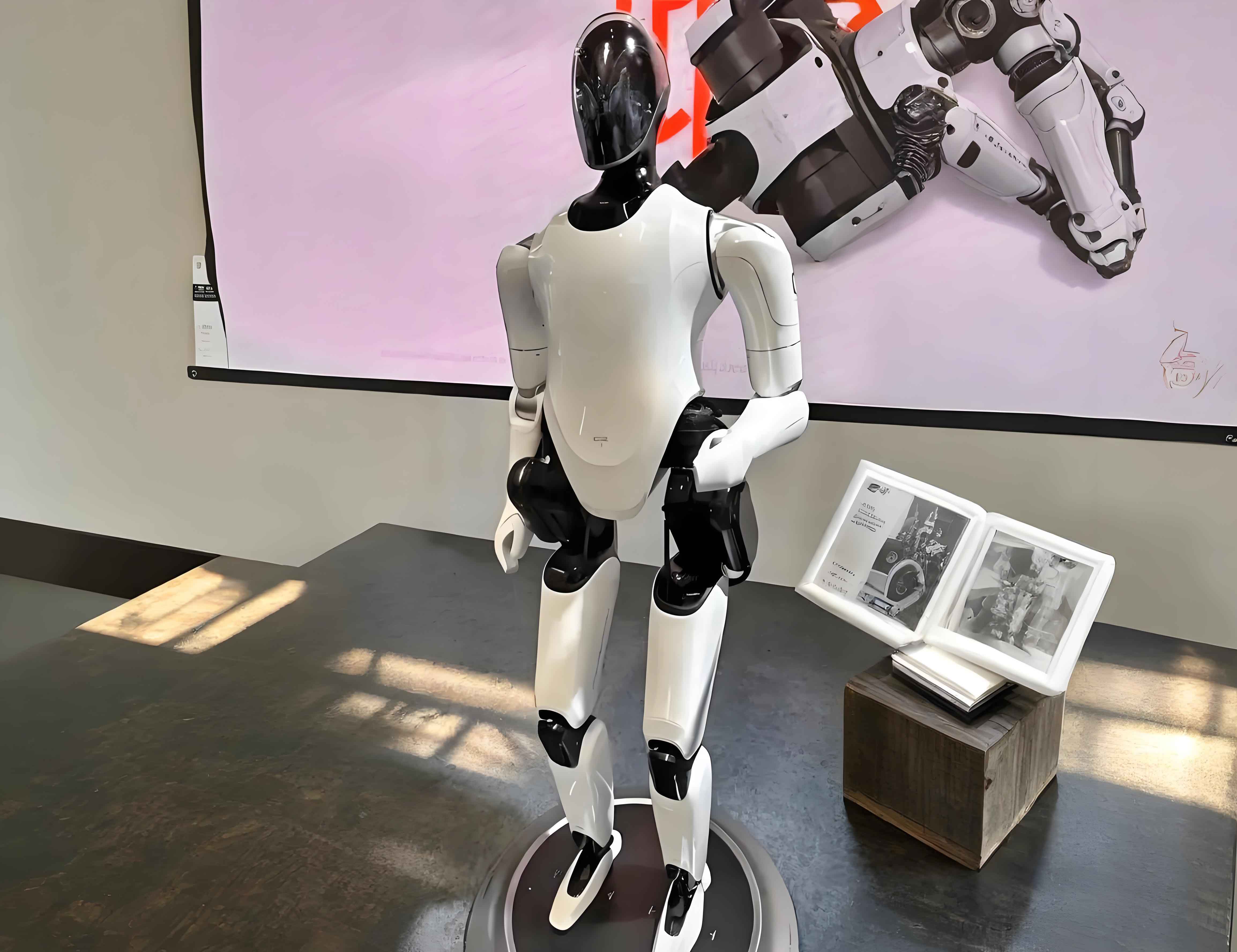
The integration of affective computing into human-robot interaction (HRI) aims to create a state of “human-machine empathy.” This is not about machines possessing feelings in the biological sense, but about them being equipped with architectures that can recognize human emotional states, generate appropriate internal affective representations, and express responses that are socially and contextually congruent. This emotional intelligence transforms the interaction from a transactional exchange of commands and data into a relational, co-adaptive dialogue. A harmonious human-robot environment is thus characterized by this bidirectional affective flow, where the embodied AI robot becomes a responsive partner rather than a passive tool. This review synthesizes current research on emotional HRI, focusing on the core architecture of affective interaction: the models for representing emotion, the multimodal techniques for its recognition, the mechanisms for its generation and expression, and the profound influence of individual and socio-cultural factors.
1. Foundations of Embodied AI and Affective Intelligence
The concept of Embodied AI challenges the notion of intelligence as a disembodied process. An embodied AI robot learns and makes decisions not from raw data alone, but from its physical experiences—the tactile feedback from a grasped object, the kinematic constraints of its limbs, and the perceptual consequences of its movements. This embodied perspective is crucial for emotional interaction because emotions themselves are deeply embodied phenomena in humans. They involve physiological changes (e.g., heart rate, sweating), expressive motor actions (e.g., facial expressions, posture), and subjective feelings that are tied to our physical state and interaction goals. Therefore, for a robot to engage in believable emotional interaction, its affective models must be connected to its physical embodiment and its real-time sensorimotor loop. The robot’s emotional state can influence its movement priority (e.g., approaching for comfort or retreating when fearful), and conversely, its physical actions and internal physiology (even if simulated) become channels for emotional expression. This creates a “cognitive-embodied-affective” loop that is essential for building robots that are not just intelligent but also socially competent and relatable.
2. Representation and Modeling of Emotion
A foundational step for any affective embodied AI robot is to adopt a computational model for representing emotion. There is no universal theory, but three dominant paradigms guide research: discrete, dimensional, and appraisal-based models.
2.1 Discrete and Dimensional Models
Discrete emotion theory, famously associated with Ekman’s “Big Six” (happiness, sadness, anger, fear, surprise, disgust), posits a set of basic, universal emotions. This model is intuitive for categorizing clear, prototypical expressions. However, human-robot interaction often elicits more nuanced, context-specific affective states. Researchers have thus proposed taxonomies specific to HRI, including states like curiosity, flow/control, confusion, }, and even relational bonds like companionship or attachment toward the robot.
Dimensional models, conversely, represent emotions as coordinates within a continuous space. The most common is the 2D Valence-Arousal (V-A) model:
$$ Emotion \approx (Valence, Arousal) $$
where Valence ranges from unpleasant to pleasant, and Arousal ranges from calm to excited. A widely used extension is the 3D PAD (Pleasure-Arousal-Dominance) model:
$$ Emotion \approx (P, A, D) $$
Here, Dominance represents the sense of control versus submission. These models are powerful for describing subtle emotional blends and tracking emotional dynamics over time, which is vital for an embodied AI robot to respond to gradual shifts in a user’s state.
| Model Type | Key Constructs | Advantages | Disadvantages | Suitability for Embodied AI Robot |
|---|---|---|---|---|
| Discrete (Categorical) | Basic emotions (e.g., joy, anger, fear). | Intuitive, easy to label and map to specific expressions/behaviors. | Oversimplifies complex or mixed states; less granular. | Good for triggering clear, scripted reactive behaviors. |
| Dimensional (V-A, PAD) | Valence, Arousal, (Dominance) as continuous axes. | Captures gradients and mixtures of affect; good for tracking dynamics. | Less intuitive for direct mapping to symbolic labels. | Excellent for continuous affective control of expressive parameters (e.g., motion speed, light color). |
| Appraisal (OCC) | Emotions as outcomes of cognitive evaluations (e.g., desirability of an event). | Causally grounded; links perception, goals, and emotion; enables reasoning. | Computationally complex; requires rich symbolic world model. | Ideal for goal-driven robots that need to explain/justify their emotional responses based on events. |
2.2 Appraisal-Based and Computational Models
Appraisal theories argue that emotions arise from an individual’s subjective evaluation of events relative to their goals, standards, and attitudes. The most influential computational implementation is the OCC model (Ortony, Clore, & Collins). It generates 22 emotion types from appraisals concerning:
1. Consequences of Events: (e.g., Joy if a desirable event occurs).
2. Actions of Agents: (e.g., Pride if one’s own action is praiseworthy).
3. Aspects of Objects: (e.g., Love if an object is appealing).
The emotional intensity can be modeled as a function of these appraisals. For example, the intensity of Joy can be related to the desirability of an event and the degree of reality:
$$ I_{joy} = f(Desirability_{event}, DegreeOfReality) $$
This model is particularly powerful for an embodied AI robot as it connects internal goals (e.g., “task completed,” “user praised me,” “obstacle detected”) to emotionally charged behaviors, making its responses appear reasoned and context-sensitive rather than random.
2.3 Cross-Domain and Fine-Grained Emotion Analysis
Emotional expression varies dramatically across contexts. The word “frustration” in a gaming context differs from its manifestation in a caregiving or industrial setting. Therefore, affective models for embodied AI robots must be adaptable. Fine-grained analysis often uses structured representations like emotion quintuples (e, a, m, f, t):
$$ Quintuple = (entity, aspect, emotion, holder, time) $$
This allows the system to pinpoint that the user’s fear (m) is directed at the robot’s fast arm movement (a of entity e) at a specific moment (t). Domain adaptation techniques, often leveraging large language models, are crucial to tune emotion recognition and generation to the specific operational domain of the robot, be it a hospital, factory, or home.
3. Recognition and Multimodal Fusion of Emotion
For an embodied AI robot to be emotionally responsive, it must first accurately perceive the user’s affective state. This is achieved through multimodal sensing, as human emotion is conveyed through a symphony of channels: subjective report, facial expression, voice, gesture, posture, and physiology.
3.1 Multimodal Channels for Emotion Recognition
Subjective Self-Report: Traditional methods like questionnaires (SAM, PANAS) provide ground truth but are disruptive and not real-time. They are mainly used for training and validating automated systems.
Visual Channels: Computer vision algorithms analyze facial Action Units (AUs), body posture, and gestures. Deep learning models can map video sequences to discrete emotions or V-A-D coordinates.
Auditory Channel: Speech emotion recognition (SER) extracts features like pitch, energy, spectral coefficients (MFCCs), and speech rate to infer emotion.
Physiological Signals: These offer objective, hard-to-fake cues. Wearable sensors can measure:
– Electroencephalogram (EEG): Brain activity patterns linked to valence/arousal.
– Electrodermal Activity (EDA): Skin conductance highly correlated with arousal.
– Electrocardiogram (ECG): Heart rate and Heart Rate Variability (HRV) indicate stress/engagement.
– Eye-Tracking: Pupil dilation, gaze patterns, and blink rate reflect cognitive load and affect.
| Signal | Extracted Features | Emotional Correlation | Practical Use for Embodied AI Robot |
|---|---|---|---|
| EEG | Band Power (Alpha, Beta, Gamma), Asymmetry Indices | Valence (Frontal asymmetry), Arousal | Potential for adaptive difficulty in tutoring robots; high-cost, intrusive. |
| EDA (GSR) | Skin Conductance Level (SCL), Response (SCR) rate/amplitude | Strong correlation with Arousal/Sympathetic activation | Good for detecting stress/excitement; can be integrated into wearable accessories. |
| ECG/PPG | Heart Rate (HR), Heart Rate Variability (HRV – RMSSD, LF/HF ratio) | Arousal, Stress (↓HRV), Certain emotional states | Useful for health/eldercare robots monitoring user well-being. |
| Eye-Tracking | Pupil Diameter, Fixation Duration, Saccadic Velocity | Arousal, Cognitive Load, Interest (negative for avoidance) | Critical for gauging attention and confusion during task-based interaction. |
3.2 Multimodal Fusion Strategies
Relying on a single modality is unreliable (e.g., a neutral face may mask internal stress). Therefore, an embodied AI robot must fuse information from multiple, often asynchronous, streams. Fusion can occur at different levels:
1. Feature-Level Fusion: Early fusion where raw or low-level features from all modalities are concatenated into a single vector before being fed to a classifier.
$$ F_{fused} = [F_{visual}, F_{audio}, F_{physio}] $$
This preserves correlation but is sensitive to noise and misalignment.
2. Decision-Level Fusion: Late fusion where each modality has its own classifier, and their outputs (e.g., emotion probabilities) are combined.
$$ P_{final}(Emotion) = g(P_{visual}(Emotion), P_{audio}(Emotion), P_{physio}(Emotion)) $$
This is robust to missing modalities but ignores cross-modal interactions early on.
3. Model-Level Fusion (Hybrid): Advanced deep learning architectures (e.g., Transformer-based models) perform fusion within the model itself, learning cross-modal attention weights. This is the most powerful approach, exemplified by modern multimodal large language models (LLMs) that can jointly process text, audio, and video for holistic affective understanding.
| Fusion Level | Description | Example Techniques | Pros & Cons |
|---|---|---|---|
| Feature-Level | Concatenate features from all modalities before classification. | Simple concatenation, Canonical Correlation Analysis (CCA). | + Captures low-level cross-modal correlations. – Sensitive to noise/alignment; “curse of dimensionality”. |
| Decision-Level | Combine final decisions/probabilities from unimodal classifiers. | Weighted average, Voting schemes, Bayesian fusion. | + Robust, modular, handles missing data well. – Loses intermediate cross-modal interaction information. |
| Model-Level | Deep neural networks with built-in cross-modal interaction layers. | Multimodal Transformers, Cross-modal Attention, LSTM-based fusion networks. | + Can learn complex, hierarchical interactions; state-of-the-art performance. – Requires large datasets; computationally intensive; complex to train. |
4. Generation and Expression of Emotion in Robots
Recognizing emotion is only half the dialogue. The embodied AI robot must also generate an internal affective state and express it convincingly through its embodiment to close the interaction loop. This involves macro-level architectural design and micro-level expressive control.
4.1 Macro-Level Affective Architectures
These frameworks define how emotions are generated, decay, and influence behavior over time. They often integrate several components:
– Personality/Mood (P): A persistent trait (e.g., based on OCEAN model) or medium-term state that biases emotion generation. For instance, an extraverted robot might have a higher baseline for positive arousal.
– Emotion (E): The short-term affective state, often generated by an appraisal model (like OCC) based on perceived events.
– Decay Functions: Emotions naturally fade over time, often modeled exponentially:
$$ E(t) = E_0 \cdot e^{-\lambda t} $$
where $\lambda$ is a decay constant, potentially influenced by personality.
Frameworks like TAME (Traits, Attitudes, Moods, Emotions) or the layered ALMA (A Layered Model of Affect) provide structured ways to combine these elements, allowing an embodied AI robot to exhibit consistent yet dynamic affective behavior.
4.2 Micro-Level Expressive Channels
The physical body of the robot is its canvas for emotional expression. Unlike virtual agents, an embodied AI robot has a rich array of actuators:
1. Facial Expression: For humanoid or zoomorphic robots, servo-driven faces can display AU combinations. The challenge is balancing readability with mechanical simplicity.
2. Body Language & Movement: Emotion can be conveyed through gait, posture, gesture, and motion quality. “Sad” movement might be slow, with low amplitude and a slumped posture, while “joyful” movement can be fast, bouncy, and expansive. Mathematical models like Laban Movement Analysis can parameterize these qualities.
3. Vocal Expression: Beyond speech content, prosody (pitch, speed, timbre) can be modulated. A scared robot might use a higher pitch and tremulous voice.
4. Light, Color, and Sound: Non-anthropomorphic robots (e.g., a floor cleaner) can use LED colors (warm/cool), patterns (pulsing/steady), and non-verbal sounds (beeps, melodies) to convey internal state. The relationship can be formalized, e.g., mapping Arousal to light intensity or blink frequency:
$$ Intensity_{light} = k \cdot Arousal + c $$
5. Haptic Feedback: A robot could use gentle touch or vibration patterns to convey reassurance or alertness.
| Modality | Actuator/Display | Affective Parameters | Example Mapping |
|---|---|---|---|
| Visual | Facial Servos, Screen | AU configurations, cartoon expressions, color hue/saturation. | Joy → Smile (AU12+), raised cheeks (AU6). Arousal → Screen color saturation/refresh rate. |
| Kinesthetic | Motorized joints, Mobile base | Velocity, acceleration, smoothness/jerk, posture angles, amplitude of gesture. | Fear → Quick, jerky retreat. Contentment → Slow, smooth swaying. |
| Auditory | Speaker | Pitch mean/variance, speech rate, volume, spectral tilt. | Sadness → Low pitch, slow speech, low volume. |
| Lighting | LEDs | Color (Hue), Intensity, Blink Frequency/Pattern. | High Arousal → Bright, rapidly pulsing red. Low Arousal → Dim, steady blue. |
| Haptic | Vibration motor, Heated element | Vibration intensity, frequency, pattern, temperature. | Alert → Short, strong burst. Comfort → Warm, gentle, rhythmic pulse. |
5. The Social and Cognitive Dimensions of Emotion
Emotion is not an isolated signal; it is deeply embedded in social and cultural contexts. The effectiveness of an embodied AI robot‘s emotional interaction depends critically on accounting for these dimensions.
5.1 Individual Differences
Users are not uniform. Their emotional responses and expectations are filtered through:
– Personality: An agreeable user might respond better to a robot’s empathetic expressions, while a neurotic user might perceive the same expressions as intrusive.
– Demographics & Experience: Age, gender, cultural background, and prior experience with technology shape interaction preferences.
– Temporary States: A user’s current mood, task goals, and stress level dramatically affect their emotional receptivity.
An adaptive embodied AI robot should, therefore, maintain a user model that includes these factors. Its emotional expressions and interaction style could be personalized—for example, a more dominant robot for users who prefer a “guide” role, and a more submissive one for users who prefer “collaborator” or “tool” roles.
5.2 Socio-Cultural Influences
Emotion expression and interpretation are culturally coded. For instance, the level of acceptable eye contact, interpersonal distance, and the intensity of facial expression vary across cultures. A bowing gesture may signify respect in one context and subservience in another. Therefore, a one-size-fits-all emotional model is inadequate for global deployment. Research in cross-cultural HRI emphasizes the need for:
1. Culturally Adaptive Models: The robot’s emotion recognition system should be tuned to the expressive norms of the local culture.
2. Culturally Appropriate Expressions: The robot’s own expressions should conform to local social scripts to avoid alienation or offense.
3. Social Role Alignment: The robot’s affective behavior should match its perceived social role (e.g., medical assistant, teacher, butler), which itself carries cultural expectations.
| Factor Category | Specific Factors | Impact on Emotional Interaction | Design Consideration for Embodied AI Robot |
|---|---|---|---|
| Individual User Traits | Personality (OCEAN), Age, Gender, Tech-savviness, Empathy level. | Determines threshold for emotional response, preferred interaction style (warm vs. formal), trust calibration. | Implement user profiling and adaptive interaction policies. Match robot’s expressiveness to user’s comfort zone. |
| Context & State | Current task (urgent vs. leisurely), User’s physiological/emotional state, Privacy setting. | Affects the appropriateness and priority of emotional feedback. A stressed user may need calming, not cheering. | Incorporate context-awareness. Robot should modulate its affective intrusiveness based on situational cues. |
| Socio-Cultural Norms | Cultural display rules, Social hierarchy norms, Preferred communication style (high/low context). | Dictates whether an emotional expression is perceived as genuine, appropriate, respectful, or intrusive. | Develop culturally-aware expression libraries and adaptive social signal processing. Allow for localization of robot’s “character.” |
6. Future Challenges and Prospects
The path towards genuinely empathic embodied AI robots is fraught with both technical and ethical challenges, yet the prospects are transformative.
Technical Challenges:
– Real-Time Multimodal Fusion: Processing video, audio, and physiological streams with low latency on mobile robot platforms.
– Long-Term Affective Modeling: Moving beyond momentary recognition to modeling user mood and attitude trends over days or weeks.
– Explainable Affective AI: Enabling robots to explain why they inferred a certain emotion or chose a particular emotional response, building trust.
– Seamless Integration: Making emotional processes an integral, non-disruptive part of the robot’s core decision-making and control stack, not a separate module.
Ethical and Social Challenges:
– Privacy: Affective sensing is profoundly intimate. Robust data anonymization and user consent frameworks are mandatory.
– Manipulation and Dependency: The power of emotional connection could be misused to manipulate user behavior or create unhealthy dependencies, especially in vulnerable populations.
– Cultural Bias: Ensuring emotion models are not biased towards specific demographic groups or cultural expressions.
– Transparency: Users should understand they are interacting with a machine simulating empathy, not a sentient being.
Prospects with Multimodal Large Models:
The advent of large foundation models (LFMs) like GPT-4V and beyond offers a paradigm shift. These models can serve as a unified “affective brain” for an embodied AI robot, offering:
1. Unified Semantic Understanding: Jointly interpreting language, tone, facial expression, and scene context to infer complex emotional states and their causes.
2. Context-Aware Response Generation: Producing linguistically and emotionally appropriate verbal responses, gesture plans, and expressive behavior sequences that are coherent with the long-term interaction history and social context.
3. Zero/Few-Shot Adaptation: Potentially adapting to new users, cultures, or domains with minimal retraining by leveraging their vast pre-trained knowledge.
The future lies in grounding these powerful linguistic-affective models in the physical experiences of the robot, creating a loop where perception informs emotion, and emotion guides physical action and expression, ultimately leading to robots that are not just tools, but understandable, predictable, and relatable partners in a shared environment.
7. Conclusion
The integration of emotional intelligence into embodied AI represents a crucial leap towards natural and effective human-robot collaboration. This review has outlined the comprehensive architecture required for an embodied AI robot to engage in affective interaction, spanning from the theoretical models used to represent emotion, through the multimodal techniques for its recognition and fusion, to the mechanisms for its generation and physical expression. Critically, we have highlighted that this technological stack does not operate in a vacuum; it must be infused with an awareness of individual user differences and the profound impact of socio-cultural norms. The emotional expressions of a robot in Japan, the USA, or Saudi Arabia may need to differ significantly to be perceived as authentic and appropriate.
The field stands at an exciting inflection point, propelled by advances in multimodal machine learning and large language models. The key challenge is to move from systems that recognize and display emotions in a scripted manner, to architectures where emotion is an emergent, integral property of an agent interacting with its world and its human partners. Future research must focus on creating long-term, adaptive affective models, ensuring ethical and transparent design, and achieving a seamless fusion between the cognitive, physical, and emotional layers of the robot. The goal is clear: to develop embodied AI robots that we can work and live with not just efficiently, but comfortably, safely, and, in a carefully defined sense, harmoniously.