
The rapid ascent of artificial intelligence has undeniably transformed fields like language processing and computer vision. Yet, a fundamental chasm persists between the operational intelligence of our most advanced models and the developmental, situated, and adaptive nature of human cognition. Prevailing paradigms, heavily reliant on vast datasets and computational scale, often model intelligence as a static function of pattern recognition within fixed architectures. This approach lacks the very essence of becoming—the progressive, self-structured, and environmentally-grounded evolution of understanding that characterizes biological minds. This limitation is acutely felt in educational contexts, where the potential for truly personalized, adaptive learning systems is hamstrung by AI’s inability to model the gradual, constructive, and embodied pathways of human cognitive development.
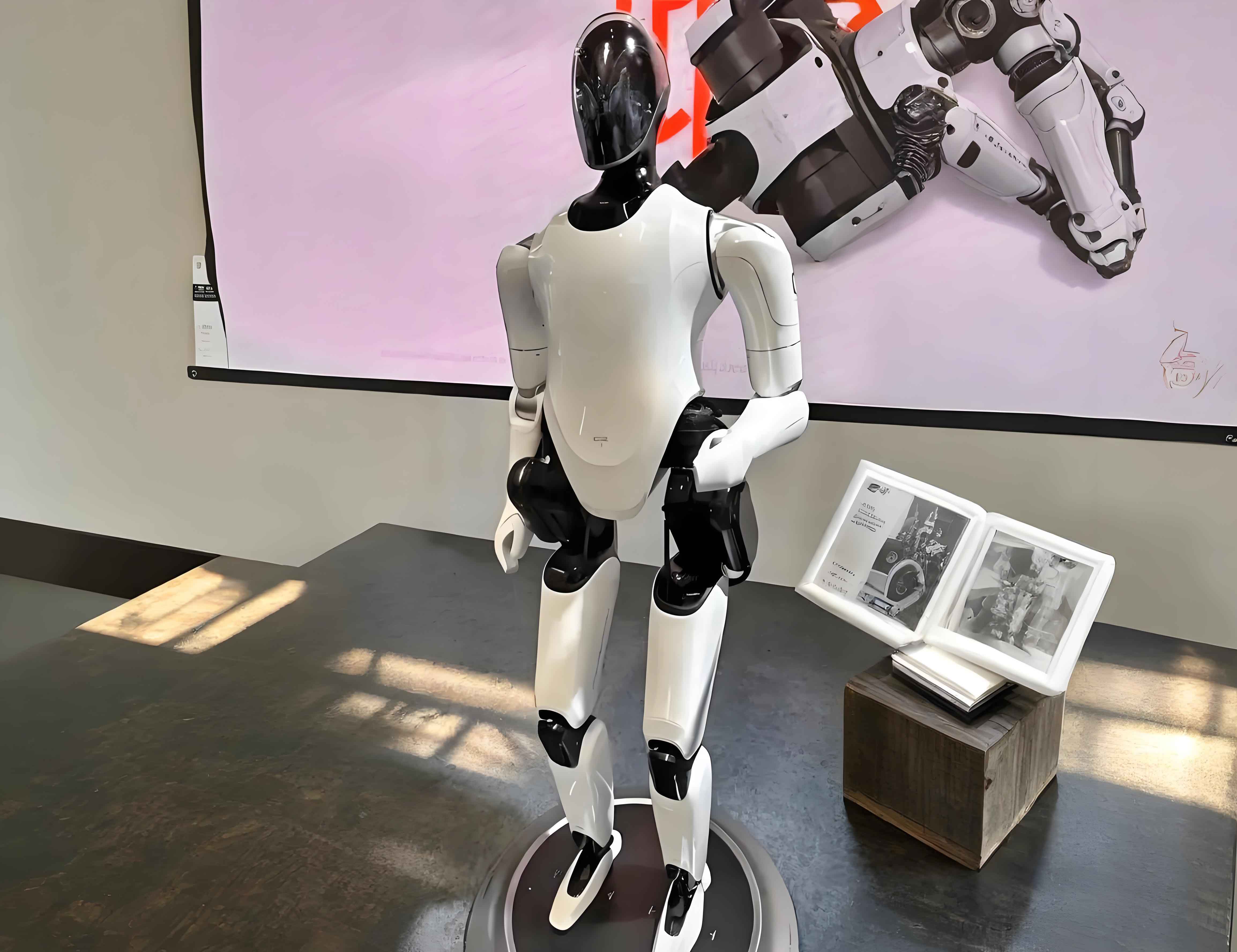
This realization compels a shift in perspective. Rather than viewing intelligence as a product to be engineered from the top down, I propose we consider it as a process to be grown from the bottom up, inspired by the developmental trajectories observed in humans. The core of this argument rests on the principles of embodied intelligence, which posit that cognition is not computed by an abstract processor but emerges from the dynamic sensorimotor coupling of an agent—an embodied AI robot—with its environment. In this view, an embodied AI robot is not merely a mobile computer but a system whose physical form, perceptual capabilities, and action possibilities fundamentally shape its learning and understanding. By tracing the developmental arc from early sensorimotor exploration to symbolic reasoning, we can construct a “cognitive growth path”—a multi-stage, scaffolded learning framework that offers a more plausible and powerful model for building adaptive, generalizable, and explainable artificial minds. This path is not just a technical blueprint for robotics; it serves as a profound theoretical lens and practical toolkit for reimagining educational innovation, bridging developmental psychology, cognitive science, and machine learning.
Theoretical Foundations: Why Embodiment is Foundational
The quest to understand intelligence has long been bifurcated. Classical AI approached it as symbolic manipulation, while connectionist AI (deep learning) treats it as statistical pattern matching in neural networks. Both, however, often treat the body as a peripheral input/output device. The theory of embodied cognition challenges this core assumption, arguing that the body is constitutive of the mind. Cognition is for action, and our concepts, reasoning, and even abstract thought are grounded in sensorimotor experiences. This is not a metaphorical claim but an architectural one: the morphology, perceptual apparatus, and action dynamics of an agent directly determine how it can know and interact with its world. Gibson’s theory of affordances perfectly illustrates this: a chair “affords” sitting not as an absolute property, but relative to the physical structure and capabilities of the perceiving agent. For an embodied AI robot with a gripper, the same chair might primarily afford “grasping” or “pushing.”
This perspective finds robust support in developmental psychology. Jean Piaget’s seminal work documented that intelligence is not pre-loaded but constructed through interaction. The sensorimotor stage (birth to ~2 years) is particularly instructive. Here, foundational cognitive structures are built not from instruction, but from exploration:
- Object Permanence: The understanding that objects continue to exist when out of sight. This is not a given but an achievement born from repeated interactions.
- Causal Reasoning: The learning that one’s own actions (e.g., hitting a mobile) can cause reliable effects in the environment.
- Agency: The developing sense of self as an entity that can initiate and control actions to achieve goals.
These milestones are not abstract lessons; they are knowledge forged in the loop of perception, action, and feedback. An embodied AI robot attempting to learn without this loop is like an infant trying to understand the world while swaddled motionless—it receives data but cannot generate understanding. Developmental robotics, a field directly inspired by such observations, explicitly aims to create machines that develop sensorimotor and cognitive capabilities through autonomous, staged interaction with their environments, mirroring this growth process.
Current machine learning, for all its power, starkly highlights this gap. Deep learning models excel at pattern detection within the distribution of their training data but struggle with causal reasoning, rapid adaptation to novel situations, and learning from sparse data. They are often “brittle.” This is because they primarily engage in statistical learning, optimizing for correlation. In contrast, human children engage in cognitive constructive learning, using their bodies to actively experiment, hypothesize, and build internal models of how the world works. The promise of the embodied cognitive growth path is to endow AI systems with this constructive capacity.
The Cognitive Growth Path: A Staged Architecture for Embodied AI
The cognitive growth path is a conceptual and computational framework that structures the learning process for an embodied AI robot into progressive, interdependent stages. The goal is not to pre-program competence, but to create the conditions where it can emerge through experience, much like a curriculum scaffolds human learning. The following table summarizes the core stages and their corresponding developmental and computational focus:
| Stage | Developmental Analogue | Core Objective for Embodied AI Robot | Key Mechanisms & Skills |
|---|---|---|---|
| 1. Sensorimotor Coordination | Piaget’s Sensorimotor Stage (0-2 yrs) | Establish reliable perception-action mappings and a basic sense of agency. | Motor babbling, proprioception, visuomotor calibration, contingency learning, reaching/grasping, object tracking. |
| 2. Goal-Directed Exploration & Causal Learning | Late Sensorimotor / Early Pre-operational | Form intentional actions to achieve desired outcomes and discover causal structures in the environment. | Intrinsic motivation, curiosity-driven exploration, tool affordance learning, simple means-ends analysis, formation of world models. |
| 3. Symbolic Abstraction & Compositional Reasoning | Concrete to Formal Operational Stages | Develop abstract, recombinable representations that allow for planning, generalization, and reasoning beyond immediate perception. | Symbol grounding, concept formation, relational learning, hierarchical planning, language acquisition (if multimodal), meta-learning. |
Stage 1: Sensorimotor Coordination – The Foundational Loop
This is the birth of cognition for the embodied AI robot. Initially, its movements are uncoordinated, and sensory input is a chaotic stream. The primary task is to learn the sensorimotor contingencies—the lawful relationships between its own motor commands and the resulting changes in sensory input. This is often initiated through processes akin to “motor babbling,” where the robot randomly activates its actuators and observes the consequences. Through self-supervised learning, it begins to build inverse models (what command achieves a desired sensory state?) and forward models (what sensory change will this command cause?).
A critical milestone here is the emergence of a form of object permanence. A robot must learn that an object occluded by another does not cease to exist. This can be modeled through memory-augmented networks or predictive world models that maintain a latent state representation $$s_t$$ of the environment, which evolves even without direct perception:
$$ s_{t+1} = f(s_t, a_t) $$
where $$f$$ is a learned transition model that predicts the next state given the current state $$s_t$$ and the action $$a_t$$ taken by the embodied AI robot. This allows the system to maintain a belief about occluded objects.
Stage 2: Goal-Directed Exploration & Causal Learning
Once basic control is established, the embodied AI robot must transition from reactive behavior to purposeful action. This requires the development of intrinsic motivation—drivers like curiosity, novelty-seeking, or competence improvement that fuel exploration without external rewards. The robot begins to set its own goals, such as “make the red block touch the blue block” or “fit the shape into the corresponding hole.”
This stage is fundamentally about discovering causality. The robot learns through intervention: if I push block A (action), it collides with block B (effect). This is a different learning signal than observing correlation. Computational frameworks like causal discovery algorithms or intervention-based reinforcement learning can be employed. The robot builds a causal graph or a structured world model that represents not just associations, but dependencies. The value of a state-action pair in such a framework can be expressed as:
$$ Q(s_t, a_t) = \mathbb{E} \left[ \sum_{k=0}^{\infty} \gamma^k r_{t+k+1} | s_t, a_t \right] $$
where the reward $$r$$ can be intrinsically generated based on learning progress or prediction error reduction, driving the embodied AI robot to seek informative interactions.
Stage 3: Symbolic Abstraction & Compositional Reasoning
The final stage involves transcending the immediate sensorimotor here-and-now. The embodied AI robot must learn to form abstract categories (e.g., “container,” “moveable,” “fragile”) from its concrete experiences. These symbols become building blocks for compositional thought: “put the small red object inside the large blue container.” This is the problem of symbol grounding—ensuring that abstract symbols retain their connection to embodied experience.
Techniques from neuro-symbolic AI are relevant here. The robot might use its deep neural networks for perception and motor control, but gradually learn to extract discrete, relational predicates that form a symbolic knowledge base. For example, from numerous interactions, it might abstract a rule:
$$ \text{Inside}(x, y) \leftarrow \text{Grasp}(x) \land \text{MoveAbove}(x, y) \land \text{Release}(x) $$
This allows for planning in a conceptual space. The system can now reason about novel combinations of symbols and then translate those plans back into low-level motor commands. This capability for abstraction and recombination is what enables powerful generalization—understanding a new type of container without exhaustive physical experimentation.
Computational Realization: From Theory to Algorithm
Implementing this growth path requires a synthesis of computational paradigms. The journey can be formally modeled as a Partially Observable Markov Decision Process (POMDP), which is a suitable framework for an embodied AI robot acting under uncertainty and with incomplete perception. The core elements are:
- States (S): The (often latent) configuration of the robot and its environment.
- Actions (A): The motor commands available to the robot.
- Observations (O): The sensory data (e.g., camera images, proprioception).
- Transition Model (T): $$P(s_{t+1} | s_t, a_t)$$ – Learned through interaction (Stage 1/2).
- Observation Model (Ω): $$P(o_t | s_t)$$ – Also learned.
- Reward (R): Can be extrinsic (task success) or intrinsic (novelty, prediction error, empowerment).
The robot’s objective is to learn a policy $$\pi(a_t | o_t)$$ that maximizes cumulative reward. The staged growth is implemented by carefully shaping the reward function, the complexity of the state/action space, and the learning architecture over time.
Key enabling algorithms include:
- Self-Supervised Learning (SSL): For Stage 1, SSL objectives like contrastive learning, dynamics prediction, or reward-free exploration are crucial. The robot learns useful representations by predicting future sensory states or by maximizing the mutual information between its actions and sensory changes.
- Intrinsically-Motivated Reinforcement Learning (IMRL): For Stage 2, algorithms like Random Network Distillation, Curiosity-driven exploration ($$r_t = \eta \cdot || \hat{o}_{t+1} – o_{t+1} ||^2$$), or empowerment maximization provide the internal drive for exploration and causal learning.
- Meta-Learning & Continual Learning: To support progressive growth without catastrophic forgetting, the embodied AI robot needs mechanisms for continual learning. This can involve elastic weight consolidation, dynamic architecture expansion, or meta-learning to quickly adapt previous skills to new tasks.
- Attention and Memory Mechanisms: Transformers and other attention-based models allow the robot to focus on relevant parts of its sensory stream and internal memory, mimicking cognitive attention. This is vital for managing information overload and for maintaining object permanence.
The integration of these components into a cohesive system is the grand challenge. A potential architecture involves a hierarchical controller where lower levels handle sensorimotor primitives (Stage 1), mid-levels manage goal-directed policy learning (Stage 2), and a higher-level network performs symbolic planning and abstraction (Stage 3), all trained jointly or sequentially.
Reflections, Implications, and the Road Ahead
This embodied cognitive growth path presents a stark contrast to conventional machine learning. The table below highlights the core differences:
| Aspect | Traditional Deep Learning | Embodied Cognitive Growth Path |
|---|---|---|
| Learning Paradigm | Statistical Learning (Pattern Matching) | Cognitive Constructive Learning (Model Building) |
| Data Dependence | High; requires massive, often labeled datasets. | Lower; relies on active generation of experiential data through interaction. |
| Knowledge Source | Passive ingestion of external data. | Active exploration and intervention in the environment. |
| Generalization | Often brittle; struggles with out-of-distribution samples. | Potentially more robust; grounded in causal/structural understanding. |
| Explainability | Low (“black box”). | Potentially higher; reasoning can be traced through world models and symbolic plans. |
| Developmental Trajectory | Static architecture, one-shot training. | Dynamic, staged growth with incremental skill acquisition. |
Educational Implications: A New Lens for Learning Science
This framework is more than a robotics strategy; it is a powerful metaphor and a concrete modeling tool for education. It provides a computational justification for long-held pedagogical principles:
- “Learning by Doing” and Constructivism: The growth path empirically demonstrates that knowledge is constructed through action and feedback. An embodied AI robot serves as a tangible model for this process, offering insights into how students build understanding.
- Scaffolding and Zone of Proximal Development: The staged architecture is the epitome of instructional scaffolding. It shows how complex cognition must be built upon well-consolidated sensorimotor foundations.
- Intrinsic Motivation: Modeling curiosity and competence-based motivation in robots offers new ways to design engaging, self-directed learning environments for students.
- Assessment: By analyzing the “failure modes” and learning trajectories of an embodied AI robot, we can develop better diagnostic tools for identifying specific cognitive bottlenecks in human learners.
- Personalized Learning: A digital twin or simulated student model following a cognitive growth path could allow educators to test interventions and predict individual learning outcomes in silico.
Advantages and Current Challenges
The primary advantage of this approach is its alignment with biological intelligence, promising more adaptive, generalizable, and transparent AI systems. It moves the field from merely engineering intelligent behavior to nurturing intelligent development. For education, it provides a rigorous, interdisciplinary framework connecting cognitive theory with technological design.
However, significant challenges remain:
- Computational Cost & Time: Growing an intelligence in real-time through physical interaction is incredibly slow and resource-intensive compared to offline batch training on GPUs.
- Sim-to-Real Transfer: Much development must occur in simulation for practicality, but transferring grown competencies to the messy physical world remains difficult.
- Integration Complexity: Seamlessly combining low-level control, mid-level skill learning, and high-level symbolic reasoning in one system is a monumental software engineering and research challenge.
- Scaling Abstraction: While simple symbolic concepts can be grounded, scaling this to the richness of human abstract thought (e.g., justice, irony) is an open question.
In conclusion, the journey from embodied intelligence to a formalized cognitive growth path represents a paradigm shift. It asks us to stop treating AI as a static artifact and start viewing it as a dynamic, developing entity. The embodied AI robot is the testbed for this vision—a system whose cognitive maturation is inextricably linked to its physical experiences. By charting this path, we do not only advance the frontier of machine intelligence but also gain a revolutionary tool for understanding and enhancing human learning. The future of both AI and education may well depend on our ability to master the art and science of cognitive growth, building systems—and supporting minds—that learn not just from data, but from living in a world.