
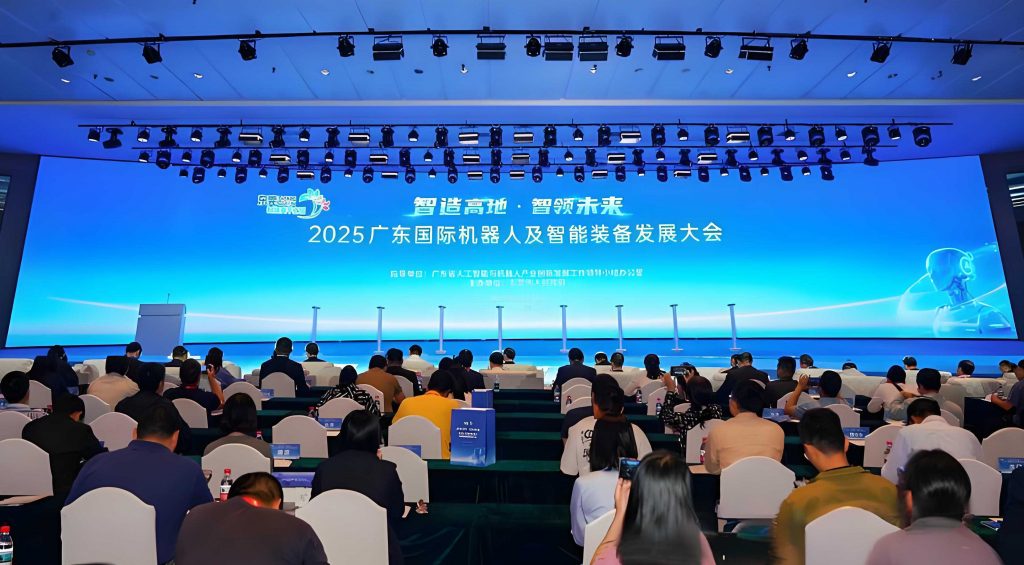
As I stand at the threshold of the century’s turn, gazing back at the radiant trajectory of robotics in the 20th century and peering forward into the promising horizon of the 21st, my heart swells with fervent emotion. It feels as though I am already immersed in an era where humans and machines coexist in harmonious synergy. Since the advent of the world’s first robot in the late 1950s, robotics has matured past its years of confusion, evolving through over four decades of transformative development. The landscape of robot technology has undergone earth-shaking changes, with more than a million industrial robots diligently serving across various fronts, and now expanding at a staggering pace into domains such as services, military, entertainment, agriculture, and education. The progress and application of robotics, as some leading minds have noted, represent the most compelling achievement of automation in the 20th century, epitomizing automation at its highest contemporary sense. Nations worldwide, in their quest to dominate this technological high ground, have invested immense human and material resources, positioning robotics prominently in their long-term strategic blueprints. Undoubtedly, robotics in the new century will witness even greater proliferation. Factories, households, and schools will become inseparable from robots; these intelligent entities will permeate every facet of human life, profoundly enhancing the quality of our existence. To accelerate the advancement of our nation’s robotics sector and welcome the imminent robot era, a pivotal symposium was convened in Beijing, aiming to pool collective wisdom and solicit diverse opinions to expedite the growth of robotics in our land. This gathering fostered consensus among experts, who, from a national perspective, put forth valuable insights and recommendations, unified in the vision for a robust China robot future.
The journey of robot technology is a testament to human ingenuity and perseverance. From rudimentary automated arms to sophisticated autonomous systems, the evolution can be modeled through growth equations that capture the exponential adoption. For instance, the cumulative number of robots deployed globally, \( R(t) \), might follow a logistic growth curve:
$$ R(t) = \frac{K}{1 + e^{-r(t – t_0)}} $$
where \( K \) is the carrying capacity or maximum potential number of robots, \( r \) is the growth rate, and \( t_0 \) is the inflection point. In the context of China robot development, this model can be adapted to reflect strategic investments and policy support, driving rapid ascent. The derivative, \( \frac{dR}{dt} \), represents the instantaneous growth, often fueled by breakthroughs in artificial intelligence, sensor technology, and materials science. As I reflect, it’s clear that the 20th century laid a formidable foundation, with key milestones summarized in the table below.
| Decade | Global Robot Milestone | Impact on China Robot Development |
|---|---|---|
| 1960s | First industrial robots introduced in manufacturing | Initial exposure through academic exchanges; nascent research begins |
| 1970s | Advancements in programmable logic controllers | Early experimental prototypes emerge in Chinese institutes |
| 1980s | Expansion into automotive industry automation | China robot imports rise; domestic production initiatives start |
| 1990s | Rise of service and medical robots | Focused R&D programs launched; integration with national plans |
| 2000s | Proliferation of AI-driven autonomous systems | Accelerated growth; China robot becomes key in high-tech strategies |
In the realm of China robot, the turn of the century marked a pivotal awakening. The nation recognized that true high-technology cannot be merely purchased; it must be cultivated through indigenous innovation. This conviction stems from the understanding that robotics is a 21st-century technology brimming with innovative vitality, sustainable development potential, and strategic importance for national economy and security. It falls squarely within the domain of “doing what must be done” in selective technological pursuits. As I ponder, the very concept of robots has broadened beyond traditional industrial arms to encompass a spectrum of intelligent agents, from humanoid companions to micro-scaled swarms. This conceptual expansion is crucial for the China robot ecosystem to thrive, unshackled by outdated definitions. The management approach adopted in national high-tech programs, emphasizing expert-led governance, has strengthened democratic decision-making and minimized strategic missteps—a model worthy of further propagation. For China robot to soar, unity is paramount; we must band together, forming a cohesive force to catch up with and surpass robotic powerhouses, thereby welcoming the robot age with open arms. State support remains indispensable, fueling this journey toward excellence.
The consensus reached among thought leaders revolves around two core pillars: philosophical perspectives and developmental priorities. In terms of观念, it is universally acknowledged that China robot technology must be自主发展 (independently developed), as reliance on external sources poses risks to national sovereignty and long-term competitiveness. The paradigm shift in robot conceptualization allows for innovative applications, such as in entertainment or agriculture, where China robot can carve unique niches. Moreover, the collaborative spirit underscored in expert management systems fosters a resilient innovation ecosystem. To quantify the strategic focus, we can consider a prioritization matrix based on impact and feasibility, often expressed through weighted scoring models. For example, the strategic value \( S \) of a robot technology domain can be modeled as:
$$ S = \sum_{i=1}^{n} w_i \cdot x_i $$
where \( w_i \) are weights assigned to factors like economic benefit, security relevance, and technological readiness, and \( x_i \) are scores for each factor. This analytical approach guides the China robot agenda toward maximizing national advantage. The table below encapsulates the key观念 consensus points that shape our trajectory.
| Consensus Aspect | Core Principle | Implication for China Robot |
|---|---|---|
| Technological Sovereignty | True high-tech must be developed independently; cannot be bought | Invest in core R&D reduce dependency on foreign robot technologies |
| Conceptual Broadening | Robot definition should evolve beyond traditional industrial arms | Encourage innovation in service, medical, and consumer robot domains |
| Governance Model | Expert-led management enhances democratic decision-making | Adopt and refine this model in national China robot initiatives |
| National Unity | Collaboration across academia, industry, and government is vital | Foster partnerships to accelerate China robot advancement |
| Sustained Support | Continuous state investment is crucial for long-term success | Advocate for stable funding and policy backing for China robot projects |
Turning to developmental priorities, the consensus emphasizes placing application at the forefront while not neglecting basic research. Foundational technology pre-research should be前瞻性 (forward-looking), potentially超前 5–10 years to anticipate future needs. Experts recommend focusing on “land, sea, air, human, micro, swarm, and network” as primary research vectors to propel robot technology forward. At this century’s juncture, the development emphasis for China robot should center on the following areas, each representing a strategic pillar for national growth. To systematically evaluate these priorities, we can employ a multi-criteria decision analysis framework. For instance, the overall priority score \( P \) for each area might be computed using:
$$ P_j = \alpha \cdot E_j + \beta \cdot S_j + \gamma \cdot T_j $$
where \( E_j \) is economic impact, \( S_j \) is security benefit, \( T_j \) is technological feasibility for area \( j \), and \( \alpha, \beta, \gamma \) are weighting coefficients reflecting national goals. This formula ensures that China robot development aligns with broader objectives. The table below delineates these key focus areas, detailing their significance and potential applications.
| Priority Area | Description | Expected Impact on China Robot |
|---|---|---|
| Automation and Robot Application Engineering | Deploying robots in industrial and service sectors to drive productivity | Enhance manufacturing efficiency; boost GDP contribution through China robot solutions |
| Transformation of Traditional Engineering Machinery | Integrating robot tech into construction and agricultural equipment | Increase competitiveness of Chinese firms; modernize infrastructure projects |
| Military Robot Technology | Developing unmanned systems for defense and surveillance | Strengthen national security; position China robot as a defense innovator |
| Underwater Robot Technology | Advancing submersibles for ocean exploration and maritime protection | Expand blue economy; safeguard territorial waters with China robot platforms |
| Underground Robot Series | Creating robots for mining, tunneling, and subterranean operations | Meet growing demand in urbanization; improve safety in hazardous environments |
| Entertainment Robot Series | Designing toy and interactive robots for public engagement | Popularize robot knowledge; stimulate consumer market for China robot products |
| Agricultural Robot Technology | Implementing robots for precision farming and livestock management | Increase crop yields and quality; promote sustainable agriculture via China robot innovations |
Delving deeper into each priority, the application of China robot in automation engineering is paramount. Consider the productivity gain \( \Delta P \) achievable through robot integration in a factory setting, which can be expressed as:
$$ \Delta P = \eta \cdot (R_h – R_m) \cdot t $$
where \( \eta \) is the efficiency coefficient, \( R_h \) is the output rate with human labor, \( R_m \) is the output rate with robots, and \( t \) is operational time. For China robot deployments, optimizing \( \eta \) through smart algorithms and adaptive control can yield significant economic benefits. In military contexts, the effectiveness of unmanned systems, such as drones or ground robots, can be modeled using engagement equations, like Lanchester’s laws adapted for robotic warfare. For example, the attrition rate might be:
$$ \frac{dB}{dt} = -\alpha R $$
where \( B \) represents blue force strength, \( R \) is the number of China robot units, and \( \alpha \) is the combat effectiveness coefficient. Such models inform procurement and deployment strategies, ensuring that China robot technologies bolster national defense cohesively.
Underwater robotics presents unique challenges due to the harsh marine environment. The pressure tolerance \( P_t \) of a submersible robot can be related to depth \( d \) via:
$$ P_t = \rho g d + P_0 $$
where \( \rho \) is water density, \( g \) is gravity, and \( P_0 \) is atmospheric pressure. Advancements in materials and密封技术 (sealing technology) are critical for China robot to excel in deep-sea exploration, potentially unlocking resources and enhancing maritime security. Similarly, underground robots must navigate confined spaces and variable geologies. Their mobility efficiency \( M_e \) might be quantified as:
$$ M_e = \frac{v \cdot \tau}{E} $$
with \( v \) being speed, \( \tau \) operational endurance, and \( E \) energy consumption. Improving \( M_e \) through innovative designs will make China robot products indispensable for infrastructure projects like subway construction or mining.
In the entertainment sector, China robot can play a pivotal role in education and cultural engagement. The appeal of a toy robot, measured through user engagement指数 \( I_e \), could be modeled as a function of interactivity \( i \), aesthetics \( a \), and educational value \( e \):
$$ I_e = k_1 i + k_2 a + k_3 e $$
where \( k_1, k_2, k_3 \) are weighting factors. By maximizing \( I_e \), China robot makers can captivate young minds and foster a robot-literate generation. Agricultural robots, on the other hand, address food security challenges. The yield improvement \( \Delta Y \) from precision farming robots can be estimated using:
$$ \Delta Y = \mu \cdot A \cdot (s_{\text{robot}} – s_{\text{traditional}}) $$
where \( \mu \) is a crop-specific coefficient, \( A \) is area, and \( s \) denotes yield per unit area. Deploying China robot solutions in farming can revolutionize rural economies and ensure sustainable food production.
The synergy among these priorities is vital. For instance, technologies developed for military China robot often have dual-use applications in civilian domains, such as sensors from underwater robots being adapted for environmental monitoring. This cross-pollination can be analyzed through technology transfer matrices. Let \( T \) be a matrix where element \( T_{ij} \) represents the transfer potential from priority area \( i \) to \( j \). Optimizing \( T \) through policy incentives accelerates overall China robot progress. Moreover, the concept of robot swarms—networks of cooperating micro-robots—opens new frontiers. The collective behavior of a swarm can be described by algorithms like:
$$ \vec{v}_i(t+1) = w \vec{v}_i(t) + c_1 r_1 (\vec{p}_i – \vec{x}_i(t)) + c_2 r_2 (\vec{g} – \vec{x}_i(t)) $$
which is inspired by particle swarm optimization, where \( \vec{v}_i \) is velocity, \( \vec{x}_i \) position, \( \vec{p}_i \) personal best, \( \vec{g} \) global best, and parameters \( w, c_1, c_2 \) control exploration and exploitation. Implementing such algorithms in China robot swarms can enhance search-and-rescue missions or agricultural monitoring.
As I contemplate the future, the trajectory of China robot is inextricably linked to national prowess. The level of robot development in a country symbolizes, in a sense, its comprehensive strength—encompassing technological, economic, and military dimensions. As a major nation, we must cultivate our own robot industry, not merely as an economic endeavor but as a strategic imperative. The road ahead demands relentless innovation, collaborative spirit, and unwavering commitment. Friends and colleagues, let us join hands, guided by the banner of national high-technology, and strive tirelessly for the soaring ascent of China robot in the 21st century. Together, we can transform visions into reality, ensuring that China robot becomes a beacon of progress and harmony in the global community.
In summary, the evolution of China robot is a multifaceted journey, blending historical insights with forward-looking strategies. The consensus on观念 and developmental priorities provides a robust framework, but execution requires meticulous planning and resource allocation. To encapsulate the interdependencies, consider a final table that maps priority areas to key performance indicators (KPIs) for China robot advancement. These KPIs can be monitored over time to gauge progress and adjust strategies accordingly.
| Priority Area | Key Performance Indicator (KPI) | Target for China Robot (2025-2030) |
|---|---|---|
| Automation Engineering | Number of industrial robots deployed per 10,000 workers | Increase from 150 to 500 units |
| Military Robots | Percentage of unmanned systems in defense inventory | Achieve 30% integration |
| Underwater Robots | Maximum operational depth (meters) | Extend to 11,000 meters for full ocean depth coverage |
| Agricultural Robots | Area covered by precision farming robots (hectares) | Expand to 10 million hectares nationwide |
| Entertainment Robots | Annual sales volume (units) | Reach 5 million units domestically |
| Swarm Robotics | Size of coordinated robot swarms (number of agents) | Demonstrate swarms of 1,000+ agents |
| Networked Robotics | Latency in robot-cloud communication (milliseconds) | Reduce to under 10 ms for real-time control |
Through such metrics, the progress of China robot can be quantitatively assessed, ensuring alignment with national goals. The formulas and models discussed earlier provide the theoretical underpinnings, while these KPIs offer practical milestones. As I conclude, the promise of China robot is not just a technological dream but a tangible pathway to a brighter future, where machines augment human capabilities and foster societal well-being. Let us embrace this challenge with vigor and vision, for the era of China robot is upon us, and its potential is boundless.