
The relentless march of human space exploration presents a paradigm shift in mission complexity. Future endeavors—ranging from on-orbit module replacement, refueling, and assembly, to the exploration of unknown celestial bodies like the Moon and Mars—demand capabilities far exceeding the pre-programmed, rigid automation of the past. These missions require embodied AI robots, such as advanced rovers or servicing satellites, to exhibit “human-like” elastic intelligence: robust perception, intelligent decision-making, and dexterous execution in unstructured, unfamiliar environments. Similarly, next-generation satellites for Earth observation, navigation, and communication must evolve beyond mere data collectors. They need intelligent data acquisition, onboard processing, and the cognitive ability to understand and respond to dynamic task requirements, thereby drastically improving application efficacy.
In this context, the application of new-generation artificial intelligence technologies—embodied intelligence, large foundation models, and deep reinforcement learning—is not merely an option but the essential pathway to meet the high-intelligence and autonomy requirements of future spacecraft. The fundamental challenge lies in moving from systems designed for specific, foreseen functions to systems capable of learning and evolving. Current spaceborne intelligent systems are often architected for functionality (e.g., target recognition, path planning) but struggle with knowledge generation and utilization. They cannot effectively adapt to unforeseen environmental changes or achieve mission-level autonomy, often necessitating ground intervention. Therefore, to forge a new class of advanced autonomous systems that can efficiently tackle the increasingly complex demands of extraterrestrial exploration and construction, there is an urgent need to construct an evolvable intelligent control system architecture for spacecraft.
This perspective analyses the developmental requirements for such an architecture. It conducts an in-depth investigation into the progress of embodied intelligence, aiming to deeply integrate its advantages in environmental interactivity, autonomous exploration, and intelligent growth to propose a novel design for an evolvable spacecraft control system. An embodied AI robot in this context is an intelligent agent whose cognitive capabilities are fundamentally grounded in and shaped by its active, physical interaction with the operational environment—be it the surface of Mars or the void of cislunar space.
The Limitations of Traditional Spacecraft Control Architectures
The architecture of an intelligent control system, defining its components, their interrelationships, and information flow logic, fundamentally determines overall performance. Traditional paradigms primarily fall into three categories, each with inherent strengths and weaknesses for space applications, particularly for an autonomous embodied AI robot.
| Architecture Type | Core Principle | Advantages | Disadvantages for Space Embodiment |
|---|---|---|---|
| Hierarchical (Deliberative) | Functions are arranged in sequential layers (e.g., perception, planning, execution) forming a serial structure. | Easier to implement high-level logic and global planning. | Lacks real-time responsiveness and flexibility; brittle in dynamic, unknown environments. |
| Reactive (Behavior-Based) | Parallel “sense-act” modules generate tight perception-action loops without complex world models. | Excellent real-time performance and robustness to fast environmental changes. | Lacks high-level strategic intelligence; unpredictable emergent behavior; potential for control conflicts. |
| Hybrid | Combines a deliberative layer for global planning with a reactive layer for local execution. | Balances strategic goal-oriented behavior with tactical reactivity. | Complex integration; the deliberative layer can still become a bottleneck for novel situations. |
While hybrid architectures, as seen in missions like Deep Space 1 and China’s Chang’e-4, represent a significant advance, they often rely on pre-defined models and state machines. Their capacity for in-situ learning and adaptation to truly novel scenarios—where the embodied AI robot encounters objects or terrains not in its original database—remains limited. Furthermore, architectures based on multi-agent systems (MAS) or service-oriented principles (e.g., ROS 2), though beneficial for modularity and coordination, face severe challenges under the communication latency, bandwidth constraints, and harsh conditions of deep space or planetary surfaces.
The high-complexity missions planned for lunar bases, asteroid exploration, and Mars sample return expose these limitations. They require spacecraft and robotic agents to operate autonomously for extended durations, handle high dynamic uncertainty, and recover from unforeseen failures—all with minimal ground support. The existing architectural paradigms, focused on functional fixedness, struggle to provide the necessary adaptive intelligence.
Embodied Intelligence: A Foundational Paradigm for Autonomous Space Systems
Embodied intelligence offers a transformative framework to address these critical gaps. At its core, it posits that intelligence emerges from the interaction between an agent’s body (its sensors and actuators), its computational brain, and the environment. An embodied AI robot does not process abstract data in isolation; it learns, understands, and makes decisions through active physical engagement. This “intelligent growth” paradigm is key for space systems: rather than deploying a fully pre-trained, static model, we deploy a system capable of refining its skills and knowledge through its lived experience on-orbit or on-planet.
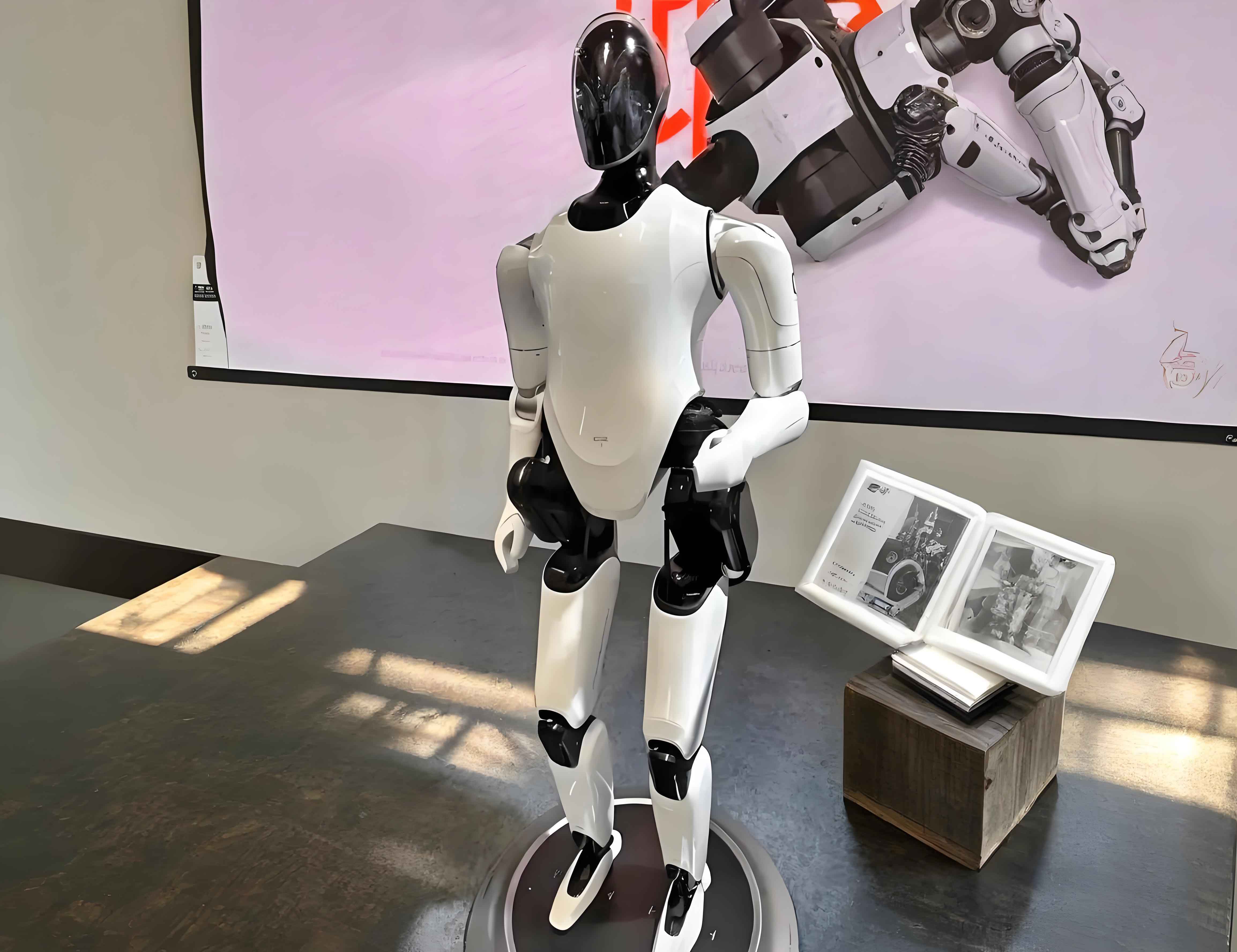
The concept can be formalized as a process where an agent’s policy $\pi$ evolves not just from pre-training on historical data $D_{pre}$, but crucially from its ongoing interaction stream $I_t$ with the target environment $E$:
$$ \pi_{t+1} = \text{Learn}(\pi_t, D_{pre}, I_t(E, S, A)) $$
where $S$ represents the agent’s sensor readings and $A$ its actions. This continuous learning loop enables the embodied AI robot to accumulate task-specific environmental cognition that was impossible to pre-program on Earth.
Research in embodied intelligence has seen rapid progress in two key application domains highly relevant to space:
1. Embodied Navigation and Exploration: Early approaches used Vision-Language Models (VLMs) trained on contrastive objectives for tasks like open-vocabulary object navigation (e.g., “find the unusual rock”). The latest evolution leverages multimodal foundation models with superior visual-language understanding, enabling more robust reasoning about scenes and instructions. An embodied AI robot on Mars could use such capabilities to interpret a high-level command like “explore the area northwest of the lander for hydrous minerals” into a sequence of navigational actions, dynamically identifying and avoiding novel hazards.
2. Embodied Dexterous Manipulation: Teaching robots complex manipulation skills is a central challenge. While Imitation Learning (IL) relies on extensive expert datasets, and Reinforcement Learning (RL) suffers from poor sample efficiency in the real world, the integration of foundation models is revolutionizing the field. Models like RT-2 demonstrate how large-scale pre-training on web and robotic data enables a form of “common-sense” reasoning for manipulation, allowing an embodied AI robot to generalize to novel objects (e.g., manipulating an unfamiliar tool found on an asteroid) by understanding its affordances from visual and semantic cues.
Key Technological Pillars for an Embodied Spacecraft
Realizing an embodied AI robot for space missions rests on advances in four interconnected technological pillars, forming a continuous “Perception-Understanding-Decision-Action” cycle.
| Pillar | Objective | Key Techniques & Challenges | Role in Embodied AI Robot |
|---|---|---|---|
| Multimodal Perception | To create a rich, accurate, and robust representation of the local environment. | Fusion of camera, LiDAR, tactile, spectral data; Transformer-based sensor fusion; handling occlusion, lighting variance. | Provides the “sensory suite.” Enables the agent to perceive object properties (shape, texture, mass) and environmental context (terrain, lighting). |
| World Model & Cognitive Understanding | To build a predictive and explanatory model of how the world works. | Physics-based simulation models; Data-driven “world models” (e.g., video prediction models); Learning object affordances and physical dynamics. | Forms the “mental simulator.” Allows the robot to imagine the consequences of actions, plan complex sequences, and understand object functionality. |
| Intelligent Decision & Growth | To generate robust, safe, and optimal task strategies and improve them through experience. | Hierarchical task planning; Online reinforcement learning; Human-robot value alignment; Learning from human feedback. | Constitutes the “cognitive engine.” Decomposes high-level goals, makes strategic and tactical choices, and updates its policy based on success/failure. |
| Fine Dexterous Operation | To execute precise physical interactions with the environment and objects. | Force/torque control compliant manipulation; Sim-to-real transfer for contact-rich tasks; Adaptive control for uncertain dynamics. | Represents the “physical actuator.” Carries out the planned actions, enabling sampling, assembly, or repair with necessary precision and compliance. |
The intelligent growth pillar deserves special emphasis. Inspired by research in evolutionary reinforcement learning, the morphology and control of an embodied AI robot can co-adapt. While a spacecraft’s physical form is fixed after launch, its control policy can evolve. A conceptual model for this in-situ learning can be framed as a constrained optimization problem. The agent aims to maximize a task performance reward $R(\tau)$ over a trajectory $\tau$, while minimizing a risk or resource cost $C(\tau)$, updating its policy parameters $\theta$ online:
$$ \theta^* = \underset{\theta}{\arg\max} \, \mathbb{E}_{\tau \sim \pi_\theta}[R(\tau) – \lambda C(\tau)] $$
where $\lambda$ is a regularization parameter. This allows the system to learn from its direct interactions, growing smarter and more capable over its mission lifetime.
Proposed Evolvable Architecture for an Embodied Spacecraft AI
Synthesizing the principles of embodied intelligence, we propose a cyclic, evolvable control system architecture designed explicitly for in-orbit or on-surface intelligent growth. This architecture enables an embodied AI robot to adapt to new tasks and scenes through three core mechanisms: Embodied Perception, Embodied Reasoning, and Embodied Execution.
1. Embodied Perception for Multimodal World Modeling: When faced with an unknown task (e.g., “sample that peculiarly layered rock”), the spacecraft first engages in active exploratory perception. It uses its suite of sensors (visual, LiDAR, tactile) to collect multimodal data $M$ on the target and environment: $M = \{V, L, T, S\}$ for Visual, LiDAR, Tactile, and Spectral data. The core challenge is fusing this high-dimensional data into a compact, informative feature representation $f$ suitable for limited onboard compute:
$$ f = \mathcal{F}_{\phi}(V, L, T, S) $$
where $\mathcal{F}_{\phi}$ is a lightweight, onboard fusion network (e.g., a distilled Transformer). This feature vector $f$ encapsulates the essential characteristics needed to construct or index a simulated task environment.
2. Embodied Reasoning for Task Evaluation and Online Learning: The feature vector $f$ is used to configure a high-fidelity simulation environment ($Real \rightarrow Sim$). This simulator contains physics models and object templates that can be parameterized by $f$. Within this digital twin, the agent’s current policy $\pi_t$ is deployed to attempt the task. A task performance evaluator $Q$ quantifies the success, generating a reward signal $r = Q(\tau_{sim})$. This signal drives an online learning algorithm (e.g., a fast adaptation meta-RL method) to update the policy from $\pi_t$ to $\pi_{t+1}$:
$$ \pi_{t+1} \leftarrow \pi_t + \alpha \nabla_{\theta} J(\theta), \quad \text{where } J(\theta) = \mathbb{E}[ \sum r ] $$
This step closes the reasoning growth loop, allowing the embodied AI robot to “practice and learn” in simulation before attempting the real task.
3. Embodied Execution for Adaptive Policy Generalization: The policy $\pi_{t+1}$ trained in simulation will inevitably face a reality gap due to modeling inaccuracies. Therefore, the final step is adaptive execution in the real world ($Sim \rightarrow Real$). The policy must generalize from the simulated parameters $f$ to the true sensory stream $M_{real}$. This is achieved through real-time adaptive control layers and low-level compliance that compensate for dynamics errors and uncertainties. The outcome of the real-world execution is fed back into the perception module, starting a new cycle of learning ($Real \rightarrow Sim$), thus closing the overarching autonomous evolution loop and enabling the embodied AI robot to become progressively more competent.
Conclusion and Forward Perspective
The journey towards fully autonomous, adaptable spacecraft for deep space and planetary exploration is fundamentally linked to the principles of embodied intelligence. An evolvable intelligent control system architecture, where an embodied AI robot grows its capabilities through iterative perception, simulation-based reasoning, and real-world execution, is no longer a distant vision but a necessary engineering target.
The challenges are substantial, spanning from developing radiation-hardened, low-power computing for advanced multimodal fusion and world models, to creating robust and safe online learning algorithms that can operate within strict resource envelopes. However, the convergence of progress in AI, robotics, and space systems engineering makes this goal increasingly attainable. By embracing the paradigm of embodied intelligence, we can transition from building spacecraft that merely perform tasks to deploying intelligent partners that can learn to perform, adapt to the unknown, and evolve throughout their missions, ultimately extending the reach and resilience of human and robotic exploration across the solar system.