
As a researcher deeply immersed in the digital transformation of libraries, I observe that the shift from physical spaces to virtual realms is undergoing a profound evolution, moving beyond mere resource aggregation to immersive interaction. The metaverse, as a comprehensive digital space integrating cutting-edge technologies like virtual reality, augmented reality, and blockchain, offers unprecedented possibilities for libraries to transcend traditional physical boundaries and reinvent service paradigms. Concurrently, embodied intelligence, an emerging paradigm in artificial intelligence development that emphasizes how intelligent agents acquire cognitive abilities through bodily interactions with their environments, provides a novel perspective for designing services in metaverse libraries. In this study, I aim to explore, through theoretical analysis and model innovation, how to leverage embodied AI robot technology to construct library service scenarios within the metaverse framework, thereby offering actionable pathways for library transformation in the digital age. The theoretical value lies in enriching the knowledge service theory system of libraries, while the practical value resides in providing new ideas and methods for service innovation and functional expansion in metaverse environments.
The development trajectory of libraries essentially represents a continuous adaptation to technological advancements and shifting user demands. Prior to the rise of the metaverse concept, libraries have undergone multiple rounds of transformation—from print to digital resources, from single retrieval to multifarious services, and from passive provision to active push. These transformations share common characteristics of breaking physical space constraints, expanding spatiotemporal boundaries of services, and enhancing user participation experiences. Metaverse libraries, as a new phase in library evolution, are built upon three-dimensional virtual spaces and integrate multidimensional features such as social interaction, identity formation, economic systems, and immersive experiences. In the metaverse environment, libraries are no longer static knowledge repositories but dynamic venues for knowledge generation and exchange. Users can roam, interact, and collaborate through digital avatars in virtual spaces, obtaining knowledge experiences that approximate yet surpass physical limitations. The deep driver of this transformation is the fundamental shift from resource-oriented to experience-oriented library service models. Users no longer settle for simple information access but expect richer, more立体, and personalized service experiences during knowledge acquisition. The maturation of metaverse technology provides the technical foundation for realizing these expectations, while the introduction of the embodied intelligence concept offers a new theoretical lens and implementation path for natural user interaction in virtual environments.
The concept of embodied intelligence originates from embodied cognition theory in cognitive science, which posits that cognitive processes rely not only on abstract brain computations but also on bodily interactions with the environment. As a technological framework capable of driving dynamic service adjustments through real-time perception of user physiological and behavioral data, embodied intelligence’s core value lies in bridging the gap between environmental feedback and user bodily experiences that often remain disconnected in traditional virtual services. The intelligence of traditional library automation systems typically manifests in algorithm optimization and enhanced data processing capabilities, whereas embodied intelligence focuses more on intelligent performance in user bodily perception, action feedback, and environmental adaptation.
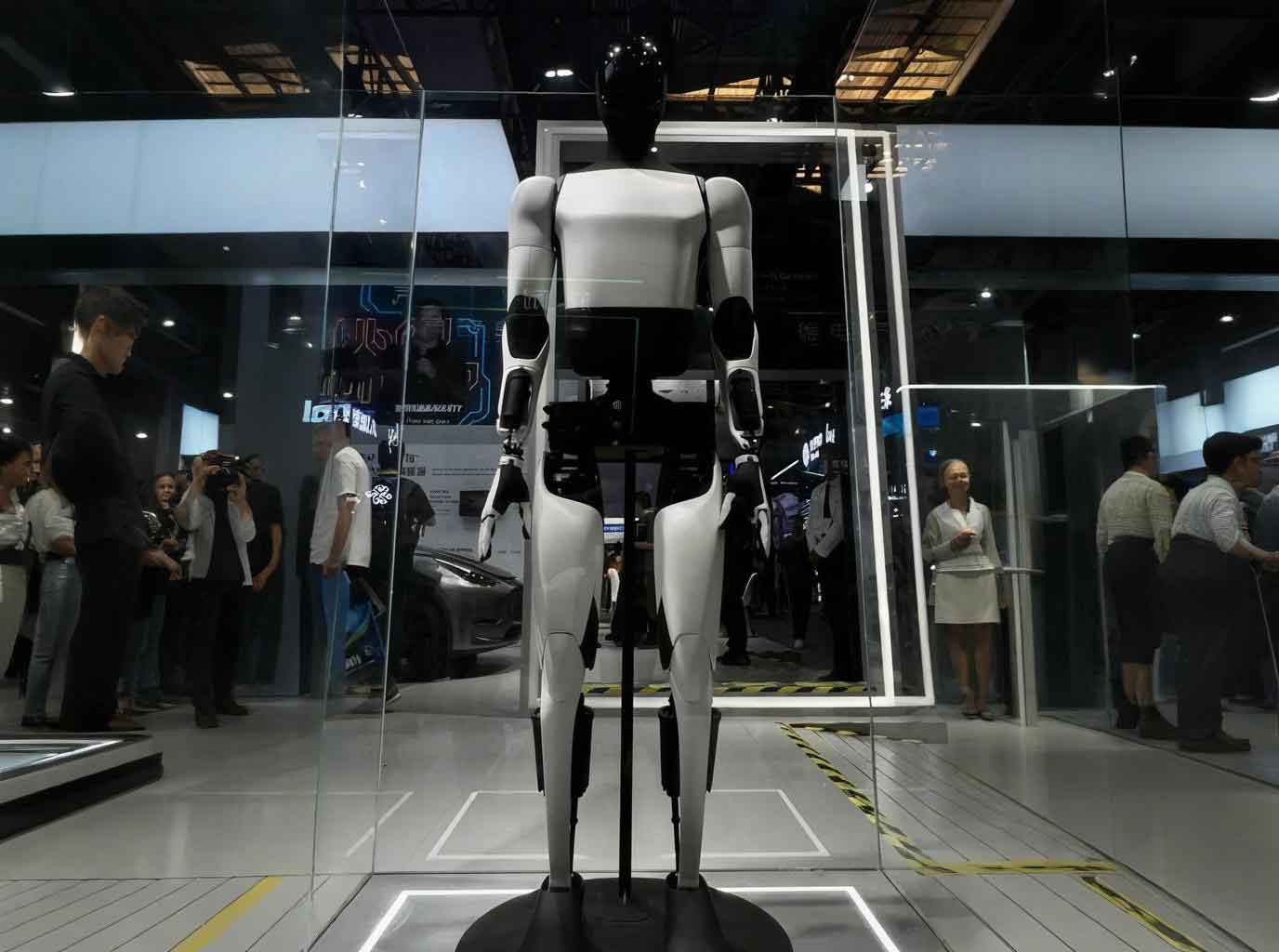
Current research on embodied intelligence in the library field exhibits a three-stage evolutionary characteristic. Initial explorations concentrated on realizing embodied interactions in physical spaces. For instance, an embodied AI robot designed for book retrieval could optimize handling paths through laser navigation, while an AR navigation system could adjust guidance frequency based on user gait. These studies validated the feasibility of bodily actions as service triggers but had not yet broken free from the constraints of physical library spaces. Research on virtual services faced limitations due to technological bottlenecks. For example, early embodied AI robot-driven reference robots possessed semantic parsing capabilities but still could not support cross-modal knowledge exploration. Recent breakthroughs focus on virtual embodied services driven by multimodal large models. An embodied AI robot-based virtual assistant designed with gesture-language joint embedding can parse document areas pointed to by user gestures and associate them with audio explanations. Reinforcement learning algorithms enable embodied AI robot-driven virtual service systems to dynamically optimize interface layouts based on user operation habits. These advancements provide key technological anchor points for constructing a service loop from perception to decision-making to action in metaverse libraries, but a systematic framework for embodied AI robot service scenarios has not yet been formed, which is the core problem this study aims to address.
In this context, I propose a three-dimensional leap in service models for metaverse libraries driven by embodied AI robots. These dimensions are summarized in the following table:
| Dimension | Description | Role of Embodied AI Robot |
|---|---|---|
| Spatial Perception Optimization | Dynamic reorganization of virtual shelves based on user cognitive habits, learning needs, and behavioral patterns. | An embodied AI robot captures user movement trajectories, gaze dwell, and gesture interactions to adjust spatial elements like arrangement, height, and labeling. |
| Content Presentation Enhancement | Multimodal fusion of knowledge expression integrating visual, auditory, and tactile channels. | An embodied AI robot selects optimal modal combinations based on user bodily feedback and cognitive states, such as providing 3D explanatory models for complex concepts. |
| Service Interaction Innovation | Naturalized operations through hand-eye coordination, simulating real-world behavior patterns. | An embodied AI robot precisely recognizes hand movements and eye directions, understanding intent to provide appropriate responses, like grabbing virtual books or circling text paragraphs. |
These dimensions can be mathematically modeled to illustrate their dynamics. For spatial perception optimization, the adjustment of virtual shelves can be represented as a function of user behavior: $$ S(t+1) = S(t) + \alpha \cdot B(t) $$ where \( S(t) \) is the shelf configuration at time \( t \), \( B(t) \) is the vector of user behavioral signals (e.g., dwell time, interaction frequency), and \( \alpha \) is a learning rate parameter optimized by the embodied AI robot. For content presentation, the multimodal fusion can be expressed as: $$ M = \sum_{i=1}^{n} w_i \cdot C_i $$ where \( M \) is the integrated knowledge presentation, \( C_i \) are different content modalities (e.g., text, audio, visuals), and \( w_i \) are weights adjusted by the embodied AI robot based on real-time user physiological data like eye movement patterns or facial expressions. Service interaction efficiency can be quantified using a response time model: $$ R = \frac{1}{\beta \cdot I + \gamma} $$ where \( R \) is the response time, \( I \) is the intent recognition accuracy of the embodied AI robot, and \( \beta, \gamma \) are constants related to system latency.
Building on these dimensions, I construct four typical service scenarios for metaverse libraries driven by embodied AI robots. These scenarios form a comprehensive ecosystem, offering intelligent services ranging from individual learning to group collaboration, and from knowledge acquisition to cultural experience. The scenarios are summarized below:
| Scenario | Core Features | Embodied AI Robot Functions |
|---|---|---|
| Adaptive Learning Support | Dynamic adjustment of learning environments based on learner states. | An embodied AI robot captures multidimensional data (e.g., eye tracking, facial expressions) to infer cognitive load and adjust content presentation, pace, and feedback. |
| Interactive Knowledge Exploration | Nonlinear, associative knowledge discovery through natural bodily interactions. | An embodied AI robot analyzes exploration trajectories and gestures to dynamically reorganize knowledge landscapes and highlight interdisciplinary connections. |
| Collaborative Academic Exchange | Immersive co-creation environments for distributed researchers. | An embodied AI robot captures non-verbal cues (e.g., micro-expressions, posture) to enhance presence and facilitate manipulation of virtual knowledge objects. |
| Immersive Cultural Experience | Cross-temporal, multisensory cultural engagement and传承. | An embodied AI robot perceives user emotions and behaviors to tailor cultural content and enable participatory experiences in historical or artistic settings. |
Each scenario leverages the capabilities of an embodied AI robot to enhance user experience. For adaptive learning, the embodied AI robot employs a cognitive state model: $$ CS(t) = f(PS(t), BS(t), EI(t)) $$ where \( CS(t) \) is the cognitive state at time \( t \), \( PS(t) \) represents physiological signals, \( BS(t) \) denotes behavioral patterns, and \( EI(t) \) encapsulates environmental interactions. The embodied AI robot uses this to optimize learning paths. In interactive knowledge exploration, the embodied AI robot applies a knowledge association algorithm: $$ A_{ij} = \frac{\sum_{k} sim(K_i, K_j)}{\tau} $$ where \( A_{ij} \) is the association strength between knowledge nodes \( i \) and \( j \), \( sim \) is a similarity function based on user interaction data, and \( \tau \) is a threshold adjusted by the embodied AI robot. For collaborative academic exchange, the embodied AI robot facilitates group dynamics through a consensus-building model: $$ G_c = \frac{1}{N} \sum_{m=1}^{N} \phi(I_m, C_m) $$ where \( G_c \) is the group cohesion, \( N \) is the number of participants, \( I_m \) are individual inputs, and \( C_m \) are contributions mediated by the embodied AI robot. In immersive cultural experiences, the embodied AI robot curates personalized paths using an emotion-behavior mapping: $$ P_u = \arg\max_{p} \sum_{e} \lambda_e \cdot E_u(e) $$ where \( P_u \) is the optimal path for user \( u \), \( e \) indexes emotional states, \( E_u(e) \) is the user’s emotional response, and \( \lambda_e \) are weights calibrated by the embodied AI robot.
To ensure the sustainable development of these embodied AI robot-driven scenarios in metaverse libraries, I propose three critical pathways. These pathways address challenges such as information overload, digital fatigue, and ethical risks, which are essential for long-term viability. The pathways are detailed in the following table:
| Pathway | Challenge Addressed | Embodied AI Robot Strategy |
|---|---|---|
| Cognitive Flow Regulation | Information overload leading to attention fragmentation and shallow knowledge. | An embodied AI robot monitors cognitive load via physiological signals (e.g., eye movements, posture) and dynamically filters information density and complexity using adaptive algorithms. |
| Physiological Compensation for Digital Fatigue | Visual and cognitive fatigue from prolonged virtual immersion. | An embodied AI robot detects fatigue signs (e.g., abnormal blinking, muscle tension) and suggests breaks, adjusts environmental parameters (e.g., brightness, layout), and encourages diverse bodily activities. |
| Algorithmic Embedment of Ethical Risks | Data privacy, algorithmic bias, and technological dependence in virtual environments. | An embodied AI robot incorporates ethical principles into design, such as data minimization, local processing, transparency in recommendations, and fostering critical thinking to reduce over-reliance. |
These pathways can be formalized through mathematical frameworks. For cognitive flow regulation, the embodied AI robot implements an information filtering model: $$ F(t) = \frac{I_{in}(t)}{1 + \eta \cdot CL(t)} $$ where \( F(t) \) is the filtered information flow at time \( t \), \( I_{in}(t) \) is the input information, \( CL(t) \) is the cognitive load estimated by the embodied AI robot, and \( \eta \) is a damping factor. Physiological compensation involves an ergonomic optimization function: $$ E_{opt} = \min \sum_{s} (U_s – C_s)^2 $$ where \( E_{opt} \) is the optimal environmental setting, \( U_s \) represents user comfort levels derived from embodied AI robot sensors, and \( C_s \) are ergonomic standards. Ethical risk mitigation uses a fairness-aware algorithm: $$ \Delta = \arg\min_{\theta} \left( \mathcal{L}(\theta) + \mu \cdot \mathcal{R}(\theta) \right) $$ where \( \Delta \) is the decision parameter, \( \mathcal{L} \) is the loss function for service efficiency, \( \mathcal{R} \) is a regularization term for ethical constraints (e.g., privacy preservation), and \( \mu \) is a trade-off parameter tuned by the embodied AI robot.
In conclusion, this study systematically argues for the scene construction logic and sustainable development paths of metaverse libraries driven by embodied AI robots. The research demonstrates that, at the service model innovation level, spatial perception optimization, content presentation enhancement, and service interaction innovation constitute the core competitive advantages. In terms of scene construction, the four core service scenarios—adaptive learning support, interactive knowledge exploration, collaborative academic exchange, and immersive cultural experience—reflect the diversified development trend of knowledge services in metaverse libraries, effectively responding to the differentiated needs of various user types. However, the construction of embodied AI robot-driven scenes in metaverse libraries still faces multiple challenges in technology, cognition, and ethics. The three sustainable development pathways proposed—cognitive flow regulation, physiological compensation for digital fatigue, and algorithmic embedment of ethical risks—aim to provide theoretical references and practical guidance for these challenges. Metaverse libraries are not a replacement for traditional libraries but an extension and enhancement of their value and functions. In the era of digitalization and intelligence, libraries must uphold their core values while reasonably applying emerging technologies like embodied AI robots to create richer and more natural knowledge experiences for users, continuing to fulfill the historical mission of knowledge transmission and cultural dissemination.
Throughout this exploration, the role of the embodied AI robot is pivotal. From optimizing virtual shelves to facilitating collaborative research, the embodied AI robot acts as an intelligent intermediary that bridges user bodily experiences with digital environments. For instance, in adaptive learning scenarios, the embodied AI robot continuously adjusts content delivery based on real-time cognitive assessments, ensuring that users remain engaged without overload. In cultural experiences, the embodied AI robot tailors immersive journeys by interpreting emotional responses, making history come alive through interactive reenactments. The embodied AI robot also addresses sustainability by mitigating digital fatigue through proactive health interventions, such as prompting movement breaks or adjusting visual settings. Ethically, the embodied AI robot embeds fairness algorithms to prevent bias in resource recommendations, thereby fostering trust and inclusivity. As libraries evolve into metaverse spaces, the embodied AI robot will become an indispensable partner in crafting personalized, efficient, and humane knowledge services, ultimately redefining how we perceive and interact with information in virtual realms. This transformation underscores the need for ongoing research into embodied AI robot capabilities, ensuring they align with library values while pushing the boundaries of innovation.