
As a researcher in marine autonomy, I have witnessed the transformative shift of unmanned surface vehicle (USV) systems from remote-controlled platforms to embodied autonomous agents. This evolution is centered on the integration of embodied AI robot principles, where intelligence emerges through multimodal perception, environmental interaction, and closed-loop learning. The core of this paradigm is the seamless coupling of the robot’s physical structure—its hull, actuators, and sensors—with the dynamic maritime environment, enabling adaptive behaviors in complex sea conditions. In this article, I will explore the key technologies, current developments, challenges, and future directions for embodied AI robots in USV systems, emphasizing their role in advancing smart shipping and ocean strategy. The urgency of this research stems from the growing demand for efficient marine operations and national strategic needs, aligning with global trends in autonomous systems and industrial智能化.
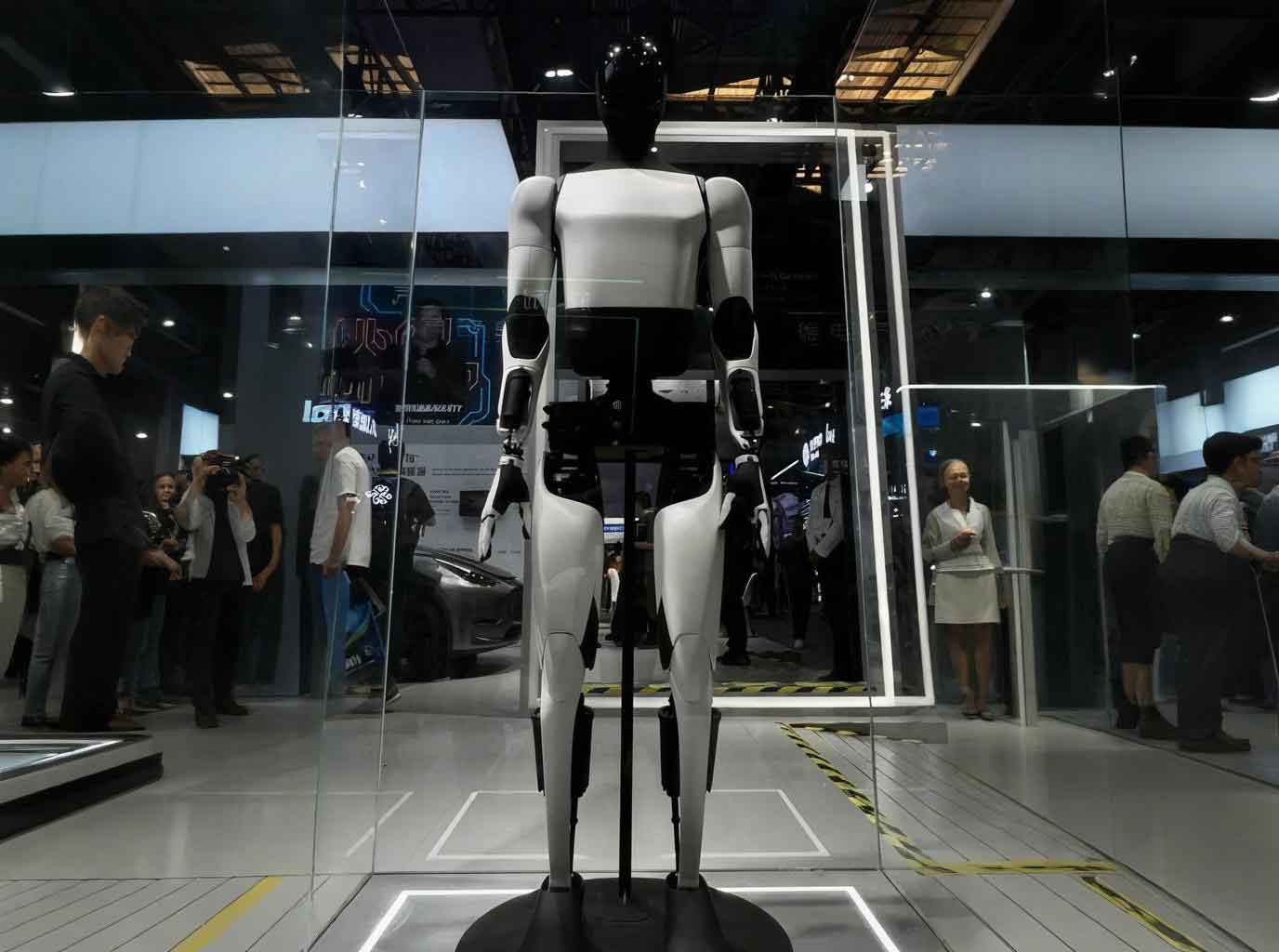
The embodied AI robot concept, when applied to USVs, involves a tight integration of perception, decision-making, and control loops, allowing these systems to operate like experienced captains in unpredictable waters. Historically, USVs relied heavily on human operators or pre-scripted missions, which limited their robustness in unstructured environments with waves, currents, and moving obstacles. By adopting embodied AI robot frameworks, we can create systems that learn from interactions, compensate for disturbances, and ensure reliable task completion. This approach is not just a technological upgrade but a holistic revolution spanning robotics, artificial intelligence, and ocean engineering. In the following sections, I will detail the current state, highlight persistent issues, and propose actionable recommendations to accelerate the deployment of embodied AI robots in maritime domains.
Current Developments in Embodied AI Robot Systems for USVs
Recent years have seen significant progress in embodied AI robot systems for USVs, with advancements spanning semantic control loops, engineering validation, evaluation frameworks, and application ecosystems. These developments mark a transition from theoretical exploration to practical integration, supported by real-world testing in ports and inland waterways.
Formation of Semantic Control Loops
In embodied AI robot systems, semantic control loops bridge high-level task understanding with low-level execution, ensuring compliance with maritime rules such as the International Regulations for Preventing Collisions at Sea (COLREGs). This involves converting natural language instructions into machine-readable semantics, integrating risk metrics like Distance at Closest Point of Approach (DCPA) and Time to Closest Point of Approach (TCPA), and generating explainable decisions for trajectory planning and control. For instance, frameworks like CORALL and AI Captain have demonstrated the ability to map COLREGs clauses to actionable intents, enabling USVs to perform compliant collision avoidance and docking maneuvers. The embodied AI robot thus operates as an intelligent agent that can interpret scenes, assess risks, and execute stable controls in real-time. To illustrate the process, consider the following table summarizing key components of semantic control loops:
| Component | Description | Example Technologies |
|---|---|---|
| Multimodal Perception | Fusion of vision, radar, LiDAR, and AIS for scene understanding | WaterScenes dataset, 4D radar-camera fusion |
| Rule Semanticization | Encoding COLREGs into machine-readable formats | CORALL framework, LLM-based intent generation |
| Risk Quantification | Calculating DCPA and TCPA for collision assessment | Formulas: $$ \text{DCPA} = \frac{|\mathbf{r} \times \mathbf{v}|}{|\mathbf{v}|} $$ and $$ \text{TCPA} = \frac{-\mathbf{r} \cdot \mathbf{v}}{|\mathbf{v}|^2} $$, where $\mathbf{r}$ is relative position and $\mathbf{v}$ is relative velocity |
| Trajectory Control | Converting intents into steering and propulsion commands | Nonlinear Model Predictive Control (NMPC), guidance navigation and control (GNC) systems |
These elements work in concert to form a closed-loop system where the embodied AI robot continuously perceives its environment, reasons about compliance, and adjusts its actions. The integration of large language models (LLMs) has further enhanced this by providing natural language interfaces for task planning, as seen in systems like SeaPilot, which uses AIS data to simulate encounter scenarios and generate lightweight models for onboard deployment. This semantic coherence is crucial for the embodied AI robot to operate reliably in dynamic maritime settings.
Engineering Validation and Digital Twin Integration
Engineering validation of embodied AI robot systems has progressed through digital twin technologies and real-world trials, demonstrating their viability in tasks like autonomous berthing and collision avoidance. Digital twins create high-fidelity virtual replicas of USVs and their environments, allowing for simulation-to-real (Sim2Real) migration and online calibration. For example, reinforcement learning combined with nonlinear model predictive control has been used to synchronize digital twins with physical vessels, reducing lateral errors and improving trajectory tracking in rough seas. The embodied AI robot benefits from such co-evolutionary frameworks, where control policies are iteratively refined in simulation before deployment. A key aspect is the use of predictive models to account for hydrodynamics, as shown in the equation for ship motion: $$ \mathbf{M} \ddot{\mathbf{x}} + \mathbf{C}(\mathbf{x}) \dot{\mathbf{x}} + \mathbf{D}(\mathbf{x}) \dot{\mathbf{x}} = \mathbf{F}_{\text{control}} + \mathbf{F}_{\text{disturbance}} $$, where $\mathbf{M}$ is the mass matrix, $\mathbf{C}$ represents Coriolis effects, $\mathbf{D}$ is damping, and $\mathbf{F}$ denotes forces. This enables the embodied AI robot to compensate for wind, wave, and current disturbances. The table below highlights recent validation efforts:
| Validation Approach | Key Features | Outcomes |
|---|---|---|
| Digital Twin Co-evolution | Combines reinforcement learning and model predictive control for dynamic synchronization | Improved tracking accuracy by 30% in trials |
| LLM-Guided Reinforcement Learning | Uses language priors to accelerate policy training for docking tasks | Increased task success rate to 95% in simulations |
| Real-World Sea Trials | Conducted in ports and inland waterways for collision avoidance and path following | Demonstrated compliance with COLREGs in over 200 encounter scenarios |
These validations confirm that the embodied AI robot can achieve robust performance, but they also reveal gaps in long-term consistency and scalability, which I will address later.
Evaluation Systems and Benchmarking
The evaluation of embodied AI robot systems has evolved from ad-hoc testing to structured frameworks that emphasize reproducibility and evidence chains. Standardized benchmarks, such as the Imazu scenarios for collision avoidance, provide a basis for comparing different algorithms. Evaluation metrics are divided into offline and online categories: offline metrics include rule violation counts and DCPA/TCPA values, while online metrics focus on near-miss rates and decision explainability. For the embodied AI robot, this dual approach ensures both safety and performance. The overall evaluation score $S$ can be computed as: $$ S = 0.6 \times S_{\text{offline}} + 0.4 \times S_{\text{online}} $$, where $S_{\text{offline}}$ and $S_{\text{online}}$ are normalized scores based on thresholds like DCPA ≥ 0.3 nautical miles and zero rule violations. The following table outlines a phased testing protocol:
| Testing Phase | Minimum Sample Size | Key Thresholds | Exit Criteria |
|---|---|---|---|
| L1: Simulation/Replay | ≥200 encounter samples (e.g., head-on, crossing, overtaking) | DCPA ≥ 0.3 nm, rule violations = 0 | Three consecutive batch evaluations passed |
| L2: Confined Waters | ≥100 valid encounters/berthings (≥30 berthings) | Near-miss rate ≤ 1%, rule violations = 0 | Two re-tests in different periods passed |
| L3: Open Waters | ≥100 samples (including crowded, tidal, and crosswind conditions) | Near-miss rate ≤ 0.5%, rule violations = 0 | A/B re-tests completed in varied sea states and traffic densities |
This framework supports the certification and insurance processes for embodied AI robot deployments, fostering trust in autonomous maritime operations.
Emerging Application Ecosystems
Embodied AI robot systems are finding practical applications in domains such as hydrographic surveying, environmental monitoring, and search-and-rescue, primarily in ports and rivers. These applications leverage the robot’s ability to perform closed-loop tasks with minimal human intervention. For instance, USVs equipped with multibeam sonars and GNSS/INS integration have demonstrated high-precision seabed mapping, while collaborative fleets enable area coverage for pollution detection. The embodied AI robot thrives in these scenarios due to its adaptive perception and control, but the ecosystem remains nascent, with challenges in data availability and regulatory compliance. The table below summarizes key application areas and their技术要求:
| Application | Typical Tasks | Required Embodied AI Robot Capabilities |
|---|---|---|
| Hydrographic Surveying | Bathymetry, obstacle detection, and channel inspection | High-accuracy positioning, robust path following, and sensor fusion (e.g., LiDAR, radar) |
| Environmental Monitoring | Water quality sampling, pollution tracking, and wildlife observation | Autonomous navigation in dynamic conditions, real-time data processing, and energy-efficient operation |
| Search and Rescue | Target detection, pattern search, and victim retrieval | Multi-modal perception (thermal, visual), collaborative planning with other vessels, and compliance with safety protocols |
| Port Operations | Autonomous berthing, cargo transfer, and vessel traffic management | Precise control under wind/current disturbances, COLREGs adherence, and communication with port infrastructure |
These applications underscore the potential of embodied AI robots to revolutionize maritime operations, yet they also highlight the need for further technological maturation, which I will discuss next.
Persistent Challenges in Embodied AI Robot Systems for USVs
Despite advancements, embodied AI robot systems face significant hurdles that impede their reliability, trustworthiness, and large-scale deployment. These challenges span technical maturity, regulatory compliance, and resource constraints, requiring focused attention from the research community.
Insufficient Technical Maturity and System Reliability
The technical maturity of embodied AI robot systems is still evolving, with weaknesses in perception, reasoning, and control loops. In perception, multi-modal sensor fusion often suffers from misalignment due to sea clutter and weather disturbances, leading to unstable scene understanding. For example, visual and radar data may fail to correlate consistently in fog or heavy rain, causing the embodied AI robot to misinterpret obstacles. In reasoning, the gap between simulation and reality tends to widen over time, as digital twins lack online calibration mechanisms to adapt to changing hull dynamics or environmental conditions. This drift can be modeled as: $$ \Delta_{\text{drift}} = \int_{t_0}^{t} \left( \mathbf{f}_{\text{sim}}(\tau) – \mathbf{f}_{\text{real}}(\tau) \right) d\tau $$, where $\mathbf{f}$ represents system states, accumulating errors that degrade performance. In control, data-driven methods like deep reinforcement learning struggle with generalization in coupled wind-wave-current scenarios, and their lack of interpretability complicates safety certification. While rule-constrained models show promise, they remain in pilot stages, limiting the embodied AI robot’s ability to handle long-term operations autonomously.
Deficiencies in Rule Compliance and Trustworthiness
Rule compliance mechanisms in embodied AI robot systems are not yet fully closed-loop, affecting their trustworthiness for maritime authorities. COLREGs provide qualitative descriptions, but translating them into quantitative risk metrics like DCPA and TCPA involves subjective thresholds, leading to inconsistent decision-making in complex encounters. The embodied AI robot may generate compliant intentions via LLMs, but without auditable evidence chains, it’s difficult to verify adherence post-hoc. Moreover, human-robot collaboration lacks standardized protocols for handover and liability assignment, raising concerns about accountability in emergencies. A compliance score $C$ could be defined as: $$ C = \sum_{i=1}^{n} w_i \cdot I_i $$, where $w_i$ are weights for different rules and $I_i$ are indicator functions for compliance, but this requires unified logging formats. The absence of such frameworks means the embodied AI robot cannot yet guarantee transparent operations, hindering regulatory approval.
Resource Constraints and Industrialization Barriers
Engineering deployment of embodied AI robot systems is hampered by resource limitations, including onboard computing power, communication bandwidth, and data scarcity. Edge devices on USVs often lack the capacity for real-time inference with large models, forcing a reliance on cloud services that may be unavailable in communication-denied areas. The embodied AI robot must balance latency and accuracy, which can be expressed as an optimization problem: $$ \min_{\theta} \left( \mathcal{L}_{\text{task}}(\theta) + \lambda \cdot \text{Latency}(\theta) \right) $$, where $\theta$ represents model parameters and $\lambda$ is a trade-off coefficient. Additionally, benchmark datasets like WaterScenes cover only limited conditions, failing to capture long-tail scenarios such as extreme storms or dense traffic. This data gap constrains the training of robust models for the embodied AI robot. Furthermore, regulatory frameworks like the MASS Code are not yet mandatory, creating uncertainty around certification pathways and increasing the cost of commercialization. These factors collectively slow the industrialization of embodied AI robot technologies.
Recommendations for Advancing Embodied AI Robot Systems
To overcome these challenges, I propose three strategic directions: enhancing autonomous closed-loop intelligence, establishing evidence-based evaluation and compliance, and promoting lightweight collaborative deployment. These recommendations aim to bolster the reliability, trustworthiness, and scalability of embodied AI robot systems in USV applications.
Autonomous Closed-Loop Intelligence via Interactive Evolution
The embodied AI robot should embrace interactive evolution, where data, models, and strategies co-evolve through continuous environmental interaction. This involves strengthening perception-decision-control loops with feedback mechanisms for online adaptation. In perception, multi-modal sensors should be fused with uncertainty estimates, using lightweight models deployed on-edge for real-time performance. For decision-making, semantic mapping of scenes to rules must be integrated with risk assessment, enabling the embodied AI robot to generate updatable and compliant navigation intents. In control, digital twins should facilitate bidirectional Sim2Real transfer, combining deep reinforcement learning with nonlinear model predictive control to handle disturbances. The control law can be formulated as: $$ \mathbf{u}^* = \arg\min_{\mathbf{u}} \left( \sum_{k=0}^{N-1} \| \mathbf{x}_k – \mathbf{x}_{\text{ref}} \|^2_Q + \| \mathbf{u}_k \|^2_R \right) + \mathcal{V}_{\text{RL}}(\mathbf{x}) $$, where $\mathbf{u}$ is the control input, $\mathbf{x}$ is the state, and $\mathcal{V}_{\text{RL}}$ is a value function from reinforcement learning. This hybrid approach allows the embodied AI robot to self-calibrate and maintain robustness in complex sea states. The table below outlines key components for this closed-loop system:
| Component | Implementation Strategy | Expected Benefit |
|---|---|---|
| Perception with Uncertainty | Use Bayesian neural networks to estimate sensor confidence and detect anomalies | Reduced false alarms in low-visibility conditions |
| Semantic Rule Integration | Embed COLREGs into graph-based reasoning engines with LLM interfaces | Explainable decision traces for auditing |
| Adaptive Control | Employ model reference adaptive control (MRAC) with online parameter identification | Improved tracking under varying hydrodynamic loads |
| Digital Twin Calibration | Implement Kalman filtering to align virtual and physical states periodically | Minimized drift over extended operations |
By focusing on interactive evolution, the embodied AI robot can achieve higher levels of autonomy and reliability.
Evidence-Based Evaluation and Compliance for Trustworthiness
Evaluation and compliance for embodied AI robot systems must shift from scenario coverage to evidence closure, ensuring that every decision is traceable and verifiable. This requires high-fidelity digital twin environments that replicate typical maritime scenarios—such as head-on encounters, overtaking, and berthing—under diverse weather conditions. Metrics should be standardized, combining safety indicators (e.g., DCPA, rule violations) with performance measures (e.g., energy consumption, task completion time). For the embodied AI robot, a unified logging format can capture the entire decision chain, from sensor inputs to control outputs, supporting third-party audits. The compliance verification process can be modeled as: $$ \mathcal{V}_{\text{comply}} = \bigcap_{i=1}^{m} \left( \text{Data}_i \rightarrow \text{Rule}_i \rightarrow \text{Action}_i \right) $$, indicating that all data must map to relevant rules and actions. Additionally, benchmark datasets should be expanded to include edge cases, such as GNSS denial or sensor failures, to stress-test the embodied AI robot. The following table proposes a compliance assessment framework:
| Assessment Layer | Focus Areas | Evidence Requirements |
|---|---|---|
| Data Integrity | Sensor calibration logs, fusion algorithms, and timestamp alignment | Raw data streams with metadata for reproducibility |
| Rule Mapping | Explicit links between COLREGs clauses and generated intents | Semantic graphs or natural language explanations |
| Action Traceability | Control commands correlated with environmental states and predictions | Time-synchronized logs of commands and vehicle responses |
| Outcome Validation | Post-hoc analysis of DCPA/TCPA, near-miss rates, and task success | Statistical reports with confidence intervals |
Adopting this approach will enhance the trustworthiness of embodied AI robot systems, facilitating regulatory approval and insurance underwriting.
Lightweight Collaborative Deployment Under Resource Constraints
Deployment of embodied AI robot systems must address resource constraints through lightweight designs and collaborative architectures. On the vessel side, model compression techniques—such as pruning, quantization, and knowledge distillation—can reduce computational demands, enabling real-time inference on edge devices. The embodied AI robot can leverage heterogeneous computing (e.g., GPUs and FPGAs) to balance speed and accuracy. For communication-limited scenarios, distributed coordination frameworks allow multiple USVs to share minimal information (e.g., trajectories and risks) while resolving conflicts via game-theoretic negotiation. The optimization problem for resource-aware deployment can be expressed as: $$ \max_{\mathbf{P}, \mathbf{C}} \left( \text{TaskUtility}(\mathbf{P}) – \alpha \cdot \text{ResourceCost}(\mathbf{C}) \right) $$, subject to latency and bandwidth constraints, where $\mathbf{P}$ denotes task plans and $\mathbf{C}$ denotes communication schedules. Moreover, open-source datasets and baseline models should be curated to foster algorithm comparability, and integration testing should follow a phased approach from simulation to sea trials. The table below summarizes deployment strategies:
| Strategy | Technical Approaches | Benefits for Embodied AI Robot |
|---|---|---|
| Model Lightweighting | Neural architecture search for efficient networks, hardware-aware compilation | Lower power consumption and faster inference on board |
| Edge-Cloud Collaboration | Offload complex reasoning to cloud when connected, fallback to local models when offline | Maintained functionality in communication-denied areas |
| Multi-Robot Coordination | Use consensus algorithms for formation control and risk-aware path planning | Scalable fleet operations with emergent intelligence |
| Data Ecosystem Development | Create shared repositories with standardized annotations for maritime scenarios | Improved model generalization across diverse conditions |
By prioritizing lightweight and collaborative solutions, the embodied AI robot can achieve scalable deployment in real-world maritime operations.
Conclusion
In summary, the journey of embodied AI robot systems in USVs is transitioning from remote control to embodied autonomy, driven by advances in semantic control loops, digital twin validation, and evaluation frameworks. These systems have shown promise in port and inland waterway applications, yet challenges persist in perception stability, rule interpretability, and resource constraints. To move forward, I advocate for a focus on closed-loop intelligence, evidence-based compliance, and lightweight协同 deployment. By doing so, we can enhance the reliability, trustworthiness, and scalability of embodied AI robot systems, paving the way for their widespread adoption in smart shipping and ocean exploration. The embodied AI robot represents not just a technological innovation but a cornerstone for future maritime intelligence, and continued research in this domain will be crucial for realizing its full potential.