
The humanoid robot sector is still at its opening stage, even as attention from investors, manufacturers, and global family offices continues to rise. In an interview, C Capital investor Zheng Yanbin said the humanoid robot race has only just begun. His view places the humanoid robot industry in a phase similar to the electric vehicle industry several years ago: several strong start-ups have appeared, but true large-scale commercialization may still require three to five years.
Zheng’s comments also connect the humanoid robot opportunity with a broader revaluation of Chinese assets. As humanoid robot companies, artificial intelligence developers, robot brain specialists, and robotic hand suppliers mature, global capital is beginning to look again at China’s technology and manufacturing base. European and Middle Eastern family offices, according to Zheng, have moved from simply watching China-related assets to allocating capital toward them, and some are even exploring ways to bring Chinese artificial intelligence, robotics, and electric vehicle technology into their local industries.
The humanoid robot sector, however, is not yet a simple story of immediate mass adoption. Zheng emphasized that display scenarios, including performances, are not the same as large-scale deployment. The real measure of the humanoid robot industry will be whether humanoid robots can enter production environments such as industrial manufacturing, logistics, and warehousing, while continuously improving their intelligence. China, with its complete manufacturing system, may become the first major market for humanoid robot applications, while overseas markets may release demand later.
For investors, this creates a complex but potentially rewarding landscape. The humanoid robot value chain includes host manufacturers, key components, robotic hands, robot brains, software models, artificial intelligence infrastructure, and energy. Zheng argued that leading humanoid robot companies will benefit first from application rollout, while critical segments such as robot brains and robotic hands may gain opportunities as use cases deepen. Among these, robotic hands may become one of the earliest segments to form meaningful demand because they must achieve fine recognition and control of materials, force, and motion, requiring both hardware capability and coordination between perception and models.
1. The Humanoid Robot Sector Remains in Its Early Phase
Zheng described the humanoid robot market as still being in an early stage of development, with market attention continuing to heat up. More than three years ago, C Capital invested in Agibot, a company focused on humanoid robot complete machines and embodied intelligence. Zheng compared the current humanoid robot sector to the electric vehicle industry eight or nine years earlier. At that time, several excellent start-ups had already appeared, but large-scale commercialization still needed three to five years. The humanoid robot industry today, in his view, is at a similar point.
The emergence of artificial intelligence large models has further improved the intelligence level of robots. Early humanoid robot prototypes had already appeared, but entering actual application scenarios still required time. As large models have matured, humanoid robots have begun to enter different scenarios, including industrial supply chains, performances, coffee shops, and retail. These are important early signals for the humanoid robot industry, but they do not yet prove that humanoid robots have reached full commercial maturity.
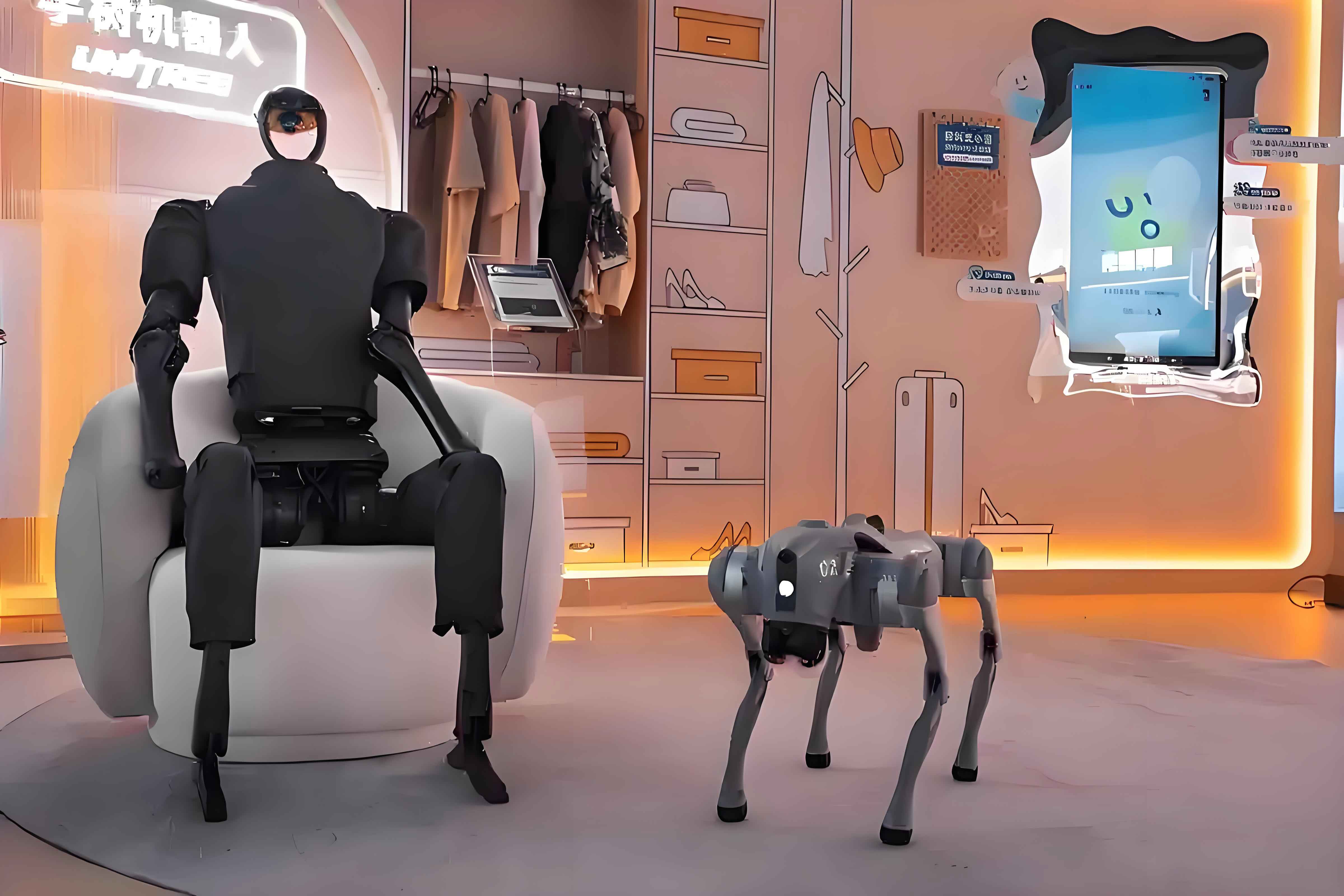
Zheng noted that shipments by humanoid robot companies such as Agibot and Unitree have exceeded 10,000 units. This is a notable milestone for the humanoid robot sector because it suggests that commercialization value is beginning to appear. However, he also cautioned that performance and display scenarios are not equal to large-scale deployment. The decisive question for the humanoid robot industry is whether humanoid robots can enter industrial, logistics, and warehousing production links and continue to improve their intelligence. Only then can the humanoid robot market expand from demonstration to durable commercial demand.
This distinction matters for investors evaluating the humanoid robot supply chain. A humanoid robot that performs in a controlled display environment may generate publicity, but a humanoid robot that works reliably in a factory, warehouse, or logistics center must meet higher standards for safety, precision, uptime, and cost. The humanoid robot industry therefore faces a transition from impressive prototypes to dependable production tools. That transition will determine the pace at which humanoid robot adoption spreads.
2. China’s Manufacturing Base Could Give the Humanoid Robot Market a First-Mover Advantage
When discussing demand for humanoid robots, Zheng said C Capital mainly focuses on investments in the Asia-Pacific region, and many of the companies it backs are headquartered in China. More than three years ago, when C Capital first invested in humanoid robots, one of its important judgments was that China is a major center of global manufacturing. Many industries’ components and raw material supply chains are closely related to China. As a result, China’s industrial intelligence is expected to have a large market space, and this was an important reason for C Capital’s positive view of humanoid robot development.
Based on this, Zheng believes the domestic Chinese market is more likely to achieve large-scale humanoid robot application first, followed by overseas markets where labor costs are higher. The logic is straightforward: China’s manufacturing ecosystem offers dense industrial scenarios, supply chain depth, and engineering talent. These factors can support faster iteration and deployment of humanoid robots in factories, warehouses, and logistics operations. For the humanoid robot industry, early deployment in China could create data, feedback, and scale that later support overseas expansion.
Overseas markets may have different advantages. In regions where human labor costs are relatively high and profit margins are relatively high, companies may have stronger incentives to adopt humanoid robots. Yet Zheng’s view is that these overseas humanoid robot opportunities may arrive after the Chinese market begins to scale. The sequence matters because the humanoid robot industry depends on manufacturing learning curves, component cost reduction, and software improvement. A large home market can help humanoid robot companies move down those curves faster.
This does not mean the humanoid robot market will be limited to China. Rather, China may serve as an early proving ground for humanoid robot applications before the technology spreads to other regions. The humanoid robot sector could follow a pattern in which Chinese industrial demand accelerates early commercialization, while overseas demand expands later as labor economics and automation needs become more urgent.
3. Host Manufacturers and Component Suppliers Shape the Humanoid Robot Supply Chain
Many humanoid robot host manufacturers are developing key components and brain models in-house. Zheng was asked whether the relationship between humanoid robot host manufacturers and component companies resembles the relationship between host manufacturers and suppliers in the electric vehicle supply chain. He said the relationship is similar. One of the hardest components to make in a humanoid robot is the robotic hand. From the perspective of hardware and components, robotic hands may become one of the first segments to achieve technological breakthroughs and form scaled applications.
The importance of robotic hands in the humanoid robot value chain is easy to understand. A humanoid robot must interact with the physical world, and the hand is a primary interface. It needs to recognize and control material, force, and motion with precision. That requires not only mechanical hardware but also perception and model coordination. For a humanoid robot to be useful in industrial, logistics, or warehouse settings, its hands must handle objects safely, adapt to different shapes and surfaces, and operate reliably over long periods. These requirements make robotic hands a critical bottleneck and a potential source of differentiated value.
Zheng’s broader point is that the humanoid robot industry will mature through coordination among host manufacturers, key components, and software models. The speed of humanoid robot industrialization will depend on how well these parts work together. A strong humanoid robot host manufacturer cannot succeed alone if its hands, brains, sensors, and models are not integrated effectively. Likewise, component suppliers can benefit as humanoid robot applications deepen, because demand for better components grows with each new deployment scenario.
C Capital has already participated in Agibot’s Series A financing and Critical Point AGILINK’s Series A financing, and it has invested in Wubian Dynamics. Agibot focuses on humanoid robot complete machines and embodied intelligence. Critical Point AGILINK mainly develops robotic hands. Wubian Dynamics focuses on embodied intelligence brains and general robot systems. C Capital’s public investment portfolio also includes XPeng, Xiaohongshu, and Biren Technology.
These investments reflect a view that the humanoid robot opportunity is not limited to one layer of the stack. Host manufacturers may capture attention, but components and software may capture durable value. The humanoid robot sector could develop a division of labor in which leading host manufacturers build platforms, while specialized suppliers provide robotic hands, robot brains, perception systems, and artificial intelligence models. Traditional manufacturing companies may also enter the humanoid robot field and purchase robot brains, robotic hands, and related products, creating a broader customer base for component and software suppliers.
4. Humanoid Robot Applications Must Move Beyond Performance
The humanoid robot industry has attracted attention through demonstrations, performances, and public appearances. These displays can show dexterity, balance, and interaction, but Zheng warned that performance and display scenarios do not equal large-scale deployment. The humanoid robot market will be defined by whether humanoid robots can enter industrial, logistics, and warehousing production environments and continuously improve their intelligence.
Industrial and logistics environments are demanding. They require humanoid robots to operate around people, machinery, and goods. They require repeatability, safety, and maintenance. They also require clear economic returns. A humanoid robot that can perform a task once may be impressive, but a humanoid robot that can perform a task thousands of times with minimal downtime is what industrial customers need. This is why the humanoid robot industry may take time to scale even if public interest is high.
At the same time, the movement of humanoid robots into coffee shops and retail shows that the technology is beginning to explore service contexts. These settings may help humanoid robot companies test interaction, navigation, and manipulation. But they may not provide the same scale as industrial, logistics, and warehousing applications. For the humanoid robot sector to become a major industry, it likely needs production applications that justify capital expenditure and continuous operation.
Zheng’s emphasis on production links suggests that the humanoid robot market will be judged by utility rather than novelty. The humanoid robot companies that can demonstrate reliable, measurable value in industrial workflows may be the ones that lead commercialization. As humanoid robots improve their intelligence, they may move from simple tasks to more complex tasks, expanding the addressable market and increasing demand for advanced components such as robotic hands and robot brains.
5. Global Family Offices Reassess China-Related Assets and the Humanoid Robot Opportunity
The changes in the humanoid robot industry are also reshaping how global capital views Chinese assets. Zheng observed that some European and Middle Eastern family offices have moved from watching from the sidelines to allocating toward China-related assets. Some are even seeking to bring Chinese artificial intelligence, robotics, and electric vehicle technology into their local industries. The quality, cost-performance, and technical capability of Chinese companies are becoming the basis for overseas investors to reassess the Chinese market.
C Capital is a private investment platform focused on Asia-Pacific markets and listed on the Swiss Stock Exchange. Its positioning is to introduce outstanding Chinese companies to global investors while bringing global capital to invest in outstanding Chinese companies. Zheng said this may only be a starting point. According to a UBS research report cited by Zheng, some global family offices currently allocate less than 10% of their assets to Asia-Pacific. Over the next four to five years, that proportion may rise further.
If global family offices increase their allocation to China and the Asia-Pacific region, the scale of capital could be substantial. Zheng said that as a new-generation investor, C Capital should seize this opportunity while showing global investors the competitiveness of Chinese companies. The humanoid robot sector is one area where this competitiveness may be visible, alongside artificial intelligence and electric vehicles.
European investors, according to Zheng, are especially interested in Chinese artificial intelligence, robotics, and electric vehicles. Europe’s traditional industries are concentrated in areas such as industrials and automobiles. One C Capital shareholder comes from the Italian Ferrari family, and this shareholder pays attention to leading Chinese automobile companies. In artificial intelligence, competition is mainly concentrated between China and the United States. C Capital’s task is to introduce competitive Chinese artificial intelligence companies to global investors. The same logic applies to humanoid robots, where Chinese companies may combine artificial intelligence, hardware manufacturing, and supply chain advantages.
This interest does not mean global capital has abandoned caution. It means the basis for evaluating China-related assets is changing. Rather than treating China only as a manufacturing destination, some family offices are examining Chinese technology companies as potential partners, suppliers, or investment targets. The humanoid robot industry may benefit from this shift because it sits at the intersection of artificial intelligence, advanced manufacturing, and automation.
6. Investment Criteria Focus on Market Size, Leadership, and Technical Barriers
C Capital regularly conducts internal discussions and evaluates industries that may form large-scale, high-growth markets over the next three to five years. Before choosing an investment target, C Capital first judges the global total addressable market, or TAM, of the company’s sector. Typically, the firm hopes the industry has at least a hundred-billion-level global market space, with the specific currency and statistical definition requiring further clarification.
Second, C Capital judges whether the target company is in a leading position in that market, such as whether it can enter the first tier or become the first or second player in the industry. After that, the firm evaluates whether the company’s technical barriers are sufficiently high and sustainable. A company may currently be first in its industry, but C Capital also considers whether another company could jump from fifth to first in the future. These questions require deep discussion and regular evaluation of which industries deserve early positioning.
In the current market environment, C Capital’s publicly disclosable key focus areas include robot brains, robotic hands, artificial intelligence applications, and energy. It has recently invested in several robot brain companies and has looked at a company focused on robotic hands. The main reason is that the competitive landscape among humanoid robot host manufacturers has initially formed. Companies such as Agibot and Unitree are already in relatively leading positions. In the next stage, more traditional manufacturing enterprises may enter the humanoid robot field and purchase products such as robot brains and robotic hands.
This investment approach reflects a layered view of the humanoid robot market. Host manufacturers may attract the most public attention, but robot brains and robotic hands may become critical enabling layers. If more traditional manufacturers enter the humanoid robot space, they may not build every component in-house. They may instead rely on specialized suppliers for intelligence, manipulation, and perception. That could create a large market for humanoid robot component and software companies.
| Focus Area | Role in the Humanoid Robot Ecosystem | Why It Matters for the Humanoid Robot Opportunity |
|---|---|---|
| Humanoid robot host manufacturers | Build complete humanoid robot systems and embodied intelligence platforms | Leading humanoid robot companies such as Agibot and Unitree have shipment volumes exceeding 10,000 units, and leading humanoid robot players may benefit first from application rollout. |
| Robotic hands | Provide manipulation, material recognition, force control, and motion precision | Robotic hands may be among the first humanoid robot components to achieve technical breakthroughs and scaled demand because they require hardware, perception, and model coordination. |
| Robot brains | Provide embodied intelligence, general robot systems, and decision-making models | As humanoid robot host competition takes shape, more traditional manufacturing entrants may purchase robot brains rather than develop them internally. |
| Artificial intelligence applications | Support humanoid robot intelligence and broader automation use cases | Artificial intelligence applications may create additional demand across the humanoid robot value chain and across service and industrial scenarios. |
| Energy | Power artificial intelligence infrastructure and advanced robotics | C Capital is evaluating energy forms such as nuclear energy to support artificial intelligence infrastructure, which may indirectly support humanoid robot development. |
7. Valuation Divergence Between Chinese and U.S. Companies May Narrow
Zheng also addressed a notable market phenomenon: even within the same sector, Chinese companies and U.S. companies may face significantly different valuation levels. U.S. companies may receive higher valuations. This gap is visible in artificial intelligence and may also influence how investors view humanoid robot companies in China and the United States.
As an investor, Zheng has observed that leading Chinese companies and leading U.S. companies in the same track may differ in valuation by more than ten times. One reason is the structure of global capital allocation. Using Anthropic and DeepSeek as examples, Zheng said market expectations for Anthropic’s latest funding round may reach USD 900 billion to USD 980 billion, and post-listing valuation expectations may reach USD 2 trillion. In contrast, market expectations for DeepSeek’s latest round may be around USD 70 billion to USD 80 billion.
Global capital allocation remains concentrated in mature capital markets such as the United States and Europe. Asia-Pacific’s allocation ratio in some global family office portfolios remains below 10%. Because some funds lack sufficient understanding of Asia-Pacific markets, they often prefer to invest in leading U.S. and European companies. This preference may further push up valuations of U.S. and European companies.
Zheng believes the sustainability of this valuation divergence remains to be seen. Some family offices willing to take risks and with forward-looking views have already begun to reduce single-market exposure to Europe and the United States and gradually increase allocation to Asian markets. In the coming years, especially over the next five years or so, more capital may flow to Asia. If that happens, the valuation gap between Chinese and U.S. companies in artificial intelligence, humanoid robots, and other advanced technology sectors may gradually narrow.
A second factor is customer procurement and payment habits. European and U.S. enterprises tend to purchase artificial intelligence products through paid subscriptions or SaaS models. In contrast, some Asian enterprises may prefer to try products for free for several months and then make a one-time purchase after the product matures or the company reaches a certain scale. Monthly subscriptions and SaaS models are still relatively limited in domestic China, but the situation has begun to change. Younger consumers and business customers are showing a greater willingness to pay. As corporate payment habits change, capital markets may give greater recognition to Asia-Pacific artificial intelligence large-model and SaaS companies. Therefore, over the next three to five years, the valuation gap between Chinese and U.S. companies may gradually narrow.
8. Artificial Intelligence, Energy, and the Wider Humanoid Robot Ecosystem
C Capital is also watching artificial intelligence applications and other needs created by artificial intelligence development, including energy demand. The firm is evaluating whether energy forms such as nuclear energy can provide electricity support for artificial intelligence infrastructure, and it is monitoring potential investment opportunities in this area. At the same time, it is looking for opportunities in the artificial intelligence application layer.
This broader view matters for the humanoid robot sector because humanoid robots depend on artificial intelligence models, computing infrastructure, and energy. A humanoid robot cannot operate without sufficient power, onboard intelligence, and reliable connectivity to training or inference systems. As humanoid robot capabilities improve, energy and artificial intelligence infrastructure may become more important constraints and opportunities. The humanoid robot industry may therefore not develop in isolation. It may be shaped by advances in artificial intelligence, energy systems, sensors, actuators, and advanced manufacturing.
The humanoid robot opportunity also connects to C Capital’s wider portfolio logic. Investments in artificial intelligence, robotics, electric vehicles, and advanced computing can reinforce one another. A stronger artificial intelligence ecosystem can improve robot brains. A stronger manufacturing ecosystem can reduce humanoid robot component costs. A stronger electric vehicle supply chain can contribute to batteries, motors, power electronics, and sensors. The humanoid robot sector may benefit from these overlapping capabilities.
For global investors, the humanoid robot theme is attractive because it sits at the intersection of several long-term trends: artificial intelligence, automation, aging workforces, supply chain resilience, and advanced manufacturing. Yet the humanoid robot industry also carries uncertainty. Commercialization may take longer than expected. Some components may remain difficult to scale. Customers may demand proven reliability before large purchases. The humanoid robot companies that succeed may be those that combine technical ambition with disciplined execution.
9. What to Watch Next in the Humanoid Robot Industry
The next phase of the humanoid robot industry will likely be defined by several questions. First, can humanoid robot companies move beyond performance and display scenarios into industrial, logistics, and warehousing production environments? Second, can robotic hands achieve the precision, durability, and cost levels required for scaled deployment? Third, can robot brains improve enough to support general tasks across different environments? Fourth, will traditional manufacturers enter the humanoid robot market and become buyers of robot brains, robotic hands, and related systems? Fifth, will global capital continue to increase allocation to China and Asia-Pacific, supporting valuation convergence for Chinese artificial intelligence and humanoid robot companies?
Zheng’s comments suggest that the humanoid robot sector is still in its early innings. The fact that humanoid robot shipments by companies such as Agibot and Unitree have exceeded 10,000 units is meaningful, but it is not the same as mature mass adoption. The humanoid robot market will require continued progress in intelligence, manipulation, reliability, and cost. China may lead early humanoid robot adoption because of its manufacturing system and industrial demand. Overseas markets may follow as labor costs and automation needs create demand.
For investors, the humanoid robot value chain offers multiple entry points. Host manufacturers may capture platform value. Robotic hand suppliers may capture a critical hardware bottleneck. Robot brain companies may capture intelligence and software value. Artificial intelligence application companies may capture productivity gains. Energy providers may support the infrastructure that powers artificial intelligence and humanoid robots. The relative returns across these layers will depend on technical breakthroughs, customer adoption, and competitive dynamics.
The humanoid robot industry is also a test of how global capital evaluates Chinese technology. If Chinese humanoid robot companies demonstrate product quality, cost-performance, and technical capability, overseas investors may reassess China-related assets more broadly. European and Middle Eastern family offices are already showing interest in Chinese artificial intelligence, robotics, and electric vehicles. The humanoid robot sector could become one of the clearest examples of this reassessment because it combines software intelligence with hardware manufacturing at scale.
10. Conclusion: The Humanoid Robot Opportunity Is Real but Gradual
The humanoid robot market is attracting significant attention, but the path to large-scale commercialization remains gradual. The humanoid robot sector is still in its early stage, comparable in some ways to the electric vehicle industry several years ago. Companies such as Agibot and Unitree have reached shipment volumes exceeding 10,000 units, showing that commercialization value is beginning to appear. However, performance and display scenarios are not the same as mass deployment. The humanoid robot industry will be defined by whether humanoid robots can enter industrial, logistics, and warehousing production links and continuously improve their intelligence.
China may become the first major market for humanoid robot applications because of its complete manufacturing system and dense industrial scenarios. Overseas markets may release demand later, especially where labor costs are higher. The humanoid robot supply chain will mature through coordination among host manufacturers, key components, software models, robot brains, and robotic hands. Robotic hands may be one of the earliest segments to achieve technical breakthroughs and scaled demand because they require fine recognition and control of materials, force, and motion.
At the same time, global capital is reassessing Chinese assets. European and Middle Eastern family offices have moved from watching to allocating, and some are seeking to bring Chinese artificial intelligence, robotics, and electric vehicle technology into their local industries. A UBS research report cited by Zheng indicates that some global family offices allocate less than 10% to Asia-Pacific, and that proportion may rise over the next four to five years. If more capital flows to Asia, the valuation gap between Chinese and U.S. companies in artificial intelligence and humanoid robots may gradually narrow.
C Capital’s investment approach focuses on large total addressable markets, industry leadership, and sustainable technical barriers. Its publicly disclosable focus areas include robot brains, robotic hands, artificial intelligence applications, and energy. It has invested in Agibot, Critical Point AGILINK, and Wubian Dynamics, and its public portfolio includes XPeng, Xiaohongshu, and Biren Technology. These positions reflect a view that the humanoid robot opportunity extends beyond host manufacturers to components, software, artificial intelligence, and energy.
The humanoid robot industry is therefore both promising and patient. It offers a long-term opportunity across artificial intelligence, advanced manufacturing, and automation, but it requires time, technical progress, and commercial validation. The humanoid robot companies and suppliers that can move from demonstration to dependable production will shape the next phase of the market. China may lead early humanoid robot adoption, while global capital continues to reassess the competitiveness of Chinese technology. The humanoid robot race has only just begun, and its most important chapters are still ahead.